

Skip to content
Search

Latest Stories

Follow Us:
Top Stories

Video: #ListenFirst Friday John Noltner

#ListenFirst Friday John Noltner
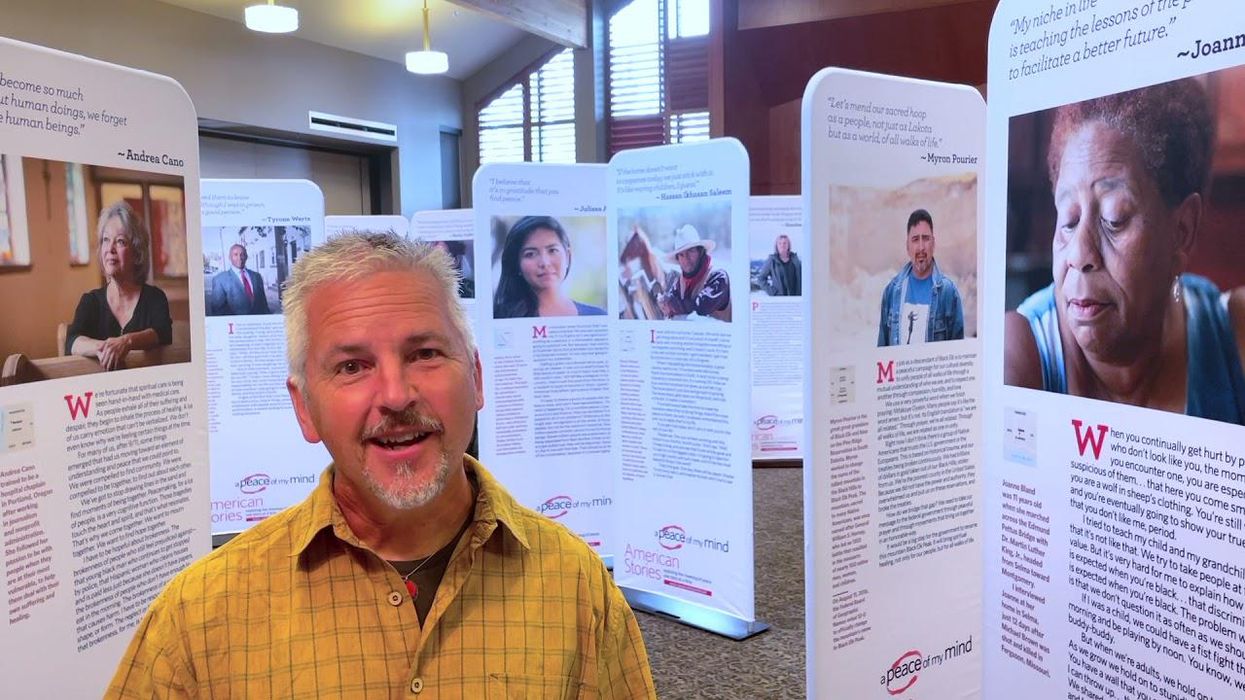
In this edition of #ListenFirstFriday, we hear from John Noltner who shares stories of hope, healing and transformation in overcoming the differences that divide us as a nation.

Watch Now.


Read More

Jesse Jackson: A Life of Activism, Faith, and Unwavering Pursuit of Justice

Rev. Jesse Jackson announces his candidacy for the Democratic Presidential nomination, 11/3/83.

Getty Images

Jesse Jackson: A Life of Activism, Faith, and Unwavering Pursuit of Justice

The death of Rev.Jesse Jackson is more than the passing of a civil rights leader; it is the closing of a chapter in America’s long, unfinished struggle for justice. For more than six decades, he was a towering figure in the struggle for racial equality, economic justice, and global human rights. His voice—firm, resonant, and morally urgent—became synonymous with the ongoing fight for dignity for marginalized people worldwide.

"Our father was a servant leader — not only to our family, but to the oppressed, the voiceless, and the overlooked around the world,” the Jackson family said in a statement.

Keep ReadingShow less
A Tonal Shift in American Clergy
people inside room
Photo by Pedro Lima on Unsplash

A Tonal Shift in American Clergy

I. From Statements to Bodies

When a New Hampshire bishop urged his clergy to "get their affairs in order" and prepare their bodies—not just their voices—for public witness, the language landed with unusual force. Martyrdom■adjacent rhetoric is rare in contemporary American clergy discourse, and its emergence signals a tonal shift with civic implications. The question is not only why this language surfaced now, but why it stands out so sharply against the responses of other religious traditions facing the same events.

Keep ReadingShow less
A Party That Seeks to Nationalize and Control Elections Has Entered Fascist Territory

Donald Trump’s call to “nationalize” elections raises constitutional alarms. A deep dive into federalism, authoritarian warning signs, and 2026 implications.

Getty Images, Boris Zhitkov

A Party That Seeks to Nationalize and Control Elections Has Entered Fascist Territory

I’m well aware that using the word fascist in the headline of an article about Donald Trump invites a predictably negative response from some folks. But before we argue about words (and which labels are accurate and which aren’t), let’s look at the most recent escalation that led me to use it.

In Trump’s latest entry in his ongoing distraction-and-intimidation saga, he publicly suggested that elections should be “nationalized,” yanking control away from the states and concentrating it at the federal level. The remarks came after yet another interview in which Trump again claimed, without evidence, that certain states are “crooked” and incapable of running fair elections, a familiar complaint from the guy who only trusts ballots after they’ve gone his way.

Keep ReadingShow less
A U.S. flag flying before congress. Visual representation of technology, a glitch, artificial intelligence
As AI reshapes jobs and politics, America faces a choice: resist automation or embrace innovation. The path to prosperity lies in AI literacy and adaptability.
Getty Images, Douglas Rissing

Why Should I Be Worried About AI?

For many people, the current anxiety about artificial intelligence feels overblown. They say, “We’ve been here before.” Every generation has its technological scare story. In the early days of automation, factories threatened jobs. Television was supposed to rot our brains. The internet was going to end serious thinking. Kurt Vonnegut’s Player Piano, published in 1952, imagined a world run by machines and technocrats, leaving ordinary humans purposeless and sidelined. We survived all of that.

So when people today warn that AI is different — that it poses risks to democracy, work, truth, our ability to make informed and independent choices — it’s reasonable to ask: Why should I care?

Keep ReadingShow less