



I didn’t grow up anywhere near Madison Square Garden. My childhood unfolded in the Midwest, far from New York’s tangled boroughs and yellow cabs. My father brought the city with him, tucked in the vowels of his accent and the teams he rooted for. He was a Jersey boy at first. Then, a reluctant Midwesterner. Geography, though, never truly loosened its grip. In our house, sports allegiance wasn’t a choice. It was inherited—an expectation passed like a family recipe. Or a story retold until it blurs into fact.
For my father, and then for me, the Knicks were never just a team. They were a test of endurance. Before I could distinguish a pick-and-roll from a triangle offense, I understood Knicks loyalty: you waited. You hoped in public, persisted when heartbreak was routine. Knicks fandom was boot camp for disappointment. The main skill was getting up after being knocked down.
Fifty-three years. That’s how long Knicks fans practiced this peculiar discipline. Over those decades, legendary moments served as signposts on the journey. Willis Reed’s limp into legend in 1970 became more than a highlight—it was mythology. Patrick Ewing was both promise and heartbreak, sometimes in the same play. John Starks—forever loved, even after Game 7. Generations calibrated their emotional weather to a franchise that specialized in not quite.
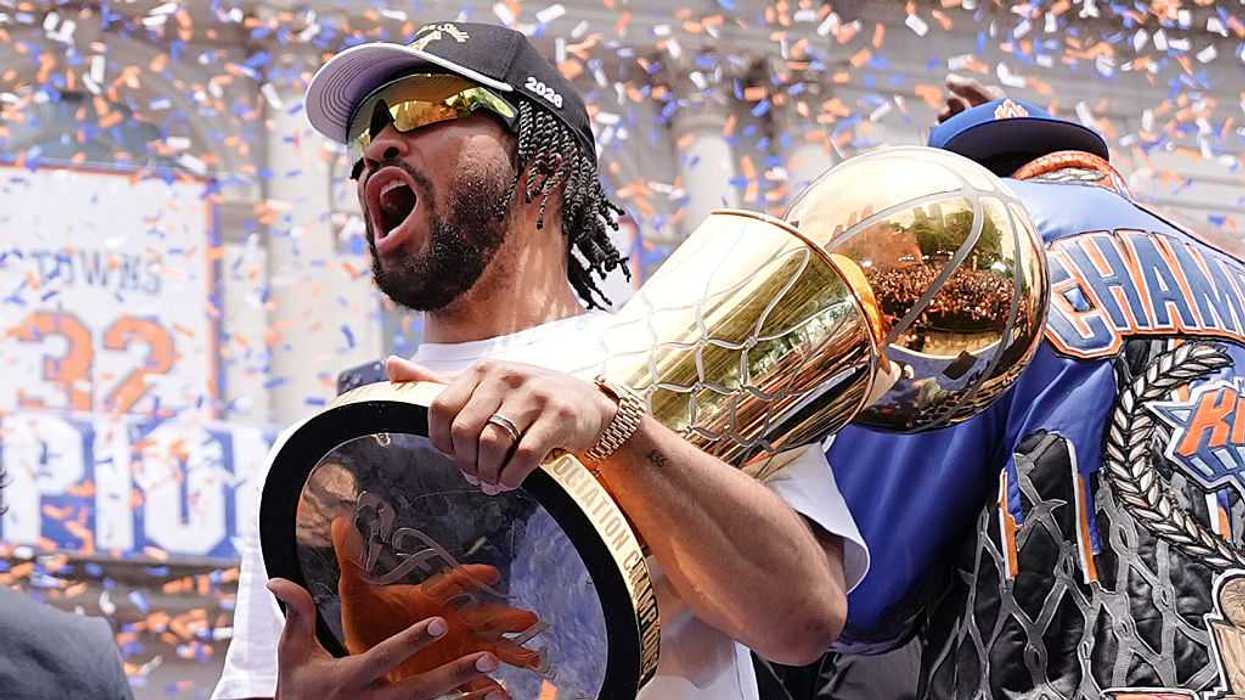
Which is why, when the Knicks finally clinched that 94–90 win over the Spurs—after half a century of waiting—it didn’t feel like just the end of a basketball season. Instead, it felt like a family secret suddenly remembered. At that moment, the city exhaled, and something old and communal surged back to the surface.
Even the win matched the usual script: comeback, deficit erased, probability bent. Analysts will dissect the X’s and O’s. Jalen Brunson’s name is entering the canon. Documentaries, oral histories, and jerseys will follow. But what lingered wasn’t tactical—it was the sound.
The frequency of collective release is its own kind of music. It ricocheted off apartment bricks in Manhattan. It spilled out of Queens bars. It crackled through FaceTime calls and group chats. Videos surfaced from London pubs. They surfaced from military bases. Meanwhile, people in neighborhoods where eye contact is usually avoided instead found themselves locked in spontaneous embrace. The celebrations looked unmistakably New York. Yet we’re used to seeing cities revealed by disaster. New York and New Jersey neighbors have shown resilience in the face of tragedy: the September 11th attacks. Hurricane Sandy. The first suffocating wave of COVID. In those moments, the city improvises solidarity. But celebration reveals a community’s scaffolding, too. Joy tests what binds us when fear is absent. Who are we when we don’t have to be afraid?
That’s what made the Knicks’ championship aftermath so moving. For a few hours, New Yorkers were neighbors. The city’s fractures remained—New York was still expensive, impatient, and divided by money, race, and politics. But for one night, delight rewrote the social contract. No one checked who’d voted for whom. No one asked about background or beliefs before giving high-fives. The lines stayed, but mattered less.
It’s a rare thing now, this kind of encounter. Our institutions—churches, civic groups, local papers—are thinning. Neighborhood associations are fading. Algorithms nudge us deeper into curated silos, where everyone else is a stranger, or worse, a threat. We’re specialists in avoiding one another. Sports resist that tendency. You can’t curate Knicks fandom to your liking; you inherit it, or you choose it. From that moment, your anxiety is indistinguishable from that of the Dominican grandfather in the nosebleeds or the twenty-something who knows the Knicks mostly by meme and misery. The hedge fund manager and the public-school teacher ride the same emotional roller coaster in the final minutes.
For a few hours, everyone joins something raw and unrehearsed. Sociologist Émile Durkheim called it “collective effervescence.” It’s a rare moment: individuals, swept up by ritual, become part of something larger. In America, sports may be our last secular sanctuary for that feeling. Dismissing fandom as trivial always misses the mark. No one thinks basketball fixes injustice. No parade will pass rent control. The Knicks can’t legislate fairness. But at their best, they remind us of what civic life neglects. We suffer together, yet do not grow callous. We invest in strangers. Our stories expand inside a much larger one. Someone else’s joy enlarges us.
This Knicks team embodied that lesson. Comeback was their language. No deficit felt permanent. Games once lost are revived. They refused inevitability. It’s tempting to draw big conclusions from sports, and usually, wisdom lies in restraint. Even so, it’s hard to ignore the resonance of millions. In an age of cynicism, people choose belief. Not naïveté, but the quiet knowledge that history doesn’t always prevail.
Fifty-three years is time enough for disappointment to calcify into identity. To pass down resignation. To forget about the surprise. Then, suddenly, the Knicks won. Confetti fell. Fathers called sons. Kids watched adults cry over things they couldn’t yet name. People poured into the streets, carrying pieces of themselves they’d misplaced somewhere between deadlines, elections, rent hikes, and the daily fatigue of being alive in America. The score will live in the record books. The parade will end. The merch will fade. But maybe, just maybe, another memory will outlast them all.
For one night, New York remembered that “us” is not an abstraction. It’s a practice. A chant. A hand offered to a stranger. A city letting itself be amazed. The Knicks had finally won. And so, too—briefly and brilliantly, had the possibility of belonging.
Rev. Dr. F. Willis Johnson is a spiritual entrepreneur, author, scholar-practioner whose leadership and strategies around social and racial justice issues are nationally recognized and applied.











The President Invited Iran to Bomb My Home