





The Trump administration recently announced changes within the Department of Education that would reclassify several graduate degrees as non-professional, limiting access to federal loans and institutional support. As a Gen Z student pursuing a Master of Public Health in Healthcare Management, to me, this serves as another reminder of how often the ground shifts beneath our feet.
For many of us in this generation, this is what coming of age has looked like: navigating urgency layered on top of fatigue and responsibility paired with diminishing support. I was in my second year of college in 2020 when the COVID-19 pandemic hit — watching the world shut down while still being expected to keep producing, achieving, and adapting. That was my life for the following three years. Now, the pursuit of higher education, including graduate degrees, which are increasingly the baseline for upward mobility, can be destabilized mid-stream. Gen Z is inheriting the compounding effects of accelerated policy decisions and is becoming the “cleanup generation” expected to absorb the fallout while the foundation is still being pulled out from under us.
Trump’s second term has made something very clear. Policies enacted quickly and without regard for long-term consequences leave damage that will take generations to undo. Executive orders, funding shifts, and rollbacks may feel temporary in the moment, but their cultural and systemic effects are long-term. This phenomenon has repeatedly been proven over the course of history. For example, the Violent Crime Control and Law Enforcement Act of 1994, which included the three-strikes rule, further increased recidivism and mass incarceration in communities of color, which ultimately reshaped Black families and communities for decades. Long after the administration that passed it left office, we still see the effects of this bill today. The lesson is simple but often ignored: policy outlives presidents, and culture outlives policy. What’s being set in motion now will shape the economic, educational, and social realities Gen Z and future generations inherit long after this administration ends.
Ultimately, this is setting up Gen Z to be the “cleanup generation”. Those of us born between the late 90s and the early 2000s inherited a blueprint: get an education, start a career, buy a home, build a family, create generational wealth, contribute to your community, and leave the world better than you found it. And we believed in it and, so far, we’ve shown up. Gen Z has been one of the most progressive, civically engaged generations — leading calls for racial justice and social and political accountability here in the United States and abroad. We’ve planned to be on the right side of history and have dreams and goals of our own while at it. But the generations that have come before us hold the power, and these policies are making it more difficult for us to reach a baseline of stability. We are carrying the responsibility of environmental collapse, generational debt, institutional racism, and a political climate unraveling in real time. Yet the systems that claim to need us keep pulling away the tools required to meet the moment. The blueprint was handed to us, yet the foundation keeps shifting.
We are like the invisible middle child. We are situated between institutional collapse and forced responsibility, too economically unanchored to have stability, and definitely too old to be spared the consequences, yet we are still blamed for our positioning. This isn’t about claiming hardship as a competition, but about naming the conditions under which a generation is coming of age and what those conditions demand of us. For us, instability is normalized, and the rules change mid-game. We are hyper-focused on just reaching a point of stability, which in 2026 is not met with grace but with criticism and being told to work harder and do better.
And so, as a member of Gen Z, I’m not too focused on homeownership, marriage, or building a family, and not because those aspirations don’t matter, but because long-term stability has become the priority for me. My peers share the same sentiments.
And if we are truly concerned about future generations, the work cannot stop with Gen Z. The conditions we normalize now, such as instability, shrinking pathways, and constant recalibration, will become the baseline for those coming after us. Whether the next generation inherits insecurity or stability depends on whether we choose to address these structural failures now, rather than passing them down. We need to prioritize not only promising but sustaining a future in which they can dream big and have stability as a baseline rather than a luxury.
If Gen Z is expected to inherit the consequences of today’s policy decisions, then those decisions must be made with our realities in mind. That means governing with generational awareness, recognizing that stability, education, housing, and career pathways no longer function the way they once did. It also means creating real space for younger voices in the rooms where long-term decisions are made, not as tokens, but as stakeholders in the future being designed. Because you cannot expect a generation to clean up systemic damage while denying its influence over the systems themselves.
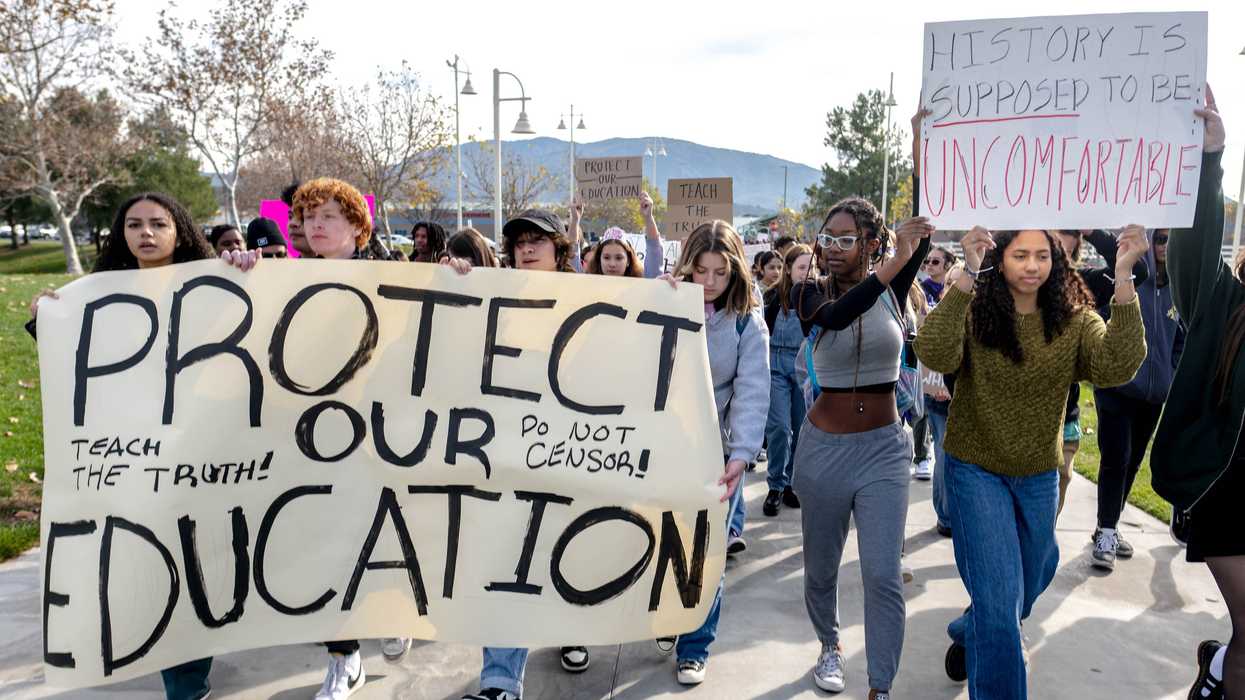
Gen Z is one of the most progressive generations by far. We have shown up in the streets and at the polls, we are politically active, socially conscious, and deeply invested in building a future that is more equitable than the one we inherited. But we are also the generation currently being asked to do the most with the least.
Gen Z will show up; we always do. But we need systems that show up for us, too.
Beverley Waithaka is a Public Voices Fellow of The OpEd Project in partnership with the National Black Child Development Institute. She writes about the intersections of public health, beauty, digital culture, and the impacts on early childhood.







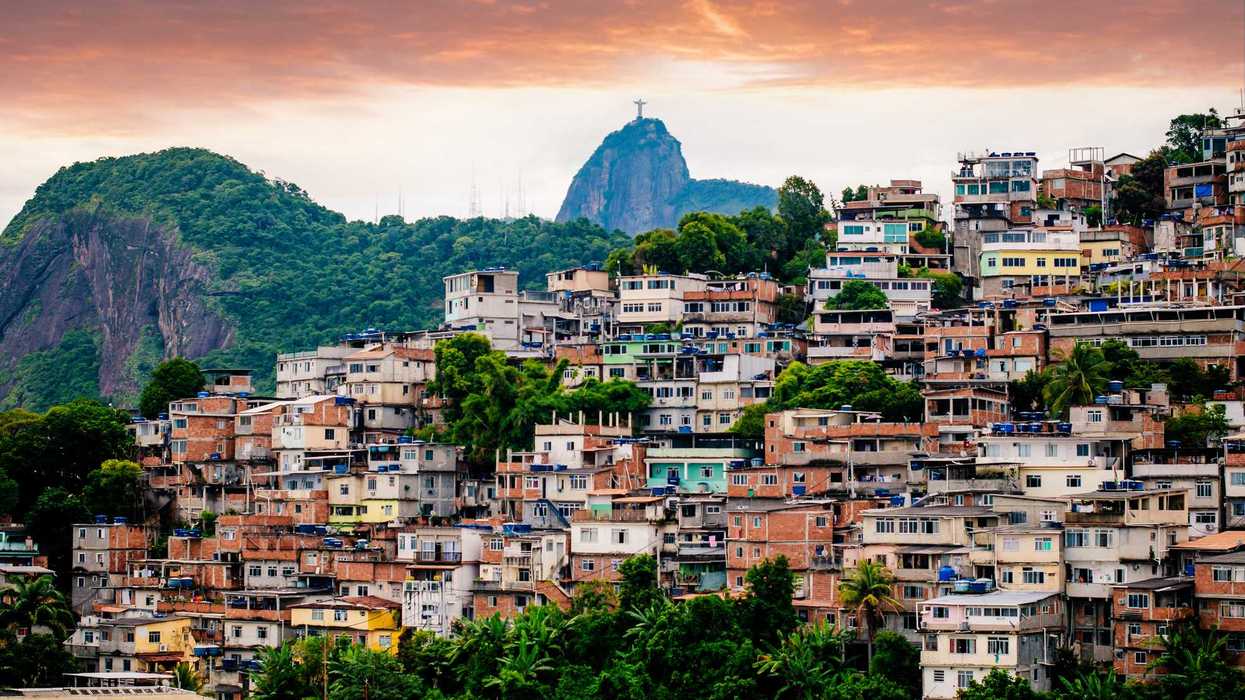
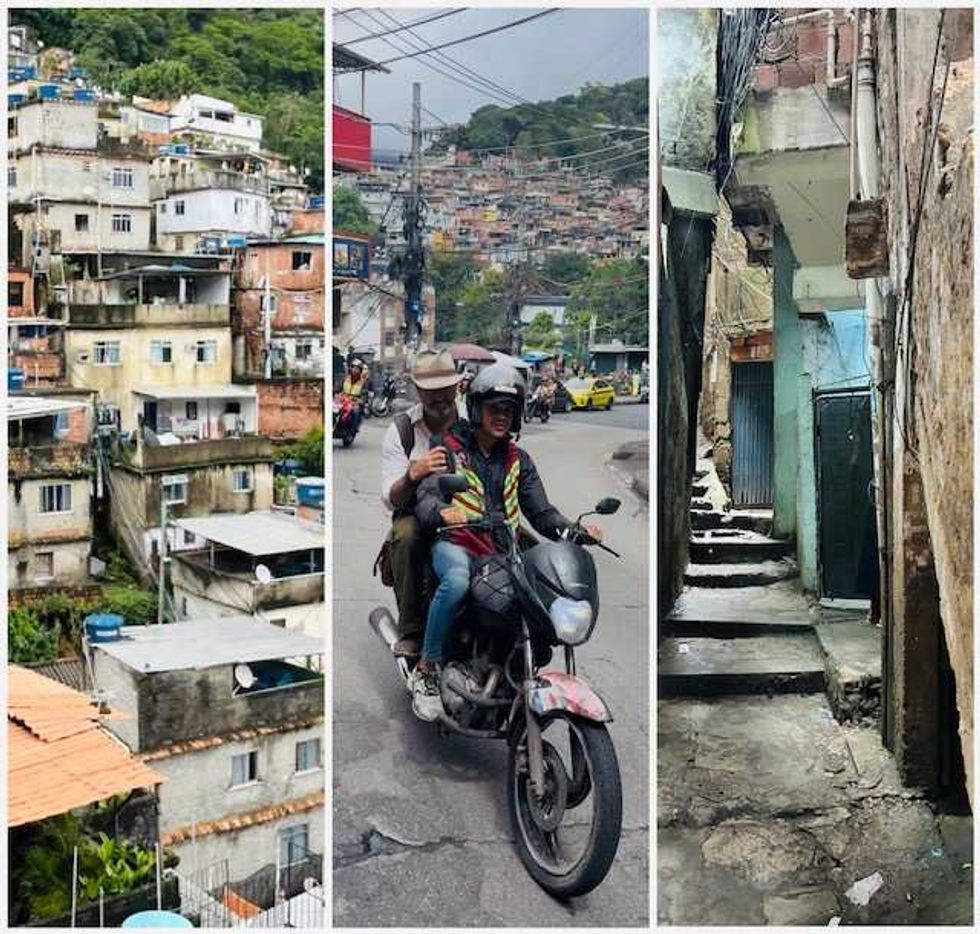 Scenes from Favela Rocinha, Brazil - (R-L) Rows of brick homes, Hugo Balta on a motorcycle taxi, and steep, winding roadsHugo Balta
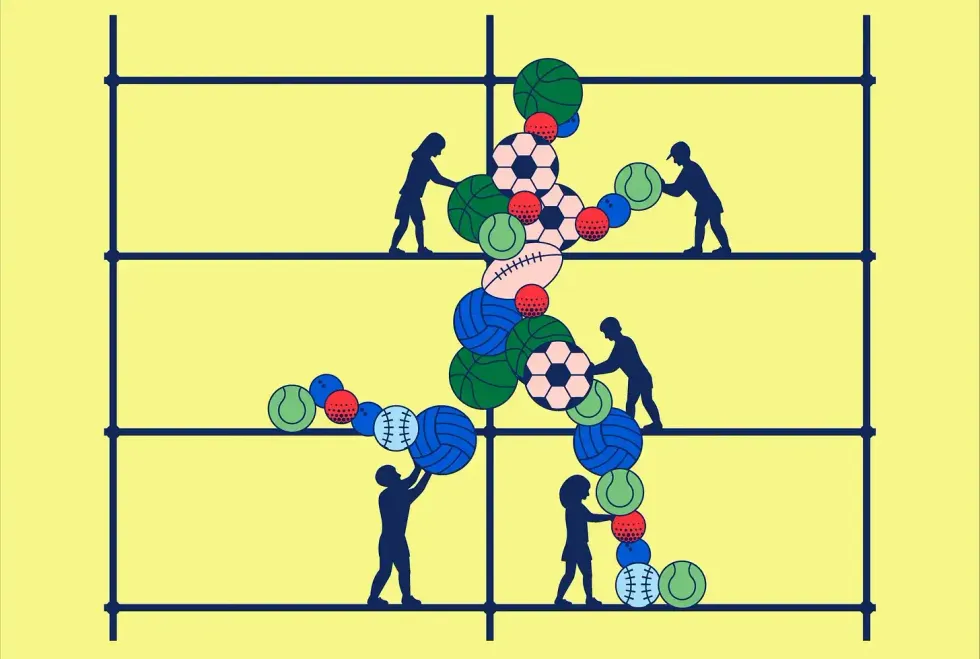 Following our HWF Civic Futures kickoff last week with Eric Liu, our design partners at Public/Official have created a unique visual to capture the “civic scaffolding” spirit of this conversation.
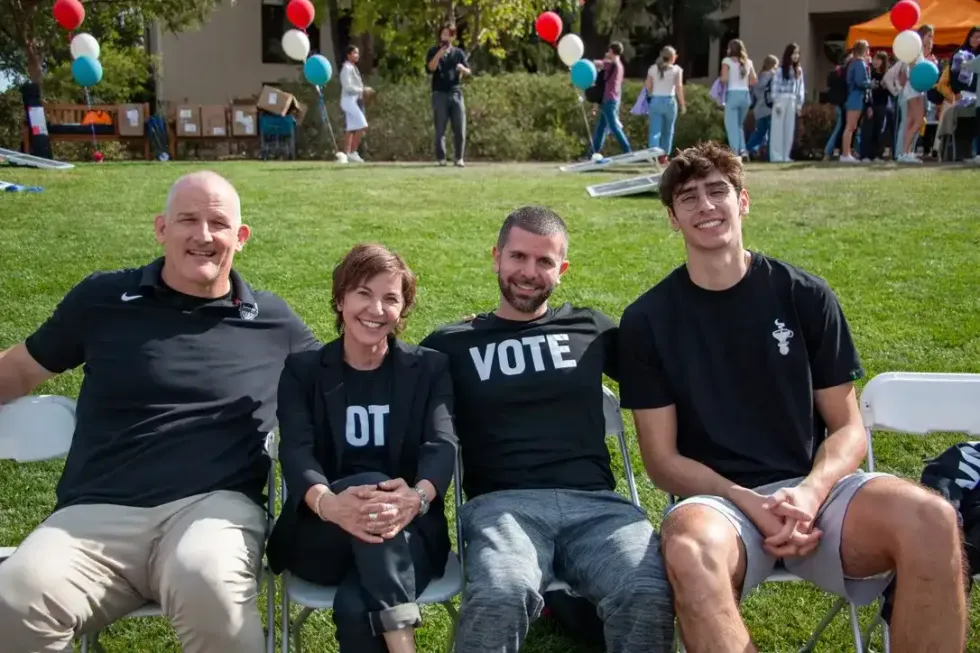 Lisa, Coaches Rev and Matt Elkin, and former Stanford Men’s Basketball star Maxime Raynaud at Stanford’s “All Vote No Play” Democracy Day, 2025