
As we celebrate Martin Luther King Jr. Day, his words echo with a clarity that feels almost unbearable: “In the end, we will remember not the words of our enemies, but the silence of our friends.”
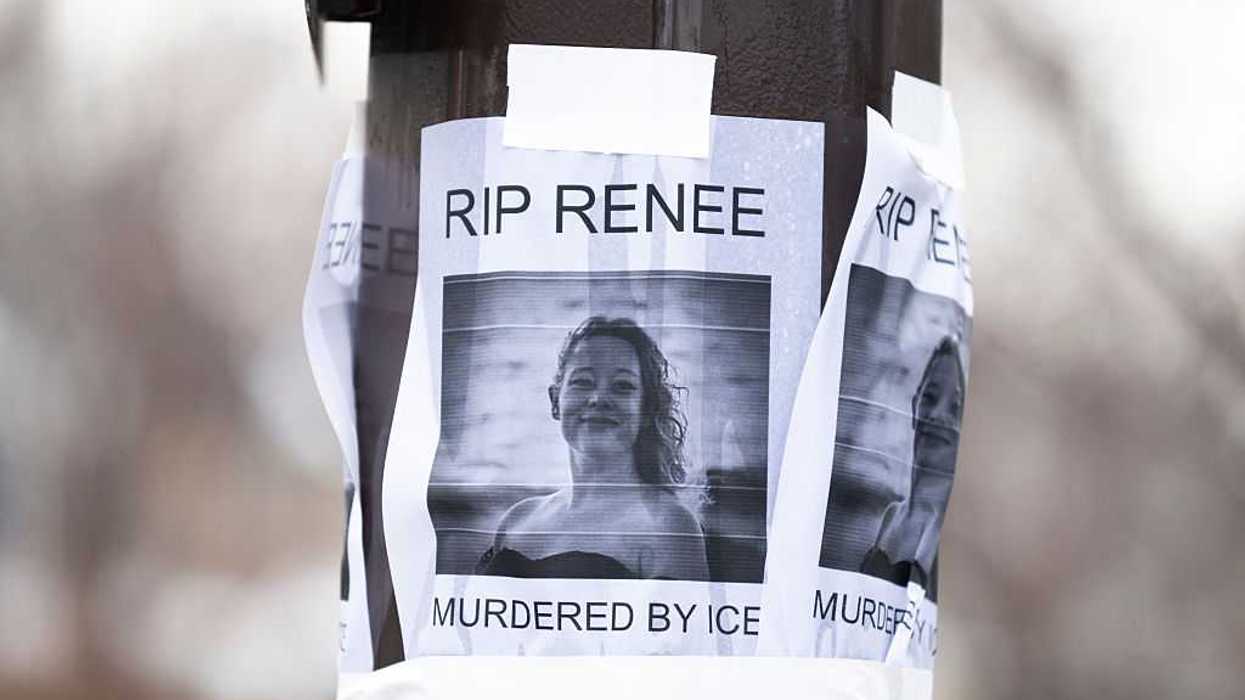
It is a warning meant for moments exactly like this one — moments when people insist they “don’t want to talk politics,” when discomfort becomes an escape hatch, and when silence becomes complicity. And today, that silence is being tested by the Trump administration’s response to the ICE officer shooting death of Renee Good in Minneapolis.
The administration has taken a position that is not only aggressive but also sharply contradicted by available evidence. Vice President JD Vance has repeatedly claimed that Good “tried to ram” an ICE officer with her vehicle and framed the shooting as “a tragedy of her own making.” He has also described Good as part of a “left‑wing network” and suggested she was “brainwashed,” offering no evidence for these assertions. President Trump and Homeland Security Secretary Kristi Noem have echoed these claims, insisting the shooting was an act of self‑defense and even labeling it “domestic terrorism.”
But verified videos contradict the administration’s central allegation that Good deliberately rammed an officer. Minnesota officials — including Gov. Tim Walz and Minneapolis Mayor Jacob Frey — have publicly disputed the federal narrative, saying the videos do not show Good driving her vehicle toward agents.
The facts are not settled, and the Trump Administration’s certainty is not supported by the available evidence.
And yet, many Americans — including people who consider themselves allies, advocates, or simply “good citizens” — are choosing silence. They say they don’t want to talk politics. They don’t want conflict. They don’t want to feel uncomfortable.
But discomfort is not the problem. Silence is.
MLK understood that injustice does not survive because of the loudness of those who commit it, but because of the quiet of those who look away. When a government advances an unverified narrative about a woman’s death — one contradicted by video evidence and disputed by state officials — silence is not neutrality. It is permission.
The Trump administration’s response to the shooting of Renee Good is not just a policy stance; it is a test of whether we are willing to confront power when it distorts the truth. It is a test of whether we will speak when the government blames a dead woman for her own killing before the investigation is complete. It is a test of whether we will challenge narratives that shift responsibility away from the state and onto the vulnerable.
And it is a test many people are failing — not because they support the administration, but because they prefer not to engage.
But MLK did not ask us to be comfortable. He asked us to be courageous.
He asked us to speak when speaking is hard. He asked us to confront injustice even when it is politically inconvenient. He asked us to refuse the easy refuge of silence.
The shooting of Renee Good — and the administration’s rush to justify it — demands that we honor that legacy. It demands that we reject the idea that “not talking politics” is a harmless personal preference. It demands that we recognize silence as a political act with real consequences.
This MLK Day, the question is not whether the administration will continue to push its narrative. It is whether the rest of us will continue to let silence do the work for them.
Hugo Balta is the executive editor of the Fulcrum and the publisher of the Latino News Network