

Seeking to harness the energy of popular opposition to established institutions, some defenders of democracy have sought a version of populism with an inclusive alternative to the MAGA movement’s xenophobic and homogenizing view of “the people.”
This year, the No Kings protests around the country and the ICE Out resistance in Minnesota have been important actions led by ordinary people to enact and protect democracy. Taken together, they show that inclusive populism faces a challenge: social media can mobilize people around shared identities, but democracy requires relations of trust that social media erode. Using inclusive populism to defend democracy thus requires attention not just to the symbols that mobilize people but also to the offline relationships and organizations that hold people together.
Two Styles of Movement
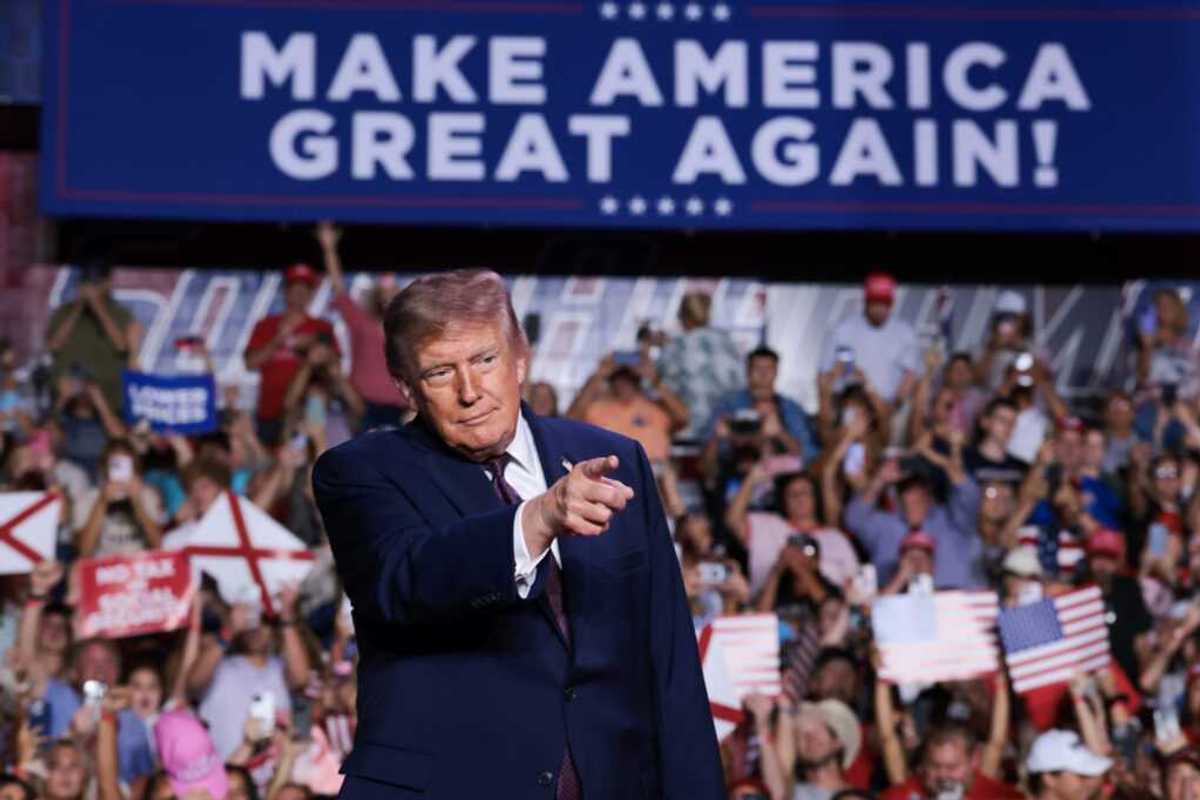
The Trump administration is trying to reshape both the US constitutional order and the contours of the American people. Trump’s executive order to overturn the birthright citizenship clause of the 14th Amendment is an effort to change who counts as an American citizen, practically and imaginatively. It is also plainly unconstitutional. Similarly, Trump’s campaign of mass deportations is a large-scale violation of the rule of law and the US Constitution, as when ICE authorized itself to enter homes without judicial authorization, in violation of the 4th Amendment.
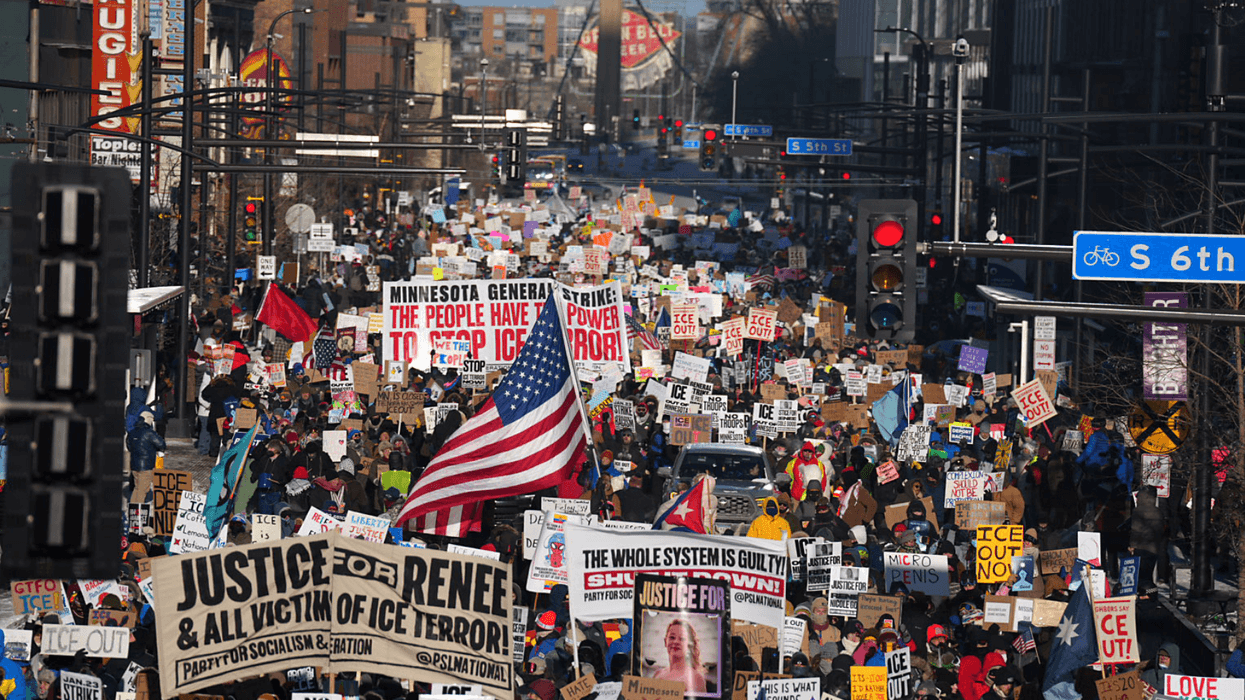
The No Kings and ICE Out protests respond to these events differently. The No Kings protests, beginning in June 2025, frame their messages around Trump’s undermining of the constitutional order. Organized primarily by chapters of 50501 and Indivisible, the No Kings actions use mass mobilization to show the breadth of opposition to Trumpism and are explicitly committed to nonviolence, deescalation of conflict, and opposition to property destruction. By contrast, ICE Out protests are framed in opposition to Trump’s racial remaking of “the people” and often engage in direct action and mutual aid rather than mass mobilization. They began in opposition to the Trump administration’s federalization of the National Guard to support immigration raids in major city centers and reached their peak (so far) in January 2026 with a massive citywide “economic blackout” and rally in Minneapolis. These efforts have typically been coordinated by immigrants’ rights groups and labor movement organizations, including union locals. Many people and organizations participate in both forms of resistance. Examining their respective strengths and weaknesses can inform how these two movements might complement each other to become the basis for a successful resistance movement.
The Power of Popular Identification
The No Kings protests claim to be the largest protests in the history of the United States. Critics argue that the protests amount to little more than a weekend picnic because of their minimal disruption and their lack of specific demands. Defenders argue that it is precisely because of these features that No Kings has been so successful.
To better understand this dynamic, we look to Ernesto Laclau, one of the most prominent theorists of contemporary populism. In his 2005 book On Populist Reason, Laclau argues that politics starts with what he calls a “democratic demand,” a specific demand for a particular thing by a defined group; for example, a group of residents demanding a bus route to their neighborhood. Laclau says when democratic demands are so specific, they don’t stimulate our political imagination. Instead, he argues, building power requires what he calls “popular demands,” which aggregate democratic demands into a larger claim made on behalf of a larger, less defined entity; for example, demanding the city provide better public services to everyone.
Finally, he argues, these demands then become properly populist and turn into an “empty signifier.” These empty signifiers represent collections of demands that have become disconnected from a particular policy. Instead, they serve primarily as a source of identity, like claiming to stand with ordinary people against the “Epstein class.” These claims are not totally empty of content, but also are hard to pin down. For example, many people identify as “workers” when they are business owners or retirees while demonizing immigrant workers as parasites.
Laclau’s concepts help us understand the success and the limits of the No Kings protests. The No Kings protests use empty signifiers—“No Kings Since 1776,” “Fighting Dictatorship Together”—that do not articulate policies or plans of action so much as a form of identity politics. These signs are tendentially empty but still have some content, as revealed by the demographics of protest attendance: research suggests No Kings attendees are overwhelmingly White, college-educated, Democratic voters who are middle-aged or older. No Kings offers a powerful way for this group to express their identity as opponents of MAGA and Trumpism. It’s not a coincidence that both supporters and critics of No Kings have referred to these gatherings as a kind of “group therapy” since they function to boost the morale and sense of agency of a group that feels disempowered.
The Limits of Popular Identification
This form of identity politics flourishes online. It’s not a coincidence that both 50501 and Indivisible, the convening organizations of No Kings, came out of viral posts on social media. These organizations have small staffs and no formal membership requirements; all it takes to join is liking the local Facebook group or resharing their Instagram post. They have shown they can mobilize huge numbers of people, but what binds the movement is largely a shared imaginative identification with relevant empty signifiers rather than a personal relationship to other specific individuals, institutions, or places.
In this, No Kings resembles many recent enormous protests that have ultimately fizzled or otherwise failed, which might serve as a warning about the limits of what large, amorphous groups can accomplish in politics. The warning could be especially applicable for groups organized through social media. As Kettering and Gallup’s Democracy for All Project shows, heavy social media use not only correlates with a sense of one’s own power to create change but also with a lower likelihood of endorsing democratic beliefs, like the idea that every citizen should have the right to vote. What’s more, heavy social media use correlates with increased feelings of social disconnection and loneliness. Connections forged online are both more ephemeral and less satisfying than those needed to deepen and defend democracy.
Democracy and Real People
If No Kings exemplifies Laclau’s empty signifier, we can analyze ICE Out in connection with his idea of democratic and popular demands. ICE Out’s demands are more specific to policies than the demands of No Kings; for example, organizers in Minnesota were directly demanding an end to the three-month-long immigration enforcement Operation Metro Surge. While popular identification plays an important role, these actions also connect more directly to specific individuals and local institutions, as when parents organized patrols around daycare centers to protect staff from immigration raids. Such actions are location-specific and connect individuals to each other. Community members engaged in mutual aid, delivered food to neighbors, and even flew to Texas to help bring home abductees released from detention.
Such practices are defenses of both democracy and vulnerable communities. They are also riskier than attending a No Kings rally, as demonstrated by the murders of Renee Good and Alex Pretti. But they are also intrinsically rewarding. As the author Will McGrath wrote about his experience driving kids to school when it wasn’t safe for their families to, “The reward is watching your city . . . organize in hyperlocal networks of compassion, in acephalous fashion, not because someone told you to, but because tens of thousands of people across a metro region simultaneously and instinctively felt the urge to help their neighbors.” These networks remain rooted in specific actions to support particular people and places. This is their strength but also their limit, making it hard to scale up the strategy to a national level.
Montgomery and Birmingham
In an interview after the day of “No Work, No School, No Shopping,” Minneapolis’s largest mobilization of resistance to ICE, JaNaé Bates Imari, the codirector of Faith in Minnesota and ISAIAH, discussed the Montgomery bus boycott of 1955–1956. Imari reflected on the ordinary people who sustained the bus boycott on a day-to-day basis: “They were taking responsibility for 381 days . . . to make sure that people could still get their kids from childcare, that they could still get to work, that folks could go and get their groceries—literally having to build the infrastructure as they went along. But they got to lead that.”
The success of these past resistance movements required both hyperlocal networks of compassion and spectacular gatherings that served as moments of polarization and identification. Inclusive populism cannot ignore the social media structures of our information environment, but if political success is to last longer than a viral meme, then the popular identification that flourishes online must find an anchor offline. Networks and political actions can connect participants to specific individuals, common communities, and concrete demands. The defense of democracy in the 21st century may depend on threading this needle.
Benjamin L. McKean is an associate professor of political science at The Ohio State University whose research concerns populism, global justice, and climate change.
This article was originally published as part of From Many, We, a Charles F. Kettering Foundation blog series that highlights the insights of thought leaders dedicated to the idea of inclusive democracy.