




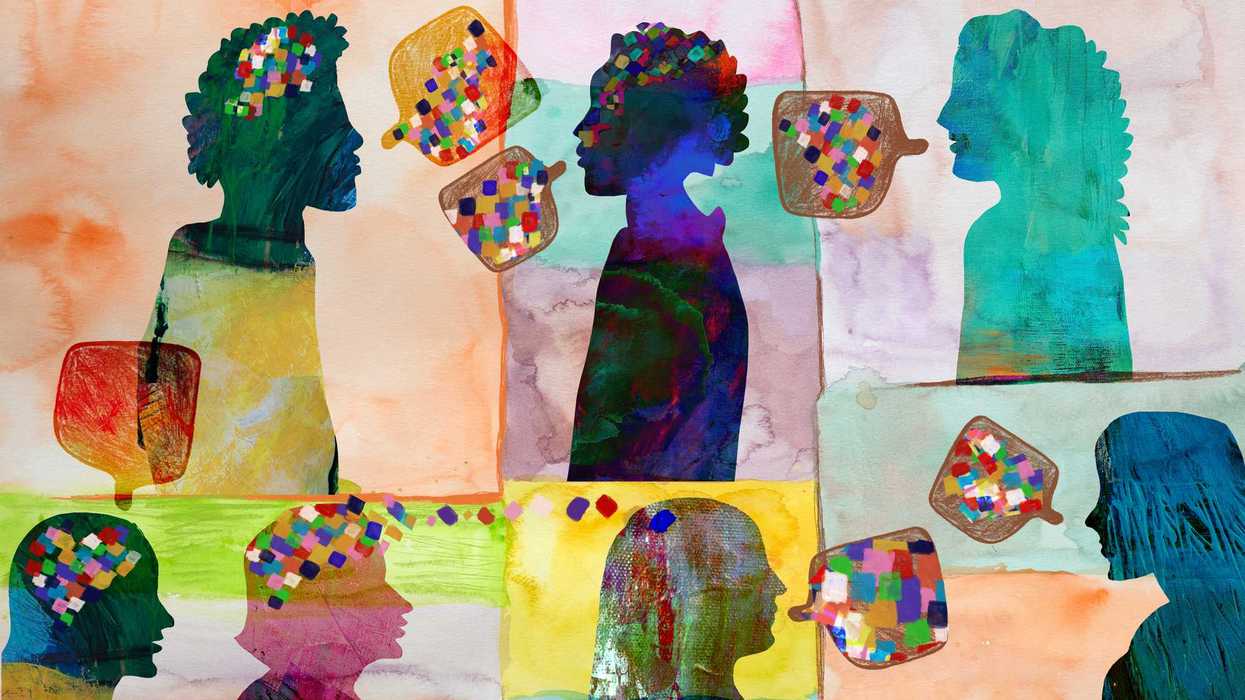
When Americans think of government, many feelings come to the surface—many of which include low trust, dissatisfaction, and fear. But translating feelings into action can be a lofty goal for government, and traditional processes often try to sanitize the elements of human emotion in exchange for progress. However, what if to create effective change in our communities, there was a focus on the feelings—harnessing the emotion and the stories and experiences that shape our lives. In Pennsylvania, this is exactly what PA Heart & Soul is doing.
Now, having operated in the state for a little over a decade, PA Heart & Soul has modeled how to successfully harness storytelling and emotion into actionable change. The program began in partnership with the PA Humanities Council and the national Community Heart and Soul organization. Their model is simple and straightforward: listen to the community and build.
In Carbondale, Heart & Soul came to the community not because anything was necessarily deeply wrong, but as Jen Danifo, Senior Manager of Programs for PA Humanities, describes it, “They were seeing a lot of apathy.” An old coal town, which saw its peak population in 1930 with 20,000 residents, has now dwindled down to a little under 10,000. The stories Heart & Soul gathered were largely of “people reminiscing about 'the good old days' or wondering when industry would come back.”
- YouTube youtu.be
But by posing the question, “What do you love most about Carbondale?” residents were able to reflect on what made Carbondale unique, wrestling with their own narratives of the town and rediscovering a sense of town pride. That renewed pride didn't go unnoticed — it rippled outward into the broader life of the community. When a city council seat opened up, a position that historically ran uncontested, eighteen people submitted applications. People weren't just proud of Carbondale again—they wanted to help shape its future.
Across the United States, having pride in our communities has increasingly become synonymous with the erasure of difficult histories and marginalized voices. The Community Heart & Soul process offers a different path—one that centers storytelling as a way to protect local histories and transform how people relate to one another and the places they call home. In the Greater Carlisle area of Pennsylvania, one of the original pilot communities for the initiative, this approach revealed how deeply community identity is tied to stories that have long gone unheard.
When the Community Action Network in Greater Carlisle joined the Heart & Soul pilot in 2016, the effort was motivated by a desire to address civic division across the region. Using the Community Network Analysis tool, volunteers began asking critical questions about the cultural fabric of the area: whose voices were being amplified, and whose had historically been left out? Through story gathering, volunteers interviewed residents across the community, including the Gumby sisters, longtime residents of Mount Holly Springs. During these conversations, it emerged that their grandfather—a former enslaved person and Civil War soldier—had built and was pastor of a small African American church in town, founded in the 1870s. This revelation led to the rediscovery of Mt. Tabor AME Zion Church and Cemetery.
The church, which, when found, was cloaked in poison ivy as a protective barrier, led to the community rallying together to preserve the site, and the church is now in the process of being registered to the National Register of Historic Places with the National Park Service. The discovery and organizing within the community would not have been possible without the tools, empowerment, and frameworks employed by Heart & Soul.
Change is emotional. It requires a reckoning with and acknowledgment of the past, and ultimately a decision to move forward. But with the right frameworks—ones that center the lived experiences, stories, and emotions of people within a community—there is a path toward positive cultural shifts. Systems and tools do not have to be removed from humanity; as PA Heart & Soul has shown, centering humanity within them can be the most productive approach.
Hollie Russon Gilman is a senior fellow at New America's Political Reform program.












The President Invited Iran to Bomb My Home