


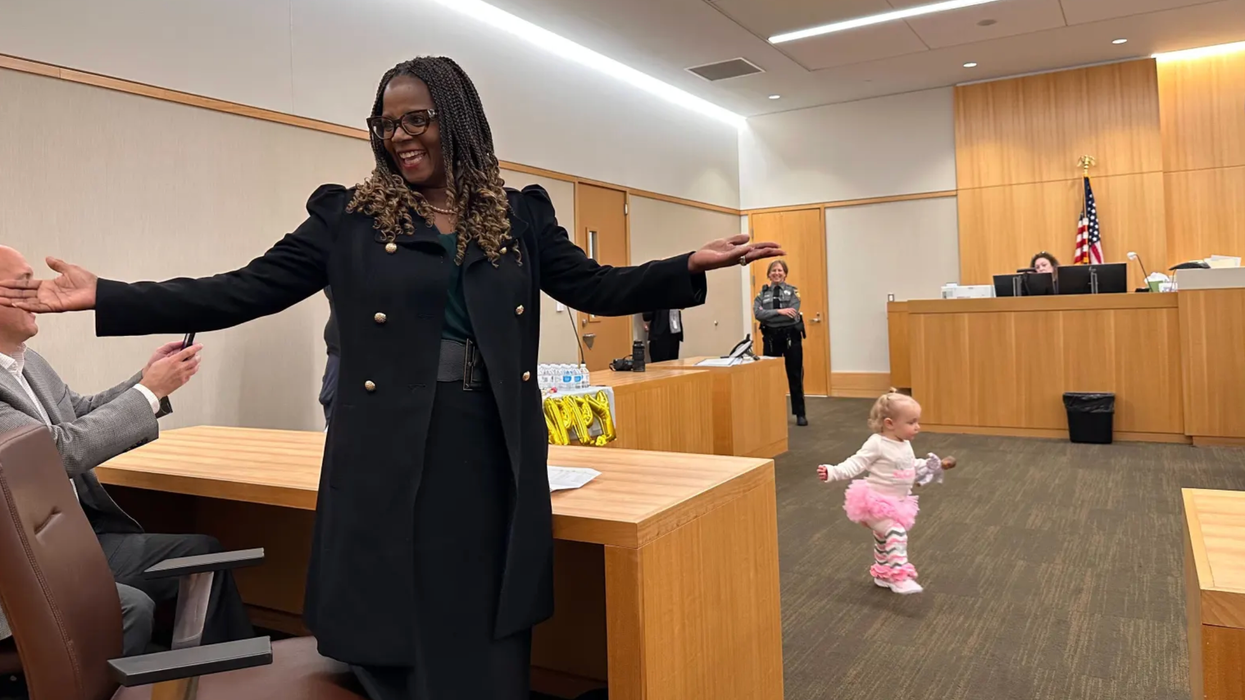
In the past 21 years, I’ve fostered and adopted children with complex medical and developmental needs. Last year, after a grueling 2,205 days navigating the DCF system, we adopted our 7yo daughter. This year, we were the last family on the docket for National Adoption Day after 589 days of suspense. While my 2 yo daughter’s adoption was a moment of triumph, the cold, empty courtroom symbolized the system’s detachment from the lived experiences of marginalized families.
National Adoption Day often serves as a time to highlight stories of joy and family unification. Yet, behind the scenes, the obstacles faced by children in foster care and the families that support them tell a more complex story—one that demands attention and action. For those of us who have navigated the foster care system as caregivers, the systemic indifference and disparities experienced by marginalized children and families, particularly within BIPOC and disability communities, remain glaringly unresolved.
The recent report from the state’s Office of the Child Advocate was no surprise at the lack of progress state agencies have made since the high-profile deaths of 2-year-old Liam Rivera and 10-month-old Marcello Meadows. My own journey—as a parent, disability advocate, guardian ad litem, and foster parent for over two decades—exemplifies the enduring challenges within Connecticut’s Child Protective Services accountability and similar systems nationwide.
The presiding judge in our case advised us to consider walking away from our daughter after DCF reversed her medical complexity diagnosis to a “normal/typical” one.
Walk away? To that, I offered a response that not many of us endeavor or are allowed to make. Here’s just part of what I told the judge.
My 2 year old has been a little sister for 589 days and we’re so happy she wasn’t relocated to another stranger with preadoptive pedigree as was adversely intended by CPS.
Your honor, I need to make you aware of who we are because we are not unicorns, but we have been a marginalized Latino family for years. We’ve been berated by CPS, chastised and told that we’ve overstepped our role by seeking out specialists for medically complex children in our care.
We’ve had our commitment questioned constantly by DCF supervisors. DCF has unnecessarily moved infants to pre=adoptive privileged families when we’ve been a pre-adoptive family for decades.
If we are all here under the premise of what is in the best interest of the child, when did this administration decide that the best interest was to become the burden of the child?
To suggest that it may perhaps be best for us, as the foster parents, to walk away from her when we’re the only family she’s known since she was 2 days old, because we questioned DCF’s decision when overriding her pediatrician and 14 other providers, regarding her medical complexities is absolutely not in her best interest.
Our family has endured three administrations, commissioners and federal oversight, yet our children in care remain the marginalized of the marginalized.
Thank you for your time and integrity. We will remain committed and a family ever after despite and in spite of systemic indifference.”
As a Latino family, we have faced constant scrutiny and dismissal of our expertise as caregivers — a certified educator and licensed nurse. The system’s bias often prioritizes privileged, pre-adoptive families over long-term, committed foster families from marginalized communities. BIPOC and disability communities receive inadequate resources and training, perpetuating cycles of neglect and systemic inequality.
In addition, judges and caseworkers lack consistency and accountability, and there is insufficient oversight of decisions that profoundly impact children’s lives. My daughter had more than eight caseworkers, several supervising workers, a handful of judges, three court systems and multiple assigned attorneys and a surrogate parent.
In Connecticut, at least five children enter foster care every day, contributing to a system that has consistently housed over 4,000 children annually for more than two decades. Despite these persistent numbers, there is a lack of compelling data and reporting to address a host of challenges, including the needs of children with developmental, physical and invisible disabilities, disproportionate institutionalization, the housing insecurities faced by youth aging out of the system, and the dangers posed by undetected predators enabled by plea deals and inadequate judicial communication.
To truly serve the best interests of children, the child welfare system must adopt a proactive, equity-driven approach. It must strengthen accountability and oversight by establishing independent oversight committees to review and monitor the decisions of DCF caseworkers, judges, and attorneys. It must ensure transparency in case handling and outcomes, and provide comprehensive, culturally competent training for foster and adoptive families, particularly those from BIPOC and disability communities. It should equip families with the tools needed to advocate effectively for their children.
DCF should also enhance collaboration with the medical and educational systems, integrating wrap-around medical and educational experts into decision-making processes to ensure that children’s developmental and healthcare needs are met by providers that actually know and treat the child.
The system should also promote community-centered support: Foster parent and kinship care networks should be prioritized, with resources allocated to support mentorship, education, and collaboration among all caregivers.
Lastly we must address inequities head-on and commit to eliminating racial and ethnic disparities in foster care outcomes through targeted interventions, lived experiences experts and equitable resource distribution.
The DCF’s stated mission to “partner with communities and empower families” must move beyond rhetoric to actionable, measurable outcomes. As caregivers, leaders, and advocates, we must demand a system that values children not as burdens, but as individuals deserving of love, protection, and opportunity.
On National Adoption Day, and every day thereafter, honor the resilience of foster and adoptive families by challenging systemic inequities and working collectively toward an accountable child welfare system that truly serves all children—especially the most vulnerable among us. From the foundation, we must build a child centered future where every child finds a family and protection, every family receives the support and service, and systemic indifference becomes reason for dismissal.
What’s Behind the Smiles on National Adoption Day was originally published by The CT Mirror and is republished with permission.











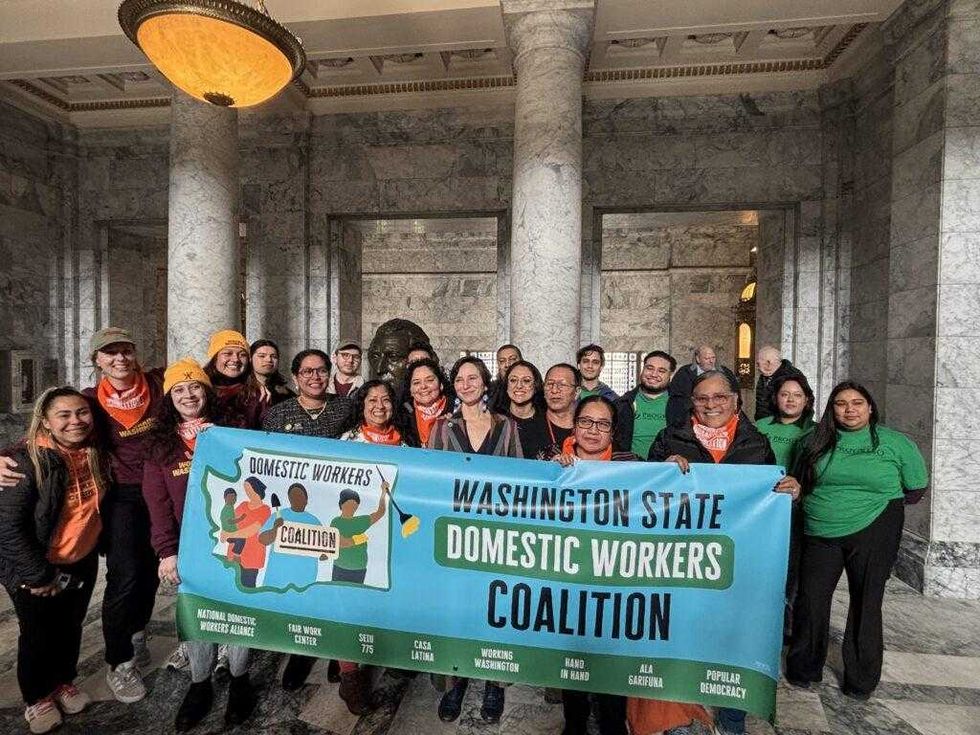 State Sen. Rebecca Saldaña, center, stands with members of the Washington State Domestic Workers Coalition at the state Capitol on Feb. 28, 2026. The Domestic Workers Bill of Rights passed in the House that day, before being signed into law in March. (Photo courtesy of Casa Latina)