


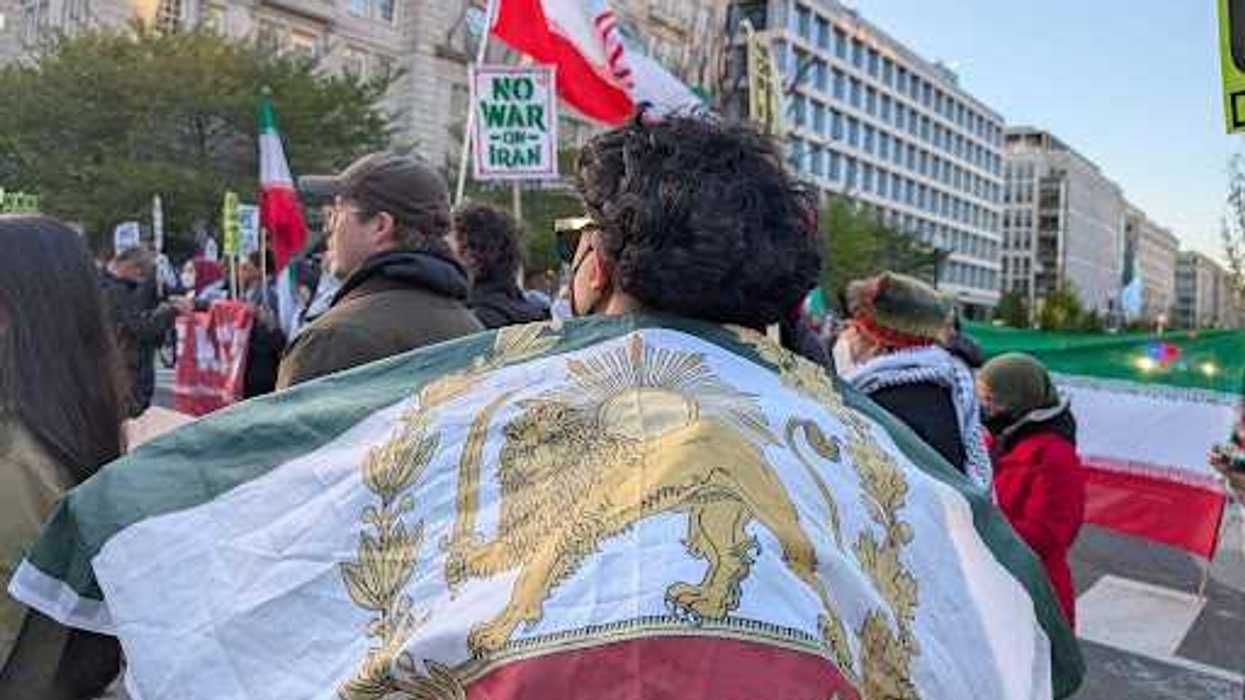
WASHINGTON - At a recent “No Kings” rally outside the U.S. Capitol, a few demonstrators waved a large Iranian flag.
The U.S. and Israel had launched the war in Iran exactly one month earlier. As protestors chanted, a woman, carrying the old flag of Iran — from before the 1979 revolution — approached the bearers of the modern flag and yelled “traitor!” They then repeatedly hurled insults at each other, yelling “traitor” back and forth.
Since the war’s start, a sharp political schism has grown among the Iranian diaspora. While many Iranian Americans have fervently opposed the war, worried about the destruction it has caused in Iran, some have welcomed it, often viewing it as a necessary vehicle for regime change.
Many of those who support the war are part of a growing movement calling for the restoration of the shah, the monarchy that ruled Iran before its 1979 revolution. As the war broke out, many in this movement celebrated in the streets, waving the pre-revolution flag, which for many has become a symbol of Iran’s former monarchy. The two sides have reacted differently to the 2-week cease-fire announced by President Donald Trump on Tuesday.
Fatemeh Keshavarz, an Iranian American writer who strongly opposes the war, said she breathed a “sigh of relief” when the cease-fire was announced. Earlier that day, in a post on Truth Social, Trump had warned that “a whole civilization will die tonight” if a deal between the warring nations was not reached by 8 pm. He had threatened to bomb large parts of the country.
However, Keshavarz remained skeptical of the cease-fire.
“I am worried that they would just use that time to replenish bombs and guns,” said Keshavarz. “They have done this before to other countries.”
Ghazal Jahanshah, who demonstrated at an anti-war protest the day after the cease-fire was announced, echoed a similar sentiment.
“My sister called me yesterday [before the announcement], and she said maybe it’s the last time we talk. I don’t know,” she said. She expressed joy that Trump didn’t carry out his threat but said, “I don’t think a cease-fire means a cease-fire.”
However, many who had supported US intervention, such as Ben Kristof Jamshidi, were disappointed by the cease-fire. They felt that the Trump administration had abandoned its promise of regime change.
“I was like, they’re leaving us with this regime?” Jamishidi said. “If they give the regime some room to breathe, they’re just going to mass execute people.”
After the assassination of Iran’s Supreme Leader, Ayatollah Ali Khamenei, at the beginning of this war, his son, Mojtaba Khamenei, took over. Many analysts expect him to continue his father’s hardline approach.
However, notably, both supporters and opponents of the war expressed doubt that the cease-fire would hold. Despite Jamshidi’s initial disappointment in the cease-fire, he now expects another advance by Trump to oust the current regime before the two-week end date. He said this brings him a sense of relief.
“First of all, for my own mental health, that’s what I’d like to believe. But at the same time, has he ever revealed his plan to the whole world before doing anything?” Jamshidi said.
He explained that he has spent nearly half his life under the regime’s dictatorship, and knows “how bad it is.”
“We really want it gone by any means necessary, and if that means bombs, then so be it,” he added.
Others who want another shah in Iran argued that the war needs to start again.
“We don’t see this war as a war,” said Peyman Bakhshayesh, who supports the shah’s return. “It was rather a rescue operation.”
Niki Akhavan, an Iranian American professor at Catholic University, attributed the rise in pro-war sentiment among Iran’s diaspora to the thousands of peaceful demonstrators the Iranian regime killed during mass protests in Iran in late December and January. She explained that, in her view, a sense of hopelessness combined with what appeared to be online propaganda campaigns propelled the rise of the pro-shah movement.

The National Iranian American Council (NIAC) commissioned Zogby Analytics to conduct a mixed-mode online and live-operator telephone survey of 508 Iranian-Americans between March 24-27, 2026. www.iranianamericanpoll.org
NOTE: Based on a confidence interval of 95%, the margin of error for 508 is +/- 4.4 percentage points.
A recent poll conducted by the National Iranian American Council found that nearly a third of Iranian Americans supported the war. That was a decrease from the first days of the war, when 49% of Iranian Americans surveyed said they either strongly or somewhat supported the war. At that time, 49% also opposed the war, marking an almost exactly even political division just over a month ago.
The same study found that the primary reason for this decline in support was the “killing and injuring of innocent civilians,” with 61% of participants citing this. According to the U.S.-based human rights group Human Rights Activist News Agency, around 1,600 innocent civilians were killed before the cease-fire.
The world now looks to an uncertain future for Iran. The sharp divisions within its diaspora continue, although they have diminished. Still, for many Iranians like Jahanshah, one desire for their homeland remains across ideologies.
“Whatever will happen, I hope that it comes from the people. That’s all,” she said.
Jamie Gareh is a graduate student at Medill.







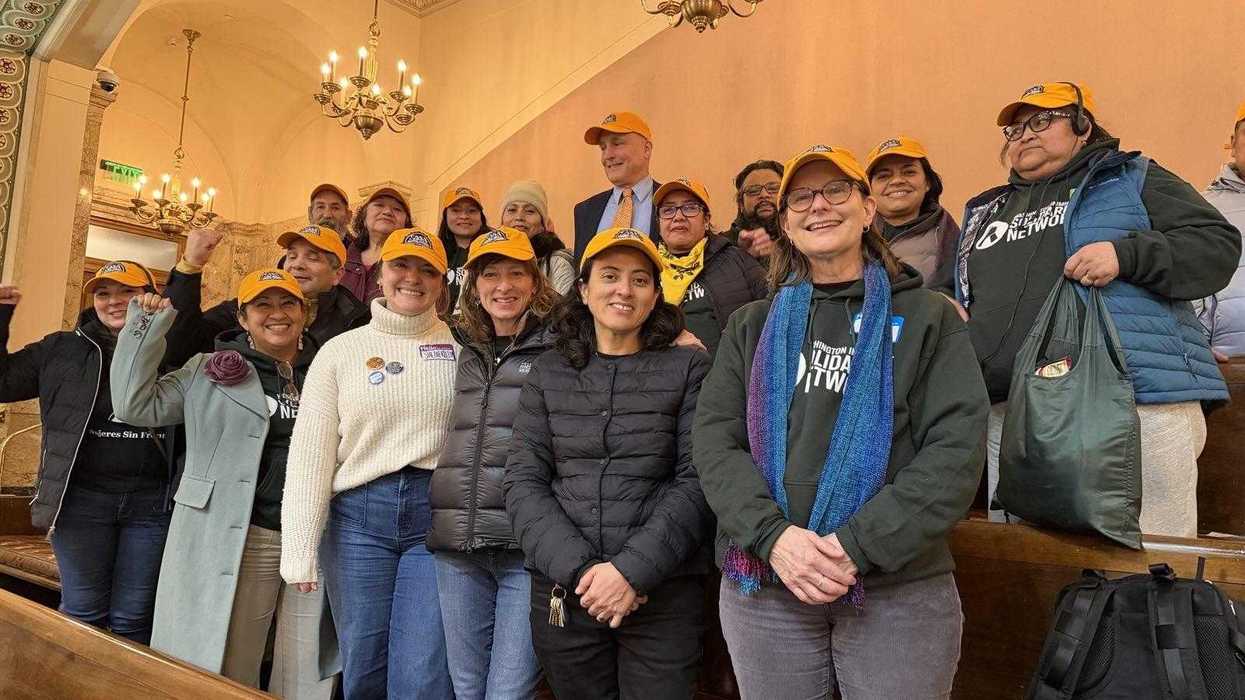
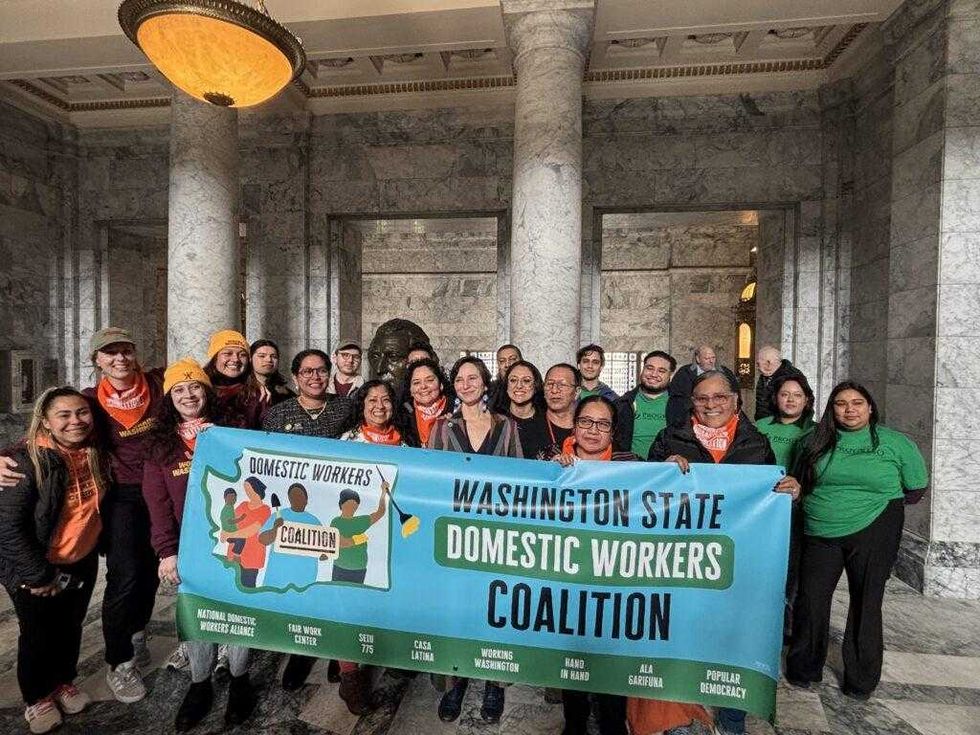 State Sen. Rebecca Saldaña, center, stands with members of the Washington State Domestic Workers Coalition at the state Capitol on Feb. 28, 2026. The Domestic Workers Bill of Rights passed in the House that day, before being signed into law in March. (Photo courtesy of Casa Latina)


The President Invited Iran to Bomb My Home