
Skip to content
Search

Latest Stories

Follow Us:
Top Stories

Alderwoman Milele A. Coggs: A Defining Force in Milwaukee

News

Alderwoman Milele A. Coggs: A Defining Force in Milwaukee

Alderwoman Milele A. Coggs

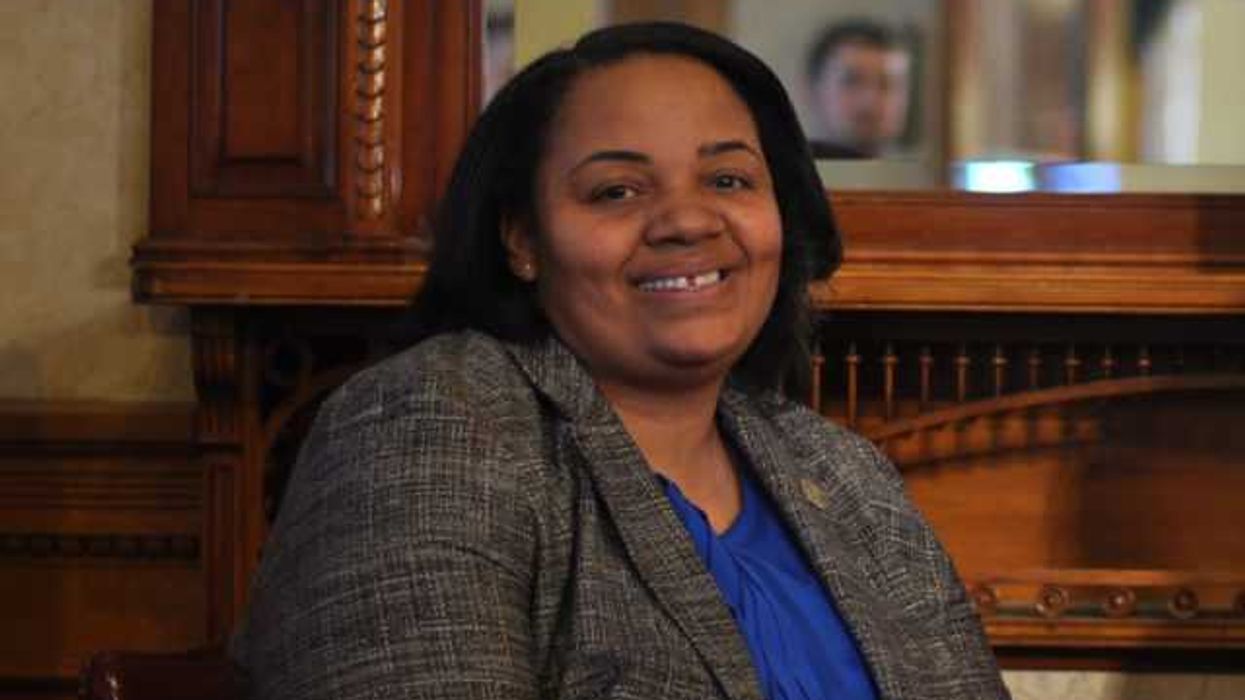
Alderwoman Milele A. Coggs has been a defining force in Milwaukee civic life for nearly two decades, combining deep community roots with a record of public service grounded in equity, cultural investment, and neighborhood empowerment. Born and raised in Milwaukee, she graduated from Riverside University High School before earning her bachelor’s degree, cum laude, from Fisk University, where she studied Business Administration and English.

The Fulcrum spoke with Coggs about the work she leads, including eliminating food deserts in her district on an episode of The Fulcrum Democracy Forum.


- YouTube youtu.be

Coggs made history early in her career: she became the youngest woman ever elected to the Milwaukee Common Council, representing the city’s 6th District. She first assumed office in 2008 and has since secured multiple re‑elections, most recently winning another term in April 2024. Her professional background as an attorney and political consultant has shaped her approach to governance, emphasizing both legal rigor and community-centered policymaking.

Over the years, Coggs has emerged as a leading advocate for cultural investment and creative community development. In 2025, she was selected to receive the Creative Community Champion Award from Create Wisconsin, recognizing her “outstanding advocacy and support of arts and cultural investment, engagement, and access for all Milwaukeeans.” As chair of the City of Milwaukee Arts Board, she has championed initiatives that expand artistic opportunity and celebrate the city’s cultural diversity.

Her leadership extends beyond arts and culture. Coggs has long been a prominent voice on issues of economic justice, neighborhood revitalization, and participatory democracy. That work was featured in The 50: Voices of a Nation, The Fulcrum’s civic‑storytelling series. In the Wisconsin episode, she discussed the city’s evolving debates around participatory budgeting, public safety, and community‑driven alternatives to traditional policing — offering insight into how local leaders navigate demands for accountability and reform.

- YouTube youtu.be

Throughout her tenure, Coggs has remained guided by a core belief she often repeats: “It is the responsibility of us all to give back to the community that helps to make us who we are.” Her career reflects that ethos — a blend of public service, cultural stewardship, and unwavering commitment to the people and neighborhoods of Milwaukee.

Do you have an idea of who we should feature in an upcoming episode of The Fulcrum Democracy Forum? Please send your suggestions to newsroom@fulcrum.us

Hugo Balta is the executive editor of the Fulcrum and the publisher of the Latino News Network

Read More

March in memory of George Floyd

Black History Month challenges America to confront how modern immigration and ICE policies repeat historic patterns of racial exclusion and state violence.

Stephen Maturen/Getty Images

Black History Month 2026: When Memory Becomes a Moral Test

Imagine opening a history textbook and not seeing the faces of key contributors to America's story. Every February, America observes Black History Month. It started in 1926 as Negro History Week, founded by historian Carter G. Woodson, and was never meant to be just a ceremony. Its purpose was to make the nation face the truth after erasing Black people from its official story. Woodson knew something we still struggle with: history is not only about the past. It reflects our present.

We celebrate Black resilience, yet increasing policies of exclusion expose a deep national contradiction. Honoring Dr. King’s dream has become a hollow ritual amid policies echoing Jim Crow and the resurgence of surveillance targeting Black communities. Our praise for pioneers like Frederick Douglass rings empty while state power is deployed with suspicion against the same communities they fought to liberate. This contradiction is not just an idea. We see it on our streets.

Keep ReadingShow less
ICE Shooting of Renee Good Revives Kent State’s Stark Warning

Police tape and a batch of flowers lie at a crosswalk near the site where Renee Good was killed a week ago on January 14, 2026 in Minneapolis, Minnesota.

Getty Images, Stephen Maturen

ICE Shooting of Renee Good Revives Kent State’s Stark Warning

On May 4, 1970, following Republican President Richard Nixon’s April 1970 announcement of the expansion of the Vietnam War into Cambodia, the Ohio National Guard opened fire on a group of Kent State students engaged in a peaceful campus protest against this extension of the War. The students were also protesting the Guard’s presence on their campus and the draft. Four students were killed, and nine others were wounded, including one who suffered permanent paralysis.

Fast forward. On January 7, 2026, Renee Good, a 37-year-old U.S. citizen, was fatally shot by United States Immigration and Customs Enforcement (ICE) agent Johathan Ross in Minneapolis, Minnesota. Ross was described by family and friends as a hardcore conservative Christian, MAGA, and supporter of Republican President Donald Trump.

Keep ReadingShow less
It’s The Democracy, Stupid!

Why democracy reform keeps failing—and why the economy suffers as a result. A rethink of representation and political power.

Getty Images, Orbon Alija

It’s The Democracy, Stupid!

The economic pain that now defines everyday life for so many people is often treated as a separate problem, something to be solved with better policy, smarter technocrats, or a new round of targeted fixes. Wages stagnate, housing becomes unreachable, healthcare bankrupts families, monopolies tighten their grip, and public services decay. But these outcomes are not accidents, nor are they the result of abstract market forces acting in isolation. They are the predictable consequence of a democratic order that has come apart at the seams. Our deepest crisis is not economic. It is democratic. The economy is merely where that crisis becomes visible and painful.

When democracy weakens, power concentrates. When power concentrates, it seeks insulation from accountability. Over time, wealth and political authority fuse into a self-reinforcing system that governs in the name of the people while quietly serving private interests. This is how regulatory agencies become captured, how tax codes grow incomprehensible except to those who pay to shape them, how antitrust laws exist on paper but rarely in practice, and how labor protections erode while corporate protections harden. None of this requires overt corruption. It operates legally, procedurally, and efficiently. Influence is purchased not through bribes but through campaign donations, access, revolving doors, and the sheer asymmetry of time, expertise, and money.

Keep ReadingShow less
New York City Mayor Zohran Mamdani.

New York City Mayor Zohran Mamdani speaks at Grand Army Plaza in Brooklyn on January 02, 2026 in New York City.

Getty Images, Spencer Platt

The Antisemitic Campaign Against Mamdani

The campaign against Mamdani by some conservative Jewish leaders and others, calling him antisemitic, has just reached a new level with accusations of antisemitism from Israel.

From almost the beginning of his campaign, Mamdani has faced charges of antisemitism because he was critical of Israel's conduct of the war in Gaza and because he has spoken against the proclamation that Israel is a "Jewish state." The fact that his faith is Islam made him an easy target for many.

Keep ReadingShow less