






The economic pain that now defines everyday life for so many people is often treated as a separate problem, something to be solved with better policy, smarter technocrats, or a new round of targeted fixes. Wages stagnate, housing becomes unreachable, healthcare bankrupts families, monopolies tighten their grip, and public services decay. But these outcomes are not accidents, nor are they the result of abstract market forces acting in isolation. They are the predictable consequence of a democratic order that has come apart at the seams. Our deepest crisis is not economic. It is democratic. The economy is merely where that crisis becomes visible and painful.
When democracy weakens, power concentrates. When power concentrates, it seeks insulation from accountability. Over time, wealth and political authority fuse into a self-reinforcing system that governs in the name of the people while quietly serving private interests. This is how regulatory agencies become captured, how tax codes grow incomprehensible except to those who pay to shape them, how antitrust laws exist on paper but rarely in practice, and how labor protections erode while corporate protections harden. None of this requires overt corruption. It operates legally, procedurally, and efficiently. Influence is purchased not through bribes but through campaign donations, access, revolving doors, and the sheer asymmetry of time, expertise, and money.
Faced with this reality, the standard response has been to call for democracy reform. The list is familiar and often sensible: Campaign finance reform, term limits, ending gerrymandering, reforming or abolishing the Electoral College, expanding ballot access, moving Election Day to a weekend, ranked-choice voting, civic education, and lowering barriers to third parties. These proposals are debated endlessly, polled favorably, and occasionally enacted in narrow or local forms. Yet at the national level, progress is glacial at best and regressive more often than not. Decades pass, crises deepen, and the same reforms remain perpetually just out of reach.
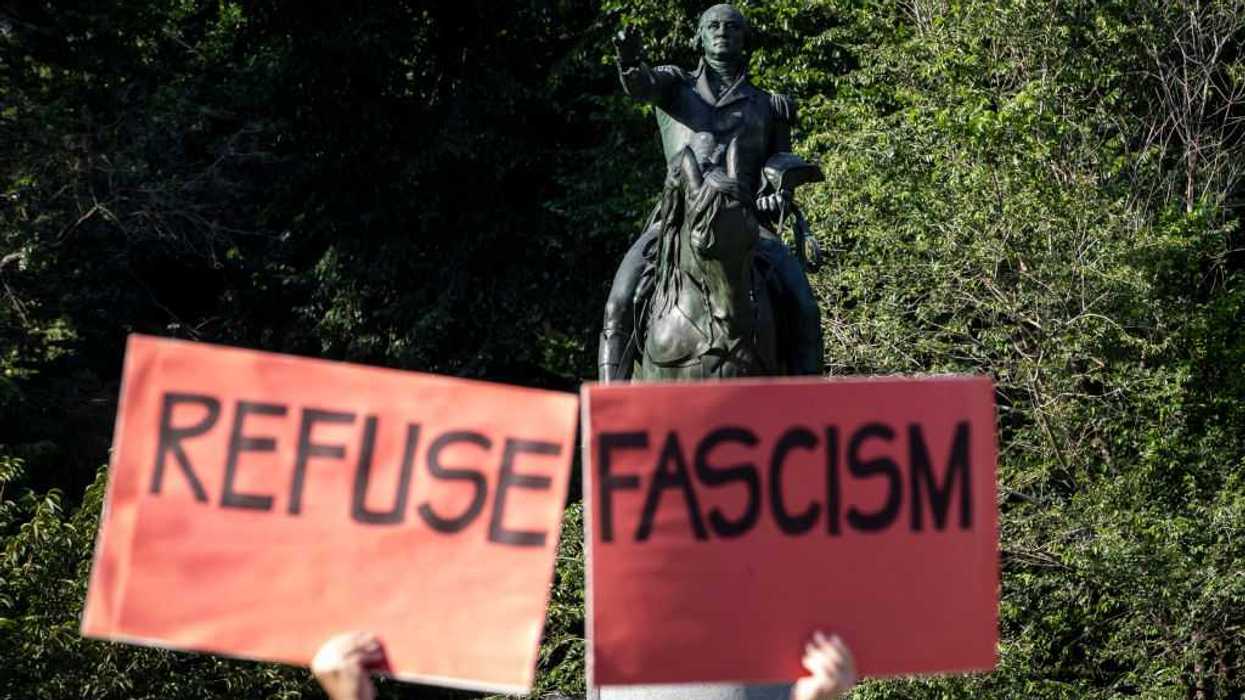
This failure is not due to a lack of intelligence, effort, or public support. It most certainly is not due to a lack of demonstrating. This failure is deeply structural, and it is long-standing. Worse, the strategy for correcting is not only Herculean: It is downright irrational.
And here is why: Each of the sought reforms must be enacted by the very people who benefit from their absence. They require sitting politicians to reduce their own power, their own job security, their own fundraising advantage, and their own control over the political landscape. In theory, representatives are supposed to act against such incentives in the public interest. In practice, incentives always win and always win big. Expecting a political class to dismantle the machinery that sustains it is not harmless idealism: It is dangerous madness.
Even when reform efforts gain traction, the system has developed sophisticated immune responses.
Bills are stalled in committee, stripped of teeth through amendments, underfunded during implementation, challenged in court, or quietly reversed years later.
Independent redistricting becomes nominal. Campaign finance reform becomes symbolic. Voting reforms become administrative labyrinths. Each fix introduces new complexities that require further fixes, multiplying points of failure. The task becomes Sisyphean not only because there are so many broken parts but because the people entrusted with fixing them have every reason to ensure that the fixes never happen.
This is why the prevailing strategy of restoring democratic health is absurd.
It assumes that the problem is a long list of bad rules rather than a bad role. It treats representatives as flawed decision-makers who need better constraints, when in fact the problem is that they are decision-makers at all. As long as representatives retain discretionary power over legislation, the incumbent veto will remain intact. Because these representatives will always block, delay, dilute, or derail reforms that threaten their position. It really is as simple as that. And no amount of civic virtue training or procedural tinkering can overcome this basic, stubborn fact.
If democracy is to be restored, the move must be far more radical and much more precise.
Instead of trying to fix every downstream failure, we must change the architecture at the source. The question is not how to persuade representatives to act better but how to render their incentives irrelevant.
That requires redefining representation itself.
Imagine a system in which representatives do not deliberate, negotiate, or exercise independent judgment. Imagine officeholders who do not “lead,” compromise, or triangulate between donors, party leadership, and public opinion. Their sole function would be to transmit the verified will of their constituents into legislative votes, exactly as expressed, without modification or discretion. In this model, representatives are not policymakers. They are avatars.
An avatar of the people does not decide what is good for the public. An avatar executes what the public has decided. Once representation is reduced to faithful transmission, the logic of political capture collapses.
Campaign finance loses its leverage because there is nothing left to buy. Gerrymandering loses its power because district manipulation no longer changes outcomes. Party discipline weakens because there is no independent judgment to discipline. Lobbying is forced into the open, aimed at persuading the public rather than influencing a handful of gatekeepers behind closed doors.
In such a system, the familiar list of democracy reforms becomes strangely irrelevant. Ranked-choice voting, third-party access, term limits, campaign finance reform, and even Electoral College reform all presume a system in which representatives act as autonomous agents. When representatives are avatars, the focus shifts from managing elite behavior to enabling collective decision-making. Democracy ceases to depend on the virtue, courage, or integrity of a political class and instead rests on the accuracy, transparency, and accessibility of public input.
One may call this a pipe dream or utopian optimism. And it may very well seem to be, so given where our democracy sits today, buckled down by a burden it can no longer support. But what it is not – which is what today’s democracy reformers are – is irrational or incoherent or beyond hope.
Because a call for a system that strips representatives of agency begins with a basic reality: systems function according to incentives, not ideals, not aspirations, and certainly not abstract notions of right and wrong. Our current system asks citizens to place their fate in the hands of individuals who must continually act against their own interests in order to serve the public. That is a pipe dream and rank utopian optimism. In contrast, the avatar model removes that demand entirely. It does not require better people. It requires adherence to the already built machinery of democracy.
Our economic suffering, then, is neither mysterious nor is it a first cause. It flows from a political system that has drifted away from genuine popular control while maintaining the outward forms of democracy. Efforts to repair that system from within have failed because power does not voluntarily constrain itself. It must be structurally bypassed.
When representatives become avatars, democracy is no longer something we ask for, protest for, pine for, or hope for. It becomes something that operates mechanically, relentlessly, and inescapably. It becomes an immanent political physics. And once that happens, everything else begins to change.
Ahmed Bouzid is the co-founder of The True Representation Movement.










The President Invited Iran to Bomb My Home