

Independents are so hot right now — and will be for the foreseeable future.
According to a major survey commissioned by CNN, nearly half of all Americans — 44% — call themselves independents while only 28% and 27%, respectively, identify as Republicans or Democrats.
I have a theory as to why. But I have to throw some fancy terms to explain it.
“Independent” is what students of semiotics call an “empty signifier,” a term that has very little, if any, substantive content. If you describe yourself as an independent, I still have to ask you additional questions about what you actually believe. All you’ve told me to that point is that you reject a party label (believe me, I sympathize).
It’s hard for young people to believe today, but Republican and Democrat labels used to work much the same way. A little more than a generation ago if you claimed to be on one side or the other, I’d have to ask a follow-up question to figure out if you were conservative or liberal, pro-life or pro-choice, for gun rights or against, etc.
Today, the same goes for independents, which used to be code for “swing voters” or “centrists.” Not anymore. According to the survey, some are “Democratic Lookalikes” (24%) and others are “Republican Lookalikes” (12%). They reject the label but ultimately vote like they don’t. The rest are among “The Checked Out” (27%), “The Disappointed Middle” (16%) and the “Upbeat Outsiders” (22%). The demographics and ideologies of these groups vary widely. In short, calling yourself an independent says something — that you don’t like the party labels — but it isn’t a one-size-fits all ideological or political signifier.
That brings me to an even more pretentious term: “institutional isomorphism.” This one describes the process by which seemingly different organizations become similar to each other.
Fast food chains that once had a very specific niche now routinely expand their offerings to capture market share out of their lane. These days you can get espresso with your breakfast wrap from Dunkin’ and get doughnuts from Starbucks. The History Channel, A&E and MTV once had very specific programming, now they all peddle reality shows and generic entertainment.
The reason why independent became an empty signifier is that the Republican and Democratic parties — and the broader right and left — succumbed to institutional isomorphism.
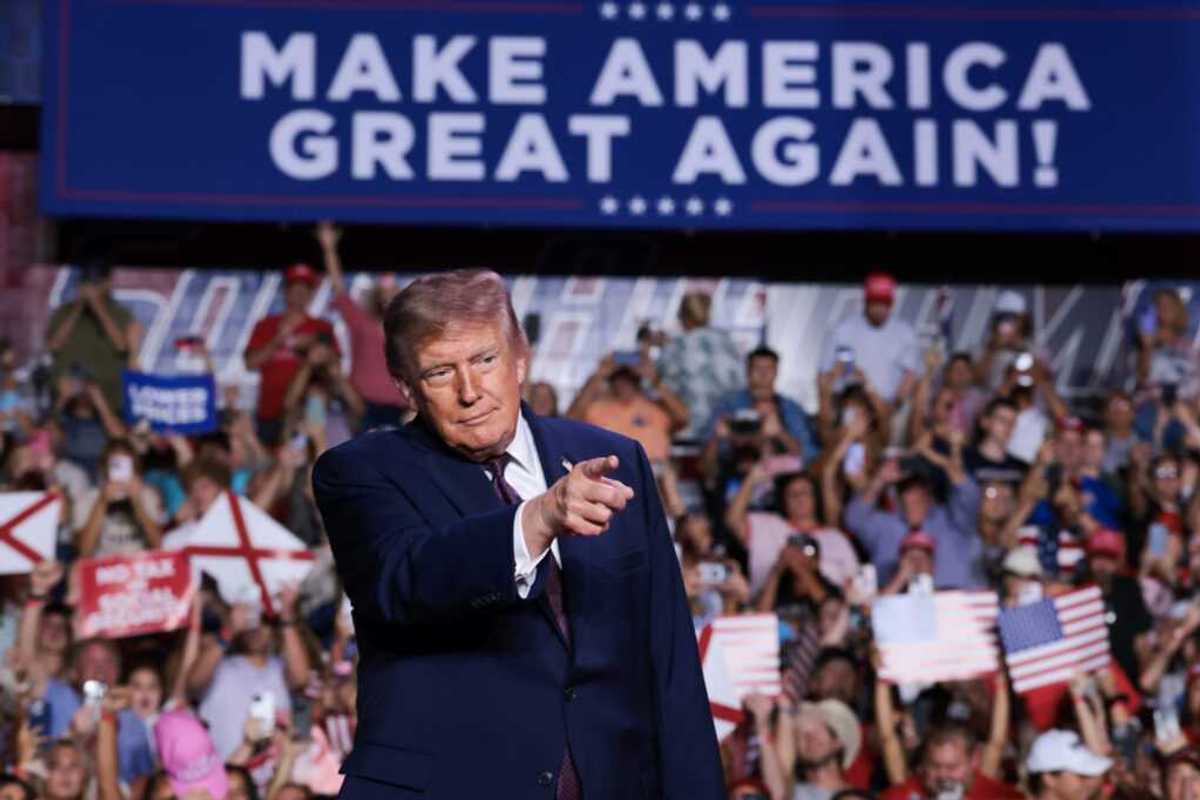
Consider the vast constellation of institutions associated with the right — Fox News and its cable imitators, as well as most right-wing radio and websites, groups like the NRA, CPAC, Turning Point USA, Club for Growth, the Heritage Foundation, Young America’s Foundation, ISI et al.: Virtually all of them simply became, for want of a fancier term, “Trumpy.” Indeed, it’s easier to list the ones that didn’t. If you love President Trump, you wouldn’t have it any other way. But if you don’t, and you lean right, you probably call yourself an independent.
The Democrats, meanwhile, are in a cul-de-sac these days because progressive foundations, activist groups, universities and “mainstream” news outlets converged into an undifferentiated ideological blob.
Consider the American Civil Liberties Union. It once kept to a very narrow lane, vigorously defending 1st Amendment rights regardless of how unpopular it made them. Over the last few decades, it has become largely indistinguishable from other generic progressive lobbying outfits, prioritizing conventional “social justice” goals even at the expense of 1st Amendment rights.
The ideological, financial and cultural pressure to conform on the right and left is intense. In a competitive marketplace, you’d think that some Ivy League schools would have resisted the “woke” tide, but they pretty much all went with the flow.
The reasons for ideological convergence on the right and left are economically and sociologically complex, but politically the main driver is our primary system. Why is it that nearly every major presidential primary candidate sounds almost identical to their competitors, at least on major issues? Why do Republican congressional primary candidates compete over who would be more supportive of Trump?
The short answer is that primary voters, and party donors, and ideological media enforcers have very narrow and concentrated conformist demands, and absent their support, candidates cannot move on to the general election. The pressure to conform doesn’t end with the nomination. In the GOP, support for Trump is the sole litmus test for being a “good” Republican. For Democrats, it’s a tight bundle of issues, but “resistance” to Trump is the most important.
The result is that general election voters are stuck with picking the least objectionable candidate, who was chosen by a process that discourages deviation from the intraparty consensus. I don’t see this dynamic ending anytime soon, which is why I expect a future where nearly everyone calls themselves an independent — regardless of what they mean by that.
(Jonah Goldberg is editor-in-chief of The Dispatch and the host of The Remnant podcast. His Twitter handle is @JonahDispatch.)