



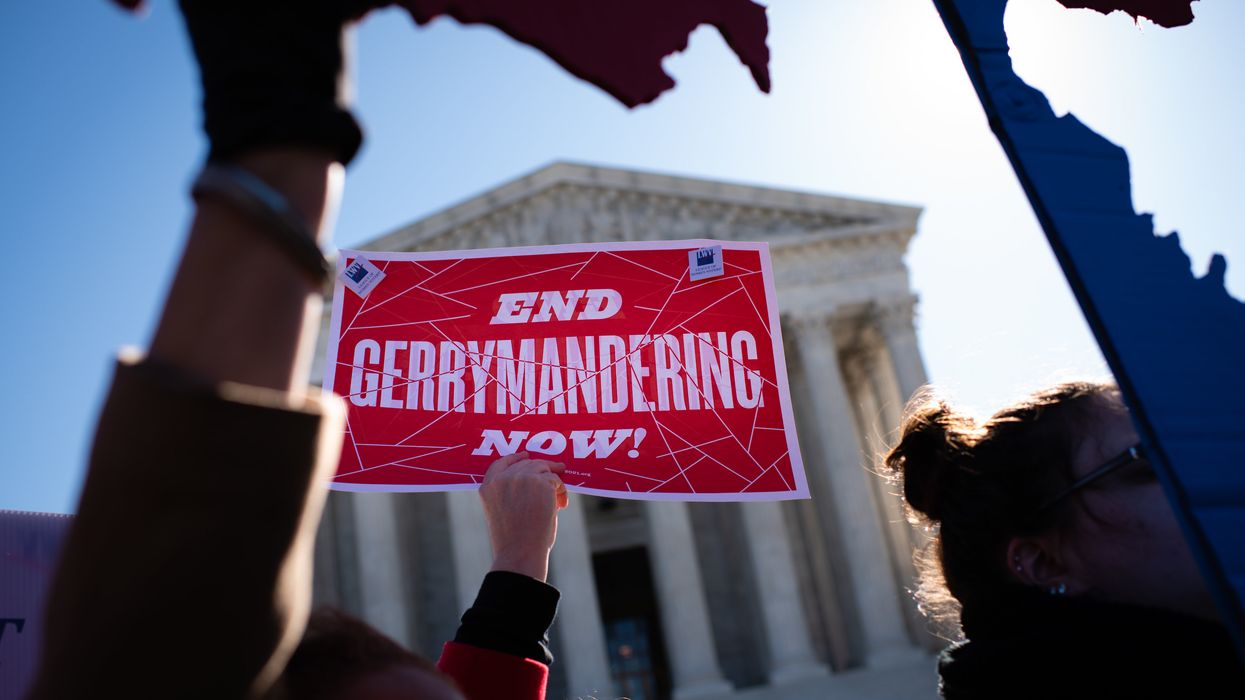

In July of 2025, I wrote a column in the Fulcrum entitled Worst Gerrymandered States Face Redistricting Showdown As Trump Pressures Texas. At the time, President Donald Trump was actively urging Texas lawmakers to redraw congressional districts, escalating what has become a national showdown over electoral fairness.
Texas already ranked among the worst offenders in the country, as The Fulcrum reported in December 2024, with two of its congressional maps serving as textbook examples of manipulated representation.
Today, with the 2026 midterm elections less than a year away, we revisit this critically important battle—one that may determine who controls Congress for the final two years of Trump’s presidency.
Our review highlights six states currently at the center of redistricting fights:
Indiana
- December 11th brought a dramatic turn in Indiana, where Senate Republicans rejected President Trump’s push for mid‑decade redistricting. The GOP‑controlled chamber voted 31–19 against a Trump‑backed map that would have dismantled the state’s two Democratic districts and added two safe Republican seats.
- The defeat marks the first major rebuke of Trump’s national redistricting campaign by his own party. Despite weeks of intense lobbying from Trump, Vice President JD Vance, and House Speaker Mike Johnson, Indiana Republicans broke ranks. Several lawmakers cited conservative principles against mid‑cycle gerrymandering, warning that such moves erode public trust and invite federal overreach.
- The vote followed weeks of turmoil: at least a dozen Indiana Republicans reported violent threats, swatting attempts, and bomb scares tied to the redistricting debate. Trump responded by vowing to back primary challengers against dissenters, singling out Senate President Pro Tempore Rodric Bray.
- This rejection not only halts GOP hopes of gaining two additional seats in Indiana but also underscores fractures within the party over Trump’s aggressive redistricting strategy.
Ohio
- Ohio continues to operate under maps repeatedly ruled unconstitutional by the state Supreme Court in 2021–22.
- More than 535,000 signatures were submitted this summer to place Issue 1 on the November ballot, which would replace the politician-controlled redistricting commission with a citizens’ commission.
- In October, the Ohio Redistricting Commission began debating new maps, but partisan gridlock persists. Republicans may seek to expand their current 10–5 advantage in U.S. House seats, though details remain uncertain.
Florida
- In December, the Florida House opened hearings to redraw congressional maps, despite Gov. Ron DeSantis suggesting a delay until spring 2026.
- The Florida Supreme Court upheld the current GOP-favored map (20–8 split) this past summer, weakening voter-approved anti-gerrymandering protections.
- Republicans hope to gain 3–5 additional seats before the midterms, but Florida’s constitutional ban on partisan gerrymandering casts doubt on the outcome.
Utah
- In August, a judge reinstated Proposition 4, the voter-approved anti-gerrymandering initiative, and imposed a new map that could create a Democratic-leaning district in Salt Lake County.
- The ruling sparked significant legislative backlash. In December, GOP lawmakers delayed candidate filing deadlines, condemned the judiciary, and prepared appeals to the Utah Supreme Court.
- Grassroots petition drives to repeal Prop 4 have fueled controversy, with reports of out-of-state petitioners stranded and unpaid.
Wisconsin
- In late 2025, the liberal-majority Wisconsin Supreme Court appointed three-judge panels to hear lawsuits challenging the current congressional map.
- Republicans currently hold a 6–2 advantage in U.S. House seats, but this balance could shift dramatically depending on the court’s rulings.
- GOP lawmakers are fighting to dismiss the lawsuits, arguing the maps are constitutional, while Democrats hope for new maps before the 2026 elections.
The Larger Danger
The dangers of gerrymandering remain profound. This is not merely a turf war between parties—it is an erosion of public trust. When only 10–15% of congressional districts are competitive, as in the 119th Congress, the result is a landscape where 370 to 390 seats are virtual locks for one party. That’s roughly 85–90% of the House.
In noncompetitive districts, general elections become perfunctory. Real contests occur in primaries, often shaped by low turnout and ideological extremism. Voters outside the dominant party feel powerless, their ballots reduced to symbolic gestures.
At its core, gerrymandering is about control. When both parties manipulate district lines to preserve power, voters lose their voice. If our democracy is to endure, we must confront the consequences of a system where representation is predetermined and competition is the exception.
David Nevins is the publisher of The Fulcrum and co-founder and board chairman of the Bridge Alliance Education Fund.













The President Invited Iran to Bomb My Home