
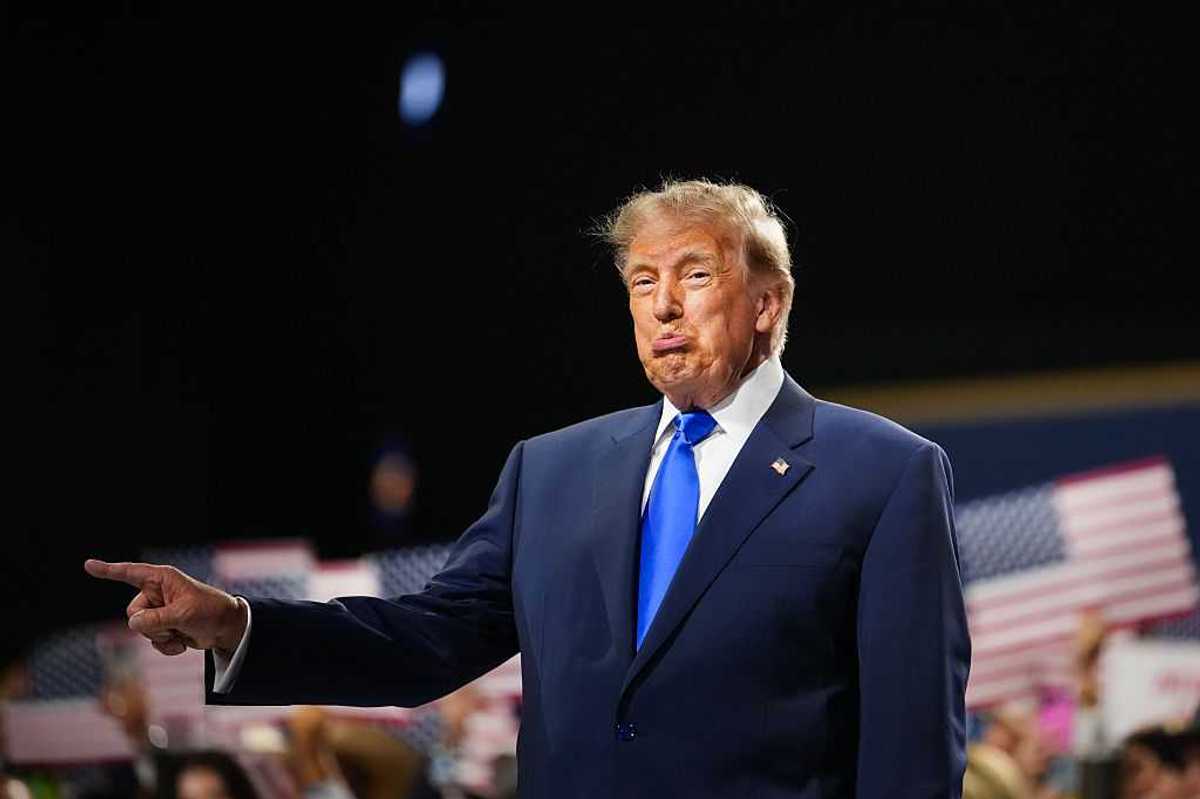

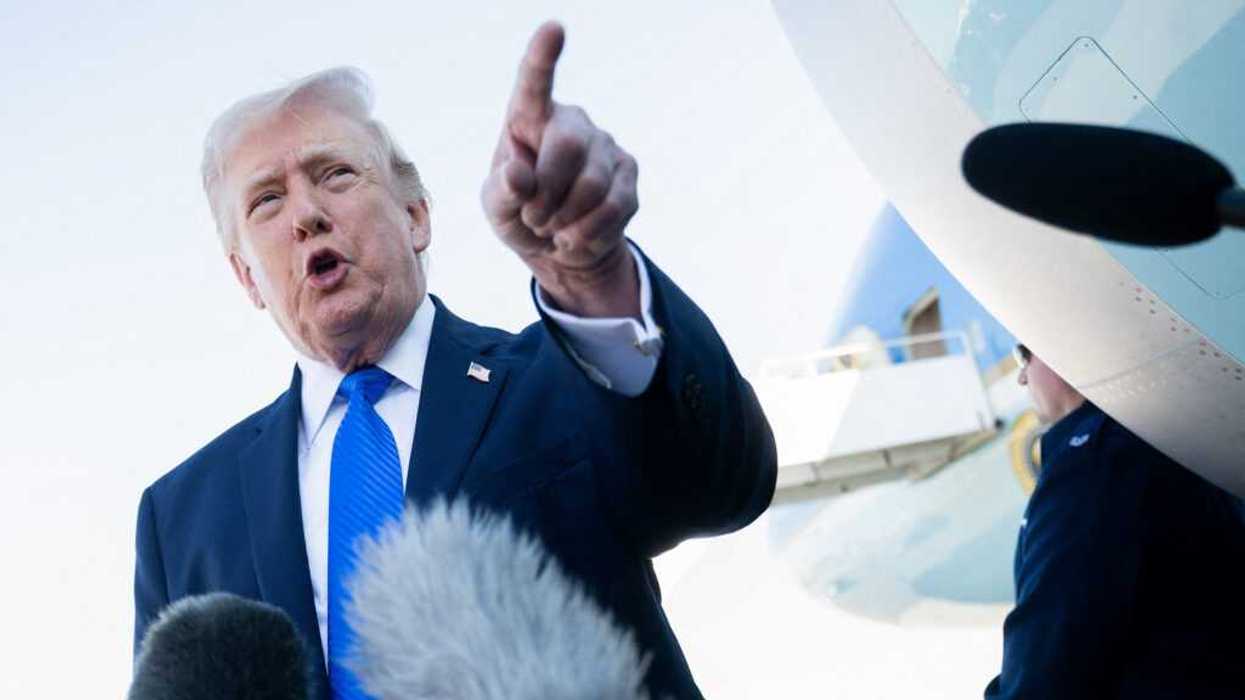

US President Trump spoke at the Saudi Future Investment Initiative on Friday, March 27. He offered a pristine example of what he calls “the weave.” What detractors take for incontinent verbal rambling is, in his own telling, genius-level embroidery of a rhetorical mosaic.
While spinning his tapestry of soundbites, the wartime president declared that the Iranians “have to open up the Strait of Trump — I mean, Hormuz. Excuse me, for — I’m so sorry, such a terrible mistake. The fake news will say he ‘accidentally said’ (chuckle), now there’s no accidents with me. Not too many. If there were, we’d have a major story. No. Well, we had that with the Gulf of Mexico. Remember the Gulf of Mexico? And one day I said, ‘Why is it the Gulf of Mexico?’ ”
Trump then digressed — sorry, weaved — for a while about the “renaming” of the Gulf of Mexico before getting back to the war.
If you watch the video, the “joke” about renaming the Strait of Hormuz was clearly deliberate. Trump said it was no accident. He has a tendency to float outrageous ideas as jokes to see how they fly — remember his “joke” that Canada should become the 51st state? Whether a joke or trial balloon, it was a terrible thing to say, and even worse idea, lending rhetorical confirmation that the president’s ego — and imperialist ambitions — is the author of this war.
But I don’t want to write a whole column about this relatively minor inanity. I just bring it up to illustrate a point. The president you see ad-libbing whatever pops into his head is the president we’ve got. When the commander-in-chief weaved in some observations about the Saudi crown prince “kissing my ass” because Trump isn’t a “loser” like previous American presidents, that was him, too.
In other words, there is no secret serious, detail-oriented Trump with “encyclopedic molecular knowledge” about matters of state, as Health and Human Services Secretary Robert F. Kennedy Jr. claims. What we see is what we’ve got.
This is very hard for some people to believe, and even harder for some people to acknowledge. These twin difficulties are the origin of all those cliches about Trump being a three- or four-dimensional chess master thinking many moves ahead of us mere checkers-playing mortals. When Trump does something unexplainable or indefensible, the best explanation and best defense for his superfans is to simply say the ways of Trump are mysterious, but rest assured he has a plan.
Entering our second month of the war with Iran, the superfans who oppose this war, for various reasons, are left in a pickle. How could this leader with an oak spine, unassailable instincts, deep knowledge and wisdom make such a mistake? How could the man they’ve defended as a genius for so long make what is in their eyes such a monumental blunder?
He was misled, of course.
For some — as it so often is when events don’t go the way they want — blame lands on the Jews, or Israel (a tomayto-tomahto distinction for many). This is how Joe Kent, who recently resigned as director of the National Counterterrorism Center, explained it. It’s Tucker Carlson’s explanation too: We’re in this war because Israel’s prime minister “demanded it.”
Others make the same argument, at one remove. “As this thing goes south, we need to know exactly who talked him into it,” Megyn Kelly demands. “What representations were made to convince the president that this was a good idea. Who? Who specifically?”
Kelly blames Israel, of course, but also advisers and Israel supporters such as Sen. Lindsey Graham of South Carolina, the Daily Wire’s Ben Shapiro and various Fox News pundits (revealingly, she excludes the crown prince of Saudi Arabia).
Now, I think some of these arguments are ahistorical, antisemitic, deranged nonsense (e.g. Joe Kent’s fevered anti-Israel paranoia). Trump has said “no” to Israeli Prime Minister Benjamin Netanyahu more than once, including during this war. But some claims have a patina of merit. If you buy the claim the war is a disaster, then the people around Trump have some culpability.
But not as much as the president himself. If Trump was like the senile “President Auto-Pen” he paints his predecessor to be, then maybe these claims would have more weight. But they don’t say that. They say this genius demigod infinity-level chess savant was deceived.
The leader cannot fail, he can only be failed.
The last resort for Trump’s defenders is to claim the decision to invade Iran was a “betrayal.” This claim at least grants Trump some agency. But for this to be true, the impulsive Trump we’ve seen weaving for a decade has to be different than the weaver in chief who launched this war. And I just don’t see it.
(Jonah Goldberg is editor-in-chief of The Dispatch and the host of The Remnant podcast. His Twitter handle is @JonahDispatch.)








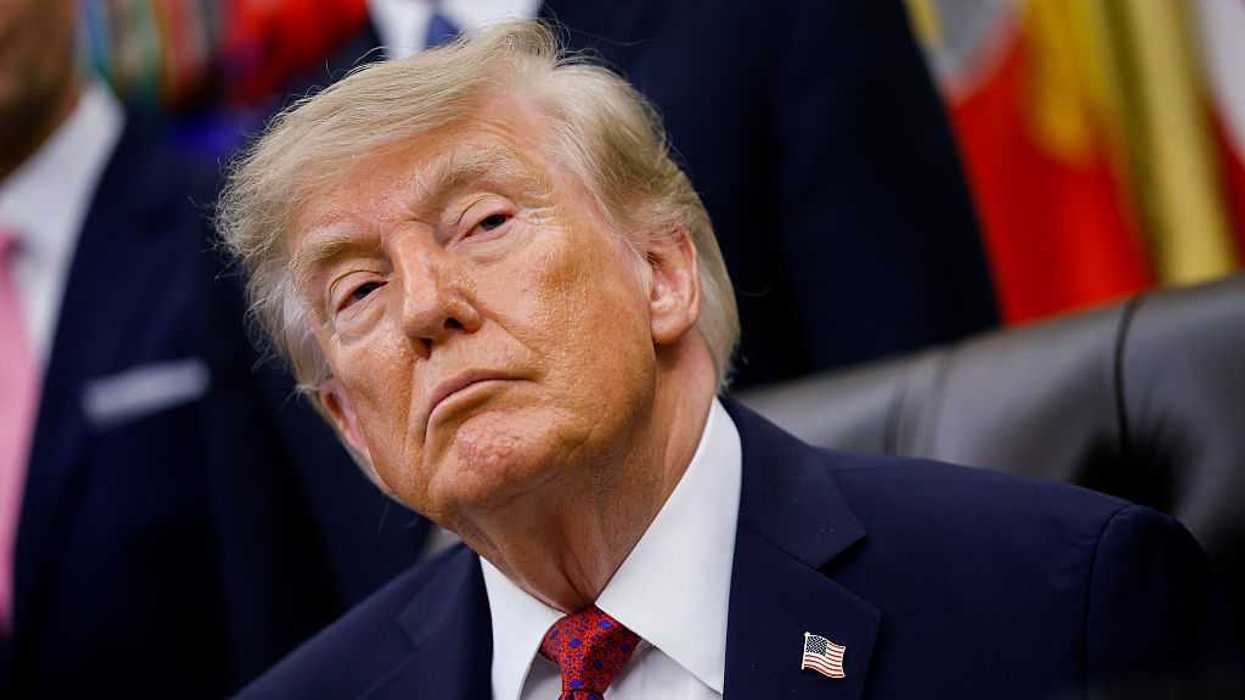
U.S. President Donald Trump speaks during a“ Steel Across America” event ahead of the 25th anniversary of the Sept. 11th attacks on the Ellipse near the White House on Sept. 8, 2026 in Washington, D.C. President Trump welcomed 9/ 11 first responders to the Tunnel to Towers Foundation’ s“ Steel Across America” event featuring a 16,900- pound, 21- foot steel beam recovered.
For Trump, even 9/11 is an opportunity
There was a reason organizers of the 9/11 ceremony in Manhattan told President Trump he could not speak at this year’s memorial service.
A good one, it turns out.
Because in a speech he gave on Tuesday in Washington, he did exactly what they were presumably worried about — he made it about himself.
According to The New York Times, Trump had wanted a speaking role at the service, but the National Sept. 11 Memorial and Museum, which oversees the site, said no, as they’ve maintained for the past decade-plus that the venue and event should be nonpartisan.
Trump has long used awful tragedies to either puff himself up, trash political opponents, or sell lies to the American people.
He blamed a deadly plane crash at Washington National Airport last year on diversity, equity and inclusion policies. He blamed Puerto Ricans for the devastation they endured after Hurricane Maria in 2017. He reportedly considered withholding disaster relief after the California wildfires based on the way affected regions voted. In an interview on Fox News meant to commemorate the 75th anniversary of D-Day in Normandy, he used the occasion to slam former House Speaker Nancy Pelosi…with graves of the dead behind him.
And now, as we approach the 25th anniversary of what many New Yorkers consider the darkest day in modern history, Trump has done it again.
He told a rambling, nonsensical story — one he’s told before — about going to Ground Zero just after terrorists flew two commercial jets into the twin towers. In the story, which no one has been able to verify, despite multiple attempts, he says firefighters had to carry him out of One Liberty Plaza, also known as the U.S. Steel Building, because they thought it was about to collapse.
As CNN fact checker Daniel Dale notes, there’s no evidence Trump went into this building, especially at a time when NYPD and NYFD had locked down the area. There’s no evidence that building was collapsing — in fact, it was deemed structurally sound and reopened within two months of the attacks. There’s no evidence he was carried out of it by firefighters.
But the lie isn’t even the worst part. Pretend it was all true — why would the leader of our country, and a New Yorker, decide to make that tragic day about himself?
Because that’s who Donald Trump is. He’s a malignant narcissist.
He’s also, incidentally, a terrible and ineffectual president, who’s made ill-fated decisions that he has to keep defending, and there’s nothing he won’t do to make himself look and feel better.
Within the first two minutes of his speech, he was cravenly using 9/11 to justify and promote his dumb war in Iran — two events separated by 25 years and 6,000 miles.
“And I will tell you, we’re right now fighting because we have a certain nation that wanted a nuclear weapon, they were very close to getting it, and now they have no chance at getting it. They will never have a nuclear weapon. Iran will not have a nuclear weapon. And they’ve been punished greatly. As you know, we’ve really taken it to them.”
As a New Yorker who lived through 9/11, still one of the worst days of my life, I’m utterly sickened by Trump’s crass, political, and self-promotional framing of that awful day.
And I’m relieved he won’t be given a platform to do it again on Friday’s anniversary in lower Manhattan.
Because for Trump, everything is his for the taking, and absolutely nothing is sacred.
S.E. Cupp is the host of "S.E. Cupp Unfiltered" on CNN.