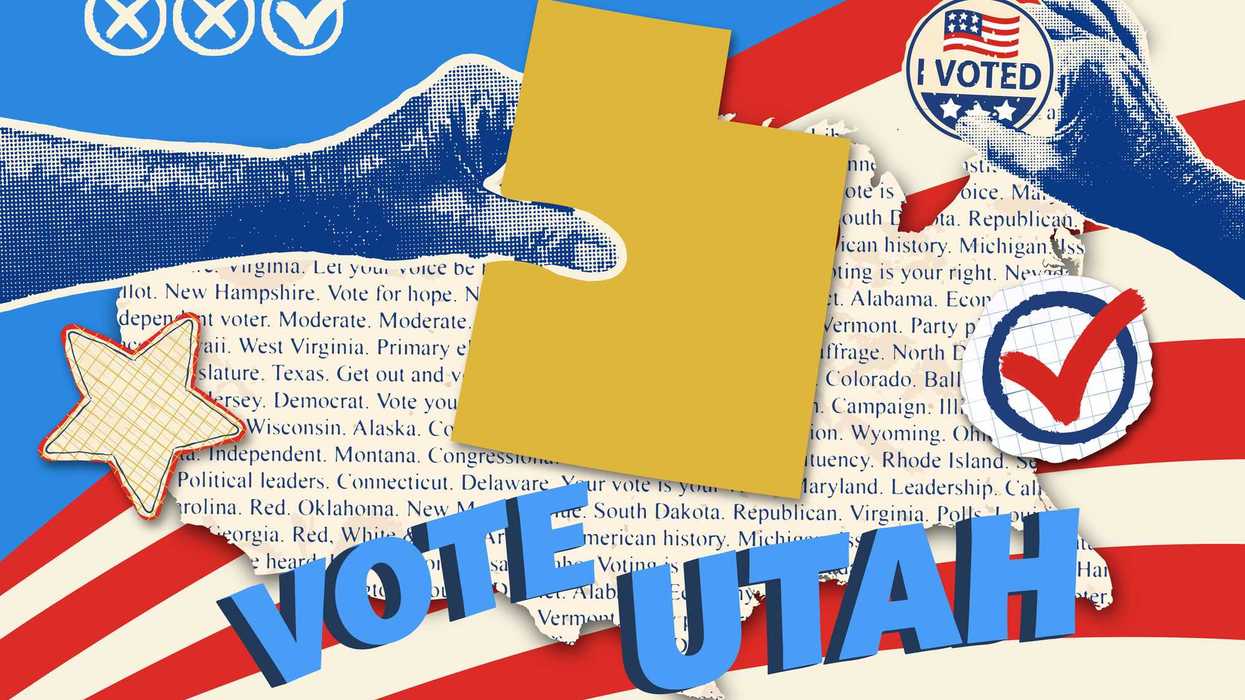
On Wednesday, February 11, the National Redistricting Foundation (NRF) asked a federal court to join a newly filed lawsuit to protect Utah’s new, fair congressional map and defend our system of checks and balances.
The NRF is a non‑profit foundation whose mission is to dismantle unfair electoral maps and create a redistricting system grounded in democratic values. By helping to create more just and representative electoral districts across the country, the organization aims to restore the public’s faith in a true representative democracy.
The recent filing is a motion to intervene in Powers Gardner v. Henderson, a federal lawsuit brought by a group of Utah elected officials seeking not only to overturn Utah’s fair court‑adopted congressional map, but also to give state legislatures near‑total control over federal election laws. More specifically, the plaintiffs invoke the fringe “independent state legislature theory,” arguing that only the state legislature—not citizen‑led ballot measures, not laws enshrined in the state constitution, and not state courts—can create congressional maps. In its filing, the NRF notes that the U.S. Supreme Court rejected the “independent state legislature theory” in a landmark decision in Moore v. Harper nearly three years ago, and the case should be dismissed.
“After being held to account in state court for drawing an illegal gerrymander, the power‑hungry Utah politicians behind this effort are resorting to a dangerous legal claim that would undermine our system of checks and balances—all in order to cheat the voters,” said Marina Jenkins, Executive Director of the NRF. “Almost three years ago, the U.S. Supreme Court rejected the same fringe legal theory presented by the plaintiffs in this case. To do anything other than dismiss this case outright rights.”
To place the Utah case in broader context, this filing is not occurring in isolation. It is part of a decade‑long pattern in which partisan actors seek to consolidate power by manipulating the rules of representation. At The Fulcrum, we have been tracking these structural threats to fair elections for years, documenting how gerrymandering, whether executed by Republicans or
Democrats, erodes competition, weakens accountability, and distances voters from meaningful choice.
In 2024, our reporting in a writing entitled The Worst Congressional Gerrymanders of the 2000’s highlighted how, after two full post-census election cycles, congressional maps had become so engineered that the outcomes of most House races were effectively predetermined long before voters cast a single ballot. According to a study conducted in 2022, approximately 85% of House seats were considered safe, meaning that the competition was nominal at best and that the elected representatives were virtually guaranteed their positions regardless of shifts in public sentiment. Experts described how cracking and packing techniques allowed state legislatures to lock in partisan advantage for an entire decade, even in states where public opinion shifted. That analysis underscored a troubling reality: when districts are drawn to guarantee outcomes, elections become performative rather than competitive.
To combat these issues and promote fair redistricting, readers can get involved by supporting local organizations that advocate for redistricting reform. Engaging with initiatives to establish independent redistricting commissions or participating in public forums to express concerns about gerrymandering are effective ways to contribute. Additionally, staying informed and voting in state and local elections can help ensure that representatives who favor fair maps are elected. By taking these actions,engaged individuals can help restore the principle that voters, not politicians, choose their leaders.
The Utah lawsuit sits squarely within that ongoing coverage. What makes Powers
Gardner v. Henderson is especially alarming not only because of the attempt to overturn a fair, court-adopted map, but also because of the plaintiffs’ reliance on the discredited “independent state legislature theory.” This theory is widely rejected because it posits that state legislatures have the exclusive authority to regulate federal elections, disregarding other democratic processes and judicial oversight. Critics argue that this undermines the system of checks and balances, which is essential to preventing partisan entrenchment. As we have reported, the theory would strip away the checks and balances that prevent partisan majorities from entrenching themselves. It would sideline citizen-led reforms, nullify state constitutional protections, and weaken federal election rules.
By connecting the Utah case to the national pattern we have documented, the stakes become unmistakably clear: when partisan map‑drawing intersects with efforts to centralize power, the danger extends far beyond any single district. It threatens the foundational principle that voters choose their leaders, not the other way around.
David Nevins is the publisher of The Fulcrum and co-founder and board chairman of the Bridge Alliance Education Fund.