



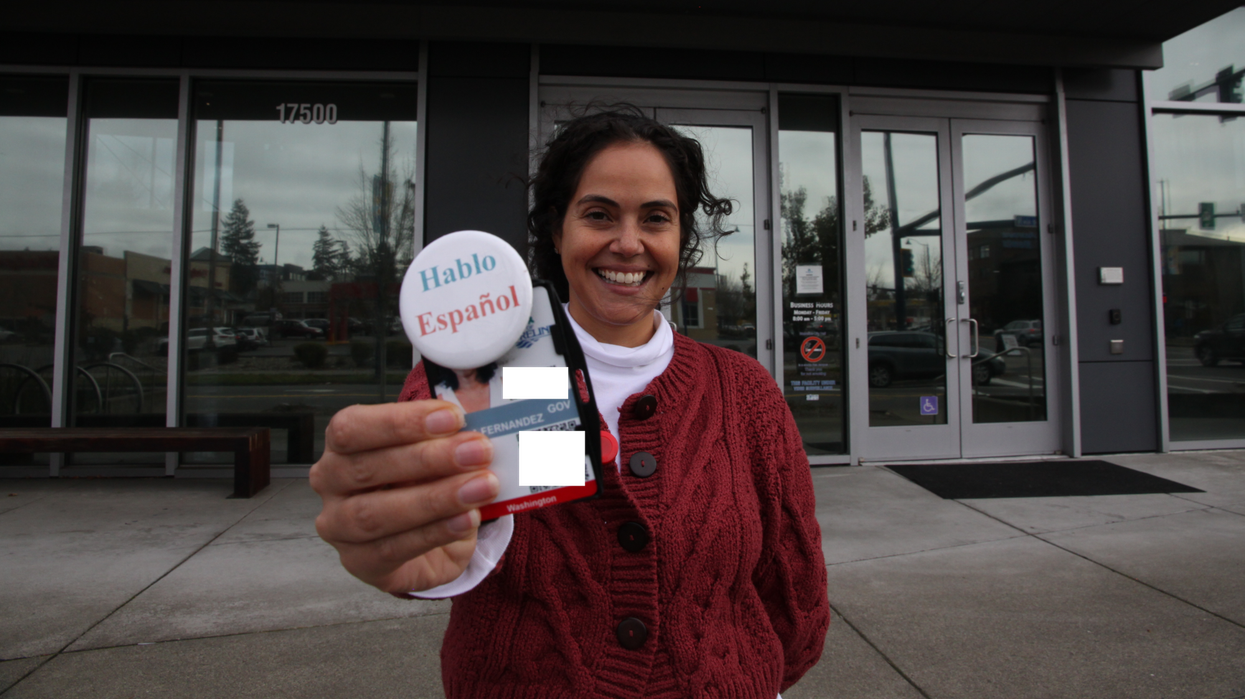
“Keep it to yourself. Push it down. Don’t say anything.” That is how Isis Lara Fernandez was taught to live with her status as an undocumented immigrant in the United States.
At 6-years-old, Lara Fernandez fled to the U.S. with her mother and siblings to escape domestic violence in Honduras. From that point forward, Lara Fernandez navigated life with a persistent fear that her secret could be discovered at any point in time.
“There was this impending amount of fear that was happening that you kind of learned to suppress,” Lara Fernandez said in an interview. “My mom didn’t know how to manage it, so she just learned to not say anything. That was a terrible strategy but that’s the only one I knew.”
On Oct. 22, the University of Washington’s Center for Communication, Difference and Equity (CCDE) hosted a roundtable discussion on the state of mental health in Latino communities. The roundtable covered the work being done across governmental, medical and non-profit agencies to provide critical resources to Latino individuals in need.
Latino individuals have been increasingly targeted by President Donald Trump’s mass deportation measures. According to a 2025 analysis conducted by the UCLA Luskin School of Public Affairs’ Center for Neighborhood Knowledge, Latinos accounted for nine out of ten Immigration and Customs Enforcement (ICE) arrests over the past six months.
Gloria Martinez Sierra, an outreach manager of the bilingual program for Parents of Adolescents and Teens (PAT) at Programs for Early Parent Support (PEPS) in Seattle, said she has seen a decline in community participation from Latino individuals at in-person events due to an increased anxiety of deportation.
Isabella Herrera, a licensed mental health counselor at UW Medicine Harborview Medical Center’s Edward Thomas House Respite, has noticed a similar decline in the number of Latino individuals she treats. The Edward Thomas House Respite provides acute medical care to individuals experiencing homelessness, treating a range of ailments such as cancer, substance abuse and psychiatric disorders.
She said that many of her patients know friends or family members who have been deported or detained, which has deterred them from going to their doctor’s appointments and receiving the critical medical care they need. As a result, health disparities in Latino communities have been exacerbated.
“For a lot of our people, engaging in their medical care is essential,” Herrera said in the roundtable. “It’s not just a primary care appointment, it’s a life-sustaining kind of treatment.”
Lara Fernandez has seen a similar trend from undocumented immigrant mothers as the equity and social justice coordinator at the City of Shoreline. Many have requested that she not enroll them in federally-funded programs like SNAP, EBT or Medicaid.
“That is the stuff that really broke my heart because this is a very vulnerable population that had no access and an excessive amount of barriers in front of them,” Lara Fernandez said in the roundtable.
Dr. Carmen Gonzalez, the director of UW’s CCDE and an associate professor in the department of communication, said culture plays a significant role in limiting conversations about mental health in Latino communities. This resistance has caused many to suffer in silence.
“If we can’t name anxiety, then it’s really tricky to come out of it or to develop coping mechanisms for how to deal with it,” Gonzalez said in an interview.
She began studying anti-immigrant rhetoric in the media as a graduate student to understand how ethnic media can mobilize protests and encourage marginalized communities to speak out against anti-immigration legislation.
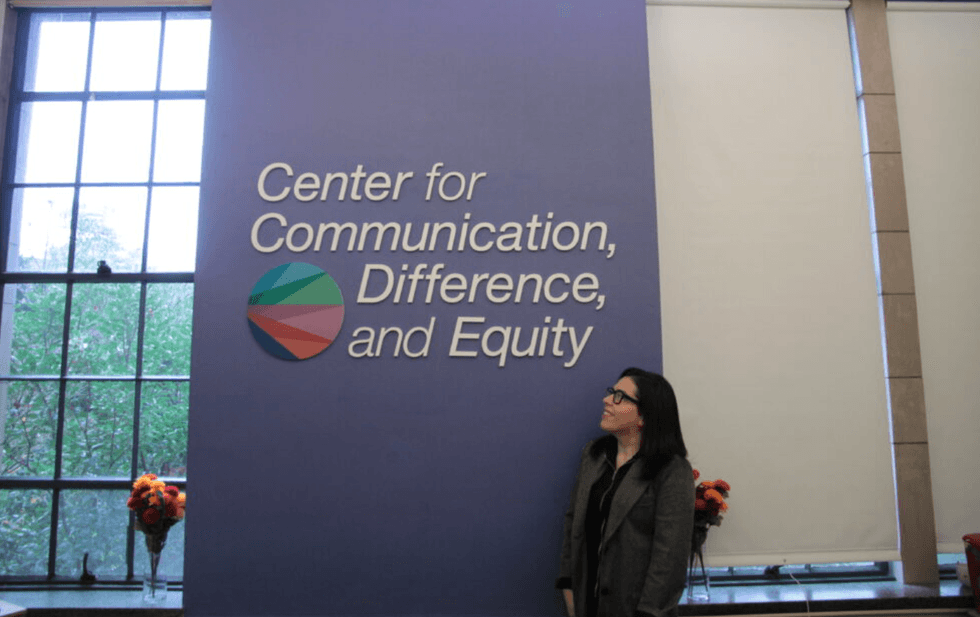 Dr. Carmen Gonzalez is the director of UW’s CCDE and an associate professor in the department of communication..Photo by Corey Olson
She said social media platforms like TikTok help promote conversations about mental health to fill in generational gaps within immigrant communities, but also spread massive amounts of misinformation that can contribute to cultural stigmas and taboos.
“I think we’re in a much better place than when I started doing research in this area, because I feel like mental health is just less taboo,” Gonzalez said in an interview.
During the roundtable, Lara Fernandez shared her experience being detained in 2014 and the role her upbringing played in how she dealt with the situation. She was detained in Texas while returning to Washington state after visiting family in Honduras. She was held in a processing center for about one month and was released after her sister set up a successful GoFundMe page to raise money for an immigration lawyer.
After her release, Lara Fernandez began working in social services, assisting immigrant and refugee unaccompanied minors at the Washington state border as they were transferred into the state’s foster care system. She focused on her work in an effort to forget the experience of being detained, but later began using alcohol as a way to cope.
“In a way, I was trying to give back to the same people that were suffering something I had just suffered,” Lara Fernandez said in an interview. “Since I was doing that, I thought I would be okay. But I was not attending to my feelings and was suppressing them a lot.”
Lara Fernandez became sober in 2018 and is currently doing research on substance use disorders and addiction in Black and Brown communities as part of her Ph.D. in leadership and change program at Antioch University.
Despite experiencing an increase in her post-traumatic stress disorder symptoms from her work with undocumented individuals, she has found healing in openly talking about her experience in spaces like the roundtable.
“It’s like I’m feeling so happy of how much I’ve overcome, but without crying,” Lara Fernandez said in an interview.
She believes it’s important for Latino communities to understand that healing can look different for different people, despite the cultural norms surrounding conversations about mental health.
“It’s kind of ingrained in our culture,” Lara Fernandez said in an interview. “I’m probably privileged speaking out about being detained because I am no longer undocumented, but speaking truth to the things that were hidden in the shadows is helpful to any healing process.”
At the end of the roundtable, Gonzalez asked each speaker what brought them hope during this difficult time for Latino communities. Every response had one thing in common: the roundtable.
“This live stream just in itself is a way of giving hope to others,” Lara Fernandez said at the roundtable. “It gives me hope that we might continue this series because I think it’s beneficial. And maybe the next one will be in all Spanish, para nuestra gente verdad.”
University Roundtable Puts Latino Mental Health Front and Center was first published on Washington Latino News and was republished with permission.
Corey Olson is a fourth-year student pursuing a double major in Journalism and Public Interest Communication and Law, Societies, and Justice at the University of Washington, Seattle.