




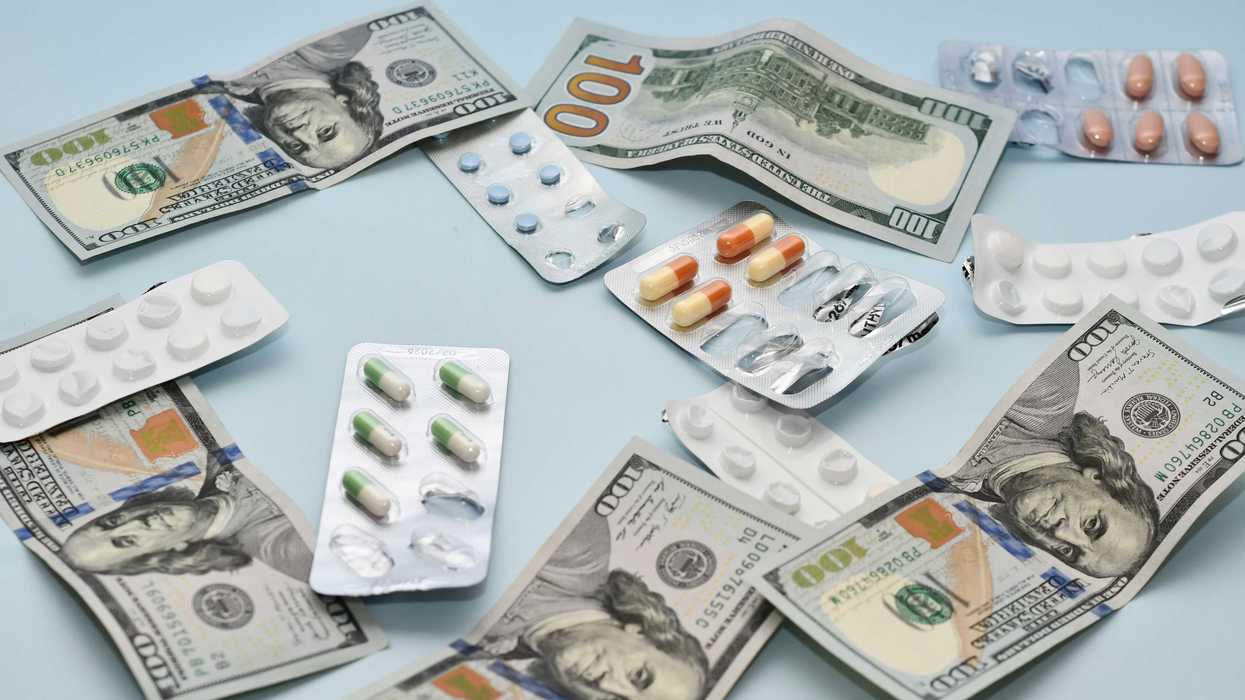

Recently, during rounds, I met a patient who almost missed her own heart attack. She'd had chest pain for hours before she finally came in. Clinicians know what those hours cost. When asked why she had waited, her answer made my own heart sink. She had a high-deductible health plan — an HDHP — which meant she would owe thousands of dollars before her insurance paid a single cent.
"It's like I don't even have insurance," she told me from her hospital bed, asking when someone from financial assistance would be able to speak to her.
My patient was not an outlier. And if the current administration's approach to healthcare affordability scales nationally, I worry she may become the norm.
Congress has already allowed Affordable Care Act subsidies to expire and stepped back from meaningful healthcare legislation, causing over one million Americans to lose coverage since the beginning of the year. An additional 4 to 5 million are projected to lose coverage, priced out of insurance as subsidies dry up. That number will climb further as Medicaid cuts take effect. Facing pressure to address affordability, the Trump administration has turned to an old emergency lever: catastrophic health plans, a form of HDHP originally intended as a last resort for healthy adults under 30. This is a mistake.
Catastrophic plans weren't always the wrong answer. For healthy adults in their 20s—people who rarely see a doctor and need coverage primarily for worst-case scenarios—the tradeoff once made sense. But now the administration is proposing to make them available to Americans of all ages—and these plans were never designed for people in their 40s, 50s, and 60s managing chronic disease.
The evidence on HDHPs is clear. Enrollees are less likely to seek preventive care, less likely to manage chronic illness appropriately, and more likely to delay or forgo treatment altogether — even when that care is technically free. Under the ACA, preventive services must be covered without cost-sharing. Yet HDHP enrollees consistently use them less.
For many, this isn’t ignorance; it’s rational. While a screening test is free, the potential cascade of follow-up labs, specialist visits, and diagnostic tests will cost. When you must spend thousands before coverage kicks in, ignorance is bliss.
Consequences are heaviest for patients with chronic diseases. One in three people with conditions like diabetes or heart failure report skipping doses or not filling prescriptions because of cost. Employer-driven switches to HDHPs are associated with higher rates of preventable hospitalizations — the expensive crises that happen when manageable conditions go unmanaged. Without preventive care, our health system ends up paying more for worse outcomes.
Even when people do need care, as with my patient, many simply stay home. HDHP enrollees are nearly twice as likely to delay or forgo treatment due to cost. For low-income adults with chronic conditions, high-deductible plans drive medical debt, which remains one of the leading causes of personal bankruptcy in the United States.
Proponents of expanding HDHPs and catastrophic plans argue that when people pay more out of pocket, they become smarter healthcare consumers and shop for better prices, driving costs down system-wide. It's a nice theory, but the evidence doesn't support it.
When employers switch workers to HDHPs, overall spending does fall — by roughly 10 to 20 percent. But that reduction comes almost entirely from people using less care, not from people shopping more wisely. Studies find no evidence of meaningful price shopping even two years after employees switch to these plans.
Spending less is not the same as spending wisely. And unlike buying a car or a refrigerator, most patients lack the information and leverage to shop for healthcare in moments of need.
Expanding HDHPs is simply a way of dressing up a policy failure as a market solution. These plans are yet another example of shrinkflation: Americans are paying for health insurance but receiving less. Employers and insurers are offloading financial risk, employees are absorbing it, and patients with limited health insurance literacy are signing up believing they have real coverage — only to discover, at the worst possible moment, that they functionally do not.
If we are serious about affordability, we need to look at where the money actually goes. Hospital care accounts for nearly 1 out of every 3 dollars spent on healthcare in America. Yet hospitals, with their powerful lobbying arms and central role in local economies, are largely left untouched. Politicians find it much easier to target drug and insurance companies, where the politics are simpler. The result is the policy theater of expanding catastrophic plans instead of structural solutions like global hospital budgets and fundamental payment reform that address what care costs and not just who pays for it.
As campaign season accelerates and pressure to address affordability intensifies, HDHPs and catastrophic plans will be offered as the solution. Don't believe it. Expanding access to catastrophic plans doesn't solve the affordability crisis — it simply reshapes it, pushing financial risk onto the patients least equipped to carry it.
In a recent episode of the show Beef, a character faces a $5,000 deductible for emergency care and asks, "Then what is health insurance?” Their query was eerily similar to the question my patient asked from her hospital bed. If we allow catastrophic plans to become the solution to a structural problem, millions more Americans will be asking it, too. We deserve better than that. And we should demand it from the people we elect to fix it.
Marc Henry Estriplet is a National Clinician Scholar at Yale School of Medicine.












The President Invited Iran to Bomb My Home