




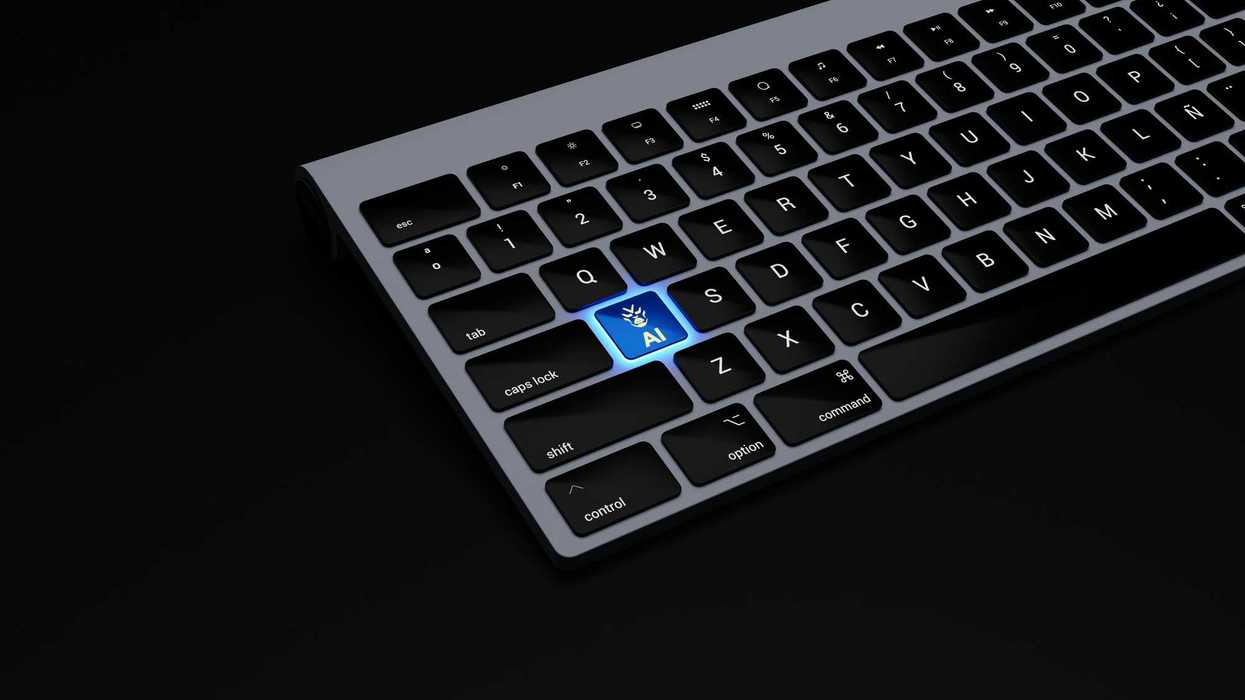
The nation that wins the global AI race will hold decisive military and economic advantages. That’s why President Trump’s January 2025 AI Action Plan declared: “It is the policy of the United States to sustain and enhance America’s global AI dominance in order to promote human flourishing, economic competitiveness, and national security.”
However, AI global dominance does not just mean producing the best AI systems. It also means that the American “AI Stack” – the layered collection of tools, technologies, and frameworks that organizations use to build, train, deploy, and manage artificial intelligence applications – will become the international standard for this world-changing technology. As such, advancing a commonsense export policy for American AI chips will play a decisive role in determining whether the United States remains embedded at the core of global AI development or is gradually displaced by rival systems.
During the Biden Administration, U.S. policy unfortunately drifted away from an approach that encouraged American technological leadership. In 2024, President Biden signed Executive Order 14110, which wrapped AI development in a bureaucratic maze of political correctness, equity, and government control of virtually every aspect of training and deployment of AI models. And, Biden’s Department of Commerce's Bureau of Industry and Security (BIS) issued last-minute regulations to ban the export of virtually all microchips to China that could be used to develop AI systems.
Biden’s hard ban on AI-capable chips to China was superficially appealing. After all, without chips, China can’t compete with America, right? Wrong. Rather than preserving America’s advantage, blanket export controls on AI capable chips encouraged the emergence of a parallel Chinese technological ecosystem largely beyond U.S. influence and would severely injure US AI companies.
As a result of the ban, China launched an aggressive campaign to replace foreign suppliers. State-backed capital flowed into semiconductor fabrication, chip design, advanced packaging, and AI data-center infrastructure. Chinese firms were encouraged to adopt domestic chips. even though performance lagged Western counterparts, ensuring scale and revenue for Chinese manufacturers. Export controls did not, therefore, freeze China’s AI ecosystem; they reorganized it around domestic Chinese supply chains and used the opportunity to accelerate their competition on the global stage.
Fortunately, Trump has started to right the ship. Since taking office he has revoked Biden’s executive order and lifted the absolute bans on sales of mid-range chips like Nvidia’s H200 chip, allowing them to be sold to highly vetted Chinese buyers. This nuanced approach to chip exports will improve America’s strategic and economic dominance in several ways.
To start, America’s new approach is well designed to thwart the fast development of a competitive Chinese AI ecosystem without surrendering military and strategic dominance in this key technology. It bans export of very high-end AI chips, where the US and its allies enjoy a monopoly. But it allows discretionary export of a lower-class of AI capable chips (for example, the H200 and AMD MI325X chips) to be exported under strict export controls which prevent diversion, mandate Know-Your-Customer protocols, and prohibit any military or intelligence uses.
This lower-class of chips is also about one-tenth as powerful than the top-end chips produced by companies in America and our allies. Yet while the H200 is not Nvidia’s best chip, it still has six times the power of the best AI chip available in China today and is better than any chip that Huawei – the Chinese telecom giant that has served as a domestic alternative to Nvidia – plans to make for at least two years. Now Chinese firms seeking chips have to decide between inferior, costly Chinese chips and much more powerful American exports, taking the wind out of state-based manufacturing efforts in China.
Furthermore, Trump’s policy bolsters the chip manufacturing of the US and its allies. Nvidia, the largest AI/GPU chip manufacturer in the world is no longer hamstrung by exclusion from one of the world’s largest markets and is better to positioned to compete internationally more broadly. This is non-trivial. At around $40,000 per chip, Bloomberg estimates Nvidia has and will lose $10-15 billion a year in lost sales of the H200 chip alone as a result of the chip ban. And it’s not just Nvidia. Biden also cut off Intel, AMD and others from billions in revenue. All this reduces US revenue for R&D, shrinks production runs, increases per unit costs, and gives Chinese firms monopolistic domestic markets, allowing their international expansion.
President Trump’s AI chip export policy supports the larger strategic and economic interests of the US. We may still be the dominant AI figure world-wide, but this is no time to be encouraging the emergence of a competitive AI-stack ecosystem nor to hamstring American companies that are the key to that dominance. That is why we must prioritize speed, scale, and global adoption and resist well-meaning yet misguided efforts like the AI Overwatch Act (H.R. 6875) currently under consideration in Congress. This bill would effectively codify the kind of overbroad export approach President Trump has begun to unwind, undermining the strategic reset now underway.
The surest way to preserve America’s technological edge is not to shrink the commercial base on which it depends, but to expand it. In a long-term strategic competition, staying ahead matters more than trying to hold others back.
Frank D. Francone is a California attorney admitted to the United States Supreme Court bar. He is also a widely published author in Artificial Intelligence, having co-authored a graduate level textbook in machine learning and about fifty peer-reviewed scientific articles in AI and information theory.














The President Invited Iran to Bomb My Home