Skip to content
Search

Latest Stories

Follow Us:
Top Stories

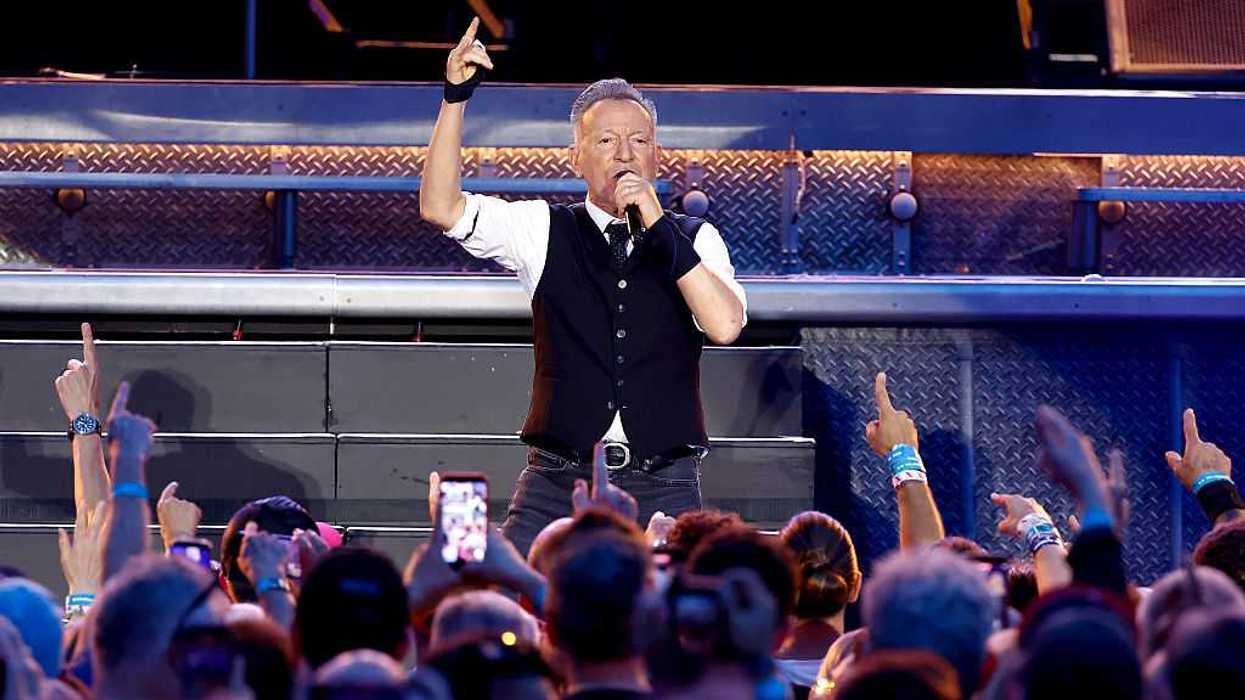
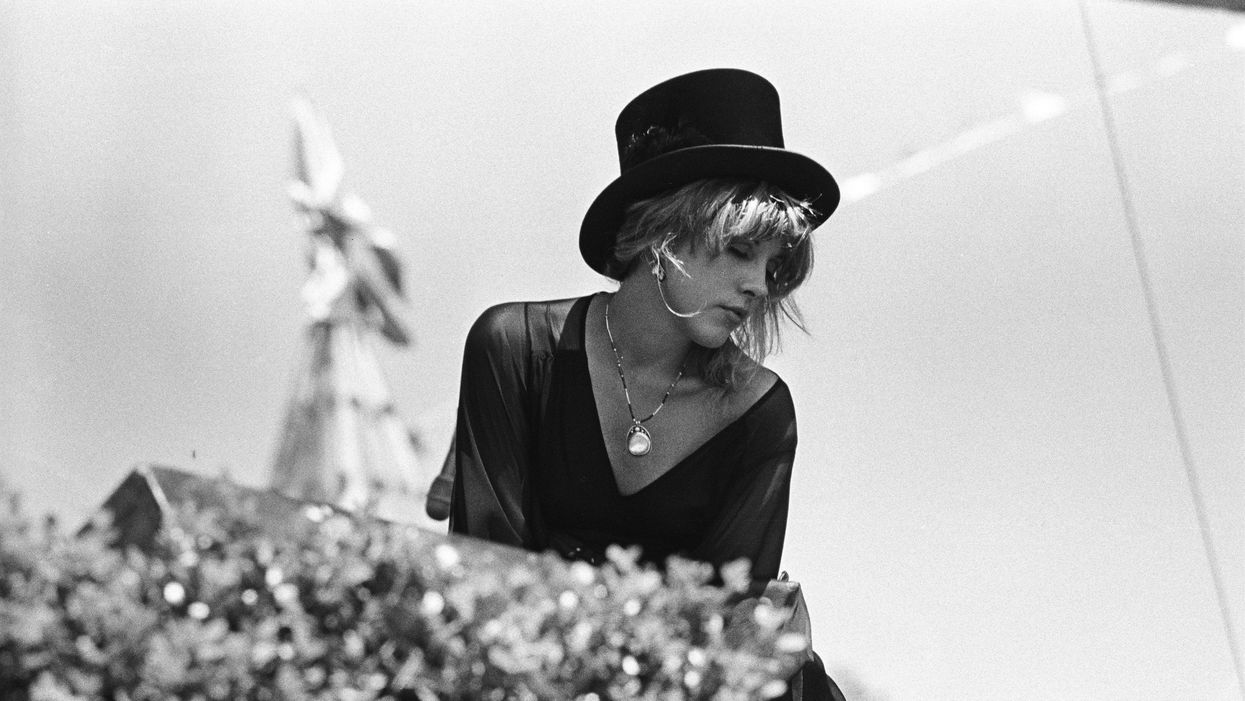
Stevie Nicks hopes Vladimir Putin never sleeps again

Stevie Nicks hopes Vladimir Putin never sleeps again

Richard McCaffrey
/ Contributor / Getty Images

Iconic singer/songwriter Steve Nicks keeps a journal that she turns to in times of crisis.

The legendary voice of Fleetwood Mac recently posted a poem to Vladimir Putin and held nothing back as she expressed her anger at the man responsible for the atrocities happening in Ukraine.


Nicks began:

“Are you lonely, Mr. Putin? Is that why you sit at your long, long marble table, alone in the night and through the day and talk to ghosts? Because you really have no friends — everyone is afraid of you; afraid to even offer up good advice, because great emperors don’t listen to anyone but ghosts. Your ghosts must be shaking their heads concerning the killing of children and young people and destroying the houses of young families just for support. Your ghosts disapprove.”

The full text of the poem appears below.

From my journal...pic.twitter.com/X1JeLrd3gG


Read More

Jennifer Lawrence speaks during the "Die My Love" press conference at the 78th annual Cannes Film Festival at Palais des Festivals on May 18, 2025 in Cannes, France.

Jennifer Lawrence questions whether celebrity activism still matters in politics. As the 2026 midterms approach, explore the decline of celebrity endorsements, rising polarization, and the evolving role of pop culture in shaping voter behavior.

Getty Images, Pool

Jennifer Lawrence Questions Whether Stars Still Influence Politics

Eight months before the 2026 midterms, one of Hollywood’s most recognizable figures has offered a blunt assessment of her industry’s political influence. Jennifer Lawrence, known for speaking out on issues from gender equality to democratic norms, now questions whether celebrity activism has any real impact.

In a recent interview, Lawrence stated that “celebrities do not make a difference whatsoever in who people vote for.” This is notable both because of her prominence and because it comes at a time when American politics is deeply intertwined with culture and entertainment. She described the Trump era as a time when she felt she was “running around like a chicken with my head cut off,” trying to use her platform to sound alarms. But after years of backlash, polarization, and the sense that celebrity statements only “add fuel to a fire that’s ripping the country apart,” she’s questioning the value of speaking out.

Keep ReadingShow less
What the Oscars can teach us about democracy
An oscar statue on display in a glass case
Photo by Martti Salmi on Unsplash

What the Oscars can teach us about democracy

On Sunday night, millions of Americans will watch the Academy Awards. They may tune in for the red carpet, Conan O'Brien’s jokes, or the live performance of the hit song “Golden.”

But behind the glitz and glamour, the Oscars have a bigger lesson to teach – how changing the way we vote can improve our democracy.

Keep ReadingShow less
Michael B. Jordan standing next to Delroy Lindo

Michael B. Jordan and Delroy Lindo at the 41st Annual Santa Barbara International Film Festival.

Getty Images, Phillip Faraone

Not OK: Curb Slurs and Hate Speech To Avoid The Monstrous

John Davidson shouted out the n-word while Michael B Jordan and Delroy Lindo presented a prize recently at the British Academy Film Awards.

Was it hate speech or a mistake made due to a disability?

Keep ReadingShow less
Bad Bunny’s Super Bowl Show Rekindles America’s Cultural Divide

Bad Bunny performs onstage during the Apple Music Super Bowl LX Halftime Show at Levi's Stadium on February 08, 2026 in Santa Clara, California.

(Photo by Kevin C. Cox/Getty Images)

Bad Bunny’s Super Bowl Show Rekindles America’s Cultural Divide

As a child of the 60s and 70s, music shaped my understanding of the world as it does for so many young people stepping into adulthood today. Watching Bad Bunny stand alone at midfield during the Super Bowl, hearing the roar as his first notes hit, and then witnessing the backlash the next day, I felt something familiar to the time of my youth. The styles have changed, but the cultural divide between young and old, between left and right, around music remains the same. The rancor about who gets to speak, who gets to belong, and whose voices are considered “American” remains remarkably constant.

The parallels to the 1980s are striking. President Ronald Reagan, in a 1983 speech lamenting what he saw as the “decay of values” among my generation, warned that “there are those who portray America as a land of racism, violence, and despair. That is not the America we know.” In his radio commentaries, he went further, arguing that “some of the so‑called protest songs seem more intent on tearing down America than lifting it up.” Fast‑forward to today, and the pattern repeats itself. Before the Super Bowl even began, President Trump announced he would boycott the game and blasted the NFL’s choice of performers as “a terrible choice,” setting the tone for the wave of outrage that followed Bad Bunny’s appearance.

Keep ReadingShow less