

There was a time when working for the United States Department of Justice might have been a lawyer’s dream. Speaking on behalf of the United States, working with people who were dedicated to preserving the rule of law and upholding the highest standards of professionalism, not a bad gig.
As Harvard Law School once explained, the department offered lawyers an unparalleled “opportunity to serve the public in a meaningful way while carrying out the Department of Justice’s (DOJ) mandate to ‘pursue justice’ every day…” Not a bad gig.
But that was then.
We know by now that the Trump Justice Department seems to have a new mission: Do what the president tells you. Accomplish what he wants you to accomplish, by hook or by crook if necessary.
Our democracy and the rule of law depend on the integrity and judgment of the public officials responsible for preserving them. While it is not a sexy political issue, voters should demand that those running for Congress in November prioritize restoring professionalism to the Justice Department.
They should be asked to ensure that the department again embraces three core principles: No investigations or prosecutions for political purposes. Respect for the judicial process and, as former Attorney General Robert Jackson once said about the role of the federal prosecutor, “while you are being diligent, strict, and vigorous in law enforcement, you can also afford to be just. Although the government technically loses its case, it has really won if justice has been done.”
Justice Department lawyers who violate those principles must pay a steep price for doing so. And the department's internal culture needs revitalization. Congress created the department and gave it its mandate. Congress has the responsibility to clarify that the department’s mandate is to serve justice and respect the rule of law.
It should convene a commission to investigate the work and responsibilities of government lawyers and to recommend changes that rebalance their political and legal obligations. It must look beyond individual behavior to identify leadership needs and institutional mechanisms that help Justice Department lawyers make good choices.
The urgency of that task was highlighted on May 21 when we learned some of the ways Trump’s Justice Department lawyers are now prepared to go to violate the principles that should guide their work.
At that time, as Dahlia Lithwick observed, “a judge in Chicago caught the Justice Department in a staggering web of misconduct and attempted cover-up.” The misconduct involved tampering with a grand jury to obtain indictments against members of the so-called “Broadview Six.”
On September 26, 2025, they demonstrated outside an ICE processing facility in the Chicago suburb of Broadview, during the Trump Administration’s deployment of federal forces, dubbed “Operation Midway Blitz.” A news report of the incident suggests that they “surrounded an ICE vehicle that drove through the crowd, banging on its windows.”
To obtain an indictment arising from that incident, federal prosecutors in Chicago seem to have violated professional norms governing their conduct in grand jury proceedings. They allegedly made contact with grand jurors outside the jury room in an effort to persuade them of the strength of the government’s evidence.
When this came to light, they tried to deceive Judge April Perry by providing heavily redacted transcripts of grand jury deliberations. But she forced their hand, and the government turned over the full version.
After reading them, the judge expressed her shock and dismay: “I have read hundreds, if not thousands, of grand jury transcripts…. I have never seen the types of prosecutorial behavior before a grand jury that I saw in those transcripts.”
We should not be surprised by what happened in the Broadview Six case or the level to which the Trump Justice Department has fallen. But we should not get used to it or accept it.
That’s why Judge Perry should not let the lawyers whose misbehavior she uncovered get off easily. But even as she does that, we all should remember the price we pay when government lawyers lose their credibility with judges.
Lawyers in the Trump Administration are in a difficult situation. They are caught between their professional obligations as attorneys and public servants and the demands of a president who doesn’t care about those obligations.
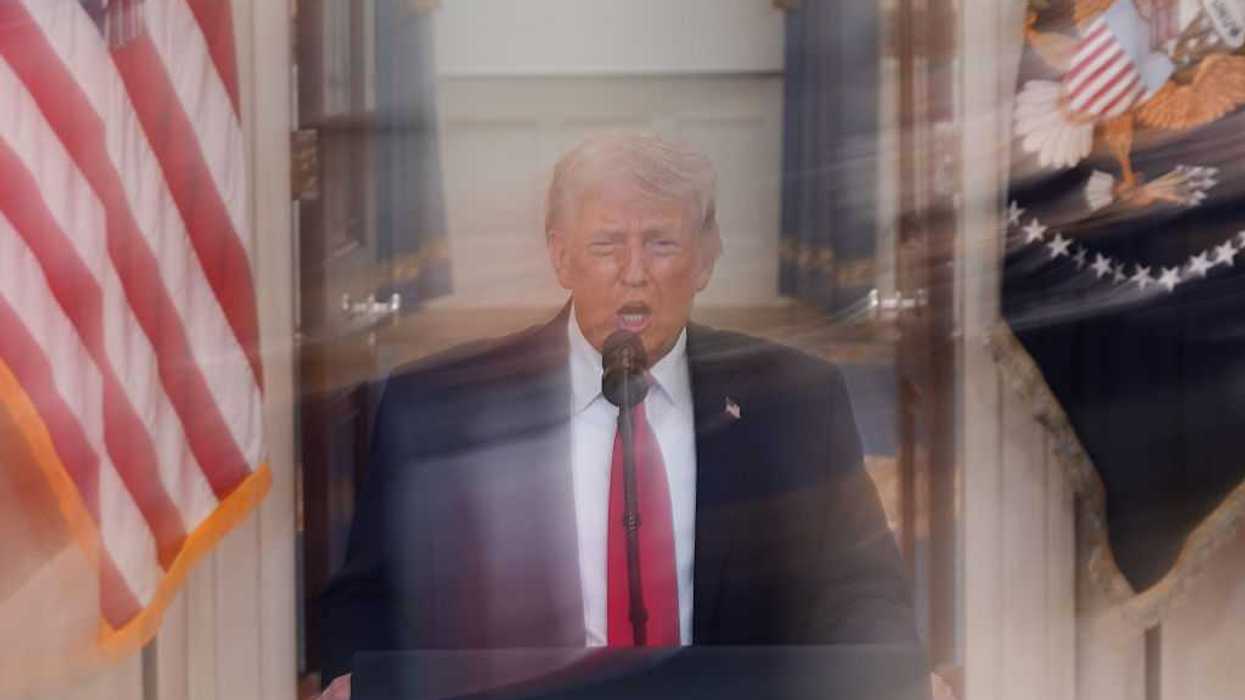
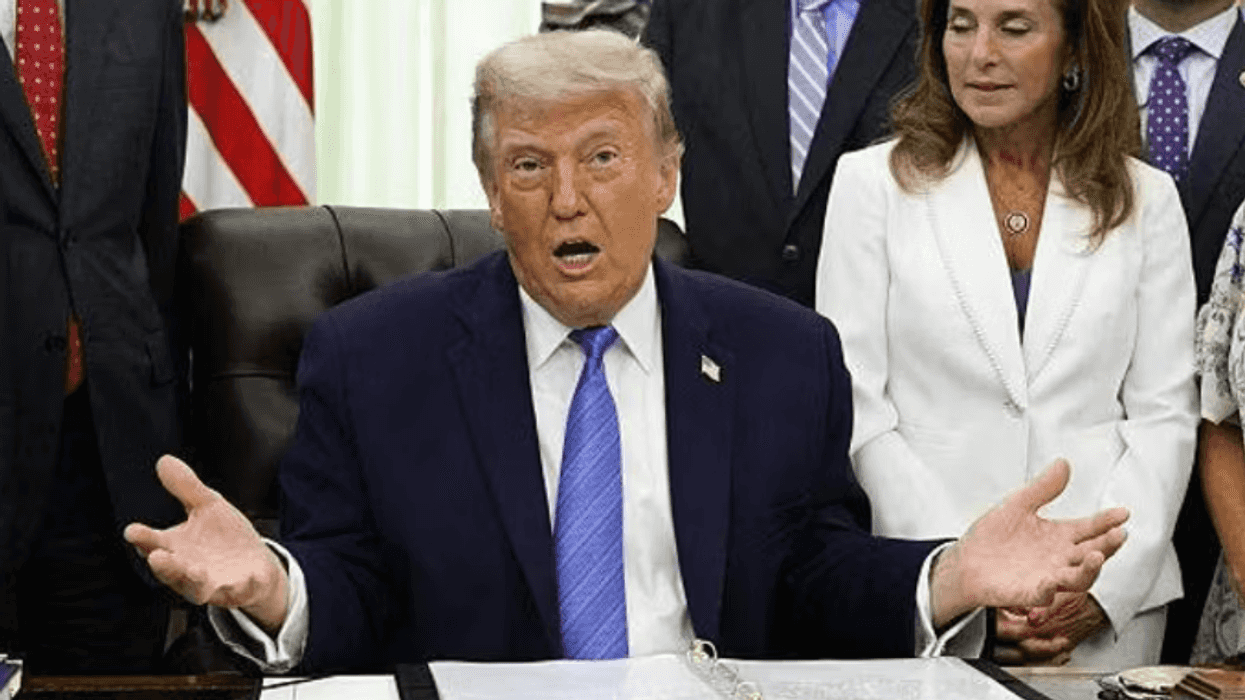
President Trump made that clear when, two months into his second term, he made an unusual visit to the Justice Department and spoke to the people who worked there. It wasn’t the visit itself that was unusual.
An article in The New York Times makes that clear. The Times quotes Professor Russell Riley, who said. “’Presidential speeches at the Department of Justice headquarters are practically a routine of the modern presidency. Most often, that venue is selected for the president to show appreciation to law enforcement officers and prosecutors, and to affirm their commitment to law and order.’”
What made Trump’s visit so remarkable is that he did not go to the Justice Department to affirm any such commitments but rather to tell the lawyers who worked there that there was a new sheriff in town who expected their help in going after his political enemies. While expressing pride in “the people in this room.” He bemoaned “the lies and abuses that have occurred within these walls.”
He characterized his predecessor and the prior administration as “a corrupt group of hacks and radicals within the ranks of the American government (who) obliterated the trust and goodwill built up over generations. They weaponized the vast powers of our intelligence and law enforcement agencies to try and thwart the will of the American people.”
In the president’s view, “Our predecessors turned this Department of Justice into the Department of Injustice.” Trump insisted that he, not the Attorney General, was “the chief law enforcement officer in our country” and, after listing his grievances, demanded that the department achieve “complete accountability for the wrongs and abuses that have occurred.”
Then, months later, in September 2025, he left nothing to the imagination. Referring to “(former FBI Director) Comey, (Senator) Adam ‘Shifty’ Schiff, (and) Leticia (James, New York’s Attorney General)” whom he called “guilty as hell, he urged Pam Bondi, then the Attorney General, not to “delay any longer, it’s killing our reputation and credibility. They impeached me twice and indicted me (5 times!), OVER NOTHING. JUSTICE MUST BE SERVED, NOW!!”
Gloves off. Dance to the president’s tune was the new order of business for Justice Department lawyers.
As a result, many of them have left, taking with them years of experience and dedication to the rule of law and their profession. Those who are left are under enormous pressure to deliver the results the president wants.
So, they sometimes cut corners, as the Chicago United States Attorney’s Office apparently did in the Broadview Six case. The New York Times says that lawyers from that office “Stacked the deck in their own favor by removing from the panel some grand jurors who had voted against them when considering an earlier version of the charges.”
They are not alone. “As Mr. Trump,” the Times adds, “has demanded more and more charges against those he perceives as his opponents, prosecutors have felt pressure to push weak cases through grand juries. And that, in turn, has led to an erosion in faith in the Justice Department by both the grand jurors themselves and the judges considering the cases.”
The columnist Michelle Goldberg asks the right question about the Trump Justice Department:” How long can decent people continue to work for such a corrupted institution?” She worries about what its lawyers will do when it is “impossible to serve both the cause of justice and an unjust government.”
The pressures on the lawyers in the Trump Justice Department are real. Navigating those pressures is not easy. And they will not go away when the current administration ends.
Justice Department lawyers need the kind of leadership that puts service above partisanship. We’ve seen it before when former Attorney General Edward Levi helped rebuild the department in the wake of Watergate.
In addition, citizens must speak out and urge our representatives to support that kind of work. All of us, regardless of political party, should want government lawyers who follow Jackson’s maxim: “A sensitiveness to fair play and sportsmanship is perhaps the best protection against the abuse of power, and the citizen's safety lies in the prosecutor who tempers zeal with human kindness, who seeks truth and not victims, who serves the law and not factional purposes, and who approaches his task with humility.”
The fate of America’s constitutional republic may depend in part on the willingness and ability of Justice Department lawyers to once again act as Jackson described.
Austin Sarat is the William Nelson Cromwell professor of jurisprudence and political science at Amherst College.