
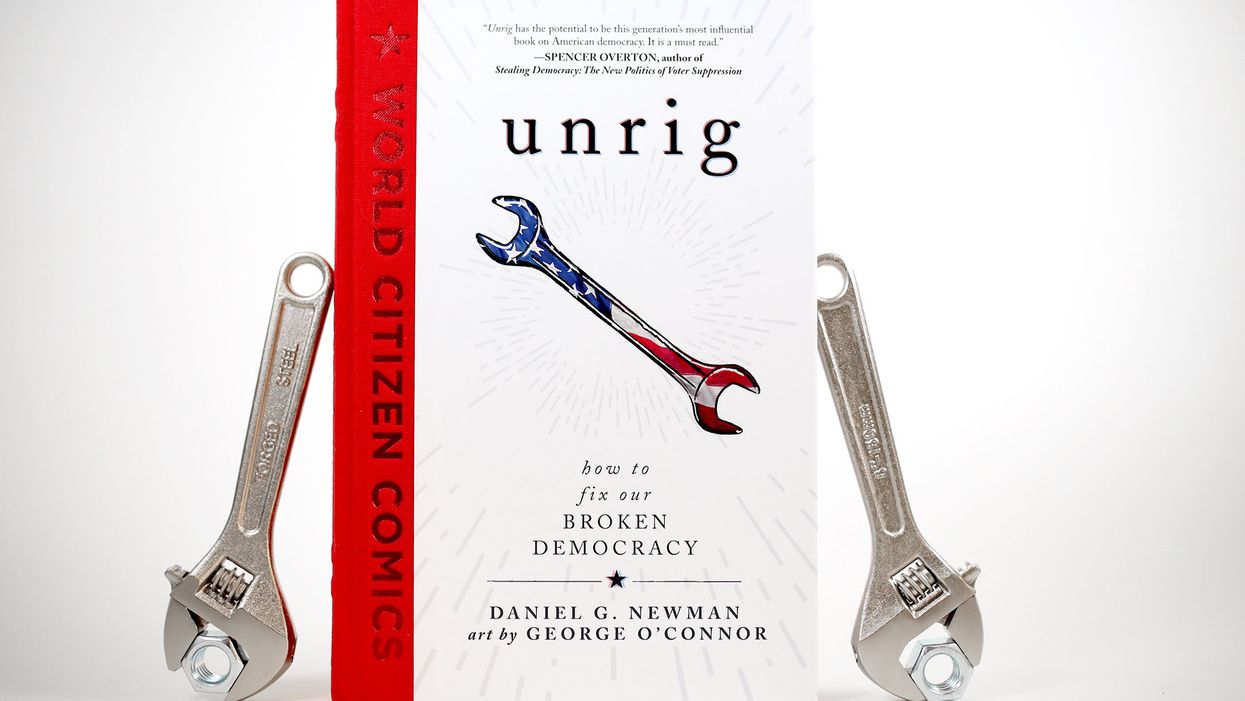

How did American democracy get so broken and what are the paths forward to fix it?
These complex questions are explored with levity and clarity in a new nonfiction graphic novel. In "Unrig: How to Fix Our Broken Democracy," the campaign finance reform advocate Daniel Newman dives into gerrymandering, money in politics, voting rights and more — all through comics illustrated by author and illustrator George O'Connor.
Having worked in the democracy reform space for the better part of two decades, Newman says he saw a critical need for material that explained the issues plaguing American politics, while also providing optimism and inspiration for making the system work better. Sales of the books, which start next week, will suggest whether he was right.
"I've had so many conversations over the last 15 years where I'm explaining how the rules of political money and voting affect every other issue in the county, and a lightbulb goes on, so this book is meant to provide a lightbulb moment of clarity," said Newman, who created in 2005 and remains president of MapLight, a nonpartisan nonprofit group that chronicles the influence of money in politics.
Newman, who's based in Berkeley, Calif., has been working on the 290-page book for two years, using interviews with more than 100 advocates and experts, plus his own knowledge and experience, to inform his writing.
His artist partner O'Connor, based in Brooklyn, is best known for the "Olympians" series of Greek mythology graphic novels.
Throughout, their work highlights central problems with the political system and explains tried and tested solutions, while also weaving in real-life stories of democracy reform advocates. The book leaves the reader with potential next steps they could take to get involved in the fix-the-system movement.
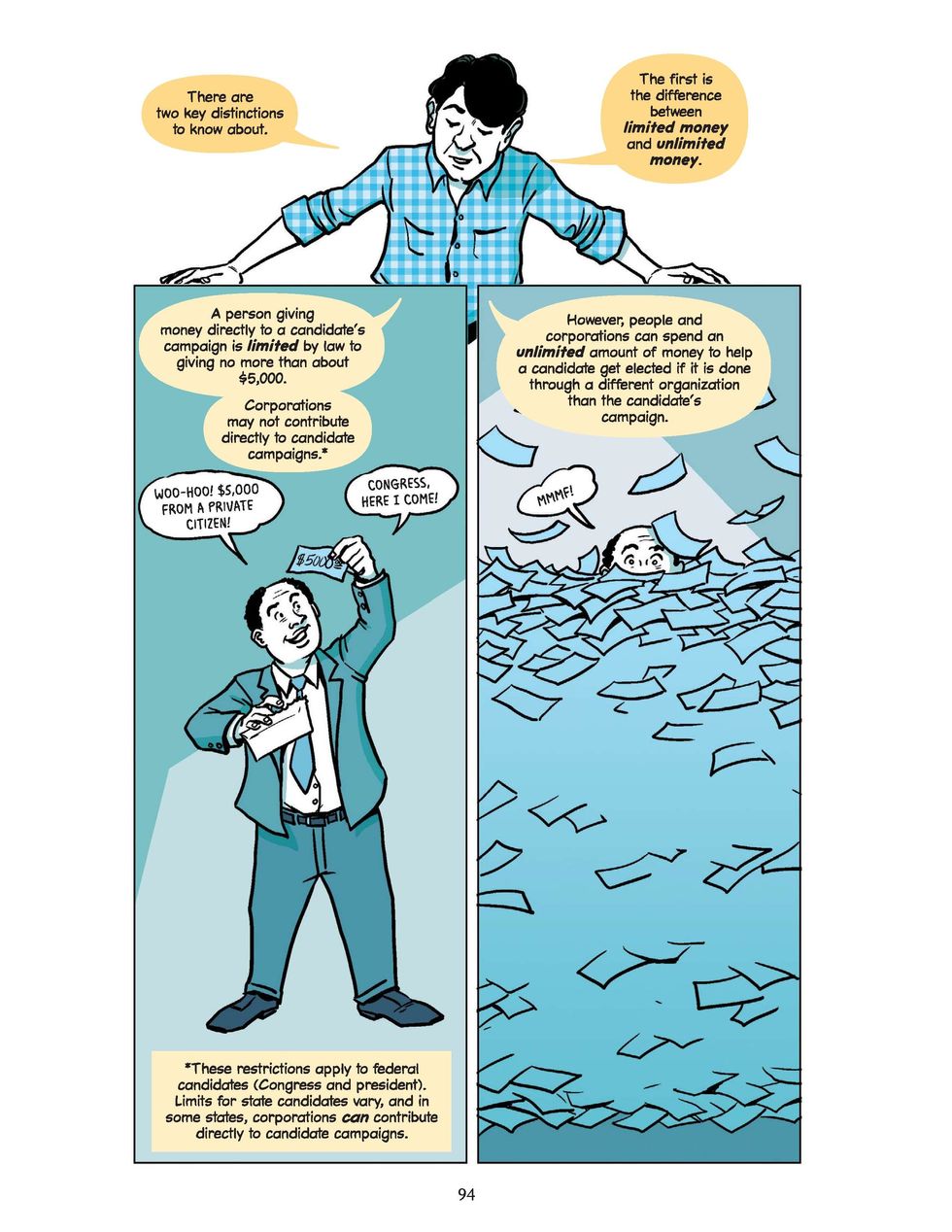
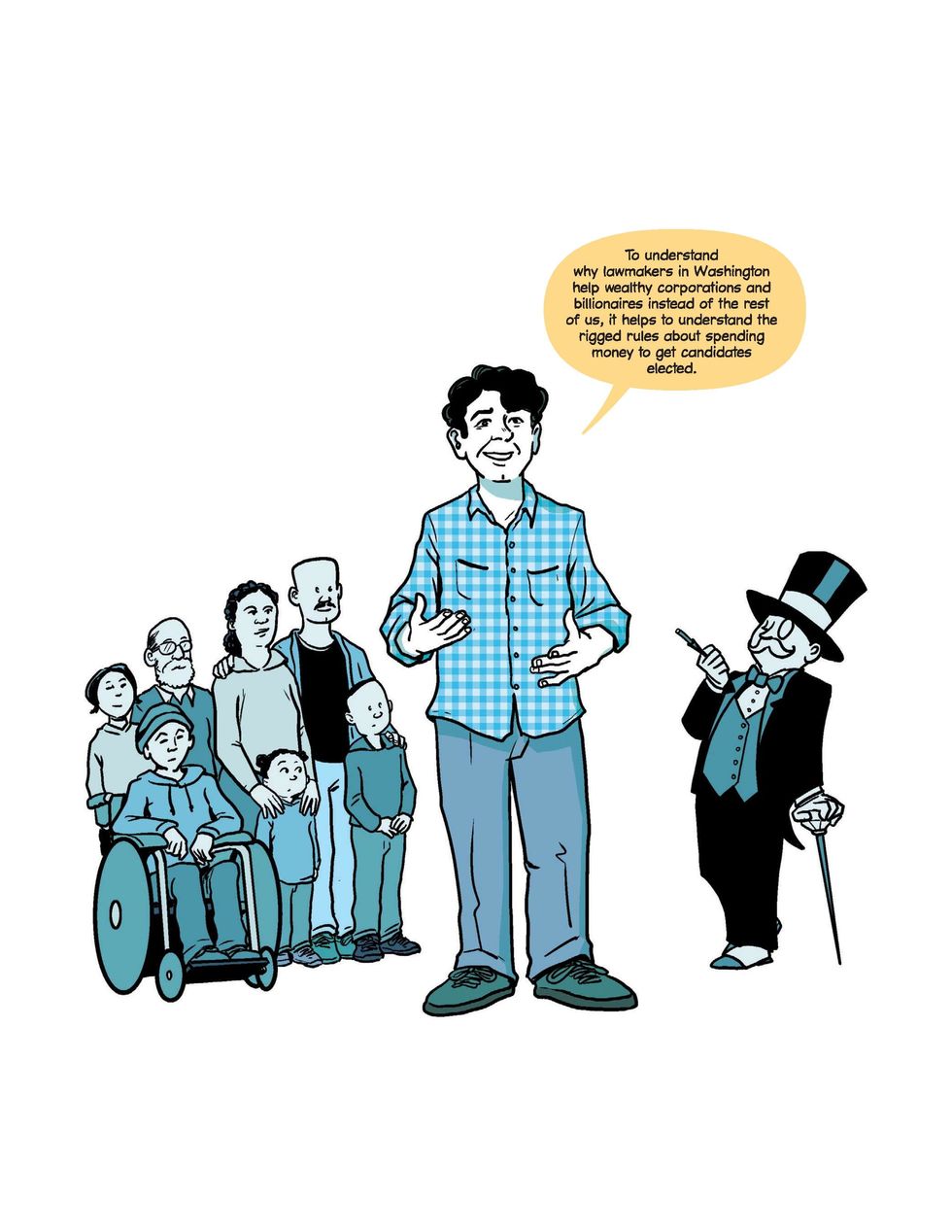
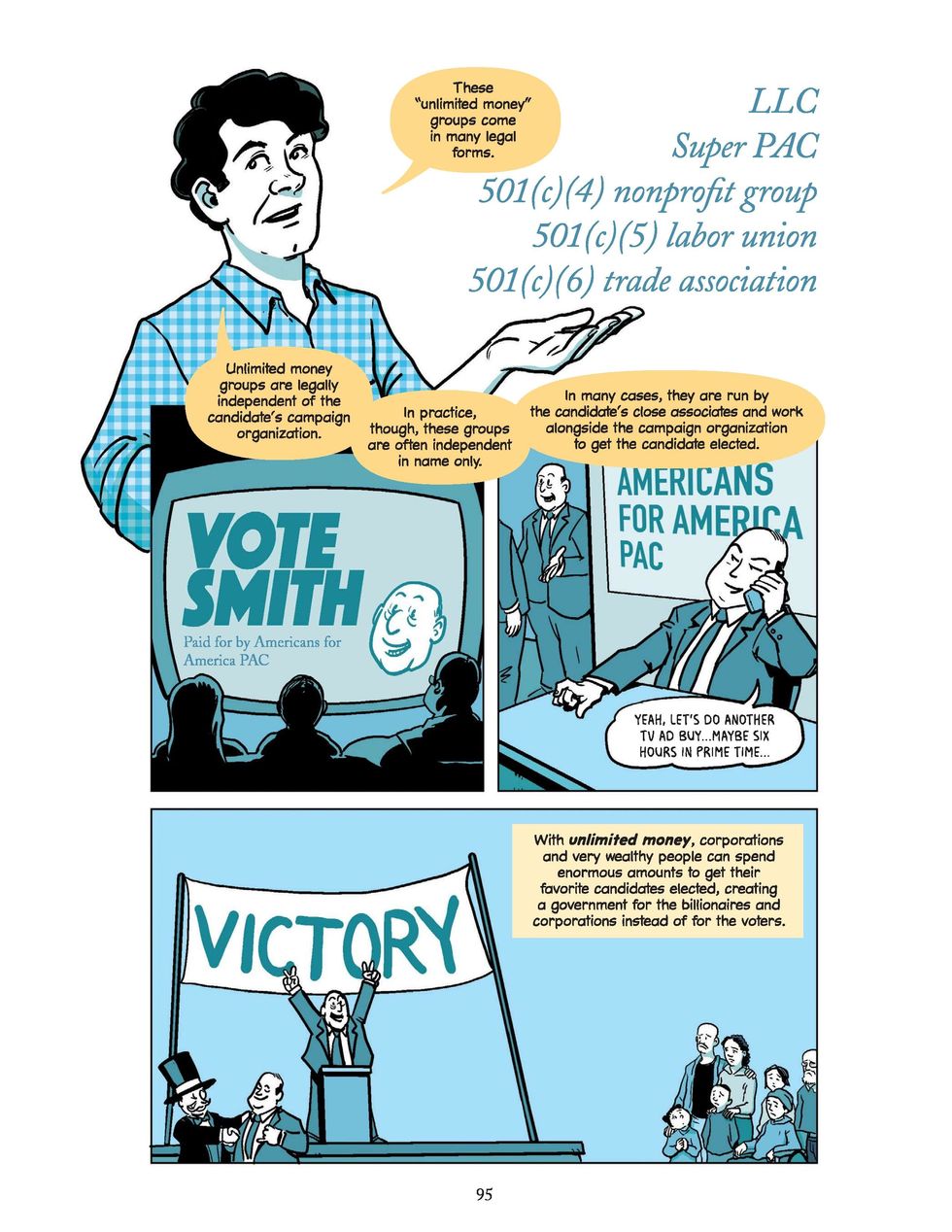
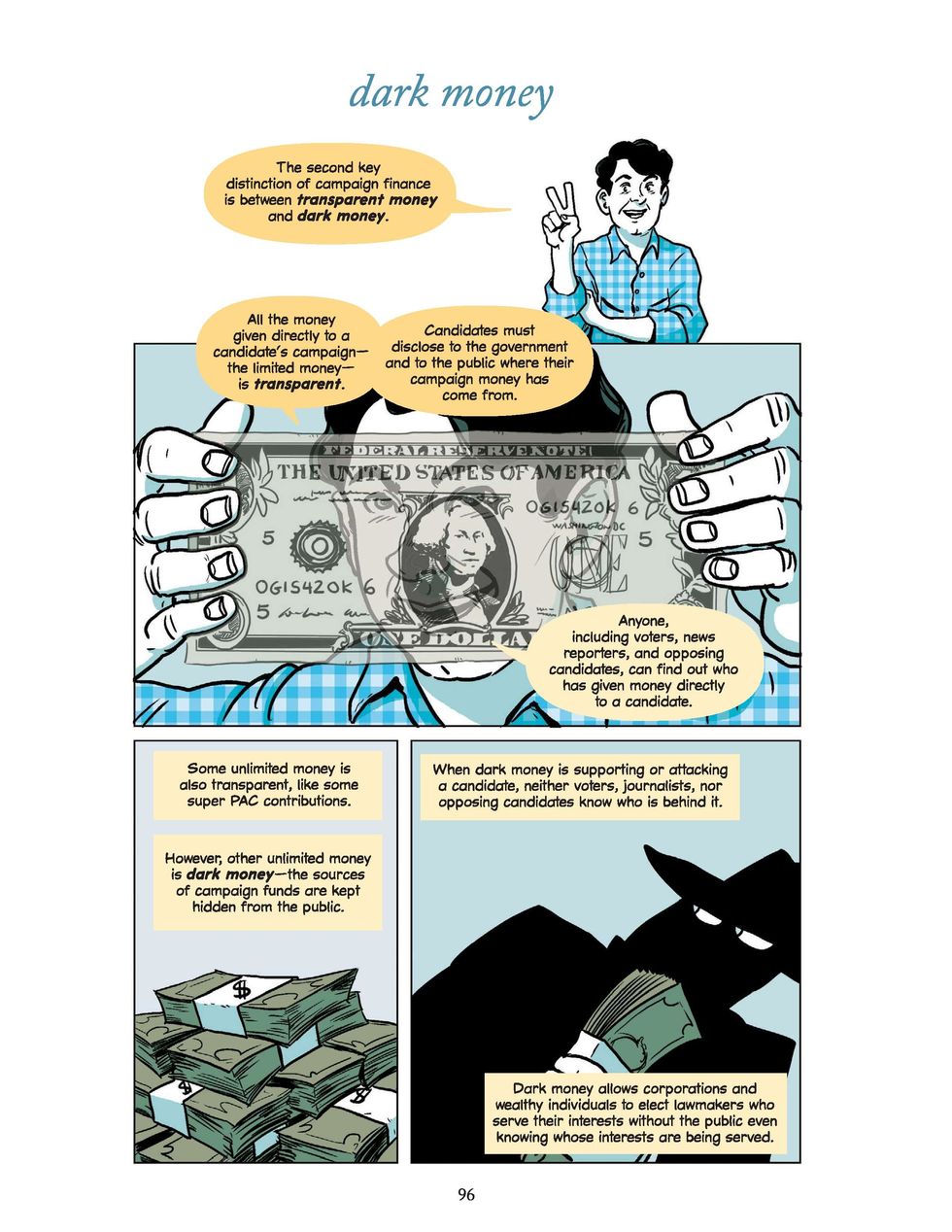
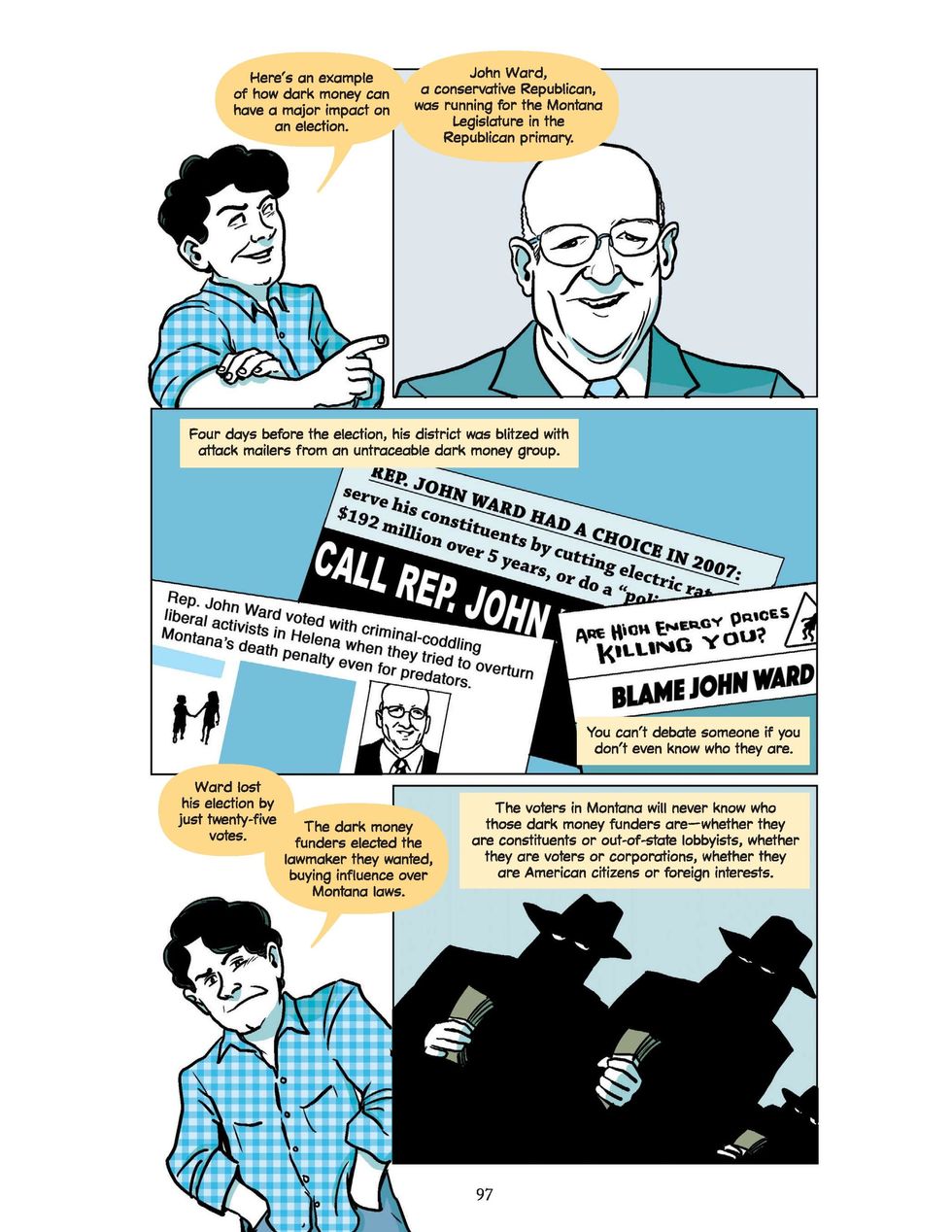
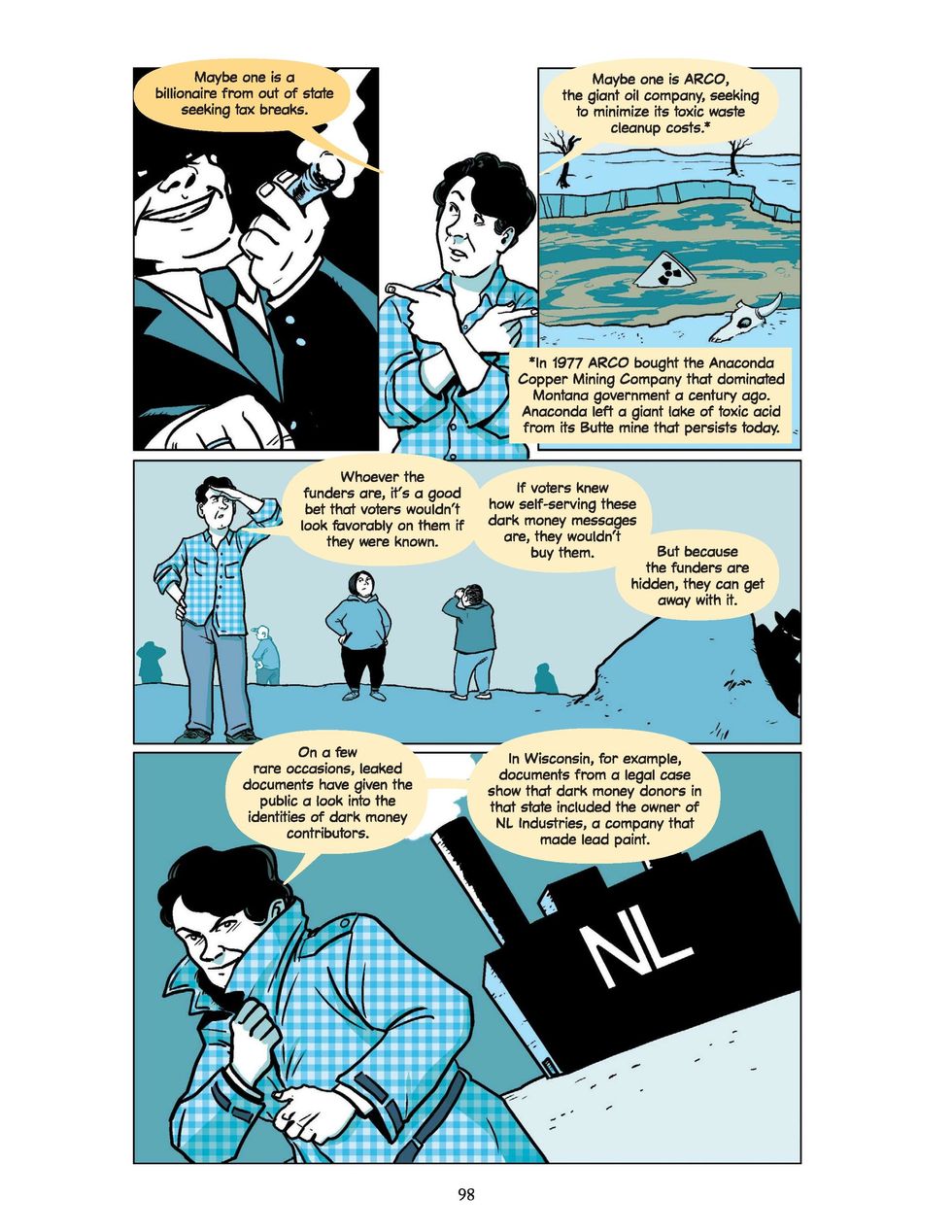
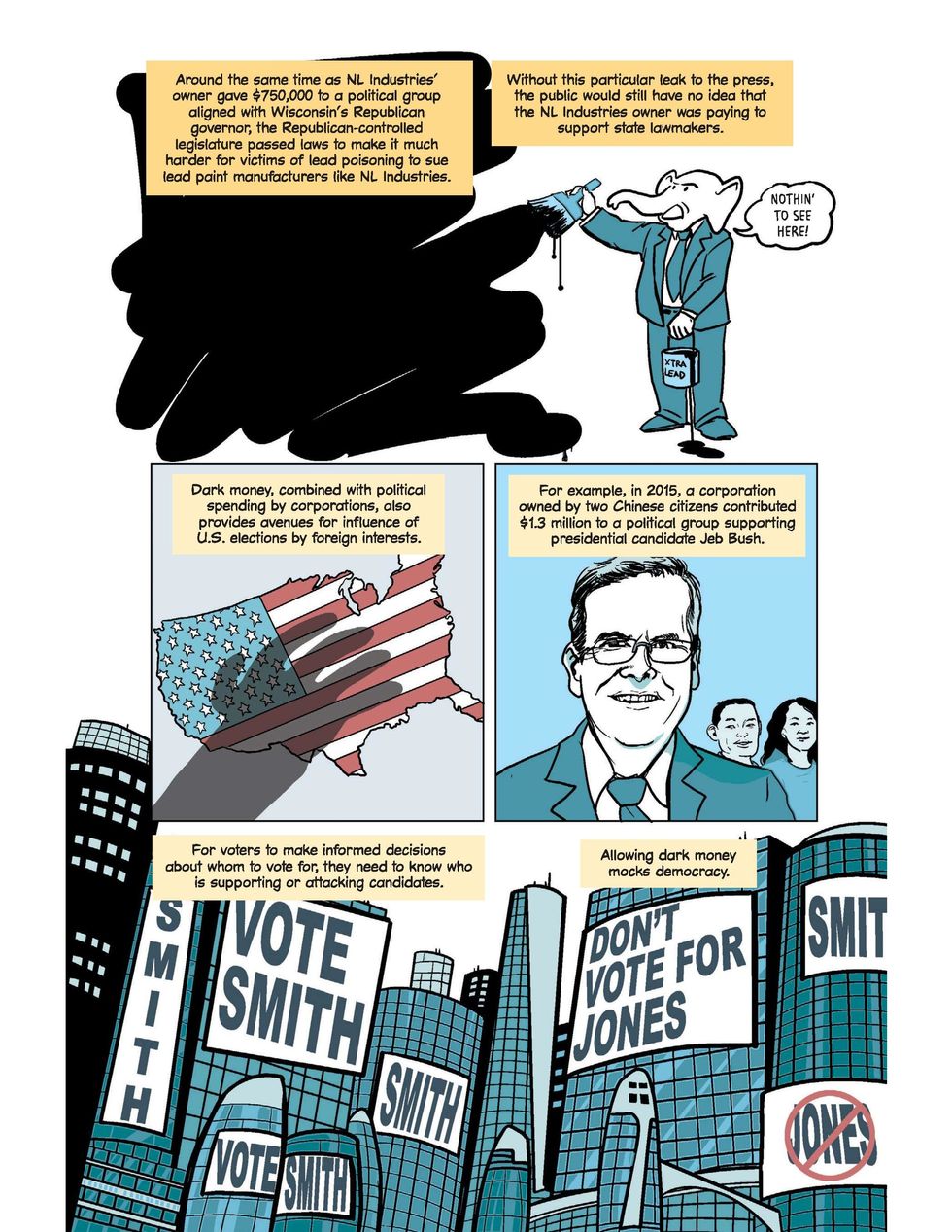
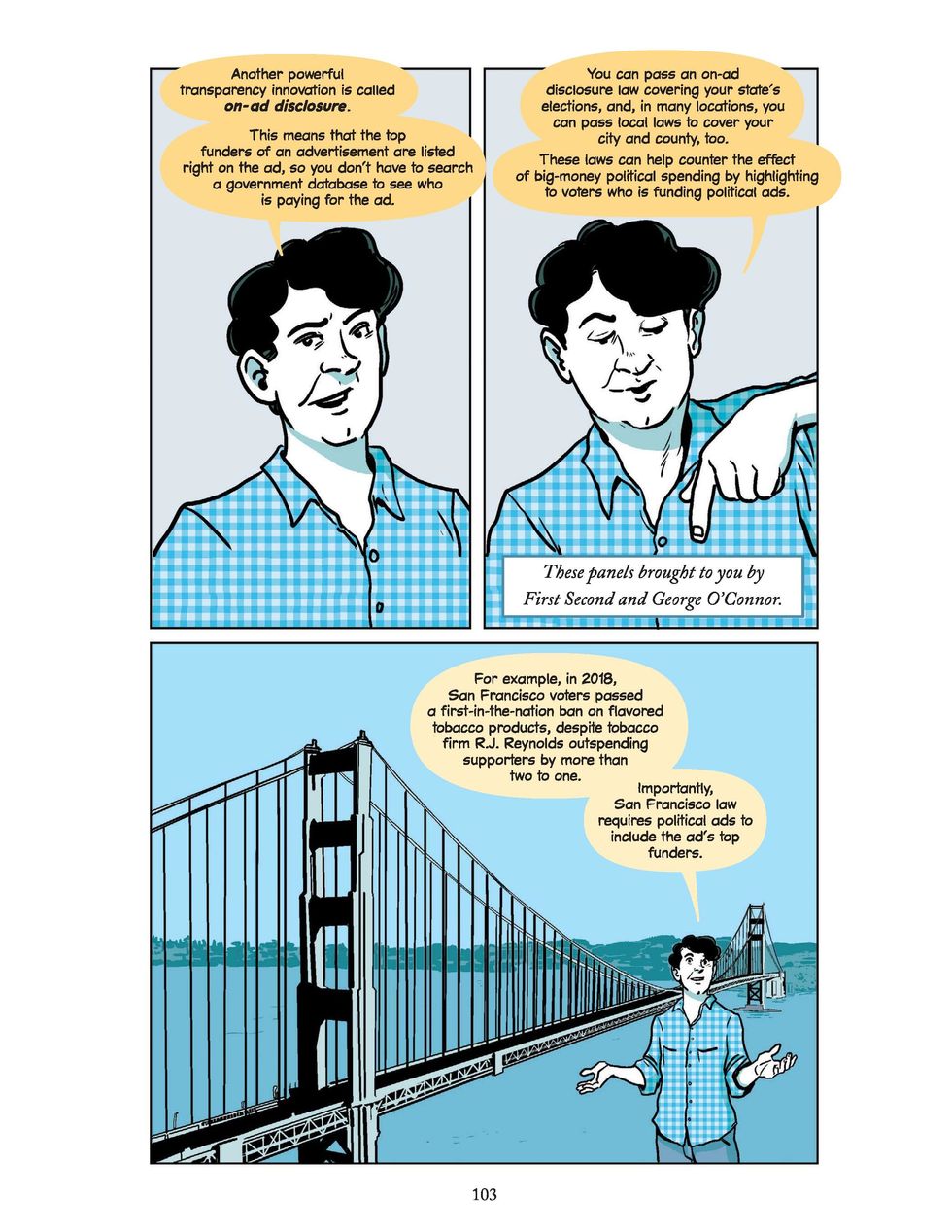
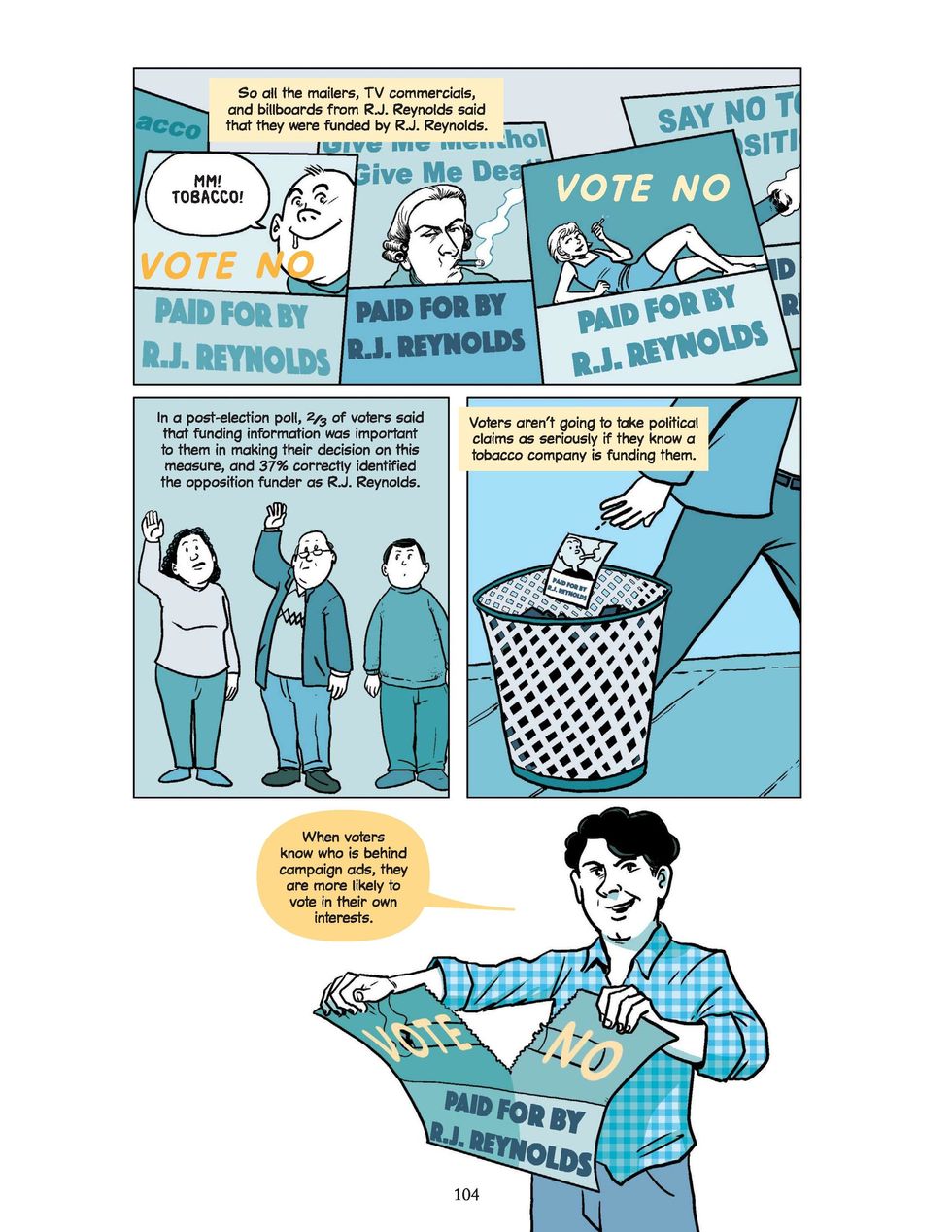
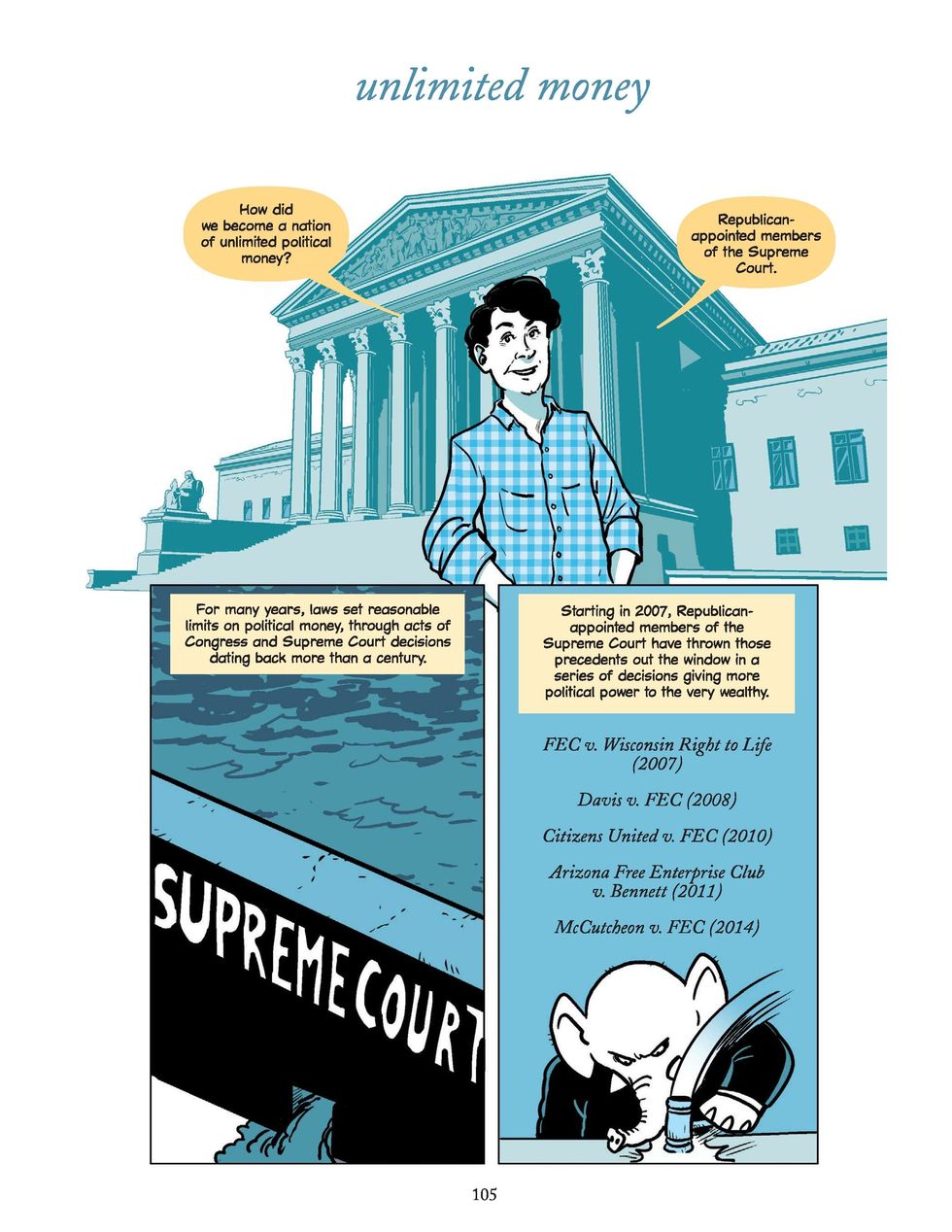
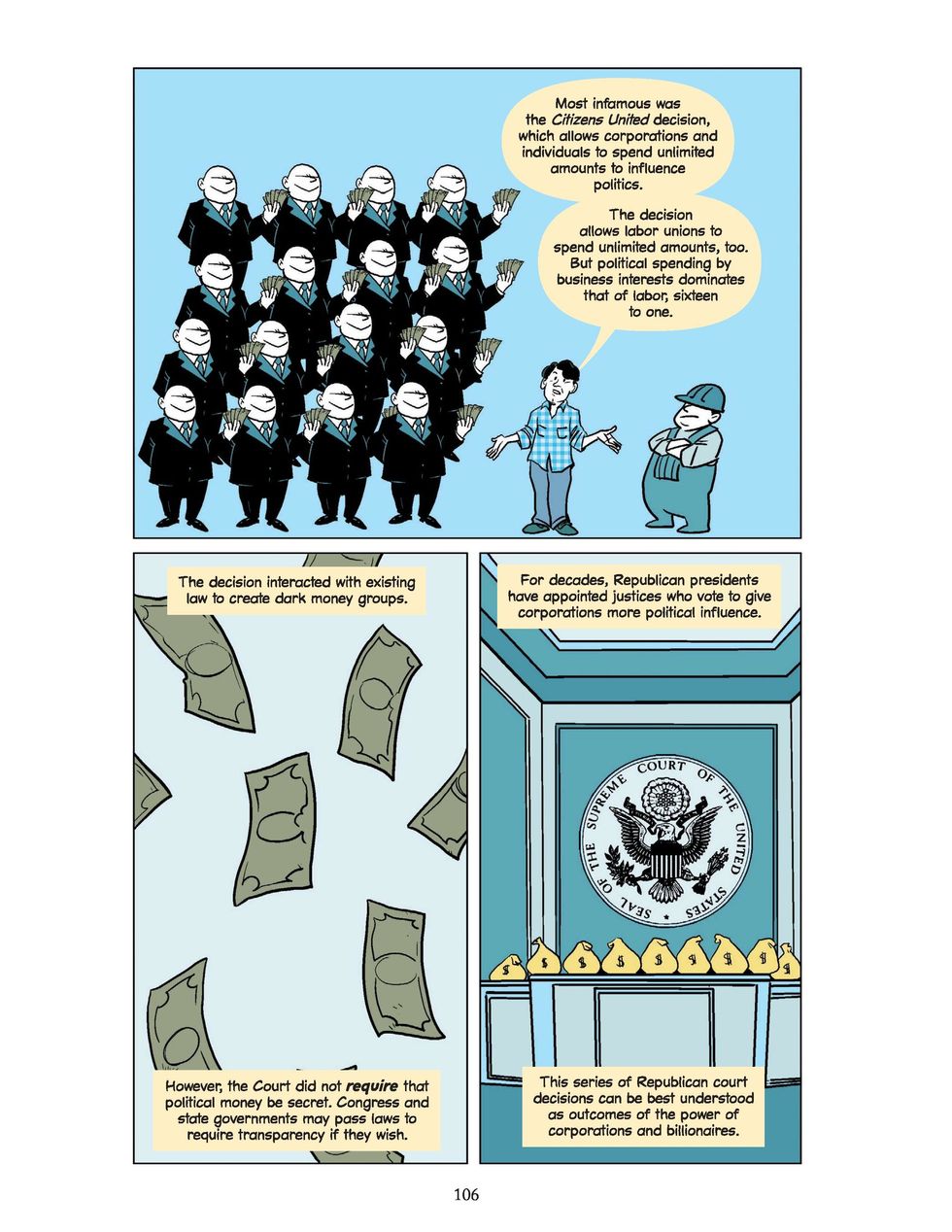
The chapter on political money — the topic Newman's most familiar with — explains how corporations and special interests are able to use their wealth to exert influence over politics, while remaining largely hidden from the public. One example is Republican John Ward, who lost his 2008 bid for the Montana Legislature by 25 votes following a last-minute ad blitz funded by entities whose identities remain hidden.
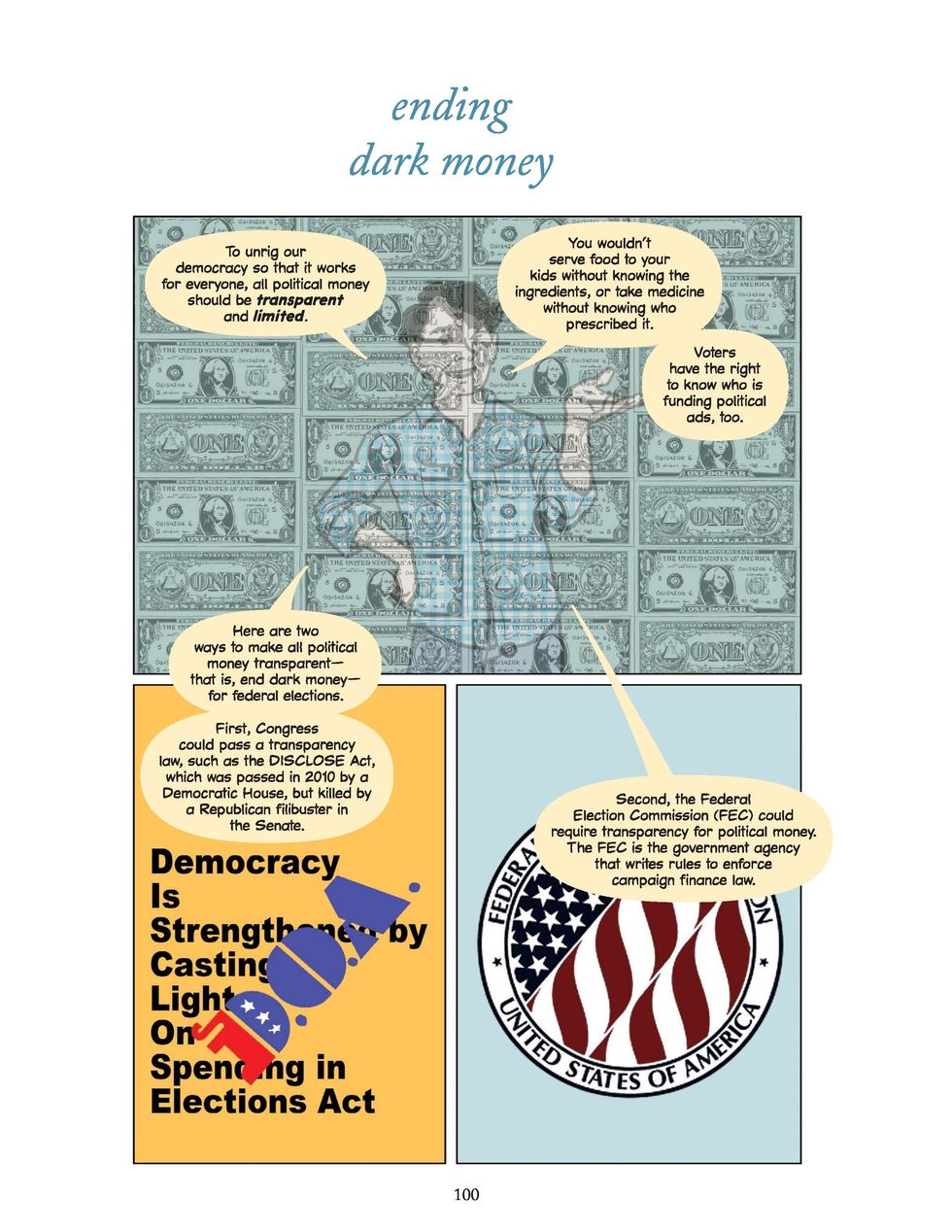
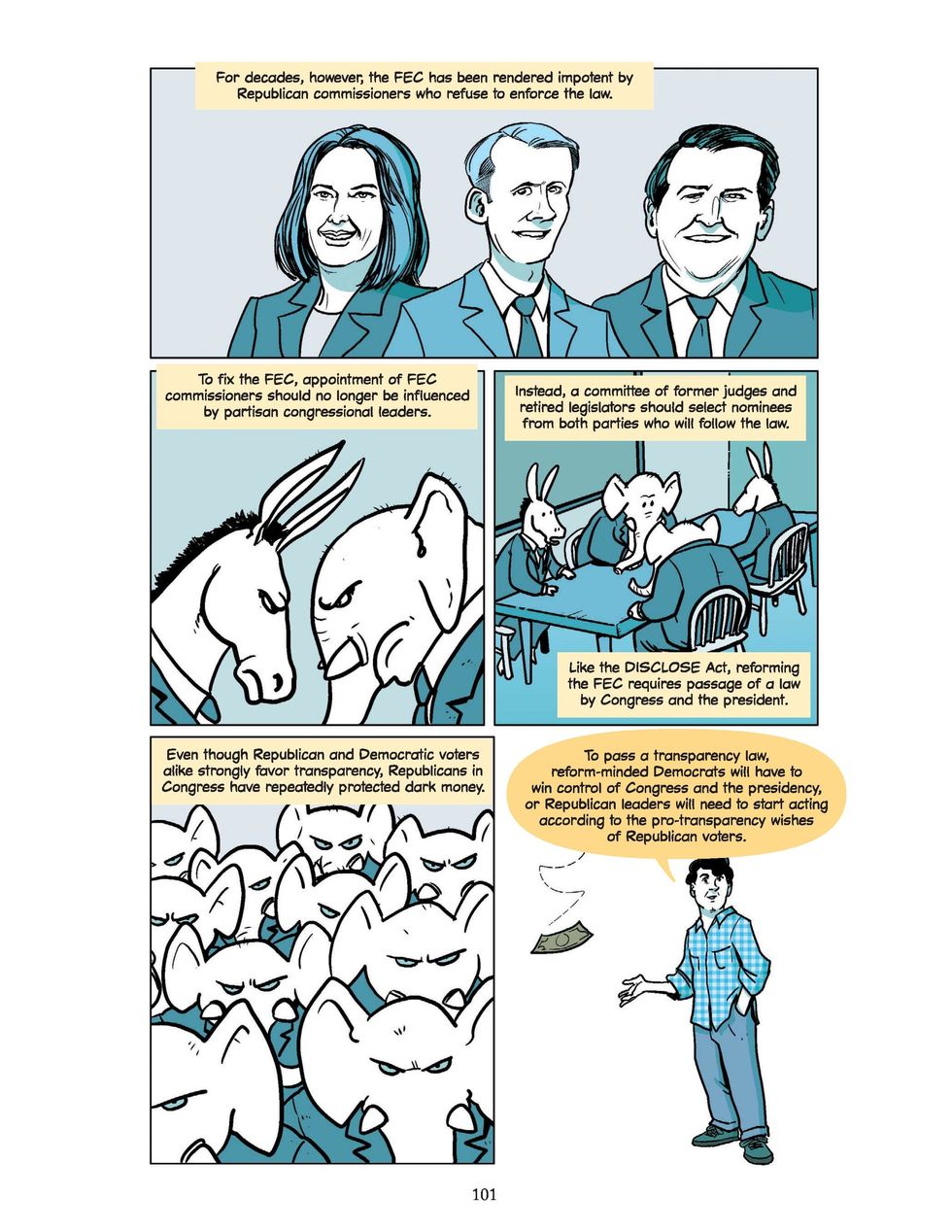
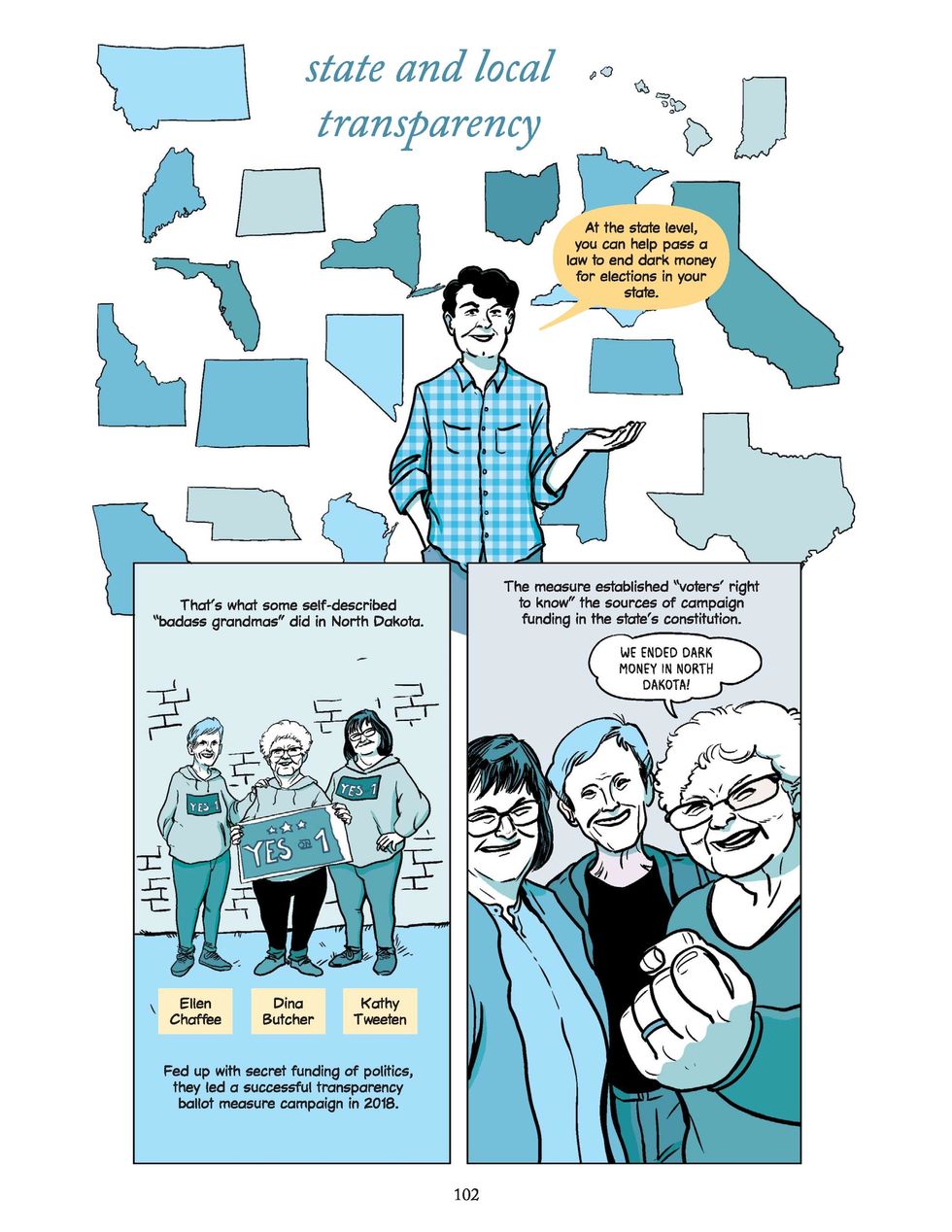
The chapter also points to solutions at the federal and state levels, including Congress bolstering disclosure rules for political ad spending online, the Federal Election Commission requiring greater campaign finance transparency and states adopting donor disclosure rules for political ads.
Democracy reform issues can often seem dry and complex, Newman said, but he hopes "Unrig" brings clarity and inspiration to readers.
"I hope people will be inspired to see that change is possible and is already happening — and how you can be involved, too," he said.
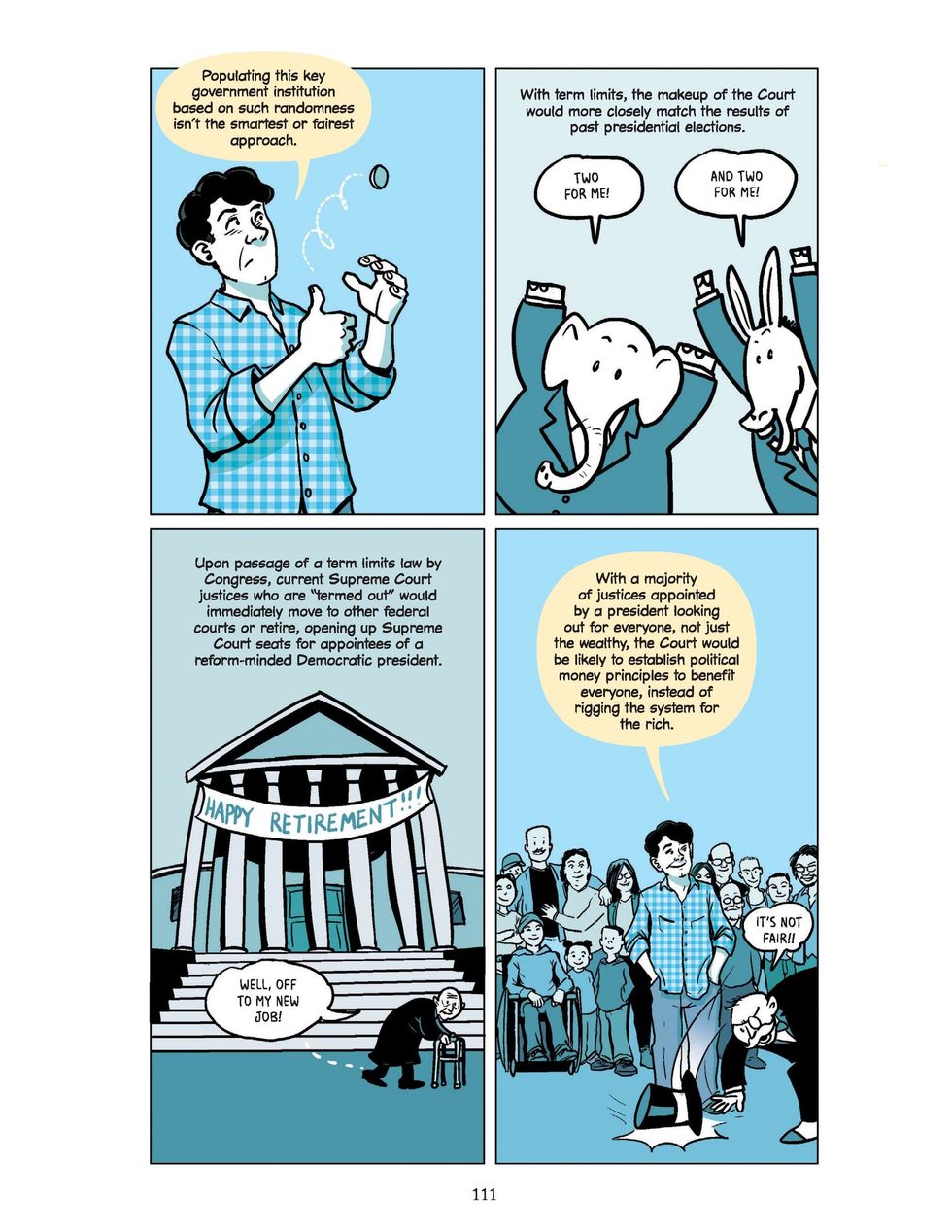
Here's an excerpt from that money-in-politics chapter of "Unrig."
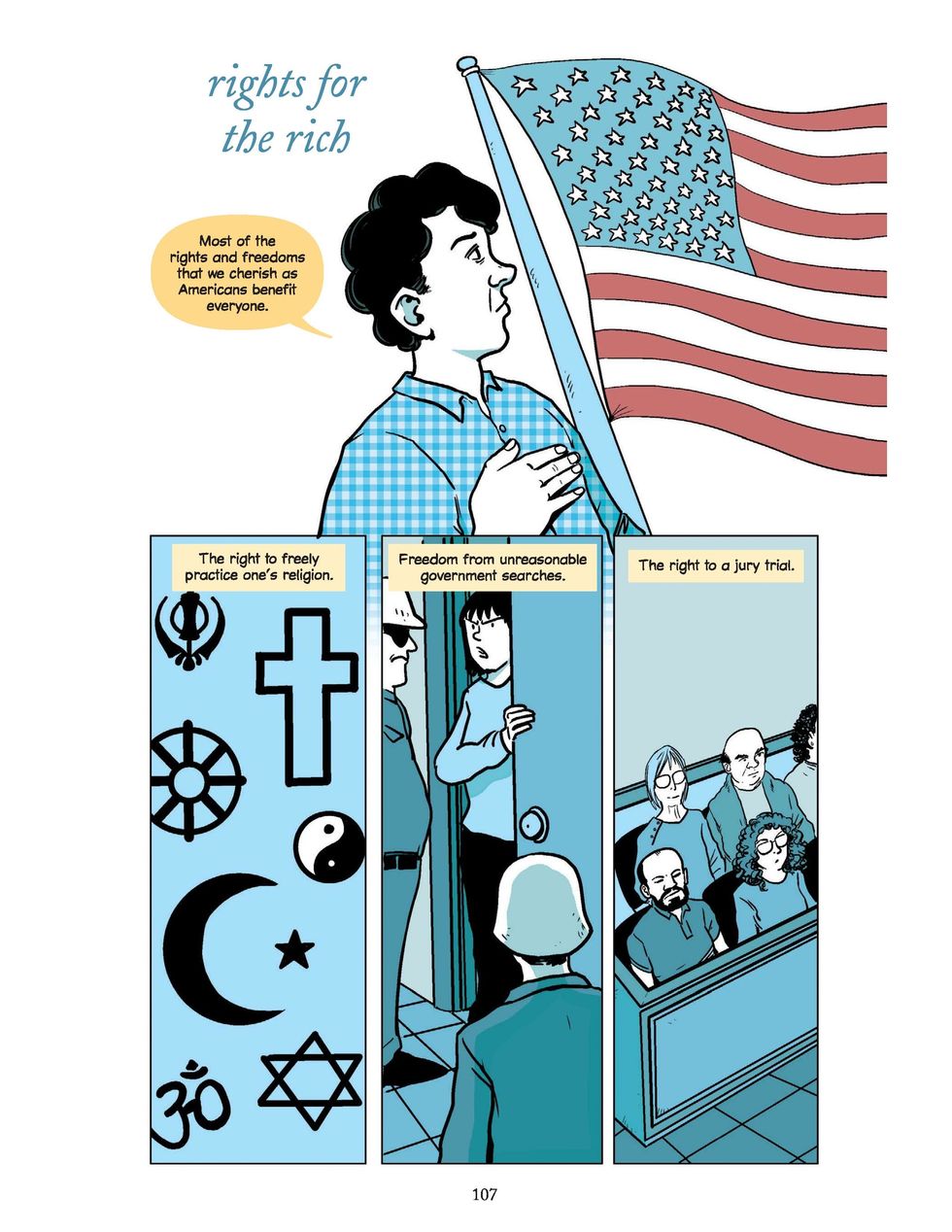
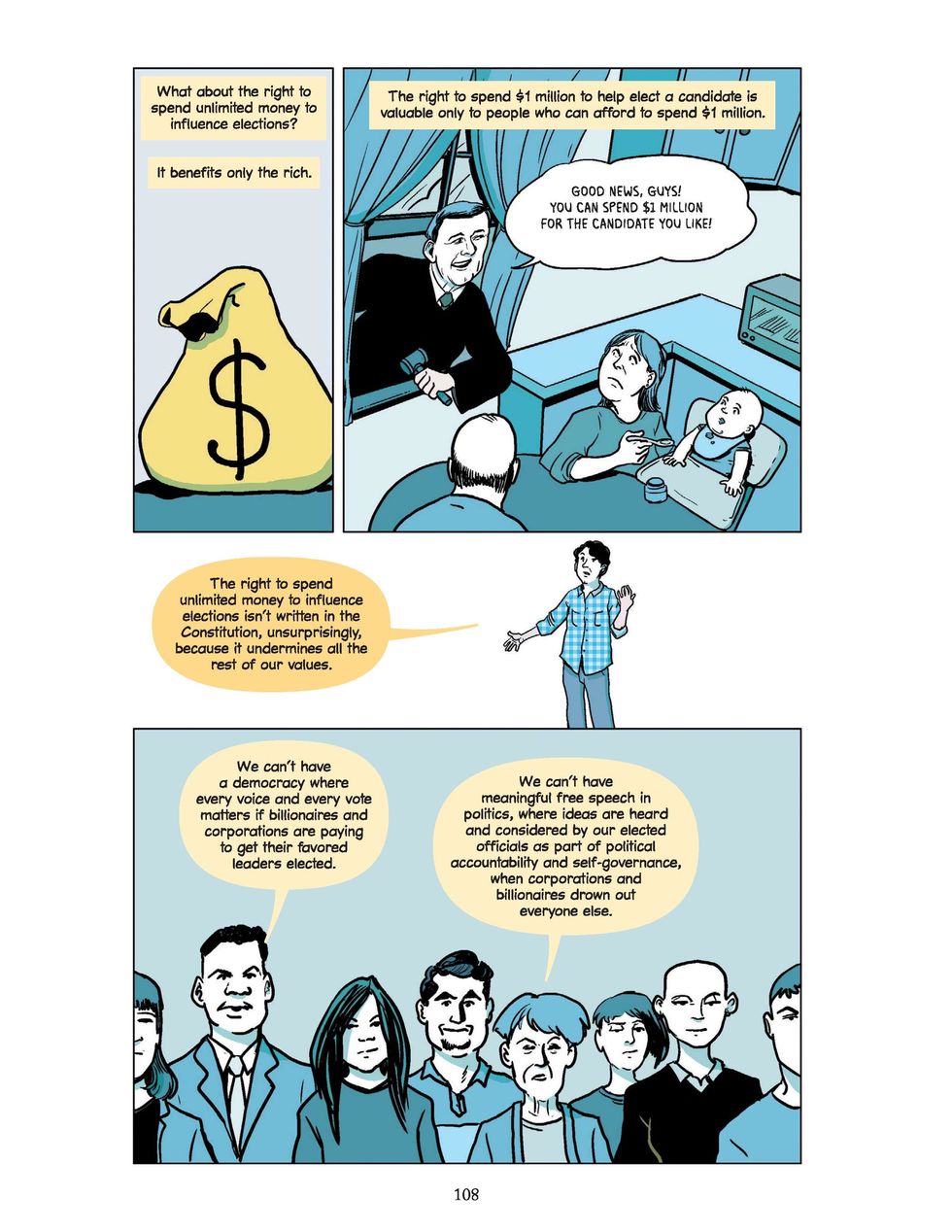
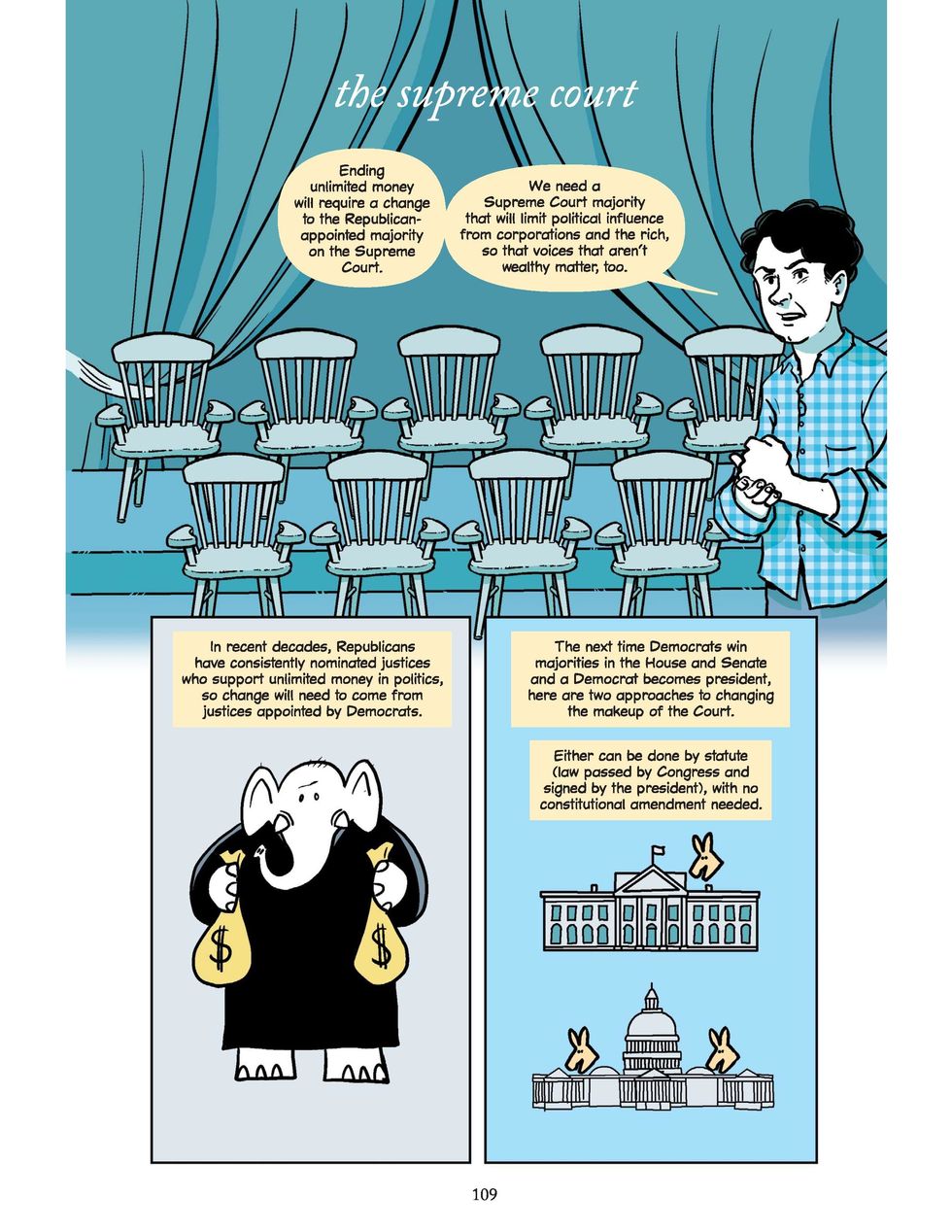
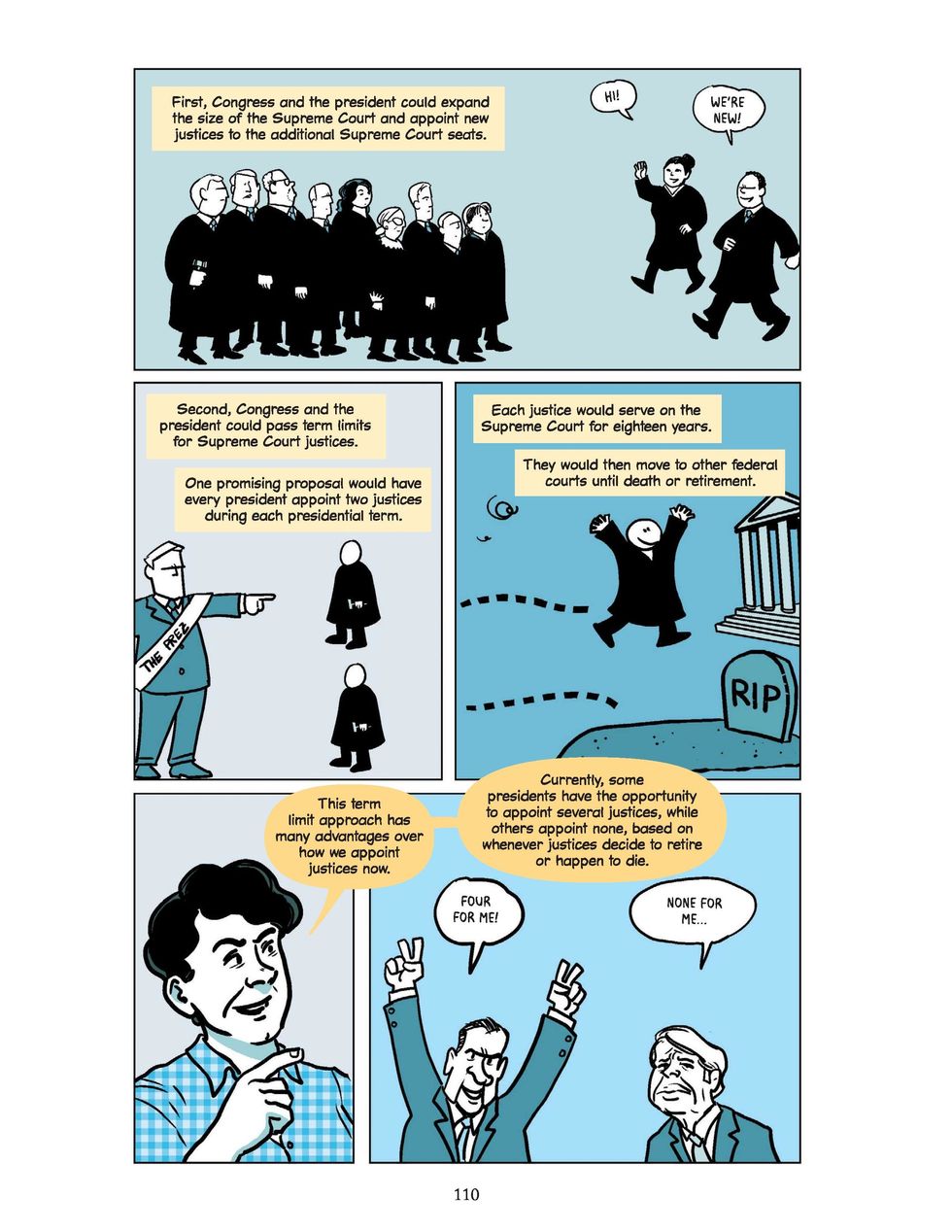










A deep look at how "All in the Family" remains a striking mirror of American politics, class tensions, and cultural manipulation—proving its relevance decades later.
All in This American Family
There are a few shows that have aged as eerily well as All in the Family.
It’s not just that it’s still funny and has the feel not of a sit-com, but of unpretentious, working-class theatre. It’s that, decades later, it remains one of the clearest windows into the American psyche. Archie Bunker’s living room has been, as it were, a small stage on which the country has been working through the same contradictions, anxieties, and unresolved traumas that still shape our politics today. The manipulation of the working class, the pitting of neighbor against neighbor, the scapegoating of the vulnerable, the quiet cruelties baked into everyday life—all of it is still here with us. We like to reassure ourselves that we’ve progressed since the early 1970s, but watching the show now forces an unsettling recognition: The structural forces that shaped Archie’s world have barely budged. The same tactics of distraction and division deployed by elites back then are still deployed now, except more efficiently, more sleekly.
Archie himself is the perfect vessel for this continuity. He is bigoted, blustery, reactive, but he is also wounded, anxious, and constantly misled by forces above and beyond him. Norman Lear created Archie not as a monster to be hated (Lear’s genius was to make Archie lovable despite his loathsome stands), but as a man trapped by the political economy of his era: A union worker who feels his country slipping away, yet cannot see the hands that are actually moving it. His anger leaks sideways, onto immigrants, women, “hippies,” and anyone with less power than he has. The real villains—the wealthy, the connected, the manufacturers of grievance—remain safely and comfortably offscreen. That’s part of the show’s key insight: It reveals how elites thrive by making sure working people turn their frustrations against each other rather than upward.
Edith, often dismissed as naive or scatterbrained, functions as the show’s quiet moral center. Her compassion exposes the emotional void in Archie’s worldview and, in doing so, highlights the costs of the divisions that powerful interests cultivate. Meanwhile, Mike the “Meathead” represents a generation trying to break free from those divisions but often trapped in its own loud self-righteousness. Their clashes are not just family arguments but collisions between competing visions of America’s future. And those visions, tellingly, have yet to resolve themselves.
The political context of the show only sharpens its relevance. Premiering in 1971, All in the Family emerged during the Nixon years, when the “Silent Majority” strategy was weaponizing racial resentment, cultural panic, and working-class anxiety to cement power. Archie was a fictional embodiment of the very demographic Nixon sought to mobilize and manipulate. The show exposed, often bluntly, how economic insecurity was being rerouted into cultural hostility. Watching the show today, it’s impossible to miss how closely that logic mirrors the present, from right-wing media ecosystems to politicians who openly rely on stoking grievances rather than addressing root causes.
What makes the show unsettling today is that its satire feels less like a relic and more like a mirror. The demagogic impulses it spotlighted have simply found new platforms. The working-class anger it dramatized has been harvested by political operatives who, like their 1970s predecessors, depend on division to maintain power. The very cultural debates that fueled Archie’s tirades — about immigration, gender roles, race, and national identity—are still being used as tools to distract from wealth concentration and political manipulation.
If anything, the divisions are sharper now because the mechanisms of manipulation are more sophisticated, for much has been learned by The Machine. The same emotional raw material Lear mined for comedy is now algorithmically optimized for outrage. The same social fractures that played out around Archie’s kitchen table now play out on a scale he couldn’t have imagined. But the underlying dynamics haven’t changed at all.
That is why All in the Family feels so contemporary. The country Lear dissected never healed or meaningfully evolved: It simply changed wardrobe. The tensions, prejudices, and insecurities remain, not because individuals failed to grow but because the economic and political forces that thrive on division have only become more entrenched. Until we confront the political economy that kept Archie and Michael locked in an endless loop of circular bickering, the show will remain painfully relevant for another fifty years.
Ahmed Bouzid is the co-founder of The True Representation Movement.