Earlier this year, the Bridge Alliance and the National Academy of Public Administration launched the Fellows for Democracy and Public Service Initiative to strengthen the country's civic foundations. This fellowship unites the Academy’s distinguished experts with the Bridge Alliance’s cross‑sector ecosystem to elevate distributed leadership throughout the democracy reform landscape. Instead of relying on traditional, top‑down models, the program builds leadership ecosystems—spaces where people share expertise, prioritize collaboration, and use public‑facing storytelling to renew trust in democratic institutions. Each fellow grounds their work in one of six core sectors essential to a thriving democratic republic.
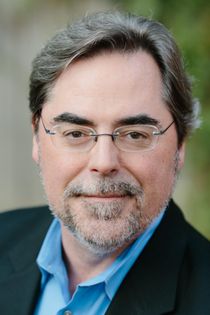
Below is an interview with Kristina Becvar. She currently advises clients across the democracy ecosystem, including bridging and dialogue, participatory practices, nonpartisan reform, civic engagement and education, governance, and trusted information, bringing expertise in strategy, communications, and research. Previously, she served as Executive Director of the Bridge Alliance Education Fund and co-publisher of The Fulcrum.
Her Fellows for Democracy and Public Service Initiative will create “From Dialogue to Direction: Rebuilding Shared Civic Purpose in a Fragmented Democracy.” This project seeks to address an increasingly consequential challenge in the bridging community: the lack of shared purpose, coordination, and narrative coherence among those working to strengthen American democracy itself.
Question: Could you describe your project, your approach, and who you anticipate being potential collaborators and stakeholders?
Kristina Becvar: I anticipate the collaborators and stakeholders will be those coalition holders and builders in the different sectors of the democracy space. I plan on working with those who are working within the different democracy fields specifically for improving bridging and dialogue in our society. I hope to engage in a debate about the limits of persuasion in this kind of era of hardened political identity and how we are able to connect practitioners together to have some shared agreements so that we can have some cohesion.
The second part would be to create a practical framework, kind of like a playbook for designing dialogue and collaboration that leads to alignment. How can we engage in everyday practices and how can we bring people into the practice.
Question: What are some of the practical results you expect and what sort of actions do you think could be carried out to implement your vision?
Kristina Becvar: I'd say a practical outcome is a clear shared vocabulary for the bridging and dialogue field. The practical outcomes are going to be some executable guidance on how to functionally make our field more cohesive.
Question: How might citizens or other key stakeholders utilize your work on this project to improve American democracy?
Kristina Becvar: I think that the goal of the folks working in the bridging and dialogue field has always been to engage citizens and stakeholders in democracy. I think that practitioners and coalition leaders are going to find this useful for developing a ladder of engagement, how to bring people in at whatever stage, interventions and facilitation is necessary.
Enjoy the short video:
https://youtube.com/shorts/NYrBYdSR3iE
Bradford Fitch is the former CEO of the Congressional Management Foundation, a former congressional staffer, and author of “The Citizen’s Handbook for Influencing Elected O