


And no, I don't mean the Republican elephant. I mean the elephant in the room that is being ignored.
The DNC's 2024 Election Report fails to even note what I consider to be a major failure by the Party—the elephant in the Democratic Party's room—not just of the Harris campaign, but of all Democratic campaigns of the past 20 years: the Party's failure to acknowledge and address the plight of blue-collar middle-class Americans.
In 2011, I wrote a post, "Democrats Better Pay Attention to the Needs of the Middle Class." In that post, I examined why the Tea Party was so angry and why formerly solid Democrats were so open to the demagoguery of Sarah Palin and Republican pundits. The answer was not just the election of a Black President, Barack Obama. Blue-collar middle-class workers were hurting—their standard of living and quality of life had been drifting downward as globalization resulted in manufacturing jobs disappearing and wages stagnating over the previous 30 years. And during those years, while they saw the Party fighting for the poor and people of color, they felt neglected. (See also the Foreword to my book, We Still Hold These Truths.)
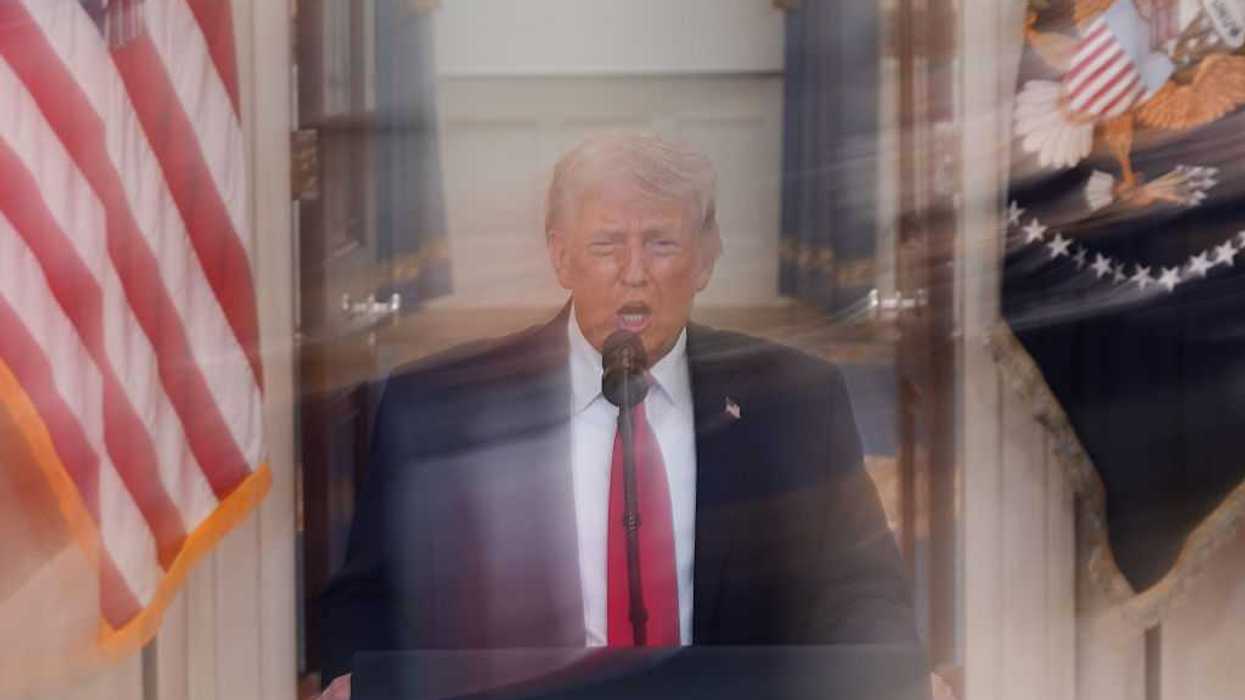
The world as the middle class knew it since WWII had been turned upside down. Small wonder they were and are scared, angry, and alienated. Yet this important shift in the American social fabric was never acknowledged by Democrats. Politicians continued to talk vaguely about the need to protect the middle class, but the evisceration that had already occurred was not mentioned. Even when Trump appeared on the scene and vociferously voiced compassion for blue-collar workers and vowed to restore them to financial well-being, the Democrats countered with nothing.
I have written previously that it is the Democratic Party's fault that our country finds itself in the dreadful place it has been since Trump was elected and took control of the Republican Party. Most Democrats will probably find this an extreme claim. But if the Party had paid attention to the plight of this core segment of the historic Democratic coalition, if the Party had spoken to them, if they had issued a mea culpa, if they had proposed and enacted policies to help these workers back to prosperity, Trump would have never been able to attract these voters and would never have won either in 2016 or 2024.
What to do now? It is not too late to do what should have been done years ago. The Party, together with all Democratic politicians, must issue a very public mea culpa to America's blue-collar middle class. And it must propose policies and programs to restore their financial well-being that the Party will enact if it is restored to power in Congress and the presidency. The moment could not be more propitious, as Trump's blue-collar supporters are feeling the pain of inflation as never before due to his actions.
But don't try to regain their support by trashing Trump. Trump supporters are fiercely loyal to him and will never agree with negative attacks on him. They may also feel that such attacks are indirect attacks on them since they supported him in all these matters.
No, the approach to blue-collar America must be to issue, unabashedly, a mea culpa—forgive me for I have neglected you. No one else is at fault, no one else is criticized, no excuses made (e.g. economists all thought globalization was a great idea). A mea culpa coupled with strong, common-sense policies and programs intended to help the blue-collar worker—and effectively communicated to them—will bring the disaffected blue-collar worker back to the Party.
The last point about effective communication is critical. Biden's huge Infrastructure measure could—should—have brought many of these disaffected blue-collar workers back to the Party if they had been told this was enacted to help them, not just to invest in the future and transform our economy. But they were never mentioned, never spoken to; Biden and Harris traveled around the country to benefit politically from all the projects, but they never mentioned the plight of the blue-collar worker and their intent to help them back to financial well-being. And so the opportunity was lost.
The appeal should be, "Are you better off now than you were 2 years ago? Come back home to the Democratic Party. You will be welcomed and nurtured and you will prosper again."
Ronald L. Hirsch is a teacher, legal aid lawyer, survey researcher, nonprofit executive, consultant, composer, author, and volunteer. He is a graduate of Brown University and the University of Chicago Law School and the author of We Still Hold These Truths. Read more of his writing at www.PreservingAmericanValues.com