




Our Long Train of Abuses
Over a snowy winter weekend, I watched Ken Burns’ The American Revolution. (And yes, if you’re not already supporting your local PBS and NPR station, you should do that today).
We’re approaching the 250th anniversary of the Declaration of Independence, and as I watched, I kept thinking about a particular passage, the one that, if I’m being honest, I probably remember best from National Treasure. Yes, the heist movie where the incomparable Nicholas Cage reads:
"But when a long train of abuses and usurpations, pursuing invariably the same Object, evinces a design to reduce them under absolute Despotism, it is their right, it is their duty, to throw off such Government, and to provide new Guards for their future security."
Radical words. The idea that people have not just the right but the duty to resist tyranny and build something better.
Now, before we get too swept up in revolutionary fervor, let’s be clear about the Revolution’s origins. They weren’t purely noble – the Revolution grew partly from colonists’ frustration over not being able to steal more Indigenous land, partly from resentment over paying taxes to fund the King’s foreign wars, and partly from elites protecting their own wealth and power. And the Declaration was written by fallible men who enslaved other human beings even as they wrote “all men are created equal.” The hypocrisy was not lost on those excluded – enslaved people, women, Indigenous peoples – who would have to fight for generations to claim those rights for themselves. And we’re still in that struggle today.
But the ideas in the Declaration were still revolutionary. For the first time, a nation declared its founding principle: government derives power from the consent of the governed. People have inherent rights, and when these rights are violated, they have an obligation to act.
Those weren’t just abstract principles. The founders knew that naming tyranny was itself an act of resistance. And as we often forget, the Declaration was a public letter holding the King accountable through a detailed list of his abuses and usurpations.
That brings us to now.
So as the documentary went through that list, many of these grievances felt oddly familiar. Not because history repeats, but because tyranny follows patterns. The Declaration states, “Let facts be submitted to a candid world” – so, let us submit our facts:
- "He has affected to render the Military independent of and superior to the Civil power" → Threats to deploy military against protestors. National Guard targeting sanctuary cities. Civilian oversight bypassed.
- "For depriving us in many cases, of the benefits of Trial by Jury" → ICE agents round people up and demand papers. Detainees held without lawyers. Mass deportations without hearings, families separated. Due process is treated as optional.
- "For imposing Taxes on us without our Consent" → Unilateral tariffs function as taxes on ordinary Americans. Tax cuts for billionaires while gutting services. Federal funding weaponized against resistant states.
- "For cutting off our Trade with all parts of the world" → Threats to annex territories. Economic coercion against allies. Trade wars are weaponized for political gain. International laws and agreements were abandoned.
- "He has excited domestic insurrections amongst us" → January 6th perpetrators pardoned and praised. Political violence is celebrated. Lies are weaponized to divide neighbors.
- "For protecting them, by a mock Trial, from punishment for any Murders which they should commit" → War criminals pardoned. Law enforcement shielded. Qualified immunity as blanket protection.
- "He has erected a multitude of New Offices, and sent hither swarms of Officers to harass our people" → Loyalty tests for political appointees. New enforcement units within agencies. Surveillance systems targeting dissenters. Review boards are designed to obstruct rather than govern.
- "For taking away our Charters, abolishing our most valuable Laws, and altering fundamentally the Forms of our Governments" → Regulatory agencies dismantled. Civil service protections stripped. Justice Department weaponized for vengeance. DOGE dismantles USAID, Education, USIP. Essential agencies gutted.
- "He has obstructed the Administration of Justice" → Inspectors general fired. Whistleblowers retaliated against. Accountability dismantled.
- "He has made Judges dependent on his Will alone" → Judges attacked for rulings. Appointments as loyalty tests. Judicial independence is treated as an obstacle.
This is our long train of abuses today. The parallel is unmistakable. As the founders understood, when such abuses accumulate and reveal a systematic assault on our rights, the people have both the right and the duty to act.
It Is Our Right, It is Our Duty
The founders understood the cost of confronting tyranny head-on. Thomas Paine wrote in The American Crisis: “These are the times that try men's souls. Tyranny, like hell, is not easily conquered; yet we have this consolation with us, that the harder the conflict, the more glorious the triumph.”
Well, it appears we are in those times again.
And yes, here I go again – processing this moment through the fantasy stories that taught me what resistance looks like. In a previous piece, I turned to fantasy novels. This time it’s the Star Wars universe. Whether it’s 1776 or a galaxy far, far away, if we’re going to resist tyranny in 2026, we might as well learn from the Rebellion.
So what does the Rebellion teach us about this moment?
First: rebellions are, of course, built on hope. Without it, nothing else matters. It’s what keeps people going when the struggle seems impossible.
Second: the chaos is strategic (we know this). So much happening, so fast. The pace of it all outstrips our ability to process it. As Andor reminds us: “It’s easier to hide behind 40 atrocities than a single incident.”
When everything is a crisis, we don’t know where to start. When every day brings new shocks, we become numb. When violations come so fast that we can’t keep up, we stop trying. We become overwhelmed, exhausted, and disengaged – which is exactly the goal.
But here’s what that frantic pace is actually hiding: desperation. Andor puts it perfectly: “The Imperial need for control is so desperate because it is so unnatural. Tyranny requires constant effort. It breaks, it leaks. Authority is brittle. Oppression is the mask of fear.”
The chaos isn’t a sign of strength; it’s a sign of how much effort it takes to maintain control.
Because tyranny can’t sustain itself. Someone has to collect the taxes, enforce the laws, run the systems, staff the agencies, and process the paperwork. Rulers need people to comply, to follow orders, to keep the machinery running. When people stop cooperating, the whole thing falls apart.
Federal workers refusing illegal orders. Civil servants refuse to leave when fired illegally. Town halls erupting over agency cuts. Economic boycotts are costing billions. School districts are saying no. Corporations responding to pressure. Communities organizing against deportation raids.
These aren’t symbolic gestures. They’re proof: those in power can’t govern without our cooperation.
This is the concept of Pillars of Support. Every government relies on cooperation from key institutions: civil servants, police and military, media, faith communities, labor, business, and courts. These pillars hold up the system. And when enough people within these pillars refuse to cooperate, the structure becomes unstable.
You’re likely part of one of these pillars, or you know someone who is. Whether you work for the government, belong to a union, run a business, attend a place of worship, consume media, or simply participate in the economy.
That means you have power. The question is whether you'll use it.
The American Revolution wasn’t won just through military force. It was won through boycotts of British goods, through pamphlets and town squares, through ordinary people deciding together they would not comply in advance.
That refusal to comply – that noncooperation – is how you withdraw support from the pillars.
And it comes in many forms:
- Economic: Boycotts. Strikes. Divestment. Coordinated boycotts have hit 11% of Target's sales in a single day. Tesla boycotts have cost over $100 billion. Workers can organize slowdowns or walk out. If you have a 401k, you’re an investor – move your money to funds that don't support companies that are complicit in repression.
- Social: Refuse to normalize the abnormal. Cancel memberships to organizations that stay silent. Stop attending events where harmful policies are being implemented. Most importantly: actively protect those being targeted. Provide sanctuary. Make your community a place where resistance is supported.
- Political: Civil servants can slow or refuse illegal orders – follow procedures so precisely that nothing gets done, or refuse outright. Organize colleagues who will refuse together. If you work in any pillar institution – or know someone who does – talk to them and encourage them to question harmful orders. If you’re on a jury, you can refuse to convict for unjust laws. Protect whistleblowers. Mass defections happen when people realize they're not alone.
- Building alternatives: Mutual aid networks that feed people when the government won’t. Community defense funds that bail people out and pay legal fees. Alternative news sources and information networks when mainstream media fails us. Neighborhood programs that protect immigrants. These are the structures we need to survive this moment, and eventually replace the systems that have failed us.
But here’s what we must not do: we must not become violent. Yes, the Revolution became a war. But it was built on boycotts, organizing, and refusal to cooperate – and that’s what we’re drawing from, not the warfare. Violence is what the authorities want – it gives them an excuse to crack down harder, to justify repression, to paint resistance as lawlessness. We are the people saying no more violence, no more harassment, no more brutality. The moment we match their tactics is the moment we lose both the moral high ground and strategic advantage.
Nonviolent resistance works. Research shows that nonviolent movements are twice as likely to succeed as violent ones – from the civil rights movement, to Otpor in Serbia, to the anti-apartheid struggle – mass participation and moral clarity make repression backfire. They attract broader participation, make it harder for authorities to justify crackdowns, and create opportunities for defections from within the pillars.
New Guards for Our Future Security
This moment is asking a lot of us. It’s overwhelming. People don’t know where to start, what will make a difference, or whether anything they do even matters.
Andor has something to say about that, too:
"Remember this: There will be times when the struggle seems impossible. I know this already. Alone, unsure, dwarfed by the scale of the enemy.
Remember this: The frontier of the Rebellion is everywhere. And even the smallest act of insurrection pushes our lines forward.
Remember this: Try."
Here’s the reality: I guarantee someone in your community is already doing this work. Someone is organizing mutual aid, running an immigrant defense network, and building alternatives. Your first step isn’t to create something new; it’s to find them and join them.
If you have 10 minutes:
- Research one organization in your community doing this work, then follow them and sign up for their email list
- Text three friends and ask them to pick one thing from this list to do together
- Call your representatives (use Resistbot or 5 Calls for scripts) – pick one issue from the list above and demand action
- Join one coordinated boycott (check Boycott Central for current campaigns) and tell people why
- Carefully identify a trusted colleague and talk about what you're seeing and what you can do together, especially if you’re in one of the pillars
If you have an hour or more:
- Go to a town hall, school board, or city council meeting
- Volunteer at a mutual aid distribution, or use Mutual Aid Hub to find or start one in your community
- Print and distribute "Know Your Rights" flyers to local businesses about ICE encounters – the Immigrant Defense Project has free materials
- Offer practical support to people taking action – rides, childcare, meals, whatever you can manage
- If you know someone who works in government, law enforcement, or a complicit company, reach out and share resources about their rights and power
If you have ongoing capacity:
- Join a rapid response network (ICE watch, protest support, bail fund)
- Get trained in nonviolent resistance through Freedom Trainers and train others in your community
- Organize your workplace or neighborhood – groups like Choose Democracy and Beautiful Trouble offer free trainings on how to build power locally
- Use your professional skills pro bono – legal aid, therapy, tech support, tutoring, accounting
- Create secure channels for whistleblowers and defectors in your field
These are entry points. Most of us start here: showing up, learning, connecting with others doing this work. That’s essential. But breaking down the pillars requires moving beyond visibility into strategic, sustained noncooperation. The goal isn’t just to protest what’s happening. It’s to make tyranny too costly to sustain.
We’ve done this before.
The Revolution wasn’t won by the powerful alone. It required the mass participation we've been talking about – people refusing to cooperate with tyranny, even when facing the world's most powerful empire.
And that mass action required a promise.
The founders ended the Declaration with a pledge. They understood that resistance required solidarity. They were promising not to abandon each other. To stand together when things got hard. To risk everything for the possibility of something better.
So let’s recommit ourselves to that pledge: "We mutually pledge to each other our Lives, our Fortunes and our sacred Honor… and May the Force be with us."
Sarah Beckerman is the founder of Global Forward Consulting and an experienced practitioner with over 15 years working at the intersection of democracy, development, and conflict resolution worldwide. She helps mission-driven leaders navigate complexity, build impactful initiatives, and turn bold ideas into action across the U.S. and around the world. Sarah previously served as Vice President of Programs at the One America Movement and held senior roles at the National Democratic Institute and the Truman National Security Project. She holds a master’s degree from American University and an undergraduate degree from the University of Massachusetts Amherst.









 Scenes from Favela Rocinha, Brazil - (R-L) Rows of brick homes, Hugo Balta on a motorcycle taxi, and steep, winding roadsHugo Balta

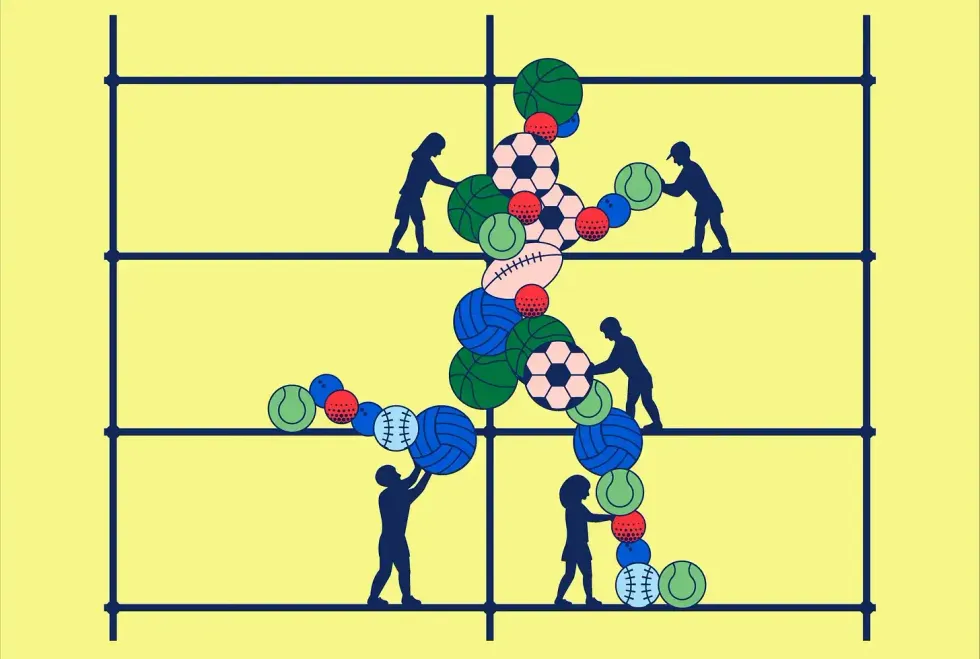 Following our HWF Civic Futures kickoff last week with Eric Liu, our design partners at Public/Official have created a unique visual to capture the “civic scaffolding” spirit of this conversation.
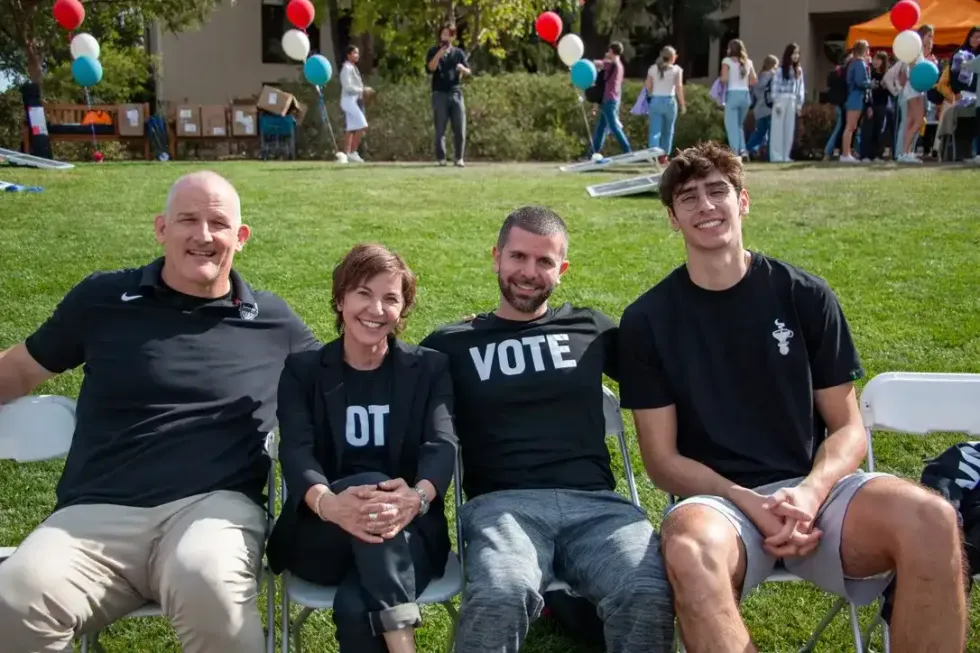 Lisa, Coaches Rev and Matt Elkin, and former Stanford Men’s Basketball star Maxime Raynaud at Stanford’s “All Vote No Play” Democracy Day, 2025