Earlier this year, the Bridge Alliance and the National Academy of Public Administration launched the Fellows for Democracy and Public Service Initiative to strengthen the country's civic foundations. This fellowship unites the Academy’s distinguished experts with the Bridge Alliance’s cross‑sector ecosystem to elevate distributed leadership throughout the democracy reform landscape. Instead of relying on traditional, top‑down models, the program builds leadership ecosystems—spaces where people share expertise, prioritize collaboration, and use public‑facing storytelling to renew trust in democratic institutions. Each fellow grounds their work in one of six core sectors essential to a thriving democratic republic.
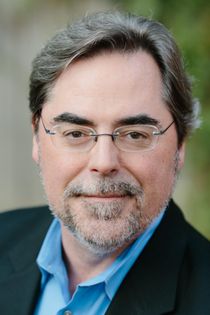
Below is an interview with Vince Macone, a 32-year veteran of federal civil service and long-time activist in Washington’s philanthropic community. Vince served as Executive Director for Enterprise Services at the U.S. Department of Commerce. In this role, he led a comprehensive shared services delivery program providing customers with world-class IT, acquisition, HR, and solutions. He also served as Principal Deputy Special Inspector General and COO for a federal law enforcement and independent audit agency at the U.S. Department of the Treasury that targets financial crimes and other fraud, waste, and abuse related to economic stabilization programs.
His Fellows for Democracy and Public Service Initiative will explore how the federal government can build a modern, diverse, and resilient talent pipeline that prepares the next generation of public servants to lead the nation into its next 250 years.
—---------------------------------------------------------------------------------------------
Question: Could you describe your project, your approach, and any potential stakeholders you'll be working with?
Vince Micone: My project is going to focus on pathways into public service, and by this, we're not just talking about the federal government, but state, local, and federal, and some of those regional governments that exist as well.
The whole point really is for us to think about how we can attract talent in this generation. I don't think we really know what the current generation is thinking and how we can motivate them into careers in public service – to work in city hall, at a state capital, or with the federal government.
The project has two pieces. The first piece is to work with students at Arizona State University who are doing a capstone project on this topic. They're going to be interviewing students who are in the Next Generation Service Corps program, students who have completed their undergrad internships in the public sector, private sector, and the nonprofit sector.
We hope to learn from those students how we can use tools that affect their generation and the digital platforms that they use to make them interested in public service. Also, what are the characteristics of early career opportunities that would keep people engaged in serving the public through these roles?
The second part of this project is going to be looking at how we can reform the probationary period for public service. How we can apply competency-based hiring into the entire process based on what we've learned through the research that we're doing with students right now.
Question: What practical outcomes do you expect?
Vince Micone: The first part of this project is one tangible outcome - how do we reach people who are looking for jobs? What are those ways that we can communicate about the importance of the public service to the next generation. What platforms do we use? What motivates people now that might be different than it was in previous generations? How do we even reach them in this media environment so that they know how to apply for these great opportunities, these great careers of service, and how do we even articulate what service means?
Question: How might citizens or other key stakeholders utilize your work on this project to improve American democracy?
Vince Micone: Democracies depend on people implementing objectives - the laws that are passed by our legislators under the direction of the executive. We need the very best and brightest to do this. We need people who will not shy away from challenges and who will also not shy away from sharing perspectives on how things can be done better. The form of our government looks for opportunities to make our communities, our nation, and the world better. That fundamentally hasn't changed. So, as we're at 250 years, we need to understand what government does, how it serves people, and how to motivate the next generation to want to work in these incredibly important jobs that make a huge difference.
Enjoy the short video:
- YouTube www.youtube.com
Bradford Fitch is the former CEO of the Congressional Management Foundation, a former congressional staffer, and author of “The Citizen’s Handbook for Influencing Elected Officials."


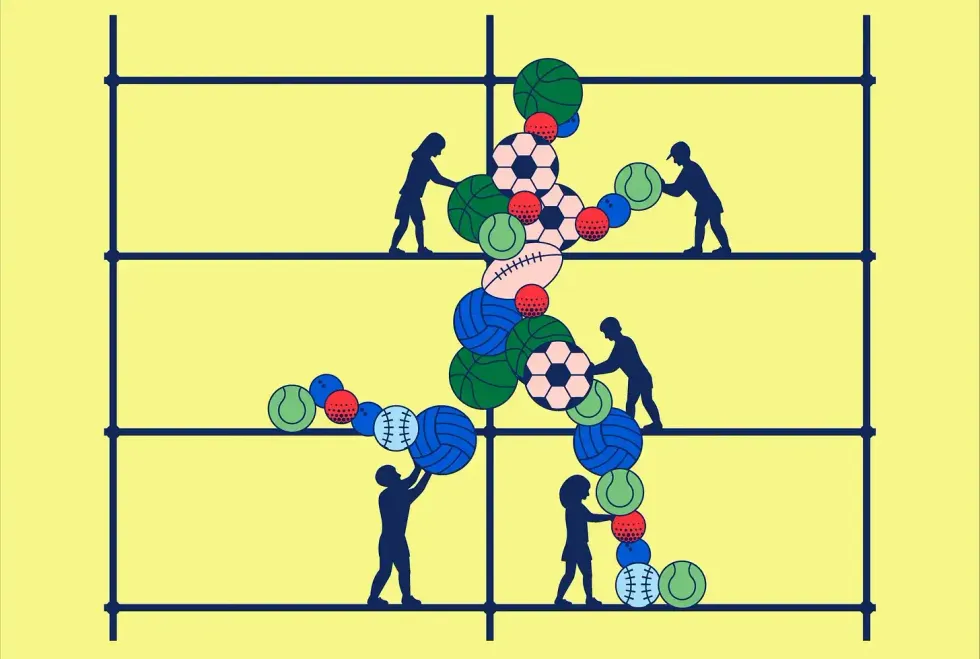 Following our HWF Civic Futures kickoff last week with Eric Liu, our design partners at Public/Official have created a unique visual to capture the “civic scaffolding” spirit of this conversation.
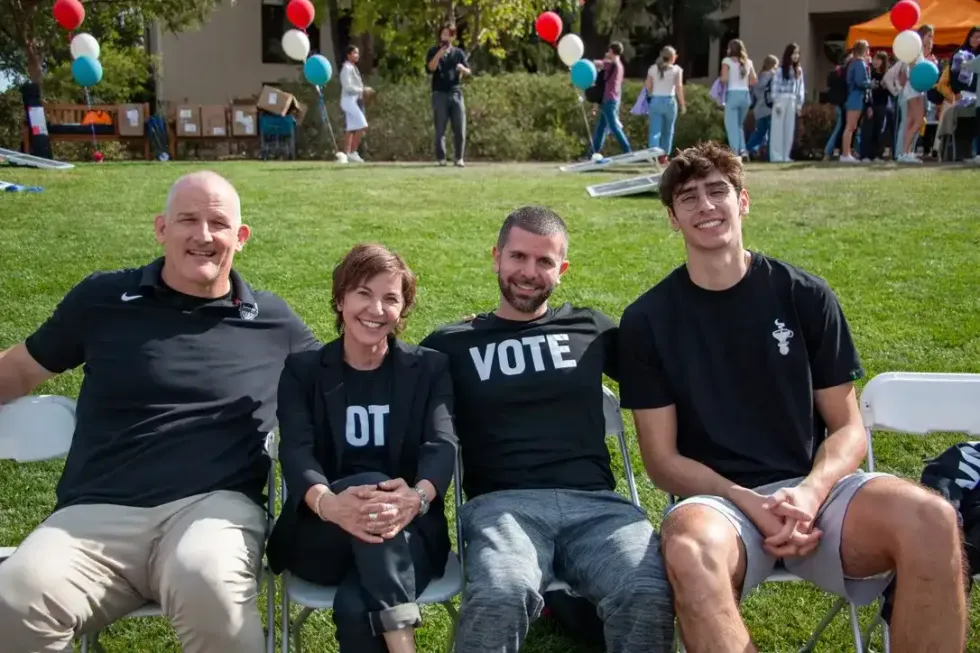 Lisa, Coaches Rev and Matt Elkin, and former Stanford Men’s Basketball star Maxime Raynaud at Stanford’s “All Vote No Play” Democracy Day, 2025