

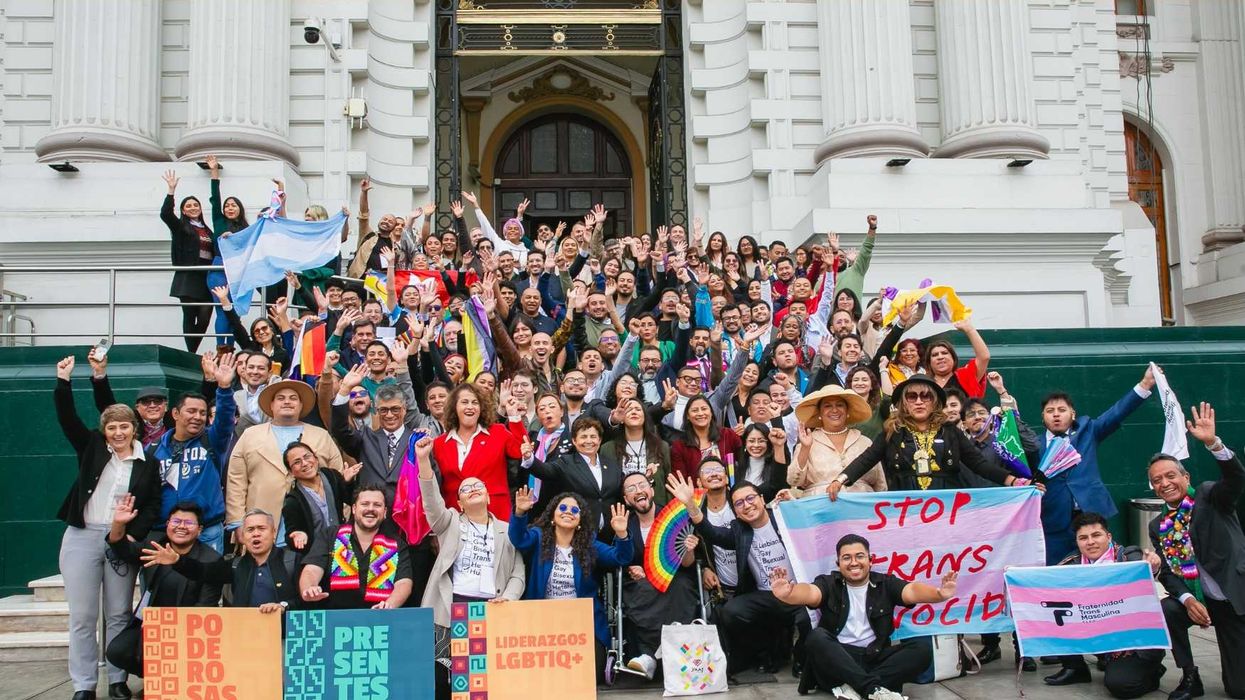
"A Peruvian, a Spaniard, a Mexican, a Colombian, and a Brazilian meet in Lima." This is not a cliché nor the beginning of a joke, but rather the powerful image of four congresswomen and a councilwoman who openly, militantly, and courageously embrace their diversity. At the National Congress building in Peru, the officeholders mentioned above—Susel Paredes, Carla Antonelli, Celeste Ascencio, Carolina Giraldo, and Juhlia Santos—presided over the closing session of the seventh LGBTIQ+ Political Leaders Conference of the Americas and the Caribbean.
The September 2025 event was convened by a coalition of six organizations defending the rights of LGBTQ+ people in the region and brought together almost 200 delegates from 18 countries—mostly political party leaders, as well as NGO and elected officials. Ten years after its first gathering, the conference returned to the Peruvian capital to produce the "Lima Agenda," a 10-year roadmap with actions in six areas to advance toward full inclusion in political participation, guaranteeing the right of LGBTQ+ people to be candidates—elected, visible, and protected in the public sphere, with dignity and without discrimination. The agenda's focus areas include: constitutional protections, full and diverse citizenship, egalitarian democracy, politics without hate, education and collective memory, and comprehensive justice and reparation.
They Don't Just Want to Erase Progress; They Want to Erase Our Very Existence
After years of progress in terms of inclusion, the anti-rights backlash in the Americas is not only rolling back hard-won rights but also directly threatening LGBTQ+ populations with erasure and criminalization. For example, in May 2025, under the guise of protecting children and adolescents, the Peruvian presidency enacted a law that prohibits "the entry and use" of public bathrooms by people whose biological sex does not match "the sex for which the service is intended." Policies to erase diversity from sex education programs—and the elimination of sex education itself from school curricula—have also become a constant threat at the national and subnational levels throughout the region. Further enforcement of these types of policies has spread to social media and the internet, with governments mandating the removal of online resources, as in the US, and the penalization of LGBTQ+ content on commercial platforms.
Visibility alone does not guarantee rights, so it has become essential to resist and denounce the lip service to the LGBTQ+ agenda and demand real protections. For example, the presence and participation of the queer community is sometimes manipulated to serve commercial or political interests with tactics such as "rainbow-washing," which many companies carry out during Pride month. Businesses may feature products in rainbow colors, but they are not committing to any substantial support or contribution to these communities. Evoking the rainbow is of little use when it does not translate into inclusion. As Carla Antonelli, a trans deputy in the Madrid Assembly in Spain, noted a few months ago during debates on the far-right's initiative to repeal the local trans law: "We are the perfect smokescreen to avoid talking about the housing crisis, poverty wages, or the increase in poverty." She then defiantly declared, "We are not going back to the sidelines!"
If We Don't Remove Violence from Politics, Participating in Politics Will Continue to Cost Us Our Lives
Legislating to guarantee LGBTQ+ rights and political participation is also an act of memory. Marielle Franco, Michelle Suárez Bértora, Ociel Baena Saucedo, and Jonier Quiceno were some of the pioneering political actors who denounced, confronted, and became victims of various forms of political violence. "Being the only transvestite in parliament is a process of daily violence. But I come from the social movement and that is why I continue to resist," emphasized Juhlia Santos, counselor of Minas Gerais in Brazil.
It is also necessary to recognize the tensions within movements. The LGBTQ+ community is not a monolithic entity. It can also rely on patriarchal practices and privilege access to political opportunities for gay men or draw on binary thinking to exclude, subordinate, or use the rest of the rainbow agenda as political bargaining chips. It is possible to be pro-LGB but anti-trans. The process of moving from activism and movements to more formal political parties also tests the persistence and resilience of those who decide to run for public office.
They Used to Call Us "Faggots" Now They Have to Call Us "Your Honors"
In Democracy Demands Equality, the LGBTIQ+ Political Participation Observatory in the Americas and the Caribbean documents the election of 61 openly LGBTQ+ individuals to national congresses between 1997 and 2024, with a total of 73 terms. It is worth noting that 49 percent of these positions were won between 2021 and 2024 and that 56 percent of those elected were lesbian, bisexual, and trans women. This report also identifies seven main obstacles to LGBTQ+ political participation: the presence of hate speech in political advocacy spaces, the proliferation of regressive laws that perpetuate discrimination, the lack of legal recognition of gender identity, exclusion from political parties, physical violence and threats against LGBTQ+ candidates, hostility towards LGBTQ+ officeholders, and state impunity regarding political violence. "Overcoming these barriers is urgent for democracy to be truly inclusive," the Observatory concludes.
The meeting in Lima focused on respect for diversity as a crucial aspect of democracy. There can be no democracy without discussions about race, Afro-Indigenous peoples, women, and all nonconforming identities. But in the future, it is necessary to open the agenda to the climate crisis and the rights to land, housing, and comprehensive health care "because these are the issues that keep us marginalized," noted Juhlia Santos.
Hope can be found in community and togetherness, and in the possibility of connecting movements and building coalitions in the struggle for life. The seventh LGBTIQ+ Political Leaders Conference of the Americas and the Caribbean closed with a call to build an empathetic democracy, with intersectionality, with respect for difference, and with the inclusion of all of us.
This article was originally published as part of Resilience & Resistance, a Charles F. Kettering Foundation blog series that features the insights of thought leaders and practitioners who are working to expand and support inclusive democracies around the globe.
Jenny Zapata López is the communications coordinator for the Heinrich Böll Foundation in Mexico City. She specializes in climate, environment, and human rights. In 2009, she was a civil society fellow at the Kettering Foundation.
Resilience & Resistance is a Charles F. Kettering Foundation blog series that features the insights of thought leaders and practitioners who are working to expand and support inclusive democracies around the globe. Direct any queries to globalteam@kettering.org.







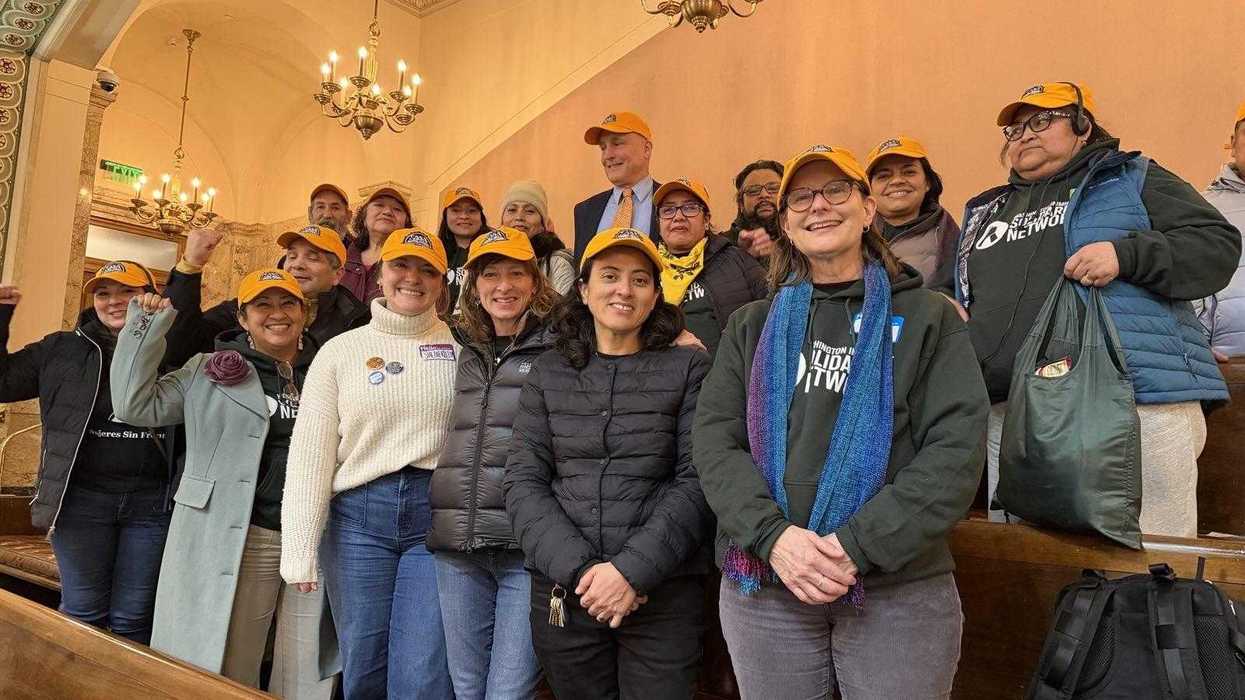
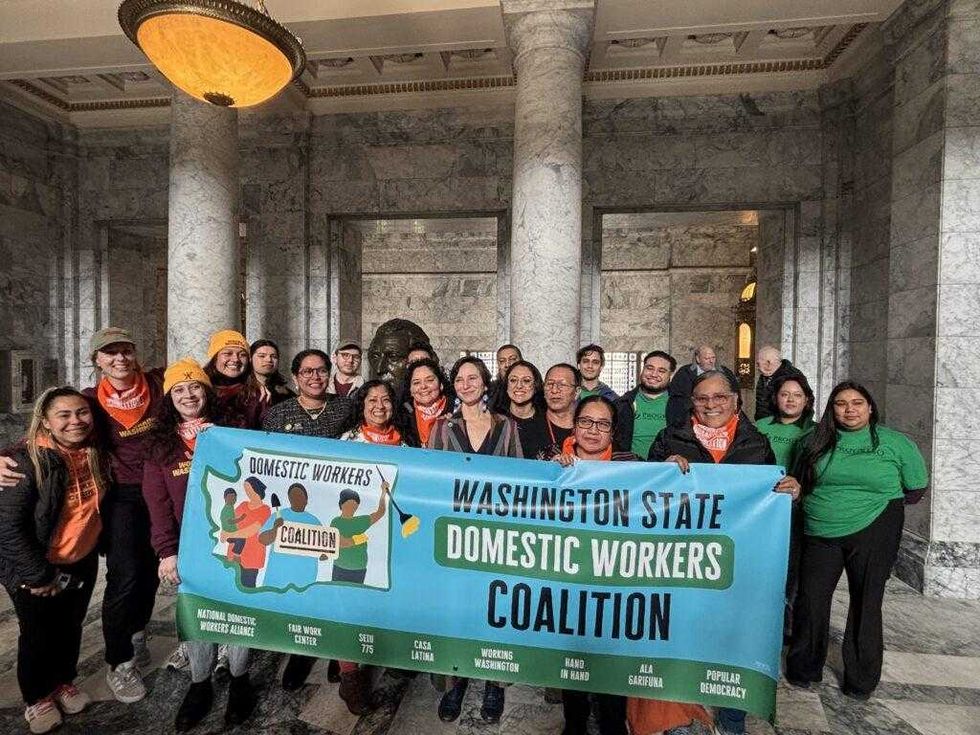 State Sen. Rebecca Saldaña, center, stands with members of the Washington State Domestic Workers Coalition at the state Capitol on Feb. 28, 2026. The Domestic Workers Bill of Rights passed in the House that day, before being signed into law in March. (Photo courtesy of Casa Latina)