


Skip to content
Search

Latest Stories

Follow Us:
Top Stories

How David Becker Works to Safeguard America’s Election Integrity

Becker joins The Unity Forum to strengthen election trust and defend officials.

News

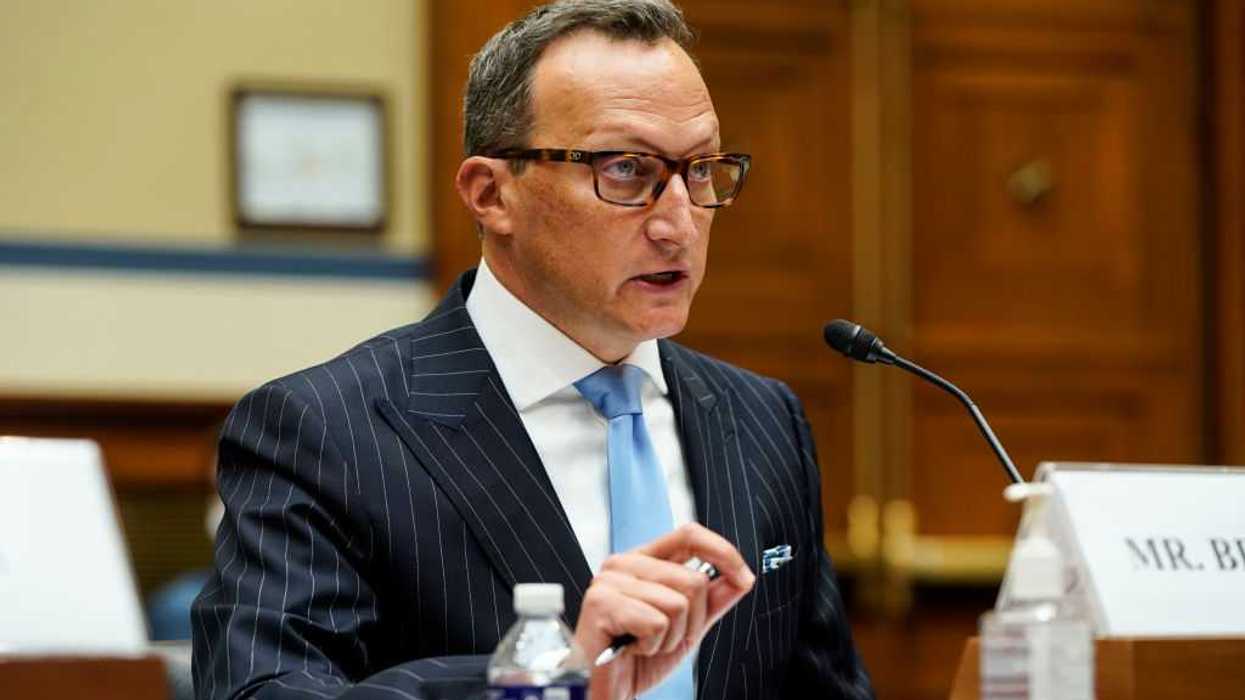
​Center for Election Innovation and Research Executive Director and Founder David Becker speaking into a microphone, while sitting down.

Center for Election Innovation and Research Executive Director and Founder David Becker testifies during a House Oversight and Government Reform Committee hearing on October 7, 2021 in Washington, DC.

Pool/Getty Images

The Unity Forum, a cross-partisan webinar and podcast series presented in partnership with the Bridge Alliance and produced by Alumni for Freedom and Democracy, is dedicated to fostering reasoned discourse and strengthening the foundations of an open society. Each program brings forward respected experts who challenge assumptions about current events, elevate civil dialogue, and deepen public understanding of today’s most pressing social, economic, and legal issues. In addition to attending Unity Forum events, readers are invited to join post-event discussions, volunteer as community dialogue facilitators, or help promote open society initiatives within their networks. Opportunities to stay engaged and make a difference are available for anyone who wants to support the mission of meaningful civil engagement.

On July 23, the Unity Forum welcomes David Becker, executive director and founder of the nonpartisan, nonprofit Center for Election Innovation & Research, which works with election officials of both parties across the country to ensure elections are trustworthy.


A key element of Becker’s work with CEIR is managing the Election Official Legal Defense Network, which provides pro bono legal assistance to election officials threatened with frivolous criminal prosecutions, harassment, or physical violence.

Prior to founding CEIR, Becker was director of the elections program at the Pew Charitable Trusts. As the lead for Pew’s analysis and advocacy on election issues, Becker spearheaded the development of the Electronic Registration Information Center, or ERIC, which, to date, has helped most states update tens of millions of out-of-date voter records and register new eligible voters easily and securely.

Before joining Pew, Becker served for seven years as a senior trial attorney in the Voting Section of the Department of Justice’s Civil Rights Division, overseeing voting rights enforcement in several states, including California and Georgia, and served as lead counsel on major voting rights litigation, including Georgia v. Ashcroft, ultimately decided by the Supreme Court.

Becker serves as CBS’ election law expert, and his many media appearances include The New York Times, The Washington Post, CNN, MSNBC, “PBS NewsHour,” and NPR, and he is frequently published on election issues.

He is the co-author, with CBS News Chief Washington Correspondent Major Garrett, of the book “The Big Truth: Upholding Democracy in the Age of The Big Lie.

Join the Conversation

To find out more, sign up for the free Unity Forum live webinar on Thursday, July 23, 2026, at 1:00 PM ET. The session will be interactive, with a live Q&A, so you can ask questions directly to David Becker and the moderator.

The event will discuss:

  • What voters should understand about election integrity heading into the 2026 midterms
  • How election officials verify results and maintain accurate voter rolls
  • The difference between real election vulnerabilities and disinformation
  • The ongoing debate over voting access, mail ballots, and election security
  • How citizens can help protect voting rights and strengthen public confidence

REGISTER NOW:

https://us06web.zoom.us/webinar/register/WN_Alb0FmtdRh2CRKZv5rPXDg#/registration

David Nevins is the publisher of The Fulcrum and co-founder and board chairman of the Bridge Alliance Education Fund.


Read More

stars and stripes falling and peeling off American flag

George Washington warned against partisan division. This opinion piece explores election reform, congressional dysfunction, and rebuilding trust in American democracy.

Malte Mueller/Getty Images

Washington Warned Us — Now America Must Renew Its Democracy

When George Washington left office in 1796, he did not simply say farewell. He issued a warning.

In his Farewell Address, Washington cautioned against what he called "the baneful effects of the spirit of party" — the instinct toward political tribalism that, he feared, would one day consume the republic he had helped build. He warned that partisan division would render our governing system dysfunctional, eroding public faith in government, and ultimately threatening the democratic experiment itself.

Keep ReadingShow less
New York City Mayor Zohran Mamdani and US Senator Bernie Sanders standing at a podium together with a crowd of supporters behind them.

New York City Mayor Zohran Mamdani and US Senator Bernie Sanders (I-VT) speak to supporters during the Mayor's 100-day address on April 12, 2026 in New York City.

Ryan Murphy / Getty Images

Just What Is a Socialist?

Gertrude Stein famously wrote, "A rose is a rose is a rose is a rose," meaning everyone knows what a rose is. The same cannot be said of a Socialist.

There are many Democratic politicians who proudly call themselves Socialists or Democratic Socialists, and there are many adversaries who brand those individuals as Socialists. Both sides use the same word, but the word means very different things to the two sides.

Keep ReadingShow less
What the World Cup Teaches Us About Democracy

Charles De Ketelaere #17 of Belgium scores his team’s first goal past Unai Simon #23 of Spain during the FIFA World Cup 2026 Quarter Final match between Spain and Belgium at Los Angeles Stadium on July 10, 2026, in Inglewood, California.

(Photo by David Ramos/Getty Images)

What the World Cup Teaches Us About Democracy

As live sporting events go, nothing comes close to the World Cup. I was in the stands when South Africa, my birth country, hosted the event in 2010 after decades of exclusion from global athletics. In June of this year, I had a full-circle moment when South Africa played in the knockout rounds for the first time, and I stood with my two American sons, arms around them, singing South Africa's anthem — the only national anthem that weaves multiple languages into a single, unifying song. Later in the week, I was in the stands again, cheering Spain's win over Austria, a country to which my only connections are a brief holiday…and the fact that my mother's family fled from there during the Inquisition.

The magic of the World Cup is that everyone in the stands wears the flags and shirts of countries that are “theirs” in some way. For some, it’s where they were born; for others, where they live or where their ancestors hailed from. For some, it is simply a country they have adopted for the afternoon. It is impossible to know how deep a person’s connection runs simply by looking at them. And next to a person waving one team’s colors is a stranger, family member, or close friend supporting the opposing team—or wearing the jersey of a team that isn’t playing that day at all.

Keep ReadingShow less