

There have always been and there will always be rich people and poor people. That is inherent in the nature of man in non-collective societies.
But while our Founding Fathers—in particular John Adams—recognized that nature is filled with examples of inequalities in man's material possessions as well as in his mental and physical attributes—and that's just the way it is—he felt strongly that each person has the moral right to change his circumstances, the moral right to equality as well as life, liberty, and the pursuit of happiness. And that government's role—as stated in the Declaration of Independence—is to "secure" those rights.
How? By providing each person with the opportunity to pursue those rights, to pursue his dreams. Government's role is not to change people but to provide people an equal opportunity to change themselves if they so desire and live good lives. In this, we have in many ways failed.
The most critical component of providing all people with that opportunity is to ensure that all children are provided with an equal opportunity to receive a good education. That is currently not the case in the United States. In every state, there is a vast discrepancy between school districts in well-to-do areas and those in poor areas—whether rural or the urban ghetto—in the amount of money that is spent per pupil. And while spending more money does not necessarily ensure quality education, it is generally the case that districts that spend more money per pupil do provide a better education to their students.
The reason for this discrepancy is that the way in which schools are funded in this country is a recipe for inequality. Local property taxes account for 45% of school funding; another 45% comes from the state, with the federal government contributing only 10%. Although states often apply equalization—between districts—formulas, they usually don't work. As a result, children who grow up in areas that have a better tax base receive a better funded, and typically a better, education. Poor children on the other hand—both White and people of color—never receive the education that gives them the equal opportunity that is promised in the Declaration of Independence to pursue happiness. Without an education, one can pursue nothing in today's world.
But a secondary education, while critically important, is only the beginning to opening up opportunities to pursue one's dreams. The fact that one is born poor in an urban ghetto or in a rural area does not indicate the intelligence or inherent ability of a child. If a child is properly nurtured by his schooling, even if he is not nurtured at home, he can achieve amazing things. And so the government and universities working together need to find ways to insure that no child with the requisite intelligence and skills is denied the opportunity to further himself.
The other factor that is critical to the people's opportunity to pursue happiness is the quality of the environment in which they live—meaning the air they breathe, the water they drink, the parks they visit; meaning the non-material things that make a huge difference in a person's life. This is usually what's referred to as "the public good." The government has had a mixed record on providing for the public good; both the Reagan and Trump administrations have been particularly dismissive of the public good.
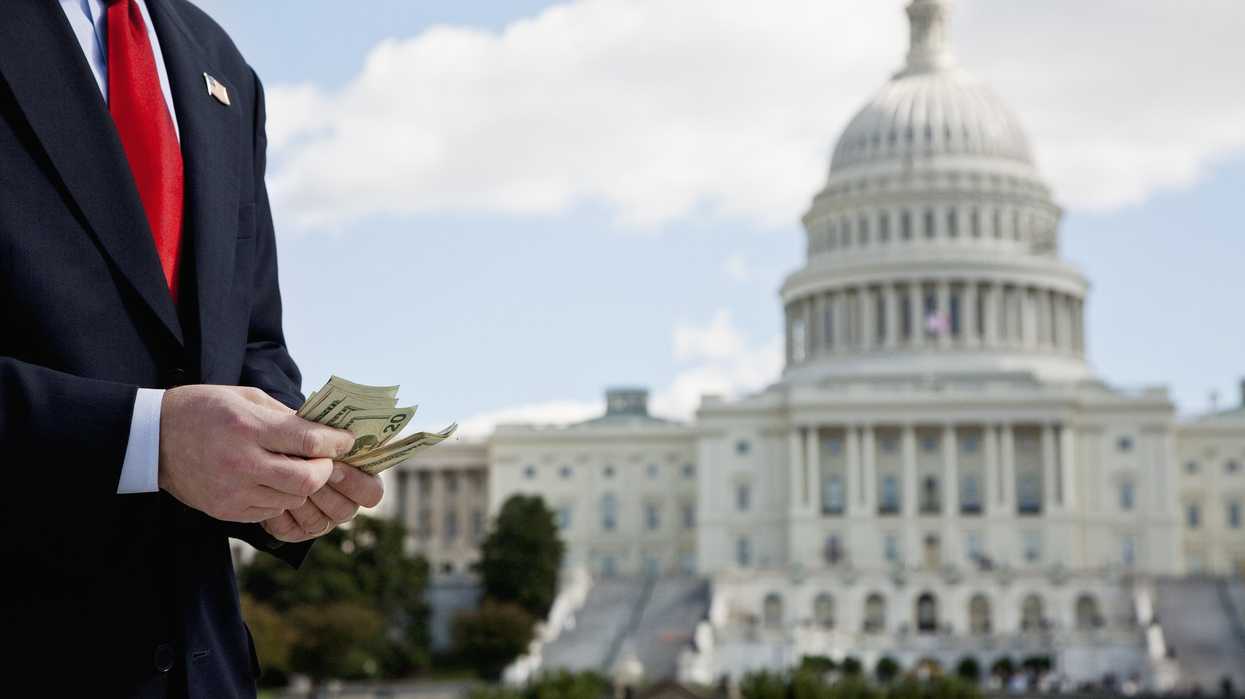
Implementing truly equal education opportunity and better providing for the public good will cost a lot of money. And that's where the very rich—the millionaires, billionaires, and now trillionaires—come in. In 1913, the U.S. ratified the 16th Amendment to the Constitution which created the income tax. The tax was a progressive tax, meaning that those who could afford a higher tax rate—who could afford to pay more of their income to support the government's efforts to defend our country and provide for the public good—were asked to do so.
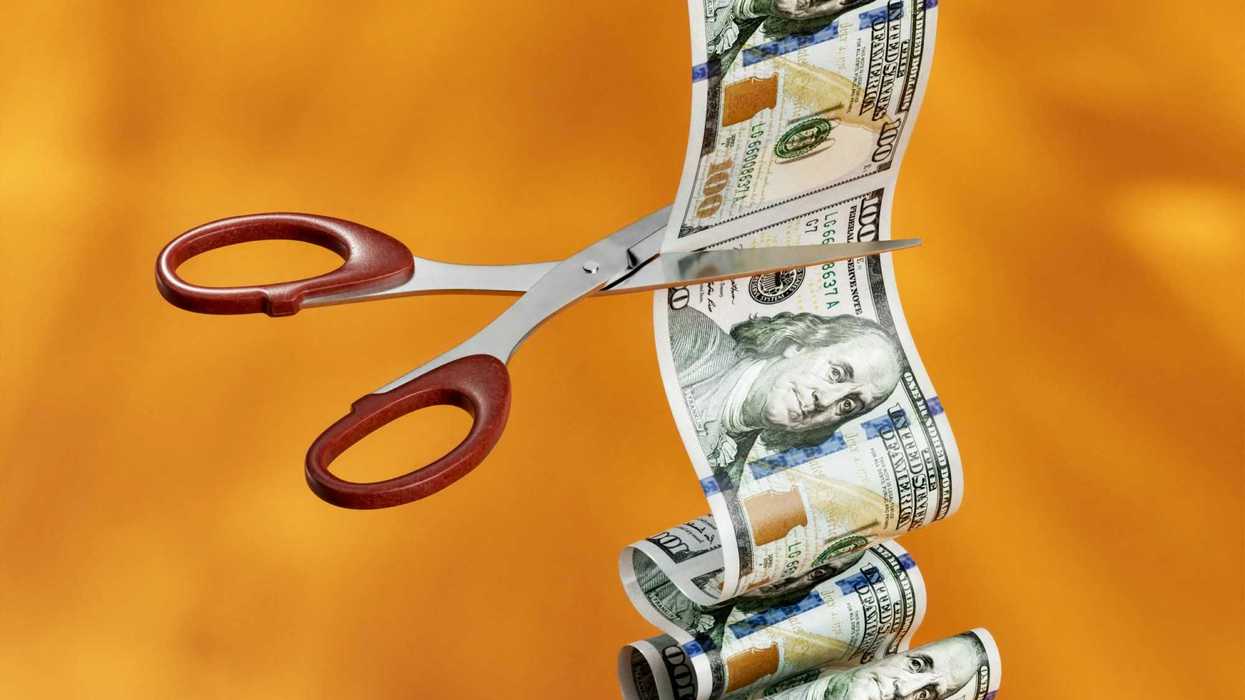
And that's what the income tax accomplished for the 65 years between 1915 and 1980. The income tax for the very rich hovered during this period between 75% and 90%, except for 5 years preceding the Great Depression. But then Reagan's first tax cut lowered the top rate from 70% to 50%, and the second cut lowered it to 38.5% in 1987 and the rate has remained at roughly that level since, with the Trump cuts lowering it several percentage points more. In addition, the Internal Revenue Code provides so many loopholes for the very rich that they pay even less. The system is so broken that many of our most profitable corporations pay no income tax.
The battle cry should not be, "Tax the rich," but "Pay your fair share." The result of a succession of Republican administrations lowering the tax rates on the rich while providing almost no break for the middle class has been a massive cut in revenue that could have paid for government programs that support the public good—not just for people but programs to repair our bridges, etc. The rich have been made richer, the poor have remained poor and America has been weakened..
If America is to be true to its founding principle that all Americans have an equal right to pursue happiness, to pursue their dreams, then the government must act in such a way as to ensure that they have the opportunity to do so, which includes tending to the public good. If people choose not to, or they fail at their effort, that is their responsibility. The government's sole responsibility is to ensure that all have an equal opportunity to make of themselves what they will.
Ronald L. Hirsch is a teacher, legal aid lawyer, survey researcher, nonprofit executive, consultant, composer, author, and volunteer. He is a graduate of Brown University and the University of Chicago Law School and the author of We Still Hold These Truths. Read more of his writing at www.PreservingAmericanValues.com









The President Invited Iran to Bomb My Home