
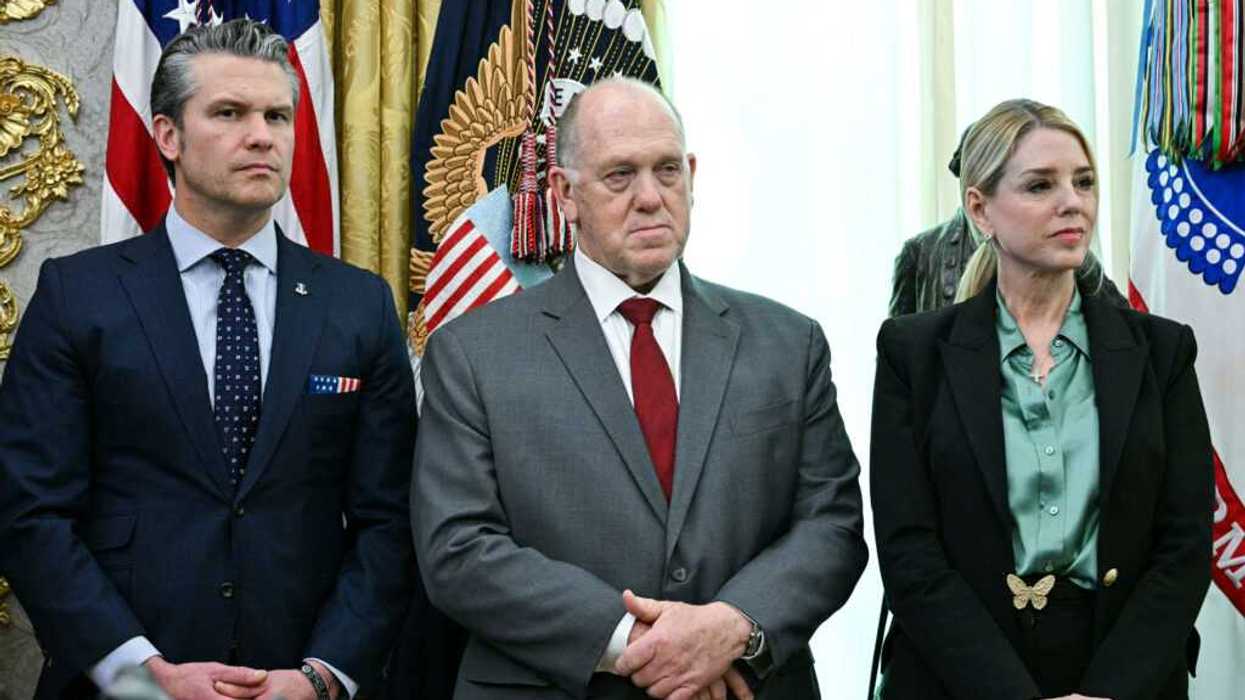

If I were Defense Secretary Pete Hegseth, I might start packing up my office at the Pentagon.
While President Trump is boasting about the so-called success of a war with Iran that has no clear mission nor end in sight, Americans are souring on it. Big time.
New polling from CBS News/YouGov shows an increasingly bearish public when it comes to the war, with 57% saying it’s going somewhat or very badly. Sixty-three percent believe the war will make the U.S. economy weaker in the short term, while a whopping 92% say the most important thing the U.S. should do with regard to Iran right now is “end the conflict as quickly as possible.”
Hardly a rousing endorsement. We know Trump closely monitors the polls, which is perhaps why he said what he did on Monday while at a roundtable in Memphis.
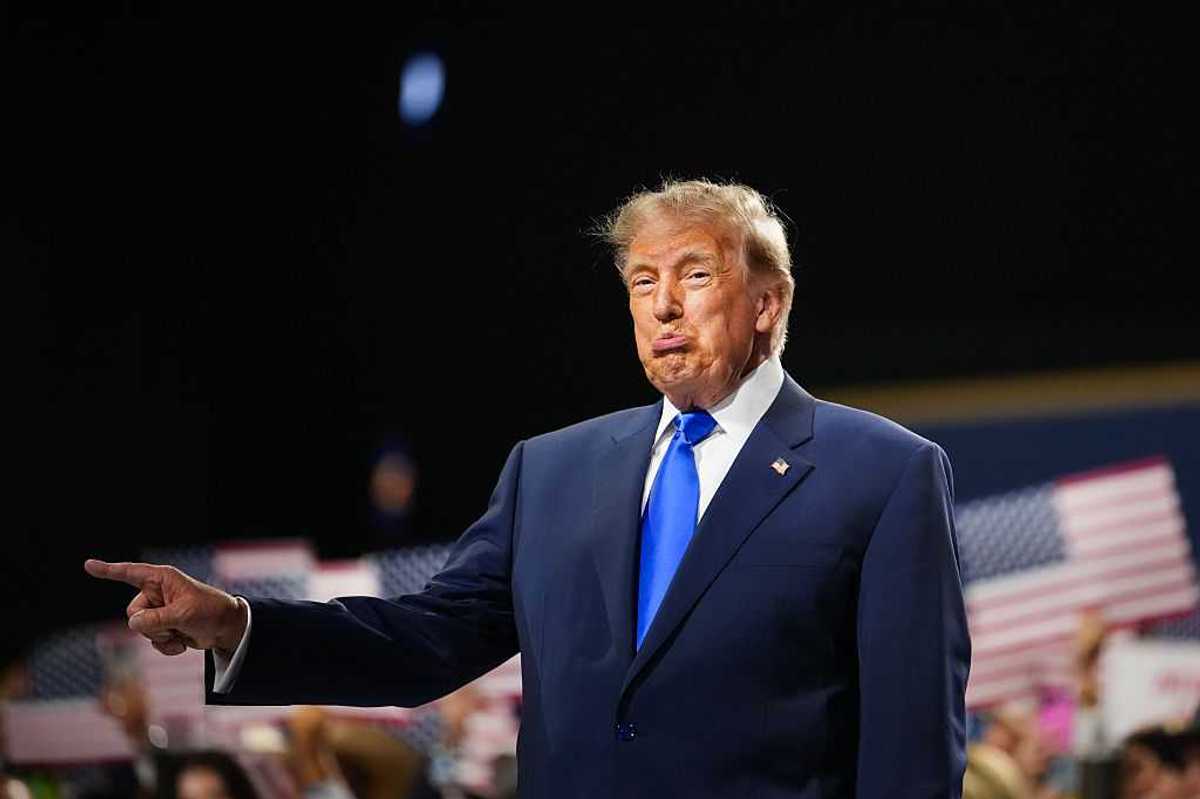
While discussing crime, Trump oddly detoured to brag about his decision to go to war with Iran and then pointed to Hegseth, who was in the room, and said: “And Pete, I think you were the first one to speak up. And you said, ‘Let’s do it, because you can’t let them have a nuclear weapon.’ ”
Now, any other time and any other president and you’d call this a compliment. But seasoned Trump-watchers’ eyebrows raised at the subtle but discernible sign of what may be to come.
It would be, after all, a very Trumpian and convenient blame-shift to make the war all Pete’s idea when it’s slumping in the polls, and it doesn’t help Hegseth that reports are swirling around D.C. that Republicans on the Hill and inside the administration have “zero confidence” in him.
As former Department of Homeland Security Secretary Kristi Noem knows all too well, Trump only loves you until he doesn’t. When ICE raids in Minneapolis turned deadly and the sordid headlines around her spending and personal life got too unbearable, Trump dumped the glammed-up grifter with an unceremonious thanks and a move to a made-up new post.
Former Kennedy Center head Ric Grenell had also been one of Trump’s longtime favorites, but he too lost his job this month after overseeing plummeting ticket sales, a mass exodus of artists, and scathing headlines. And that’s after he put Trump’s name on the building!
A couple other Trump cabinet members may want to prepare for early exits, while we’re at it.
Attorney General Pam Bondi’s DOJ has been rightfully dragged through the mud for its incompetence and political hackery, overseeing multiple failed attempts at indicting Trump’s political opponents, an obvious cover-up of the Epstein files, and losing so much talent it now has to recruit prosecutors straight out of law school. Maybe that’s why Bondi recently hung the North Korea-coded banner of Trump on DOJ HQ.
DNI Tulsi Gabbard might not be long for this world either. She’s been excluded from high-level meetings at the White House, so much so that the joke among aides is that DNI stands for “Do Not Invite.” Even Trump has publicly dismissed her advice.
If you’re wondering why these folks continue to work for a guy who humiliates them, sidelines them, and then dumps them, that’s easy — they have no principles, integrity or self-respect! And when you’re solely motivated by naked power grabs and money, you can put up with a lot.
Only time will tell if Hegseth, Bondi and Gabbard can survive what will only become worse and worse headlines. But in the meantime, Pete might want to put a Trump banner up on the Pentagon — just in case.
S.E. Cupp is the host of "S.E. Cupp Unfiltered" on CNN.







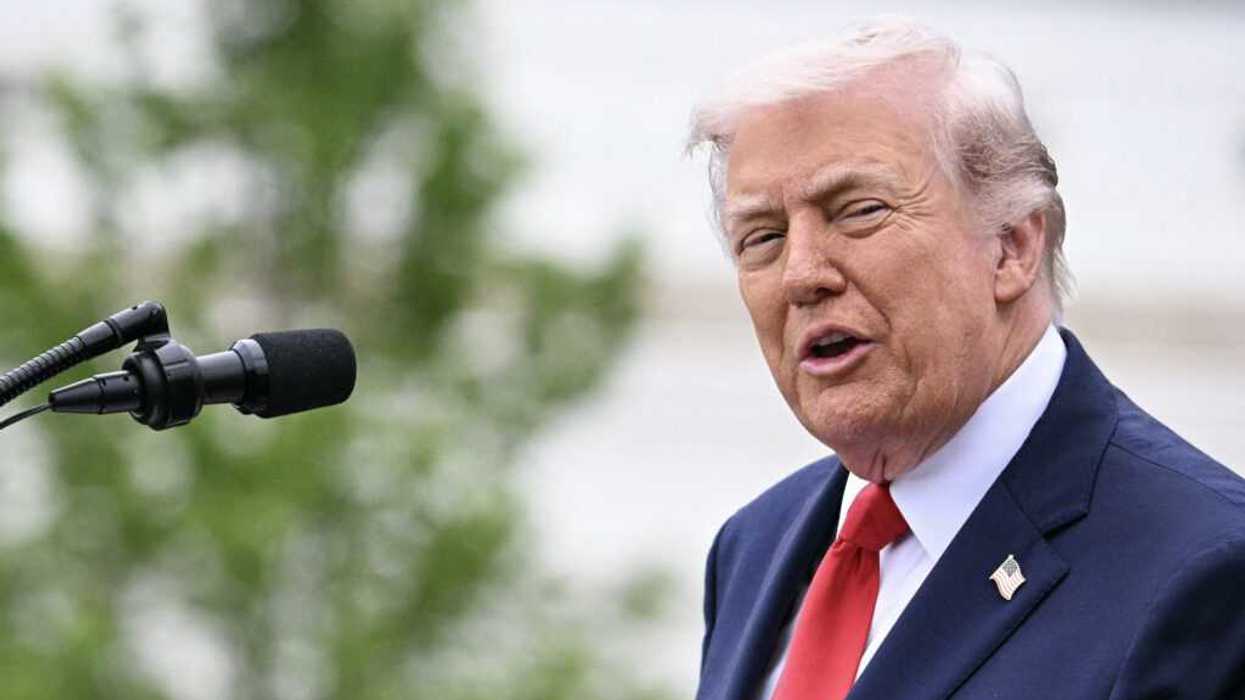


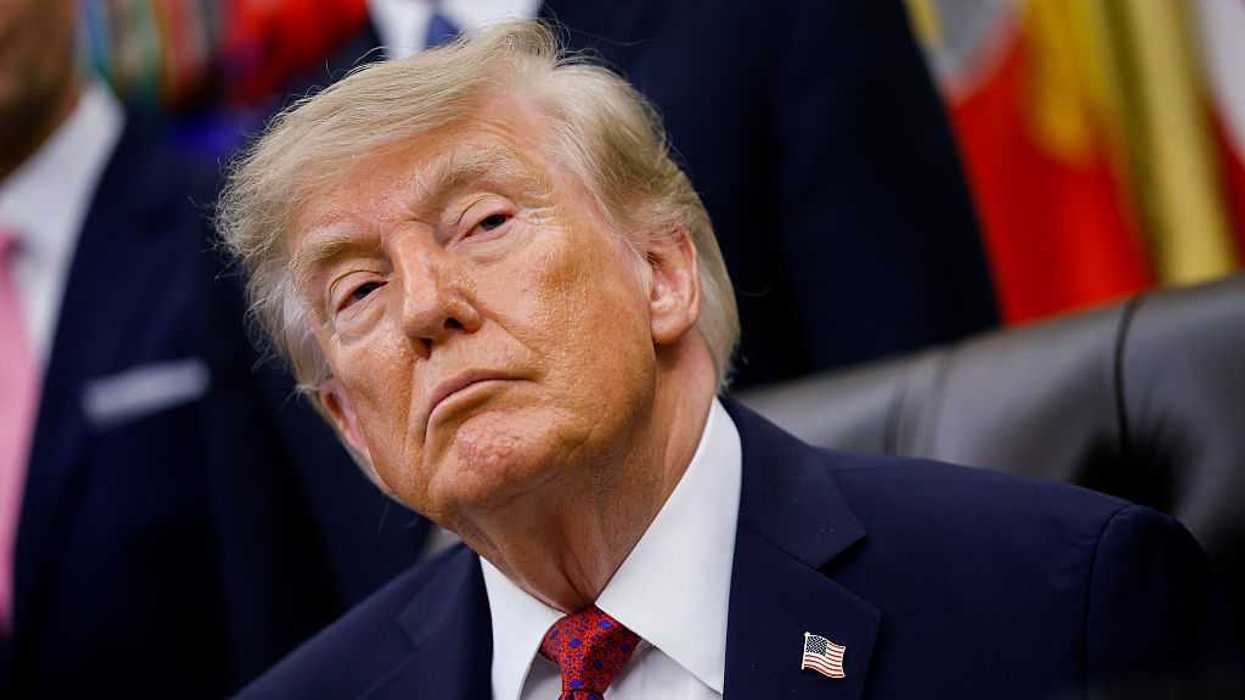
U.S. President Donald Trump speaks during a“ Steel Across America” event ahead of the 25th anniversary of the Sept. 11th attacks on the Ellipse near the White House on Sept. 8, 2026 in Washington, D.C. President Trump welcomed 9/ 11 first responders to the Tunnel to Towers Foundation’ s“ Steel Across America” event featuring a 16,900- pound, 21- foot steel beam recovered.
For Trump, even 9/11 is an opportunity
There was a reason organizers of the 9/11 ceremony in Manhattan told President Trump he could not speak at this year’s memorial service.
A good one, it turns out.
Because in a speech he gave on Tuesday in Washington, he did exactly what they were presumably worried about — he made it about himself.
According to The New York Times, Trump had wanted a speaking role at the service, but the National Sept. 11 Memorial and Museum, which oversees the site, said no, as they’ve maintained for the past decade-plus that the venue and event should be nonpartisan.
Trump has long used awful tragedies to either puff himself up, trash political opponents, or sell lies to the American people.
He blamed a deadly plane crash at Washington National Airport last year on diversity, equity and inclusion policies. He blamed Puerto Ricans for the devastation they endured after Hurricane Maria in 2017. He reportedly considered withholding disaster relief after the California wildfires based on the way affected regions voted. In an interview on Fox News meant to commemorate the 75th anniversary of D-Day in Normandy, he used the occasion to slam former House Speaker Nancy Pelosi…with graves of the dead behind him.
And now, as we approach the 25th anniversary of what many New Yorkers consider the darkest day in modern history, Trump has done it again.
He told a rambling, nonsensical story — one he’s told before — about going to Ground Zero just after terrorists flew two commercial jets into the twin towers. In the story, which no one has been able to verify, despite multiple attempts, he says firefighters had to carry him out of One Liberty Plaza, also known as the U.S. Steel Building, because they thought it was about to collapse.
As CNN fact checker Daniel Dale notes, there’s no evidence Trump went into this building, especially at a time when NYPD and NYFD had locked down the area. There’s no evidence that building was collapsing — in fact, it was deemed structurally sound and reopened within two months of the attacks. There’s no evidence he was carried out of it by firefighters.
But the lie isn’t even the worst part. Pretend it was all true — why would the leader of our country, and a New Yorker, decide to make that tragic day about himself?
Because that’s who Donald Trump is. He’s a malignant narcissist.
He’s also, incidentally, a terrible and ineffectual president, who’s made ill-fated decisions that he has to keep defending, and there’s nothing he won’t do to make himself look and feel better.
Within the first two minutes of his speech, he was cravenly using 9/11 to justify and promote his dumb war in Iran — two events separated by 25 years and 6,000 miles.
“And I will tell you, we’re right now fighting because we have a certain nation that wanted a nuclear weapon, they were very close to getting it, and now they have no chance at getting it. They will never have a nuclear weapon. Iran will not have a nuclear weapon. And they’ve been punished greatly. As you know, we’ve really taken it to them.”
As a New Yorker who lived through 9/11, still one of the worst days of my life, I’m utterly sickened by Trump’s crass, political, and self-promotional framing of that awful day.
And I’m relieved he won’t be given a platform to do it again on Friday’s anniversary in lower Manhattan.
Because for Trump, everything is his for the taking, and absolutely nothing is sacred.
S.E. Cupp is the host of "S.E. Cupp Unfiltered" on CNN.