
As a young journalist, I covered the funeral of Cesar Chavez in 1993 and have interviewed Dolores Huerta several times over the past 30 years.
They were heroes to me and my family, icons of the Chicano civil rights movement.
Reading this week in The New York Times the allegations that Chavez raped Huerta and groomed and assaulted minor girls was devastating. My heart felt like it split open knowing one of our greatest civil rights leaders was capable of such evil.
As a child my mother’s family in the 1950s migrated from picking cotton in Texas to Midwestern states, where they picked beets and tomatoes.
They eventually made it to rural Illinois and transitioned from farm work to factory work in Chicago. But my mother never forgot her farm worker roots.
Growing up in the Chicago suburbs in the 1970s, as a family we picketed local grocery stores asking people to boycott lettuce and grapes. My parents taught us about the history of the farm worker movement and its leaders Cesar Chavez and Dolores Huerta.
For more than 60 years, Huerta held on to the secret of her coercion and assault that resulted in her secretly having two of Chavez’s children.
Huerta issued a public statement Wednesday, “I have never identified myself as a victim, but I now understand that I am a survivor — of violence, of sexual abuse, of domineering men who saw me, and other women, as property, or things to control.”
In the 1998 interview I did with Huerta she acknowledged that she and Chavez would argue. It was her idea for a grape boycott. He wanted it to be a potato boycott.
“It took a fight to get that. In fact, probably the only reason I won that fight was because he was on the seventh day of a fast and he was weak,” she told me. “We never argued about philosophy because we shared the same philosophy. We argued about strategy. Should it be grapes or potatoes? Sometimes he would win, and sometimes I would win.”
She did not reveal to me or anyone until now the deeper reality of their encounters.
For too long we haven’t believed women, or offered them protection from predators. This has created a culture of silence.
In the case of Jeffrey Epstein, an estimated 1,000 girls and young women were trafficked. Besides Epstein, who died in prison, and Ghislaine Maxwell, sentenced to 20 years in prison for conspiring to sexually abuse minors, nobody else has been charged.
We know the names of other men in the files from former President Bill Clinton to current President Donald Trump, the latter mentioned at least 38,000 times. They should and other men in the files should be investigated.
At least in the United Kingdom Prince Andrew was arrested but not for sexual abuse but for alleged misconduct in office.
It is unconscionable the U.S. is not investigating the men in the Epstein files.The accountability for the victims is nonexistent. Now who will be held accountable since Chavez died in 1993?
It’s important to investigate who knew about Chavez’s grooming of girls at his compound and if there are other victims who may yet come forward.
The message must be swift and clear. Cesar Chavez day, celebrated in California and other states as an official holiday on March 31, should be cancelled as a holiday.
Already the United Farm Workers Foundation has cancelled Chavez Day activities. There are reports of cancellations of events in Arizona, California and Texas. A Chavez memorial statue at Fresno State was immediately covered up after news broke. Chavez’s name should be taken off streets, schools and other landmarks. His murals should be painted over.
Instead on March 31 the world should honor all people who have been victims of sexual abuse and violence.
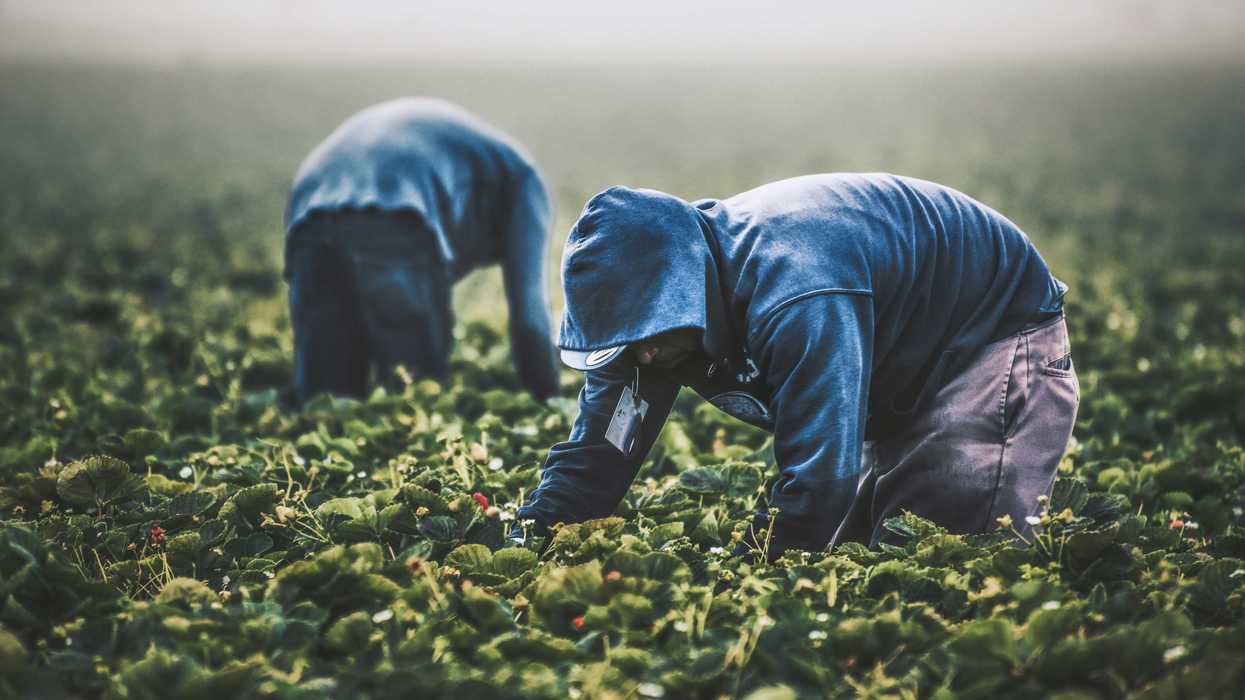
It’s important to remember the values of the movement of economic equality for the farm workers who feed our country and still toil in the fields.
Today, the movement matters as farm workers, immigrants and Latinos are targets of the ICE raids. The fight for economic justice, civil rights and worker protections continues. Huerta, 95, who has fought for this justice, fairness and equity, continues her pursuit.
“The farmworker movement has always been bigger and far more important than any one individual,” Huerta said in her statement. “Cesar’s actions do not diminish the permanent improvements achieved for farmworkers with the help of thousands of people. We must continue to engage and support our community, which needs advocacy and activism now more than ever.”
I’m reminded of how Huerta leads a chant at the end of most of her speeches. I last heard her speak in Albuquerque in the summer of 2023.
“Who’s got the power?
We’ve got the power!
What kind of power?
People power!
She ended with the phrase she coined, “Yes, we can.”
¡Sí, se puede!”
Yes, we can keep fighting for justice for women and workers.
Cancel Cesar Chavez: Continue The Fight For Justice was first published on CA Latino News and was republished with permission. CALN is an affiliate of the Latino News Network.
Teresa Puente is an assistant professor at California State University, Long Beach. She teaches courses in News Reporting and Ethics, Social Media Communication, and Bilingual Magazine Reporting and Production.