




WASHINGTON – For more than a month, Democrats have refused to fund the Department of Homeland Security while demanding that the agency limit Immigration and Customs Enforcement agents in ten specific ways after federal agents killed two people during federal immigration operations in Minnesota in January.
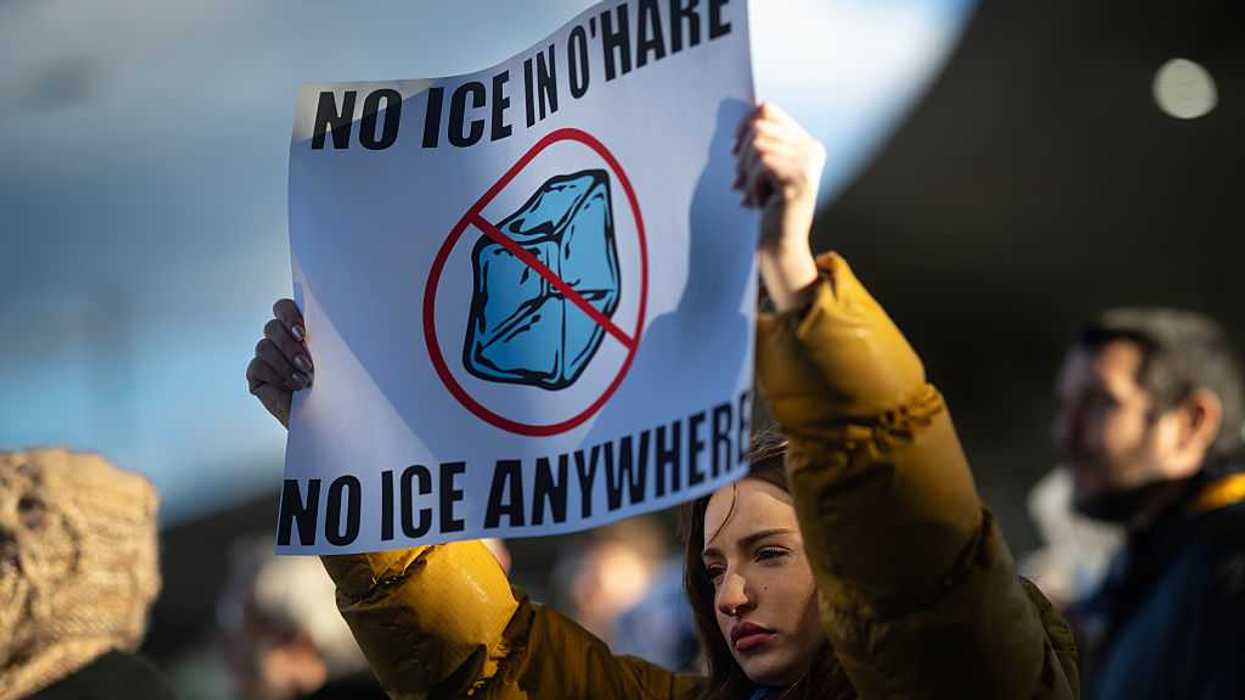
“We will not continue to allow what we’re seeing on the streets. Thousands of Americans, of immigrants, of our neighbors from Chicago to Minneapolis are saying ‘enough is enough,’” said Rep. Delia Ramirez, D-Ill.
Democrats’ push for immigration enforcement reform has fueled a funding standoff on Capitol Hill that triggered a partial shutdown of DHS in mid-February after lawmakers failed to reach a funding agreement. The shutdown followed their dispute over the Trump administration’s immigration crackdown, including the January deaths of Renee Good and Alex Pretti in Minneapolis.
Amid the backlash, President Donald Trump announced the withdrawal of 700 federal agents from Minnesota and sent border czar Tom Homan to lead immigration enforcement, who later announced the wind down of the operation, but also stressed support for Trump’s goal of widespread deportation of undocumented immigrants.
“We are not surrendering the President’s mission on a mass deportation operation. If you are in the country illegally, if we find you, we’ll deport you,” Homan said at a press conference in Minneapolis last month.
On Capitol Hill, the budget standoff raised a broader question about whether Democrats can realistically use the DHS funding fight to force changes to federal immigration enforcement while Republicans control Congress.
Democratic leaders have made 10 demands in the DHS funding bill to restrict ICE officers’ aggressive tactics as a condition for funding Homeland Security. The demands include removing face coverings, identifying themselves during operations, and less aggressive force standards.
“They have the leverage to withhold the funding, so the issue is what do you do with it?”
Georgetown Law School supervising attorney Sophia Genovese told Medill News Service.
Genovese pointed to the shutdown in the fall when Republicans entered the negotiations expecting Democrats to eventually concede, and Democrats ultimately agreed to a deal without securing the policy changes they had demanded.
She said her concern is that if Republicans hold out long enough again, public attention could fade and Democrats could face similar pressure to fold.
“The public strongly supports this. This is an issue that’s going to keep coming up,” Genovese said. “But the fear is if they’re going to capitulate and fold and continue to allow this crisis to occur again.”
In recent months, Democrats have also introduced a series of bills to advance their push for ICE accountability.
At a news conference in February, Senator Jeff Merkley, D-Ore., and Reps. Andrea Salinas, D-Ore. and Derek Tran, D-Calif., introduced the “ICE and CBP Constitutional Accountability Act”, which would allow individuals to seek civil damages if U.S. Customs and Border Protection or ICE officers violate their rights.
Rep. Salinas criticized Trump’s 2025 budget bill that awarded more than $170 billion towards border and interior enforcement, and said the legislation would check ICE and CBP by targeting funds from the 2025 budget bill and using those funds to compensate victims.
“Without accountability, there are no consequences. And without consequences, they will keep violating the Constitution,” Salinas said.
That same month, Rep. Ramirez introduced the “Melt ICE Act”, a bill that would end funding for immigration detention and enforcement under DHS and redirect the money to community services. She said continued funding for DHS fuels human suffering and called for abolishing ICE.
“It must be dismantled piece by piece, and we need something new, a system that actually honors our rights, a system based on dignity, humanity,” Ramirez said.
Sen. Peter Welch, D-Vt., said he hopes Democrats can secure significant reforms to ICE's operations, but he is skeptical that Trump will support meaningful change and would instead veto the bills.
“He’s had a very bad policy. He’s the person who appointed Noem during the rampage in Minneapolis, and he’s really politicized the whole issue so I don’t think he has confidence in reasonable reform,” Welch told Medill News Service. “ICE should be subject to all of the same standards in training, engagement, and warrants that apply to police enforcement in every community across the country.”
Genovese said the proposed legislation falls into several categories, including bills aimed at shrinking the immigration enforcement system and reducing deportations, measures that seek to reform agents’ conduct without limiting enforcement, and others she said would have little practical impact.
“Are all of these bills feeding into an overall reduction of the Department of Homeland Security’s enforcement apparatus, or are these pieces of legislation just simple appeasements for the public? And so that’s something the Democrats need to think critically about,” Genovese said.
Genovese argued that even some Republicans are beginning to recognize the need for limits on immigration enforcement.
“They are disappointed with the immigration enforcement actions they are seeing,” Genovese said. “Even if not every single bill passes, I think Democrats have a tremendous opportunity to get some of these bills passed.”
Indeed, in March, Homeland Security Secretary Kristi Noem faced two days of sharp questioning from Republicans and Democrats on the House and Senate Judiciary Committees over her leadership and the administration’s immigration crackdown.
“What we’ve seen is innocent people getting detained that turn out are American citizens,” Sen. Thom Tillis, R-N.C., said heatedly to Noem. “We’re beginning to get the American people to think that deporting people is wrong. It’s the exact opposite. The way you’re going about deporting them is wrong.”
Soon after the hearing, Trump fired Noem as homeland security secretary and nominated Sen. Markwayne Mullin, R-Okla., as her replacement.
Rep. Ramirez told Medill News Service that both parties must ask whether they are standing up for their constituents, the rule of law, and the Constitution, and to take action without making excuses or delaying the work.
“Are they going to continue to make excuses and not have a spine and allow Donald Trump to continue to terrorize their communities? So I think it's really important that right now, we're building the case to be able to actually ‘melt ICE’,” Ramirez said.
Gloria Ngwa is a Journalism and Psychology Student at Northwestern University.














The President Invited Iran to Bomb My Home