


Editor’s note: More than 10,000 officials across the country run U.S. elections. This interview is part of a series highlighting the election heroes who are the faces of democracy.
Francisco “Cisco” Aguilar, a Democrat, assumed office as Nevada’s first Latino secretary of state in 2023. He also previously served for eight years on the Nevada Athletic Commission after being appointed by Gov. Jim Gibbons and Brian Sandoval. Originally from Arizona, Aguilar moved to Nevada in 2004.
Aguilar brings a background in law, sports, and education to his role as the state’s chief elections officer. He spent 12 years as general counsel for Agassi Graf, the management company for tennis champions Andre Agassi and Stefanie Graf, and the Andrew Agassi Foundation for Education. He is also the founding chairman of the Cristo Ray St. Viator College Preparatory High School, which serves one of Las Vegas’ most vulnerable neighborhoods — and was formerly the special counsel to the chancellor of the Nevada System of Higher Education, Jim Rodgers.
In 2020, Aguilar founded Blueprint Sports & Entertainment, a sports technology start-up supporting student athletes with their name, image, and likeness. In addition, he served 18 years on the board of directors for the Marshall Foundation, helping provide scholarships to University of Arizona students, and Aguilar also completed a brand sustainability fellowship at Adidas Global Headquarters in Germany.
During his time in office, Aguilar has supported state legislation to make the harassment of election workers a felony, led the swing state through the 2024 presidential election cycle, expanded language access support, and helped increase Nevada’s youth voter turnout to above the national average. Last year, the Democratic Association of Secretaries of State announced that Aguilar would serve as the chair during the 2026 election cycle.
Since 2023, Aguilar has been part of Issue One’s Faces of Democracy campaign advocating for protections for election workers and for regular, predictable, and sufficient federal funding of elections.
This interview has been edited for length and clarity.
Issue One: How did you end up in this profession?
Cisco Aguilar: Through passion. I built a high school in one of the most vulnerable neighborhoods in Las Vegas, where about 86% of our students are Latino and 10% are Black. On Election Day in 2020, I asked them if their parents had voted, and many of them told me no. It just made my head pop off because Clark County — where Las Vegas is located — is the fifth largest school district in the country, and it’s majority minority. We don't have the greatest educational outcomes, and if that's going to change, it requires parents voting.
I also come from the sports world, which is pretty competitive like this environment.
Issue One: You spent years working as a lawyer before becoming an election official. How does your legal background assist you in your role as secretary of state?
Cisco Aguilar: I think it helps in understanding an issue and asking questions before making assumptions. Knowing to step back, not have an emotional or reactive response, find out what the issue is and why a person believes what they believe, and then figure out a solution — or convince the person the issue they believe is in existence actually doesn’t exist.
Issue One: What part of the election administration story in Nevada do you think is not told or widely understood enough?
Cisco Aguilar: Elections are about the people, and our elections don’t work if we don’t have the people. The division of responsibilities is crucial to this as well. As secretary of state, I'm the chief elections officer, but our elections don’t work if we don’t have the commitment of the 17 county clerks. They know their voters and understand the issues of their communities. I think if people understood how much these individuals care about our elections and giving voters a voice, they would have more faith and trust in the process.
Issue One: In 2020, Nevada implemented an automatic voter registration system. How has this been going in the state?
Cisco Aguilar: It's been an adventure. I was not around when these decisions were made about automatic voter registration, so we’re just trying to meet our legislature’s expectations to implement the process.
I wish there was more data to truly understand if these voters are engaging in the process. In Nevada, we have about 800,000 nonpartisan registered voters, 600,000 Republican voters, and 600,000 Democratic voters. So, there's a huge spread between party affiliated and nonpartisan. I would like to know if that is because of people truly choosing to be nonpartisan or people not taking the extra step to select a party. We did have a bill during the 2025 legislative session to help us understand this. If we had that data, it would help us understand the impact of automatic voter registration on the state. I think it falls on the parties to do a better job of understanding who those nonpartisan voters are and engaging with them.
We have a high number of registered voters in Nevada, but our turnout numbers are not matching what we’d expect them to be. That may be an indirect consequence of automatic voter registration.
Issue One: In recent years, election-related misconceptions, conspiracy theories, and lies have proliferated. How has this impacted your daily work?
Cisco Aguilar: It’s definitely a detriment and unfortunate, but it can also be an opportunity to educate voters about the process and the systems. It's a responsibility of the secretary of state's office to listen to these concerns and find what it is that we need to be doing differently. We have to be more transparent so that people are quick to discount conspiracy theories or misinformation. That's on us to make sure that voters can see that our systems are working the way they're intended to. We have a tagline in the secretary of state's office: modernization, innovation, and transparency. The more transparency we have, the more trust we're going to have from the voters.
I think the fact that elections are a little slower to adopt real-time data than other industries can cause people to start to make up ideas. We’re working really hard to build that transparency piece because the data is there, we just need to properly share it with the voter.
For example, in Nevada, counties had about 98% of the ballots on election night in their possession. They processed about 90% of those and 8% of the ballots were processed over a few days after the election. It created a lot of misinformation about the origination of those ballots. Less than 1.5% of Nevada's mail-in ballots arrive after Election Day. But we didn't process all the ballots we had in hand on Election Day. And the bottleneck of mail-in ballots that were dropped off at polling locations on Election Day, which is about 8 or 9%. If counties were processing the ballots being dropped off earlier, we could release information to the voter and decrease that gap. That’s something we’re working on.
Issue One: Why is it important for election officials in one part of the country to defend election processes in other parts of the country?
Cisco Aguilar: We're one country, and every vote matters. No matter what's happening in Nevada, what's happening in Michigan, Pennsylvania, or Wisconsin is critical. We need to understand that we're all in it for the same reason and the same goal. Elections are the only time in American history where every citizen has equal power. If we take away that opportunity for somebody to have a voice, we're disenfranchising opportunities for people to say where our country should go and what our future should look like. It requires all of us to make sure that everybody understands that their vote matters.
Issue One: A major election administration challenge across the country has been high turnover among election officials. As secretary of state, how have you worked to support, recruit, and train new local election officials?
Cisco Aguilar: Nobody wants to work in an environment where they feel uncomfortable. So we made that a priority, and in 2023 we passed a bill that made it a felony to harass or intimidate election workers and poll workers. That bill passed out of the legislature unanimously in an expedited manner, and it went immediately to the governor to sign. We have to create a safe environment. Once we create that safe environment, we can start recruiting and retaining people in their positions.
And back to my comment earlier, elections are about people. We have to take care of the people that we have and make sure they're fairly compensated, that they feel safe and secure, and that they understand they're a part of a mission that's very important to our country. I’m proud to say that the secretary of state's office within Nevada’s state government has one of the highest retention rates and one of the lowest vacancy rates. I think that’s because we really stick together and are in this as a team. We need to apply that same kind of mindset to the counties where the clerks and their teams are and make sure they have the resources and support to do their job.
Issue One: What are some of the bipartisan checks and balances that are built into the election administration process in Nevada?
Cisco Aguilar: I serve as the chief elections officer, but there is a division of duties across the state between the 17 county clerks. The county clerks execute the elections on the ground. That division of duty is intentional and is critical to the overall safety and security of the process. Tabulation also occurs in the individual counties, and there’s not a single county controlling the entire process.
We also implemented a statewide election management and voter registration system that allows me to look at the data to make sure there are no inconsistencies and that Nevada's running its elections in a unified process. Before, 17 counties had 17 different systems. Now, this single system has been critical in understanding voter behavior and building in efficiencies to better serve voters. There’s also the certification of systems, the checks, the audits, everything before the election, after the election, and the vendors checking their systems in between.
Our policy on elections is determined by the legislature and the governor. Voters have to understand that election processes are decided at the state and local level, not the federal level. That is an intentional check and balance on federal power. If they want to change the election process, they have to go to the legislature or the governor, who can work together to implement those policy ideas.
In Nevada, we have a Republican governor and a Democratic legislature, and we have to work together. We’re a purple state. If I want to get things done as secretary of state, I have to work with our governor and our legislature to figure out how to implement policy. I've been super lucky to have a good working relationship with our governor where we can communicate and say: "Here are the differences in where we believe policy should be, but here's where we agree. This is how we're going to make Nevada stronger from our points of agreement.”
Issue One: What are your biggest concerns as you look ahead to the 2026 elections?
Cisco Aguilar: Turnout. Nevada’s always been at the forefront of our national elections. This is one of the first elections where Nevada’s not going to have a statewide federal race. This is truly going to be a Nevada election, and I hope people are motivated to get out and vote and participate in the process.
Yes, I'm worried about bad foreign actors and people making comments that are not true about the election process. I’m worried about the safety of our poll workers. But, we've built systems to stand up to these challenges.
We’ve also been hyperfocused on cybersecurity. We proved recently through a cyber attack on the state of Nevada that our systems are secure. They were not infiltrated, and we were able to tell people that their voter information, voter profiles, and data was safe, secure, and untouched.
Issue One: Given the challenges, what inspires you to stay in this line of work?
Cisco Aguilar: Knowing that you're giving an opportunity for somebody to have a voice that may not have necessarily had one. We’re excited about some simple changes we’ve made for our tribal communities. From 2022 to 2024, we saw tribal community turnout increase by 34%. That's pretty significant, but it also makes you really sad because of how long we had disenfranchised a certain group of voters in our state from having a voice.
Hearing somebody say, "I voted for the first time, and this is why I voted, and here's what happened during that vote." That's what keeps us motivated.
Issue One: Outside of being passionate about running safe and secure elections, what are your hobbies, or what is a fun fact that most people might not know about you?
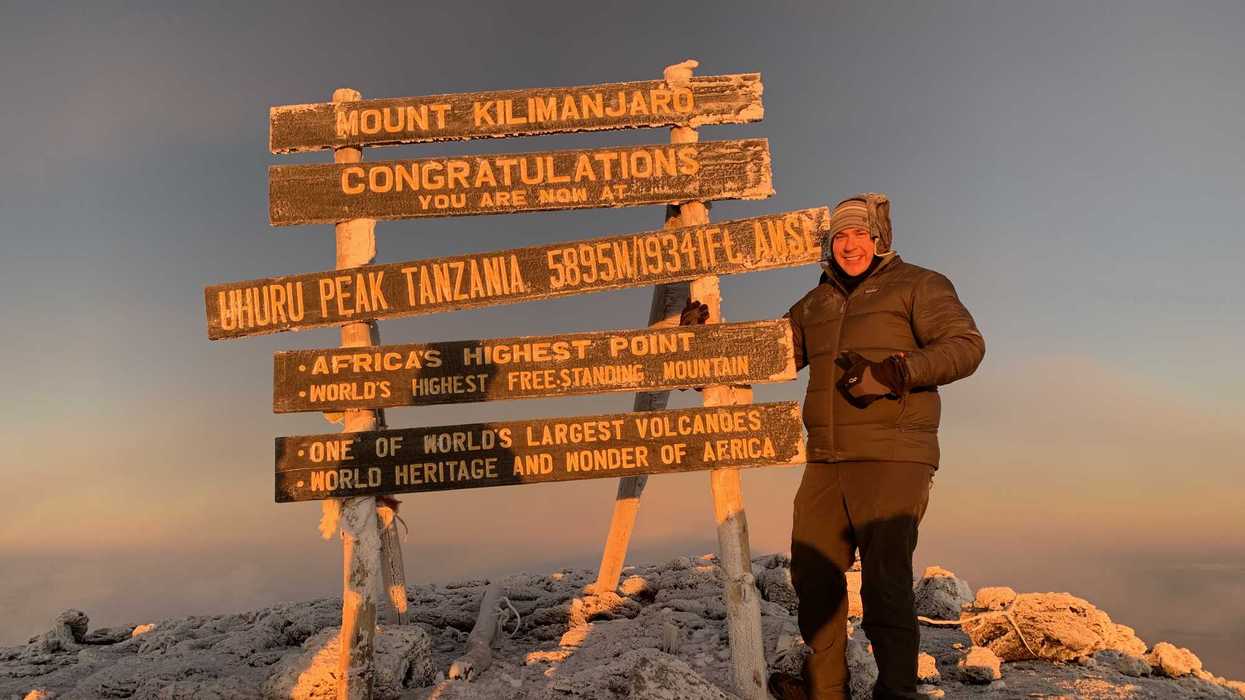
Cisco Aguilar: I like being outdoors. I like hiking, skiing, and riding my bike — I just did a century ride in Arizona. An interesting fact that most people don't know is that I'm on a mission to visit 100 countries. I’m at 96. After visiting so many countries, you realize that people are all the same across the world. Everybody just wants peace. Everybody wants to be able to provide for themselves and their families.
Issue One: What is your favorite book or movie?
Cisco Aguilar: Charlie and the Chocolate Factory has been my favorite book since I was in fourth grade. It’s a unique story about somebody who was completely optimistic about the process no matter the challenges. It’s not always about being the loudest person in the room, but about understanding the process and enjoying the moment.
Another book is Open by Andre Agassi, which is a phenomenal sports book about life in general, overcoming challenges, and taking advantage of opportunities. It's also about understanding that we're not in these adventures by ourselves and it’s important to have a team, a goal, and a reason why you’re doing something.
For movies, F1 was incredible, and Casablanca is an incredible movie that people should really see.
Issue One: Which historical figure would you have most liked to have had an opportunity to meet?
Cisco Aguilar: Mark Twain's brother, Orion Clemens. He was Nevada’s first secretary of the territory, and it would be interesting to have his perspective about Nevada back in the day. And also to hear about his trials and tribulations. He loved adventure.
From a political perspective, JFK — being such a young individual and dynamic communicator, getting people to understand what is needed to achieve a goal.
And then JP Morgan because he was a financier, created a library system, and created our finance system — understanding his entrepreneurial perspective and what it took to build something incredible.
Caroline Pirrone is an election protection and money in politics intern at Issue One.
Ella Charlesworth is the strategic engagement manager at Issue One.








The President Invited Iran to Bomb My Home