
Most Americans already have strong views about whether the war with Iran is justified, and many political leaders speak as if the answer is obvious.
Much of that debate has unfolded without a clear understanding of what the initial Obama nuclear agreement did, why it was abandoned, or what the realistic outcomes of the current conflict might be.
Unfortunately, in today's polarized work, arguments are often formed by pre‑existing loyalties, partisan rhetoric, or the need to defend a position already taken.
This piece lays out the core facts: what the first deal contained, what its critics objected to, and what the war has changed. Readers who want to form an opinion based on evidence rather than emotion can do so with a clear picture of the possible risks and rewards.
What the Obama Nuclear Deal (JCPOA) Was
The Joint Comprehensive Plan of Action (JCPOA), signed in 2015, was an agreement between Iran and the U.S., U.K., France, Germany, Russia, China, and the EU. Iran accepted major restrictions on its nuclear program and extensive inspections in exchange for relief from international sanctions.
Key elements included:
- Uranium stockpile reduction: Iran cut its enriched‑uranium stockpile by 98%, to under 300 kg.
- Enrichment cap: Enrichment was limited to 3.67%, far below weapons‑grade.
- Centrifuge limits: Iran reduced its operating centrifuges from about 20,000 to a much smaller number.
- Inspections: The IAEA gained continuous access and monitoring authority.
- Sunset clauses: Restrictions were set to expire on staggered timelines between 10 and 25 years.
- Sanctions relief: Iran received phased relief from U.S., EU, and UN sanctions.
JCPOA Sunset Clauses: What Ended After 10, 15, 20, and 25 Years. The JCPOA and UN Security Council Resolution 2231 created a layered schedule of expiration dates for nuclear and verification restrictions.
10‑Year Sunsets
• Limits on advanced centrifuge R&D
• Restrictions on manufacturing centrifuge components
• Gradual easing of procurement‑channel controls for nuclear‑related imports
15‑Year Sunsets: These were the core nuclear restrictions:
- The 300‑kg uranium stockpile cap
- The 3.67% enrichment cap
- Limits on centrifuges at Natanz and Fordow
- Ban on enrichment at Fordow (beyond limited research)
- Caps on heavy‑water production and stockpiling
20‑Year Sunset
- IAEA surveillance of centrifuge production facilities
25‑Year Sunset
- IAEA monitoring of uranium mining and milling operations
Some provisions were permanent, including Iran’s commitment never to pursue nuclear weapons and long‑term IAEA access under the Additional Protocol.
What Aspects of the Agreement Trump Did Not Like
President Trump withdrew the U.S. from the JCPOA in 2018, calling it “the worst deal ever.” His objections centered on numerous important issues:
- Sunset clauses: He argued the deal only delayed Iran’s nuclear capacity.
- Ballistic missiles: The JCPOA did not restrict Iran’s missile program.
- Regional proxy activity: The deal did not address Iran’s support for armed groups in Lebanon, Yemen, Iraq, and Syria.
- Enrichment limits: Trump said Iran could resume higher‑level enrichment once the sunset provisions expired.
- Sanctions leverage: He believed the U.S. gave up too much economic pressure up front.
What Trump Has Said He Wants in a New Deal: Trump has stated that any new agreement must be “far better” than the JCPOA. Reporting indicates the U.S., under his leadership, has sought:
- Additional nuclear restrictions beyond the JCPOA limits
- Limits on Iran’s ballistic‑missile program
- An end to Iran’s support for regional armed groups
- Longer‑lasting or permanent constraints instead of sunset clauses
- A wider regional security framework dealing with Iran’s military reach
These goals reflect the view that the JCPOA postponed, rather than eliminated, Iran’s nuclear and regional ambitions.
Evaluating whether a tougher deal is “worth it” requires weighing potential benefits against the strategic costs of the conflict.
Energy Security and the Strait of Hormuz
Possible benefits of a successful deal:
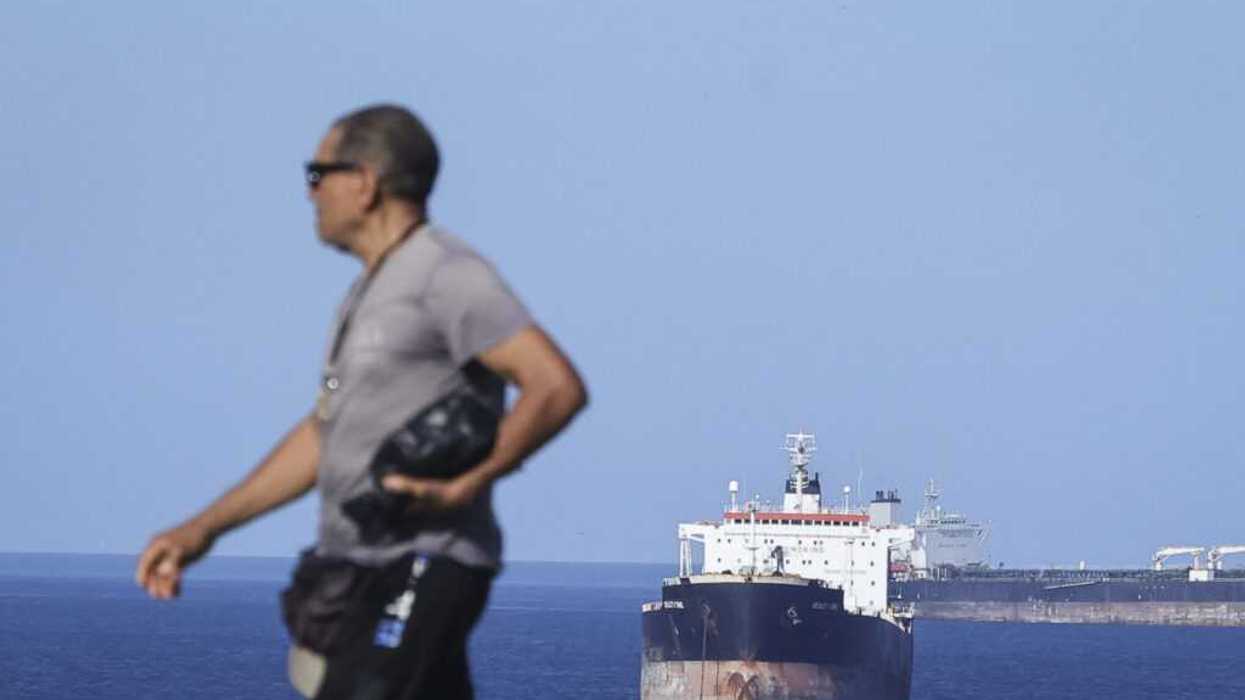
- Reduced risk of disruption in the world’s most important oil chokepoint, through which 20–27% of global seaborne oil and major LNG shipments pass
- More predictable energy prices and fewer war‑risk premiums
Offsets and costs in a war environment:
- Iran has repeatedly shown it can threaten or partially close the strait, causing oil price spikes and global economic stress
- Even limited conflict can lead to tanker attacks, blockades, and insurance shocks that act as a tax on the global economy
China and Russia: Who Gains From Prolonged Crisis?
Possible benefits of a stronger deal:
- Reduced the opportunity for China and Russia to position themselves as Iran’s protectors and economic partners
- Limits on their ability to secure discounted Iranian oil or strengthen military ties
Offsets if conflict continues:
- War and sanctions push Iran further into China’s and Russia’s orbit
- China benefits from discounted oil and a distracted United States
- Russia benefits from higher global energy prices and another geopolitical front that divides Western attention
NATO Allies: Unity vs. Fracture
Possible benefits of a coordinated, stronger deal:
- Repaired transatlantic relations after the U.S. withdrawal from the JCPOA
- Shared sanctions and diplomacy could realign U.S.–European strategy on Iran
Offsets if the U.S. acts alone or escalates conflict:
- Secondary sanctions and unilateral decisions have already strained relations with key NATO economies
- A war that raises energy prices and harms European economies deepens concerns that U.S. actions impose costs on allies without consultation
Middle East Allies: Mixed Incentives
Possible benefits of Trump’s four asks:
- Israel and several Gulf states have long supported tougher limits on Iran’s nuclear program, missiles, and proxies
- A credible agreement could reduce proxy attacks across the region
Offsets and risks:
- If diplomacy fails, these same allies become front‑line targets for missiles, drones, and cyberattacks
- Extended conflict and high oil prices can threaten friendly governments and fuel anti‑U.S. sentiment
CONCLUSION
In the end, the question is not whether one prefers the Obama deal or a tougher Trump‑style agreement, or whether one supports or opposes the war.
The real question is whether the United States is making choices grounded in a full understanding of the costs, risks, and strategic trade-offs involved.
Facts do not settle every argument, but they do set the boundaries of what is real, and only by facing those facts, free of bias or wishful thinking about the future, can the country judge whether the road ahead leads toward greater security or deeper uncertainty.
David Nevins is the publisher of The Fulcrum and co-founder and board chairman of the Bridge Alliance Education Fund.







 Army Spc. Vanessa Guillén. (U.S. Army)
 The 20th Fighter Wing courtroom at Shaw Air Force Base includes a jury box, witness stand, and gallery, and is used for courts-martial and other military legal proceedings. (Airman 1st Class Daniel Blackwell/U.S. Air Force)