



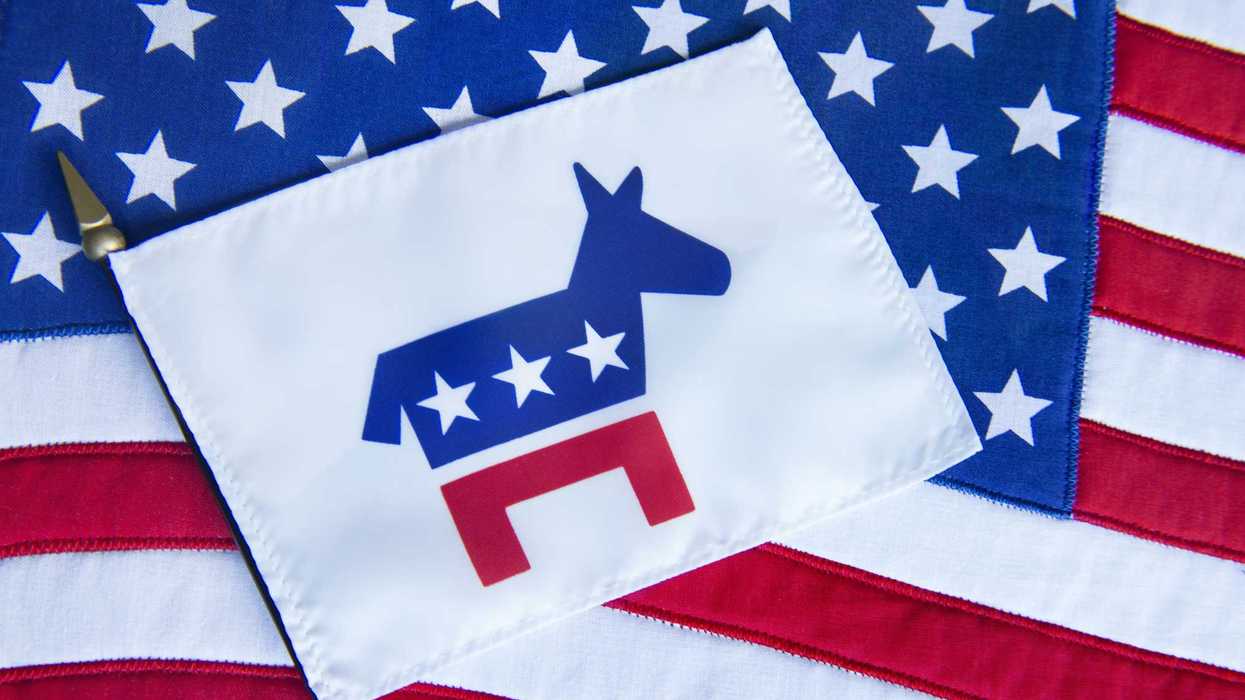

Labels can be misleading and misused. The label "Centrist" is empowering because it signifies you are mainstream, not extreme, a place where all people can come together. To be labeled "Left" is to place you outside the mainstream, extreme; left connotes a kind of kookiness as well as—horror of horrors—Socialism.
But are the labels accurate? For most of the 20th century, the Democratic Party was, without question, the party that championed the working man, the average person—the people. But they were nevertheless firm capitalists—they were not Socialists.
All the actions government has taken to improve the opportunities and lives of working men and their families, the poor, and the elderly have been enacted by Democratic Congresses under Democratic Presidents. To name but a few of the highlights:
Workers - The National Labor Relations Act of 1935 guaranteed private-sector employees the right to organize into unions, engage in collective bargaining, and go on strike. It also prohibited unfair labor practices by employers. A Democrat-controlled Congress passed it under Democratic President FDR. That act was amended in 1947 by a Republican-controlled Congress over President Truman's veto to restrict union actions and create union unfair labor practices.
The Elderly: Social Security was passed in 1935 by the same Congress under President Roosevelt. Medicare was passed in 1965, again with both houses of Congress controlled by Democrats and Democratic President Johnson. A vocal campaigner against Medicare, on behalf of the AMA, was Ronald Reagan, who called it socialized medicine.
The Poor - Aid to Families with Dependent Children was another law that was passed in 1935, part of FDR's effort to have government help those in need and thus enable them to pursue their lives. The Food Stamp Act was passed in 1964, again by a Democratic-controlled Congress under President Johnson, part of his War on Poverty.
As a result of these laws, workers prospered and rose to become solid middle-class Americans. The elderly were more secure and independent. And the poor, while certainly still poor, gained a better standard of living and more stability. Because of their support of the worker against corporate interests and the poor, many Americans—Republicans—viewed them as "leftists."
In the 1980s, after the election of Ronald Reagan, some Democratic leaders felt that the Party needed to appeal to a broader base, and they coveted the money that flowed from corporations to the Republican Party. These Democrats formed the Democratic Leadership Council, which included Bill Clinton.
Under their influence, the Party's actions—if not its stated ideology—shifted to the Right. While still championing support for the poor, people of color, and workers, the support of industry interests was unmistakable. Whether it was Clinton's embrace of Free Trade Agreements, his signing of the Republican Congress's repeal of the Glass-Steagall Act (a depression-era regulation of banks), or Obama's lack of support for reinstating the Glass-Steagall Act after the 2008 stock market crash and resulting recession—clearly the Democratic Party was lending support to interests of industry that were against the interests of middle-class working Americans.
Now we are seeing a surge in the popularity of Democrats who are members of the Democratic Socialists of America (DSA), who champion the interests of the working man, the average person. And they are succeeding because, despite the label—"Socialist" or "left"—that "centrist" Democrats as well as MAGA Republicans apply to them, their words appeal to the mass of people who have been suffering for years under policies that take little account of their interests.
Seen in this historical light, who is "centrist" in terms of the Democratic Party? It is the Democratic DSA candidates, the Progressives, who are truly Democratic centrists. And it is the self-avowed centrists who, in terms of the Democratic Party, are right-wing.
When looking at the country as a whole, the Democratic Party is clearly left of the Republican Party—now more so than ever before—but does that mean it is leftist? In terms of our founding documents ... the Declaration of Independence and the Constitution ... the Democratic Party has been centrist in that the policies it promotes and has promoted mostly move the country closer to our founding principles. If the Democrats are considered "left," then our founding documents must be considered "left" as well.
I have argued that Democratic DSA candidates should resign from the DSA because the DSA's fundamental position is antagonistic to Democrats' fundamental beliefs and America's founding principles. It works for a "government and economy by and for the working class." That is not democracy, which is defined as government by and for all the people, not some subset. And that is not the belief of Bernie Sanders, Zohran Mamdani, Abdul El-Sayed, or most, if not all, of the other candidates who are members of the DSA. (See my article, "The Democratic Socialists of America Is Not What It Seems.")
A generation of Democrats has been conditioned to think of themselves as "centrists," Democrats in the mold of Bill Clinton and Barack Obama—great Americans, great Democrats, and fervent supporters of the people, but they tried to have their cake and eat it too. They got into bed with corporate America, and the result was the inevitable growth of corporate influence and interests in shaping Democratic policies.
This shift to the right must end. It has hurt the American people, especially the blue-collar worker, and it has hurt the Party. 50.1% of U.S households had incomes under $75,000 in 2022. If Democrats want to once again become the majority party, then these are the people, both urban and rural, that the Party must appeal to, in addition to suburban women and liberals of all stations. And these are the people who are the natural constituents of the Party. Yes, even the rural poor and middle class; they may traditionally vote Republican, but they will be natural Democratic voters once the Party gets beyond the culture labels. See my article, "Winning the Rural Vote: A New Approach for the Democratic Party."
Bottom line, the Democratic Party has always been, and should remain, a big tent, with its central goal being to give all people an equal opportunity to pursue their right to life, liberty, and happiness. Whether one is more conservative in their approach, you are still a Democrat. If you are more radical in your approach, you are still a Democrat. The main thing is that we all agree on the Party's mission to pursue that goal, and that all the Party's policies must support that goal and serve the people's interests. (See my article, "Can the Democratic Party Still Lead?")
We must return to the fundamentals of the Party, just as we must return to our founding principles as expressed in the Declaration of Independence, if America is to be saved from becoming an ever-increasing land of inequality rather than one of increasing equality. The Party must stand for, as Abraham Lincoln put it, "government of the people, by the people, and for the people."
Ronald L. Hirsch is a teacher, legal aid lawyer, survey researcher, nonprofit executive, consultant, composer, author, and volunteer. He is a graduate of Brown University and the University of Chicago Law School and the author of We Still Hold These Truths. Read more of his writing at www.PreservingAmericanValues.com












The President Invited Iran to Bomb My Home