
Skip to content
Search

Latest Stories

Follow Us:
Top Stories

Podcast: Introducing "When the People Decide"

Podcast: Introducing "When the People Decide"

We are excited to share the first episode of a new narrative series on ballot initiatives from the McCourtney Institute for Democracy: "When the People Decide."

In this reported series, Jenna Spinelle tells the stories of activists, legislators, academics, and average citizens who changed their cities, states, and the country by taking important issues directly to votes — like Medicaid expansion in Idaho, sentencing reform in California, and LGBTQ workplace protections in Ohio.


This episode tells the story of a campaign in Michigan to end partisan gerrymandering in 2018 and shows how it is part of a legacy of ballot initiatives dating back to the 1800s. After becoming disillusioned with the results of the 2016 election, Katie Fahey took to Facebook to gauge the interest of grassroots mobilization amongst her colleagues, friends and family.
Introducing: When the People Decide

Introducing: When the People Decide
open.spotify.com


Read More

GOP Claims of Voter Disenfranchisement Are a Self-Fulfilling Prophecy

Repeated claims of voter fraud have eroded Republican trust in mail-in voting. Explore how GOP rhetoric surrounding mail ballots risks depressing conservative turnout ahead of the 2026 midterms.

ArtMarie/Getty Images

GOP Claims of Voter Disenfranchisement Are a Self-Fulfilling Prophecy

Trump’s efforts to sow seeds of doubt in the election process have had an unintended yet predictable effect on the 2026 midterms: many Republican voters no longer trust mail-in voting.

When City Councilmember Nithya Raman surged from behind in the Los Angeles mayoral primary as late mail-in ballots were counted, some members of the GOP pointed to a broken election system. In reality, they were watching California elections function exactly as designed — slow, scrupulous, but secure.

Keep ReadingShow less
Person voting in a voting booth.

Why are so many American elections uncontested? Richard Neal’s long tenure in Congress highlights a broader problem involving money, ballot access, parties and candidate recruitment.

Hill Street Studios/Getty Images

America Has an Uncontested Elections Problem

Richard Neal, the congressman representing Massachusetts’ 1st district, is concluding his 19th congressional term this year. In many ways, Neal is a typical long-tenured congressperson. However, Congressman Neal is distinguished by having been elected to Congress uncontested more times than anyone in post-civil rights American history.

Neal owes his long tenure in part to the uncompetitive elections in western Massachusetts where so-called “silent elections” are common. Some would be challengers may be put off by the fact that he has won seven of his eight contested congressional races by more than 20 points. More often than not, Neal has been uncontested in the Democratic primary as well, however, this year he has competition in both the primary and general election.

Keep ReadingShow less
A Democracy Cannot Run on an AI Model

Clerk Matthew Sandbar, 34, demonstrates part of the ballot-sorting process to members of the media attending a walkthrough of the Philadelphia Ballot Processing Center used to process the ballots of the 2022 US midterm elections, in Philadelphia on October 27, 2022.

Photo by Ryan Collerd / AFP via Getty Images

A Democracy Cannot Run on an AI Model

Tallying the results of Washington, DC’s first ranked-choice election in June took about 10 days—longer than many voters are used to. In an age when artificial intelligence can generate an answer in seconds, waiting days for election results can feel old-fashioned, inefficient, even suspicious. And it is about to matter far more widely. This November, 17 states, cities, and counties will use ranked-choice voting, including Maine and Alaska statewide, in races that could help decide control of Congress. More voters than ever will watch results take days to resolve, and more will be asked to trust a count they cannot see.

But that slowness may be one of its most democratic features.

Keep ReadingShow less
People waiting in a line outside as the sun sets.

Voters wait in line outside the Metropolitan Multi-Service Center to cast their ballots in Houston, Tuesday, Nov. 4, 2025. A recent state investigation confirmed that some registered voters flagged as potential noncitizens by a federal system had already provided proof of citizenship.

Brett Coomer/Houston Chronicle via Getty Images

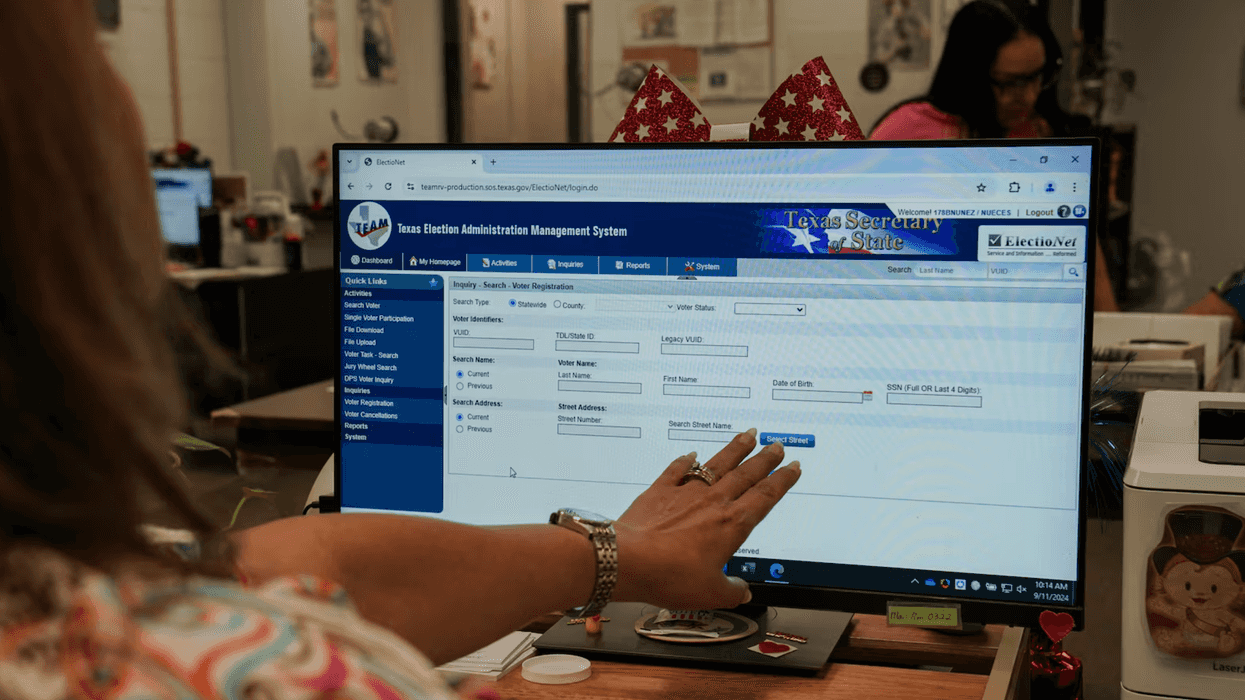
Texas Confirms Some Flagged As Potential Noncitizens on Voter Rolls Had Provided DPS Proof of Citizenship

Election officials across the state should immediately reinstate some voters who were incorrectly flagged as potential noncitizens through a federal program, the Texas Secretary of State’s Office told county officials Wednesday.

Christina Adkins, the state elections director, told county officials the state had reviewed Texas Department of Public Safety records confirming the citizenship of some of the 2,724 registered voters who were flagged as potential noncitizens, according to an audio recording of her comments obtained by Votebeat and The Texas Tribune, as well as election officials who heard them. The voters were flagged after the state checked its voter roll through a federal program called Systematic Alien Verification for Entitlements, or SAVE, used to verify the citizenship of people registered to vote.

Keep ReadingShow less