
A legal challenge regarding mail-in voting rules and postal service regulations is currently moving through the federal court system as the midterm elections approach. The dispute involves administrative directives and postal regulations concerning ballot delivery standards and state requirements. Lower courts have previously addressed how these rules are implemented, prompting appeals and legal filings from various administration officials, state attorneys general, and election administrators over operational timelines and voter access.
Brian Miller is the executive director of Nonprofit VOTE, a nationwide organization that works to help nonprofits engage the communities they serve in voting and elections.
In the article "Voting Is Not a Closed-Book Test," Miller explores mail-in voting and why giving voters time and access is critical to a healthy democracy.
He spoke with me in a recent episode of The Fulcrum Roundtable, where columnists join for deeper, on‑the‑record discussions about issues shaping American governance and civic participation.
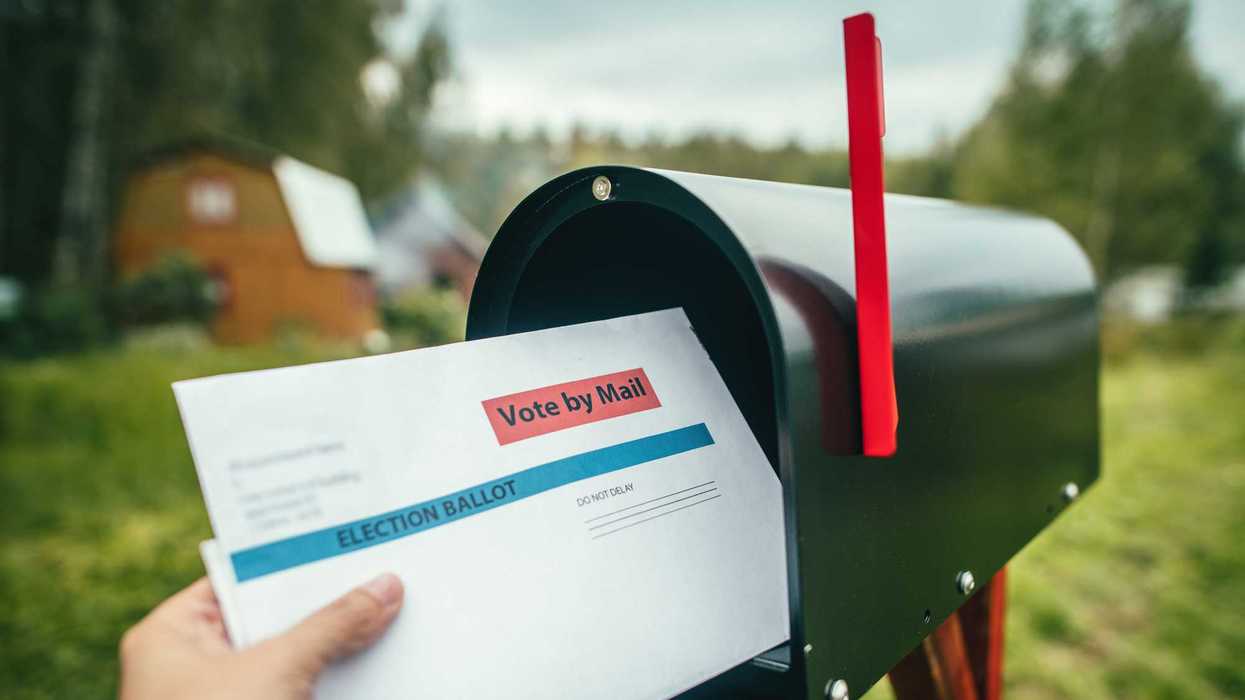
Miller emphasized that having a ballot at home fundamentally alters how citizens interact with local measures and down-ballot candidates. "There's a tremendous benefit of having that ballot sitting at your house on your kitchen table where you can look at it and say, 'Wow, that's a confusing ballot measure. What does it mean?' And you can take the time to do the research," Miller said.
- YouTube youtu.be
According to Miller, this opportunity for research is especially impactful during off-year election cycles and for down-ballot choices—such as school boards, city councils, and local ballot initiatives—where voters are less likely to be saturated with media coverage than during presidential or congressional campaigns.
"The second real benefit of mail-in voting is that it allows people to make informed decisions," Miller noted, adding that this dynamic ultimately boosts overall voter turnout.
Reflecting on post-COVID-19 policy shifts, Miller cautioned against state efforts to roll back "no-excuse" mail-in voting. While emergency provisions during the pandemic introduced broader access, several states have reverted to strict excuse-only requirements that can demand signed doctor orders or employer documentation.
Addressing legal precedent and authority, Miller underscored that state legislatures hold primary responsibility for running elections within federal constitutional and statutory guardrails. "The president has no authority to run elections. That's not and never has been an authority of the president," Miller stated, clarifying that while Congress sets legislative parameters through measures like the Voting Rights Act, operational control belongs to the states.
He urged state lawmakers to maintain broad mail-in access, describing it as a safe, secure way to prevent last-minute disruptions—such as bad weather or sudden illness—from disenfranchising citizens.
During the conversation, Miller addressed persistent political rhetoric surrounding voter fraud and list maintenance. He pushed back against claims conflating inactive or deceased records on voter rolls with fraudulent voting activity.
"Instances of deceased people being on the voter role is simply an administrative bureaucratic issue that just needs to be cleaned up," Miller explained, highlighting interstate cross-referencing systems like ERIC that help update voter rolls when citizens relocate or pass away. "They're not voting... The instances of a person who's deceased voting is next to no. And I think those two are very separate issues and they should not be conflated".
Miller emphasized that current security measures—such as matching signatures and verified registration lists—already provide robust protections.
As head of Nonprofit Vote, Miller oversees initiatives that resource human service organizations—including housing clinics, food pantries, and community health centers—to help people facing systemic barriers navigate voting procedures.
He challenged the notion that voter outreach should be left entirely to political campaigns, noting that campaigns strategically target high-frequency voters to win races rather than build an inclusive electorate.
"When candidates and campaigns focus all their communication on people with a history of voting... populations that don't have a history of voting are not contacted," Miller said. "And when they're not contacted, they don't vote. And when they don't vote, they're labeled as an unlikely voter. This cycle keeps repeating itself".
Nonprofits, Miller argued, are uniquely suited to interrupt that cycle. He shared that when trusted community organizations engage the people they serve, voter turnout among those individuals increases by roughly 10 percentage points compared to similar peers.
By framing mail-in voting as a tool for meaningful civic engagement rather than just administrative logistics, Miller advocates for a broader dialogue centered on voter access, integrity, and expanding the electorate.
As debates over election access continue nationwide, the case for mail-in voting extends far beyond convenience. In the view of advocates like Miller, providing voters with the time and tools to research their ballots at home remains one of the most effective ways to strengthen civic engagement and safeguard democratic integrity.
Hugo Balta is the executive editor of The Fulcrum and the publisher of the Latino News Network