





McMahon is an adjunct associate professor of applied economics and political science at the University of Vermont and an international democracy and governance consultant.
It has become clearer to Americans than ever before that the Electoral College is archaic and represents a threat to our democracy — and needs to be significantly altered if not abolished. But what's the best way forward?
Relying on electoral votes is cumbersome and can be so unrepresentative of the will of the people that two of the past four presidents got elected despite losing the popular vote, George W. Bush in 2000 and Donald Trump in 2016. And in several other elections, including last year's, small shifts at the margins of a few states would have produced the same result. (President Biden got 7 million more votes nationwide, but his margins of victory in Arizona, Georgia and Wisconsin were a cumulative 43,000. Had only those ballots gone the other way, a 269-269 electoral vote tie would have meant Trump's reelection — by the House, where each state would have had one vote and most delegations have Republican majorities.)
So people are talking now about how to change the system. A problem with the most straightforward alternative – simply relying on the national popular — is that it eliminates a main benefit of the Electoral College, and a reason why it was created in the first place: less-populated states benefit from having more electoral vote clout per person than the bigger states. So the smaller states are not going to want to eliminate the college, which means the constitutional amendment that would be required is not happening.
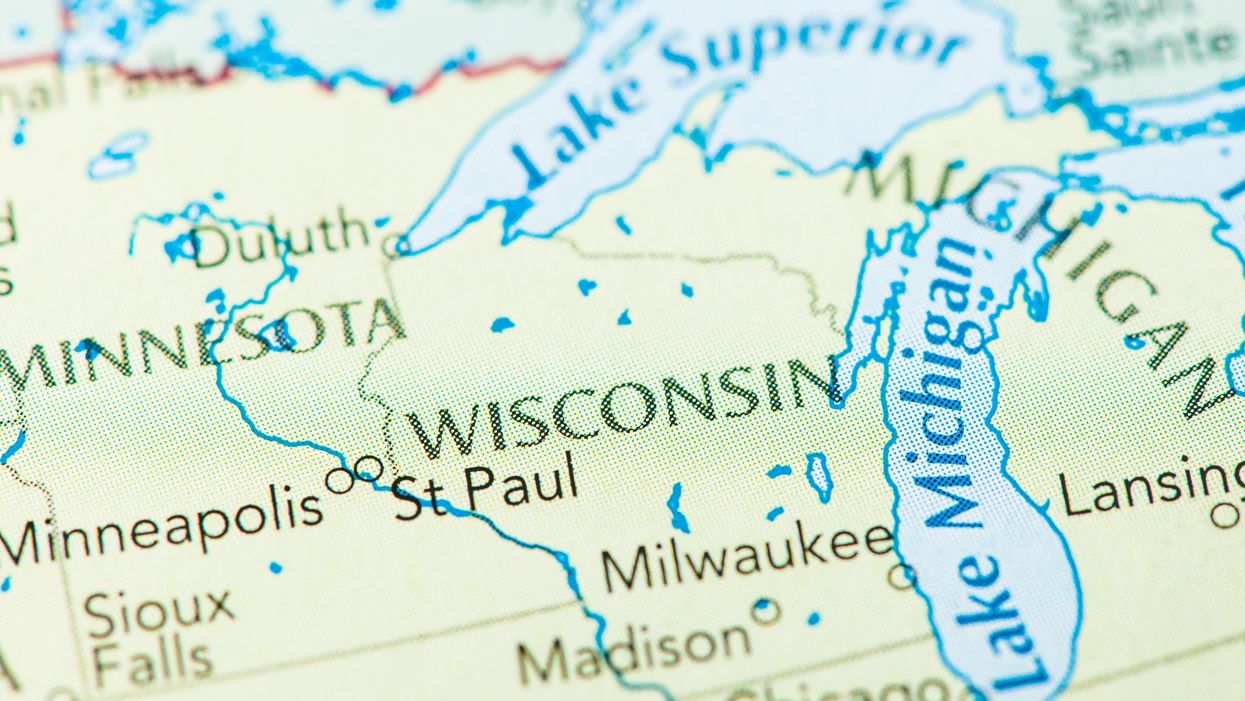
Instead, some are thinking about ways such a change can happen at the state level. This is now the case in Wisconsin, where Republican state Rep. Gary Tauchen has introduced a bill that would assign one electoral vote to the winner in each of the state's eight congressional districts, with the statewide winner getting the other two votes. (This is the system used in Maine and Nebraska; everywhere else, the statewide winner gets all the electoral votes.)
Tauchen's proposal has been criticized as a partisan ploy to leverage the state's highly gerrymandered congressional map — which faces its once-a-decade redraw in any case, this time by a divided state government. But his larger objective of making electoral votes "reflect Wisconsin's diverse political landscape" is a worthwhile goal that his and other states could achieve by better means.
Under the current system political parties can count on being able to win all electors from states they control. That's why in California, for example, the Democratic-majority Legislature won't be changing a mechanism that reliably provides 55 electors for the Democratic ticket. What makes Wisconsin different is that control is split between its Republican-majority Legislature and its recent favoring of Democrats statewide: Biden last fall, and both Sen. Tammy Baldwin and Gov. Tony Evers in 2018.
Tauchen's proposal aims to salvage as many electoral votes for his side as possible. Applied to last fall, Trump would have claimed 6 of the state's 10 votes because he carried three-quarters of the congressional districts.
That disproportionate outcome is the result of what a Schwarzenegger Institute study found to be the second most gerrymandered state in the county. In 2018, for example, Democrats received 53 percent of the overall vote for state House candidates but won only 35 percent of the seats.
Because of such partisan gerrymandering, a district-based system would not fix a core problem in our presidential elections: The candidate with the most votes does not always win. If applied to the whole country, the system would not have rectified the outcomes of 2000 and 2016. And broad awarding of electoral votes by House districts would likely make congressional gerrymandering worse, given the increased political reward for maximizing partisan leverage.
A much better approach would be for the state to award electors based on the overall split in the popular vote — 60 percent of the ballots translating to three-fifths of the electors, say, or as close to that as possible. Proportional solutions have been proposed many times in the country's history, and in 1950 the Senate passed such a proposal with more than a two-thirds majority.
In the Wisconsin context, the Legislature could opt to award all electors proportionally, probably yielding a 5-5 split in most elections. Alternatively, they could use the proportional system but also include the element of Tauchen's proposal giving a two-elector bonus to the statewide winner — which could help keep Wisconsin on the list of presidential battlegrounds.
Moving from winner-take-all could help the state turn down the electoral heat after years of intensifying partisanship and a polarizing gubernatorial recall election. A proportional approach would also defuse tensions arising there and in many other states over qualifications of third-party candidates. In 2016, Jill Stein's 1 percent share in Michigan probably swung 16 electoral votes from Hillary Clinton to Donald Trump; if the state had awarded its Electoral College votes proportionally, the Green Party candidate's impact would have been non-existent. And this year, Wisconsin courts decided not to allow the Greens' Howie Hawkins on the ballot, a decision derided by Republicans as a partisan move to protect Biden's edge.
Georgia, Michigan, Arizona and Pennsylvania — like Wisconsin — are toss-up states that went for Biden last fall but have Republican legislatures now. So there could be alignment between a GOP desire to compete for more electoral votes and our national need to move away from an unhealthy winner-take-all system.
Adoption by several influential states could build momentum for a constitutional amendment applying the proportional system nationwide, and switching from an Electoral College populated by humans to one where a computer awards electors approximating the statewide totals as closely as possible.
The good denizens of the Badger State might miss the special focus the current system showers on swing states like theirs. But its electoral votes would still matter under this proposed system, and the nation's political health would improve. Wisconsinites should concur that acting in the best interests of the country — even if it means ceding some attention for the common good — is the right path to follow.












Some MAGA loyalists have turned on Trump. Why the rest haven’t