

Skip to content
Search

Latest Stories

Follow Us:
Top Stories

Abrams calls for reviving federal oversight of some elections

Stacey Abrams

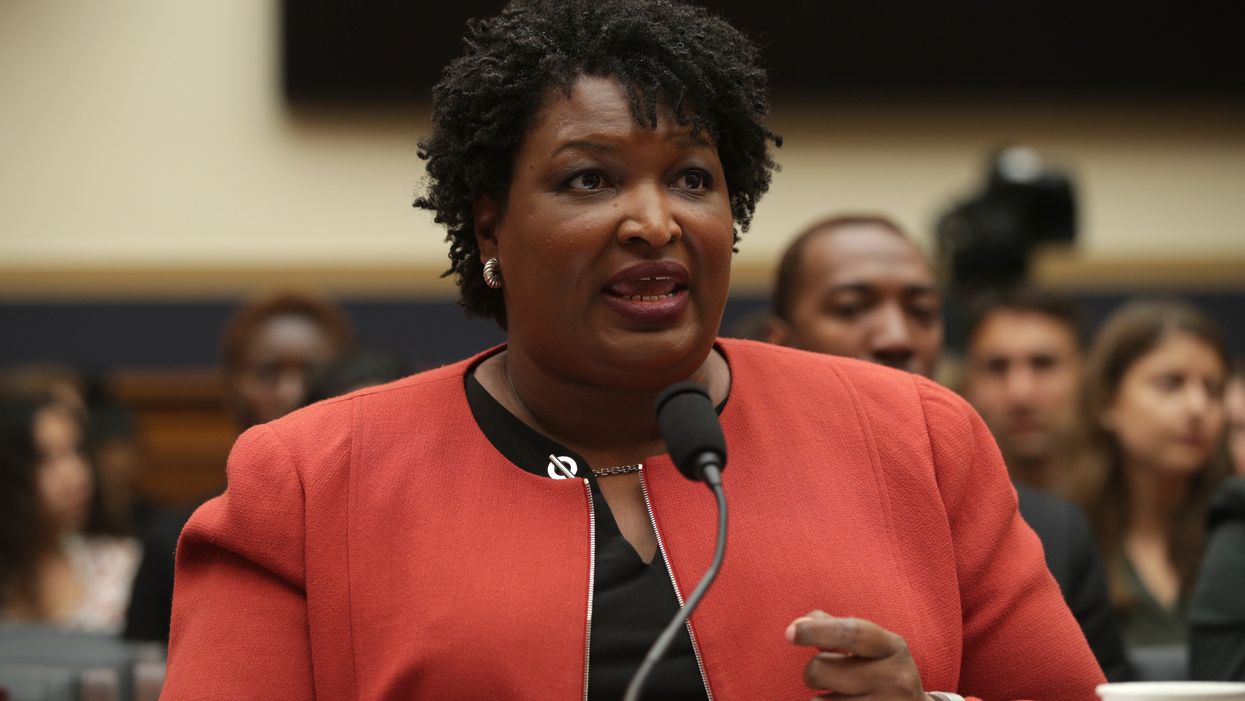
Stacey Abrams testified before a House Judiciary subcommittee on Tuesday.

Alex Wong/Getty Images

Stacey Abrams, who gained national attention during her failed 2018 bid for the Georgia governorship, is urging Congress to restore federal oversight of elections in some states.

Had she won the extremely close contest, Abrams would now be the first black female governor in America. She and her fellow Democrats maintain the election was not fairly conducted in part because her Republican opponent, Brian Kemp, was secretary of state – and therefore Georgia's top elections official – at the time.

Abrams was the most prominent witness Tuesday at a House Judiciary subcommittee hearing on civil rights and elections in the six years since the Supreme Court eviscerated the heart of the 1965 Voting Rights Act.


In Shelby County v. Holder, the court struck down the part of the law requiring advance federal approval before any changes in voting laws or practices in parts of country with a history of voter discrimination. All of Georgia had been subjected to this so-called preclearance requirement, which the court ruled is now unconstitutionally outdated.

Calling for Congress to come up with a new system for preclearance that could withstand another such challenge, Abrams said that jurisdictions formerly covered by the law "have raced to reinstate or create new hurdles to voter registration, access to the ballot box, and ballot counting."

Abrams said a voter registration group she created in Georgia, which was active in her 2018 race, submitted thousands of forms to Kemp's office and soon discovered "artificial delays" in processing those registrations. The state's requirement that names on registrations exactly match records of other government agencies sidetracked thousands more.

Both practices had a greater impact on black citizens, she said, because they are more likely to register through third-party groups like the one she founded, Fair Fight Action.

And both, she said, would have been stopped in advance under preclearance.

Abrams also charged that Kemp improperly purged names from the voter rolls.

"By denying the real and present danger posed by those who see voters of color as a threat to be neutralized rather than as fellow citizens to be engaged," Abrams said, the six-year-old Supreme Court ruling "has destabilized the whole of our democratic experiment."

After the election, Abrams created Fair Fight Action to combat the tactics used against her. It has also sued the Georgia secretary of state and is asking the federal courts to revive preclearance for any election law changes in her state.

House Democratic leaders have written legislation creating a new set of rules for the Justice Department to use in determining which states must get such preclearance, and it has more than enough sponsors to pass. But the bill would almost certainly be shelved by the Republicans in charge in the Senate.


Read More

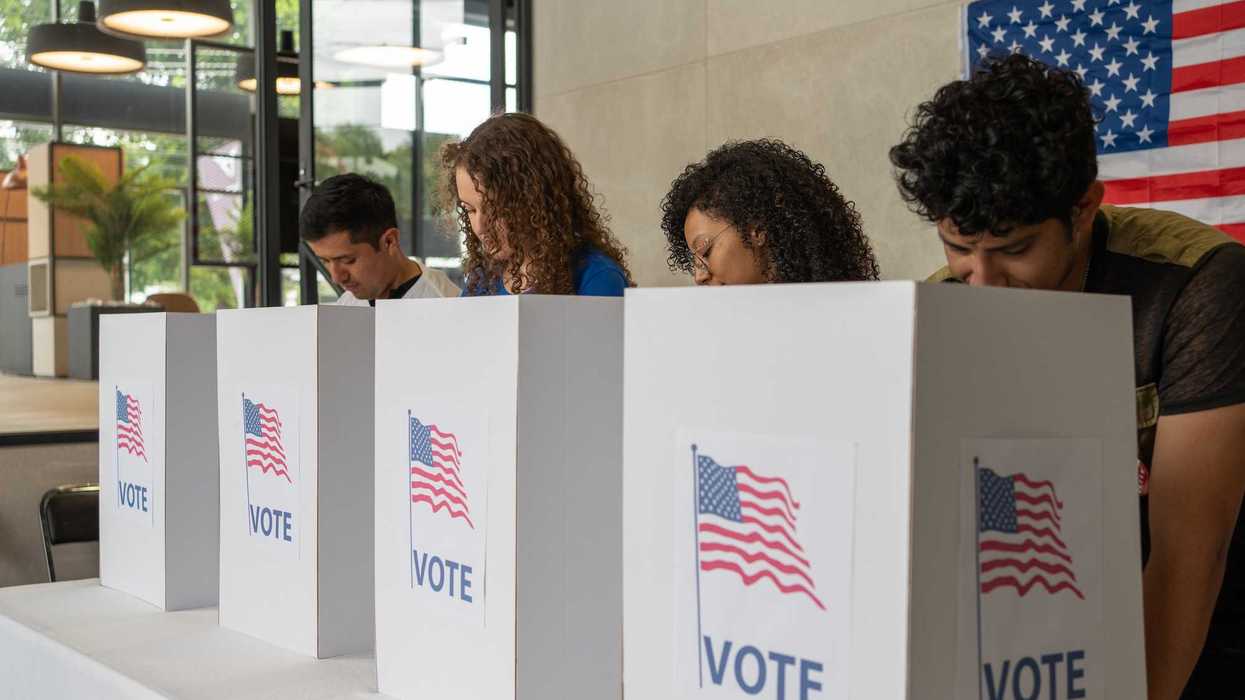
People standing at voting booths.

The proposed SAVE Act and MEGA Act would require proof of citizenship to register to vote, risking the disenfranchisement of millions of eligible Americans.

Getty Images, EvgeniyShkolenko

The SAVE Act is a Solution in Search of A Problem

The federal government seems to be barreling toward a federal election power grab. Trump's State of the Union address called for the Senate to push through the SAVE Act, which has already passed the House, in the name of so-called "election integrity." And the SAVE Act isn’t the only such bill. Like the SAVE Act, the Make Elections Great Again (MEGA) Act—introduced in the House—would require voters to provide a document outlined in the Act that allegedly proves their U.S. citizenship. We’ve been down this road before in Texas, and spoiler alert: it was unworkable.

Both the SAVE and MEGA Acts would disenfranchise millions of eligible U.S. citizens without making our federal elections more secure. They seek to roll out a faulty federal voter registration system, despite the existing separate registration and voting process for state and local elections. And these Acts target a minuscule “problem”—but would unleash mass voter purges and confusion.

Keep ReadingShow less
With the focus on the voting posters, the people in the background of the photo sign up to vote.

Should the U.S. nationalize elections? A constitutional analysis of federalism, the Elections Clause, and the risks of centralized control over voting systems.

Getty Images, SDI Productions

Why Nationalizing Elections Threatens America’s Federalist Design

The Federalism Question: Why Nationalizing Elections Deserves Skepticism

The renewed push to nationalize American elections, presented as a necessary reform to ensure uniformity and fairness, deserves the same skepticism our founders directed toward concentrated federal power. The proposal, though well-intentioned, misunderstands both the constitutional architecture of our republic and the practical wisdom in decentralized governance.

The Constitutional Framework Matters

The Constitution grants states explicit authority over the "Times, Places and Manner" of holding elections, with Congress retaining only the power to "make or alter such Regulations." This was not an oversight by the framers; it was intentional design. The Tenth Amendment reinforces this principle: powers not delegated to the federal government remain with the states and the people. Advocates for nationalization often cite the Elections Clause as justification, but constitutional permission is not constitutional wisdom.

Keep ReadingShow less
Postal Service Changes Mean Texas Voters Shouldn’t Wait To Mail Voter Registrations and Ballots

A voter registration drive in Corpus Christi, Texas, on Oct. 5, 2024. The deadline to register to vote for Texas' March 3 primary election is Feb. 2, 2026. Changes to USPS policies may affect whether a voter registration application is processed on time if it's not postmarked by the deadline.

Gabriel Cárdenas for Votebeat

Postal Service Changes Mean Texas Voters Shouldn’t Wait To Mail Voter Registrations and Ballots

Texans seeking to register to vote or cast a ballot by mail may not want to wait until the last minute, thanks to new guidance from the U.S. Postal Service.

The USPS last month advised that it may not postmark a piece of mail on the same day that it takes possession of it. Postmarks are applied once mail reaches a processing facility, it said, which may not be the same day it’s dropped in a mailbox, for example.

Keep ReadingShow less
Post office trucks parked in a lot.

Changes to USPS postmarking, ranked choice voting fights, costly runoffs, and gerrymandering reveal growing cracks in U.S. election systems.

Photo by Sam LaRussa on Unsplash.

2026 Will See an Increase in Rejected Mail-In Ballots - Here's Why

While the media has kept people’s focus on the Epstein files, Venezuela, or a potential invasion of Greenland, the United States Postal Service adopted a new rule that will have a broad impact on Americans – especially in an election year in which millions of people will vote by mail.

The rule went into effect on Christmas Eve and has largely flown under the radar, with the exception of some local coverage, a report from PBS News, and Independent Voter News. It states that items mailed through USPS will no longer be postmarked on the day it is received.

Keep ReadingShow less