


Skip to content
Search

Latest Stories

Follow Us:
Top Stories

Republicans close to ending same-day registration in Montana

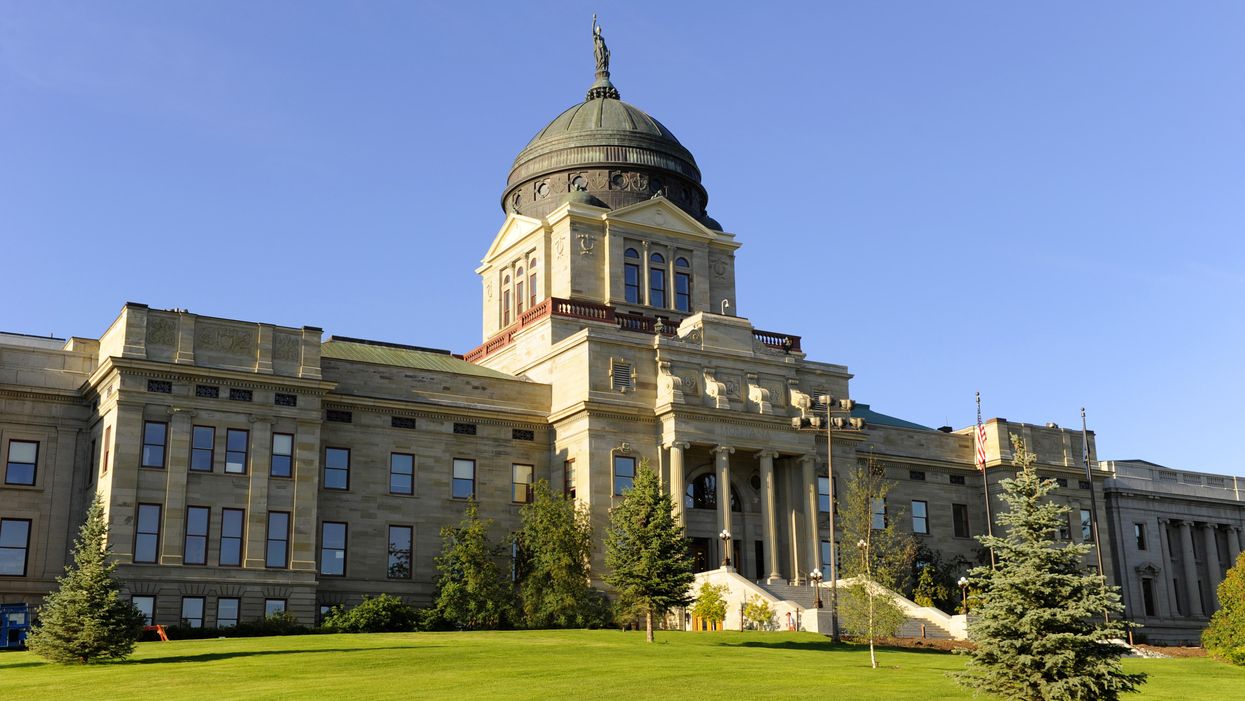
Montana Capitol

Lawmakers in Montana's Capitol are expected to work out differences in their voter registration bills and send a final version to the governor.

Dennis Macdonald/Getty Images

Republican lawmakers need only clear a couple minor hurdles in their effort to eliminate same-day voter registration in Montana.

On Tuesday, the GOP-majority state Senate voted 32-18 along party lines to endorse a bill that would end voter registration at noon the day before Election Day. Their endorsement all but guarantees the legislation will soon reach Republican Gov. Greg Gianforte's desk.

Montana is currently one of 21 states, plus Washington, D.C., that allow voters to both register and cast a ballot on Election Day. Since Montana adopted the policy in 2006, thousands have taken advantage of this last-minute registration option. Same-day registration would be nationally mandated with enactment of HR 1, the comprehensive voting rights and democracy reform bill Democrats are pushing against solid Republican resistance in Congress.


Republicans in Helena who support the bill say Montanans already have plenty of time to register to vote before an election and the same-day policy places an undue burden on election administrators.

"Elections, you know, they don't just pop up out of the blue. They don't come along and surprise us. We know they're coming. The dates are there. We need to register ahead of time," said GOP state Sen. Mike Cuffe, who sponsored the bill.

But Democrats who oppose this effort called the legislation "voter suppression." They argue limiting registration opportunities will make it harder for people, particularly Native Americans and those with disabilities, to participate in elections.

Last month, the state House passed the bill along party lines. The state Senate will vote on the legislation one more time and then both chambers will need to concur on the amendments. Once it clears the Legislature, the measure will be sent to the governor for final approval.


Read More

Post office trucks parked in a lot.

Changes to USPS postmarking, ranked choice voting fights, costly runoffs, and gerrymandering reveal growing cracks in U.S. election systems.

Photo by Sam LaRussa on Unsplash.

2026 Will See an Increase in Rejected Mail-In Ballots - Here's Why

While the media has kept people’s focus on the Epstein files, Venezuela, or a potential invasion of Greenland, the United States Postal Service adopted a new rule that will have a broad impact on Americans – especially in an election year in which millions of people will vote by mail.

The rule went into effect on Christmas Eve and has largely flown under the radar, with the exception of some local coverage, a report from PBS News, and Independent Voter News. It states that items mailed through USPS will no longer be postmarked on the day it is received.

Keep ReadingShow less
Congress Must Stop Media Consolidation Before Local Journalism Collapses
black video camera
Photo by Matt C on Unsplash

Congress Must Stop Media Consolidation Before Local Journalism Collapses

This week, I joined a coalition of journalists in Washington, D.C., to speak directly with lawmakers about a crisis unfolding in plain sight: the rapid disappearance of local, community‑rooted journalism. The advocacy day, organized by the Hispanic Technology & Telecommunications Partnership (HTTP), brought together reporters and media leaders who understand that the future of local news is inseparable from the future of American democracy.

- YouTube www.youtube.com

Keep ReadingShow less
People wearing vests with "ICE" and "Police" on the back.

The latest shutdown deal kept government open while exposing Congress’s reliance on procedural oversight rather than structural limits on ICE.

Getty Images, Douglas Rissing

A Shutdown Averted, and a Narrow Window Into Congress’s ICE Dilemma

Congress’s latest shutdown scare ended the way these episodes usually do: with a stopgap deal, a sigh of relief, and little sense that the underlying conflict had been resolved. But buried inside the agreement was a revealing maneuver. While most of the federal government received longer-term funding, the Department of Homeland Security, and especially Immigration and Customs Enforcement (ICE), was given only a short-term extension. That asymmetry was deliberate. It preserved leverage over one of the most controversial federal agencies without triggering a prolonged shutdown, while also exposing the narrow terrain on which Congress is still willing to confront executive power. As with so many recent budget deals, the decision emerged less from open debate than from late-stage negotiations compressed into the final hours before the deadline.

How the Deal Was Framed

Democrats used the funding deadline to force a conversation about ICE’s enforcement practices, but they were careful about how that conversation was structured. Rather than reopening the far more combustible debate over immigration levels, deportation priorities, or statutory authority, they framed the dispute as one about law-enforcement standards, specifically transparency, accountability, and oversight.

Keep ReadingShow less
ICE Monitors Should Become Election Monitors: And so Must You
A pole with a sign that says polling station
Photo by Phil Hearing on Unsplash

ICE Monitors Should Become Election Monitors: And so Must You

The brutality of Immigration and Customs Enforcement (ICE) and the related cohort of federal officers in Minneapolis spurred more than 30,000 stalwart Minnesotans to step forward in January and be trained as monitors. Attorney General Pam Bondi’s demands to Minnesota’s Governor demonstrate that the ICE surge is linked to elections, and other ICE-related threats, including Steve Bannon calling for ICE agents deployment to polling stations, make clear that elections should be on the monitoring agenda in Minnesota and across the nation.

A recent exhortation by the New York Times Editorial Board underscores the need for citizen action to defend elections and outlines some steps. Additional avenues are also available. My three decades of experience with international and citizen election observation in numerous countries demonstrates that monitoring safeguards trustworthy elections and promotes public confidence in them - both of which are needed here and now in the US.

Keep ReadingShow less