Skip to content
Search

Latest Stories

Follow Us:
Top Stories

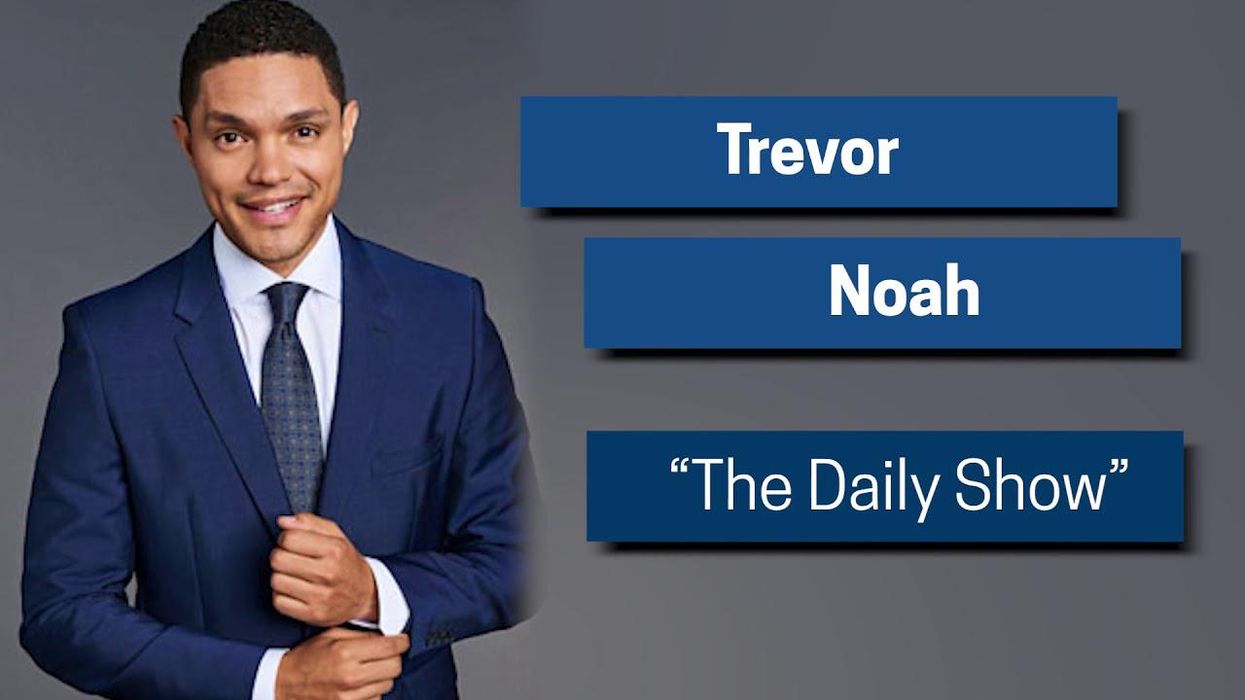
How does humor help democracy?

How does humor help democracy? (feat. Trevor Noah)

As far back as Benjamin Franklin and Mark Twain, humor has been used to call into question the actions of those in power. And that tradition continued throughout our nation‘s history in humorists such as Mort Sahl, Lenny Bruce, Dick Gregory, Jonathan Winters, Richard Pryor, George Carlin, Jon Stewart, Stephen Colbert, Trevor Noah and many, many more.

At the National Democratic Institute’s Democracy Gala in 2019 Trevor Noah, Madeleine Albright and NDI President Derek Mitchell provided their thoughts on how humor helps democracy.


Mitchell said, “The core of humor and laughter is a freedom of spirit, certainly of speech, an irreverence, an assertion of individualism that are essential to a democratic culture.”

Watch this video from the event and see if you agree with us that comedy can be a powerful force to raise awareness to the realities of the political and social imperfections in our country, and by doing so can open our minds to the corrective actions needed.

If you have current or past examples of how political comedy has been more civil, please email us at pop-culture@fulcrum.us.
Read More

Hollywood Gets Congress Wrong—and It’s Costing America Trust in Democracy

Hollywood sign and The Capitol

AI generated picture

Hollywood Gets Congress Wrong—and It’s Costing America Trust in Democracy

The following article is excerpted from "Citizen’s Handbook for Influencing Elected Officials."

Since the 1970s, public trust in American institutions—including Congress—has steadily declined. Approval ratings for the House and Senate usually hover in the teens. Certainly, some misdeeds by our elected leaders have contributed to this decline, and mainstream national media can claim its fair share of “credit” in portraying Congress in a negative light. Yet another major ingredient in the ugly formula poisoning public opinion of Congress is Hollywood. Movies and TV shows routinely portray Congress as craven, corrupt, selfish, and completely indifferent to the public interest. Regrettably, this is a wholly incorrect portrayal of our nation’s legislators.

Keep ReadingShow less
More Artists Boycott Trump‑Renamed Kennedy Center

Musicians and dance companies are canceling performances in protest, adding to a widening backlash over political interference at the nation’s premier arts institution.

Getty Images, ntn

More Artists Boycott Trump‑Renamed Kennedy Center

The recent wave of cancellations by artists at the Kennedy Center underscores a broader and urgent question in contemporary society: the struggle between artistic autonomy and political influence. By withdrawing from their scheduled appearances, these artists are responding to the Center's controversial renaming by a new Board of Directors appointed by President Trump. This renaming, seen by many as politically motivated, has catalyzed a strong reaction. Earlier this year, at least 15 performers withdrew in protest. This forms part of a growing trend, with public resignations and statements from notable figures like Issa Rae, Rhiannon Giddens, Renée Fleming, and Ben Folds. They have all expressed concerns that the Center’s civic mission is being undermined.

More performers are visibly withdrawing from the Kennedy Center, with fan-favorite names disappearing from the roster. In recent weeks, news outlets have reported that more artists and groups have called off their upcoming shows. These include jazz drummer Chuck Redd, the jazz group The Cookers, singer-songwriter Kristy Lee, and the dance company Doug Varone and Dancers. Fans holding tickets now face the stark absence that mirrors these artists' discomfort with the renaming and what it represents politically.

Keep ReadingShow less
Interfaith Music Aims to Reclaim January 6 for Unity

Elena “La Fulana” Lacayo

Interfaith Music Aims to Reclaim January 6 for Unity

Music has played a significant role in uniting people of different faiths in the United States. From the Civil Rights era to the years following 9/11, Americans have used music to bridge religious divides and affirm their shared humanity. Interfaith music extends beyond worship and remains a lasting way for Americans to remember their common bonds. St. Augustine expressed the power of music in faith when he said “When I sing, I pray twice.”

In this spirit, The Fulcrum highlights stories during the holiday season that reflect universal themes. Messages of love, kindness, hope, and generosity resonate across cultures and traditions, reminding us that shared values are stronger than our divisions.

Keep ReadingShow less