



Skip to content
Search

Latest Stories

Follow Us:
Top Stories

Americans are mostly worried about poor leadership and inflation

concerns about government
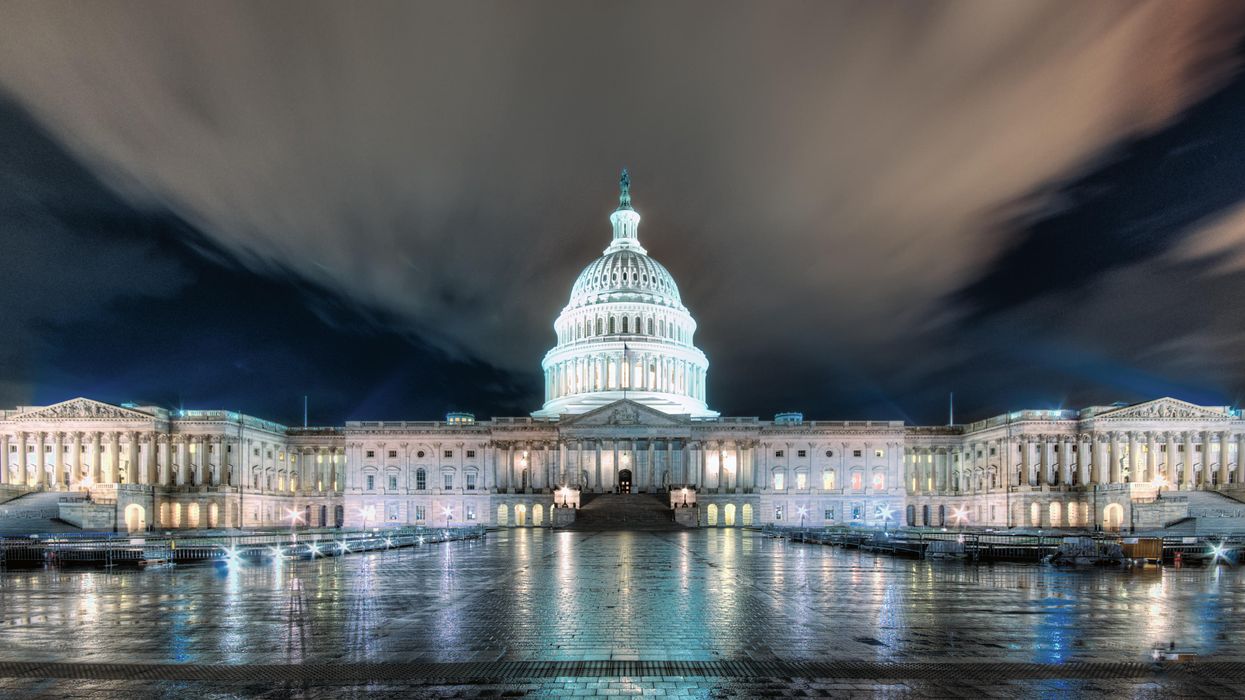
Sky Noir Photography by Bill Dickinson/Getty Images

While concerns about inflation have skyrocketed since January, more Americans remain concerned about government than any other challenge facing the nation, according to a new poll.

Twenty-two percent of Americans told Gallup pollsters in March that government and poor leadership is the most important problem in the United States. That’s the sixth consecutive month in which at least one-fifth of Americans chose that response.


More than three times as many white people than people of color said government was the biggest problem, and that answer was 30 percent more common among Republicans than Democrats.

Selection of “unifying the country” has declined slightly, from 7 percent in January to 5 percent in March, well within the margin of error.

Economic issues overall were a more common answer, with 37 percent of respondents selecting among a number of topics. Inflation was the most popular of those answers, selected by 17 percent — up from 8 percent in January.

The Consumer Price Index, which measures inflation, reached 7.9 percent in February. That’s the highest rate in 40 years.

The coronavirus and disease in general is no longer a major concern among Americans. In January, when the latest Covid-19 wave peaked, 20 percent said it was the biggest problem facing the country. That dropped to 3 percent in March.

Gallup served 1,017 adults March 1-18. The survey has a margin of error of 4 percentage points.


Read More

When Secrecy Becomes Structural

U.S. President Donald Trump at the White House February 20, 2026 in Washington, DC.

(Photo by Kevin Dietsch/Getty Images)

When Secrecy Becomes Structural

Secrecy is like a shroud of fog. By limiting what people can see and check for themselves, the public gets either a glimpse (or nothing at all), depending on what gatekeepers decide to share. And just as fog comes in layers, so does withholding: one missing document, one delayed detail, one “not available” that becomes routine.

Most adults understand there are things that shouldn’t be shown. Lawyers can’t reveal case details to people who aren’t involved. Police don’t release information during an active investigation. Doctors shouldn’t discuss your medical history at home. The reason is simple: actual harm can follow when sensitive information is revealed too early or to those who shouldn’t be told.

Keep ReadingShow less
For Trump, the State of the Union is delusional

U.S. President Donald Trump, with Vice President JD Vance and Speaker of the House Mike Johnson looking on, delivers his State of the Union address during a Joint Session of Congress at the U.S. Capitol on Feb. 24, 2026, in Washington, D.C. Trump delivered his address days after the Supreme Court struck down the administration's tariff strategy and amid a U.S.


(Getty Images)

For Trump, the State of the Union is delusional

State of the Union speeches haven’t mattered in a while. Even in their heyday, they were only bringing in 60-plus million viewers, and that’s been declining substantially for decades. They rarely result in a post-speech bump for any president, and according to Gallup polling data since 1978, the average change in a president’s approval rating has been less than one percentage point in either direction.

To be sure, this is good news for President Trump. He should hope and pray this State of the Union was lightly watched.

Keep ReadingShow less
The spectacle of Operation Epic Fury
A general view of Tehran with smoke visible in the distance after explosions were reported in the city, on March 02, 2026 in Tehran, Iran.
(Photo by Contributor/Getty Images)

The spectacle of Operation Epic Fury

The U.S. and Israel’s joint military campaign against Iran, which rolled out under the name Operation Epic Fury, is a phrase that sounds more like a summer action film than a real‑world conflict in which people are dying. The operation involves massive strikes across Iran, with U.S. Central Command reporting that more than 1,700 targets have been hit in the first 72 hours. President Donald Trump described it as a “massive and ongoing operation” aimed at dismantling Iran’s military capabilities.

This framing matters. When leaders adopt language that emphasizes spectacle, they risk shifting public perception away from the gravity of war. The death of Iran’s supreme leader following the bombardment, for example, was a world‑altering event, yet it unfolded under a banner that evokes adrenaline rather than anguish.

Keep ReadingShow less
How Race and Species are Leveraged Against Each Other

Texas Rep. Al Green held a sign reading "Black People Aren't Apes," protesting a racist video Trump had previously shared on Truth Social. Green was escorted out of the House chamber just minutes into President Donald Trump's State of the Union address.

How Race and Species are Leveraged Against Each Other

This was nothing new.

Before President Donald Trump released a video on his Truth Social account earlier this month that depicted Michelle and Barack Obama as apes, many were already well aware of his compulsive use of AI-generated deepfake content to disparage the former president. Many were also well aware of his tendency to employ dehumanizing rhetoric to describe people of color.

Keep ReadingShow less