
Two years after the collapse of the Berlin Wall in 1989, the late, great Harvard University political scientist Samuel Huntington wrote a famous essay that identified three major waves of democratization in the modern world. The first "long" wave began in the 1820s when America extended suffrage to a large proportion of the male population. It continued for almost a century until 1926 with 29 countries, including Britain—America’s former colonial ruler!—France, Canada, Australia, Italy, and Argentina becoming democracies. Allied victory after World War II launched the second wave that reached its peak in 1962 with 36 countries embracing democratic systems including West Germany, Italy, Japan, and India. The third wave started in 1974, gathered momentum in 1990 and continued to surge with the Color Revolutions toppling corrupt autocrats in Georgia and Ukraine. This final wave, between 1980 and 2000, doubled the proportion of democratic governments in the world from 30 to 60 percent.
But Huntington also pointed out that the first two waves were followed by reversals. Hence, it was hardly implausible that so also might the third as “memories of authoritarian failures fade” and “irritation with democratic failures” increases. And as if on cue, 15 years after Huntington penned his words, the world entered what Stanford University’s Larry Diamond dubbed a “democratic slump” as: the Arab Spring abruptly stopped, Putin’s one-man rule aborted Russia’s half-hearted gestures toward democracy, Latin American countries failed to stop autocrats like Nicolas Maduro in Venezuela and Jair Messias Bolsonaro in Brazil, and China dashed hopes of political liberalization and extinguished, among other things, Hong Kong’s thriving liberal democracy.
Predicting that autocracies that became weak democracies might revert back to being autocracies didn’t require much prescience. But Huntington’s essay also addressed the possibility of strong democracies like the United States (my adopted country) and India (my native country) going illiberal even though neither country had any serious history of authoritarian rule. India had experienced a 21-month-long Emergency in 1975 when then Prime Minister Indira Gandhi suspended the constitution and ruled by decree, using her sweeping powers to crack down on the press and arrest opposition leaders. However, a massive national outcry forced her to reverse course and call elections, proving India’s deep commitment to its liberal democratic principles.
But that was then.
Now, both countries seem determined to confirm Huntington’s worst fears. Consider the following parallels:
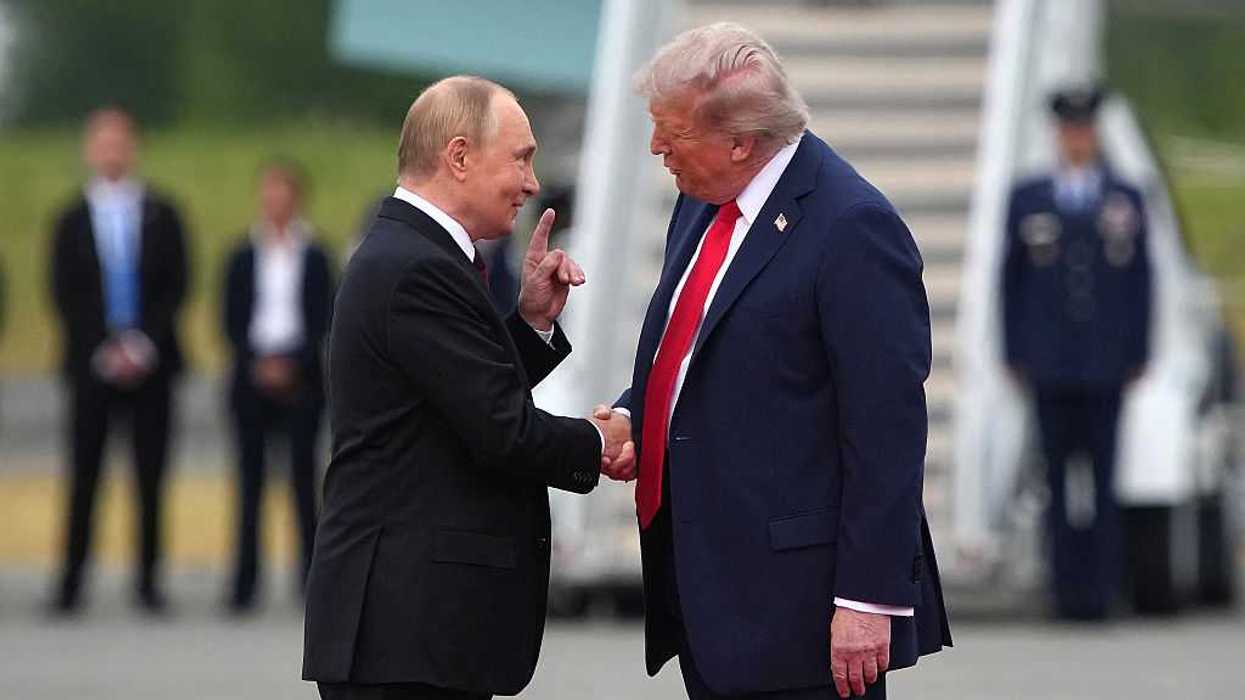
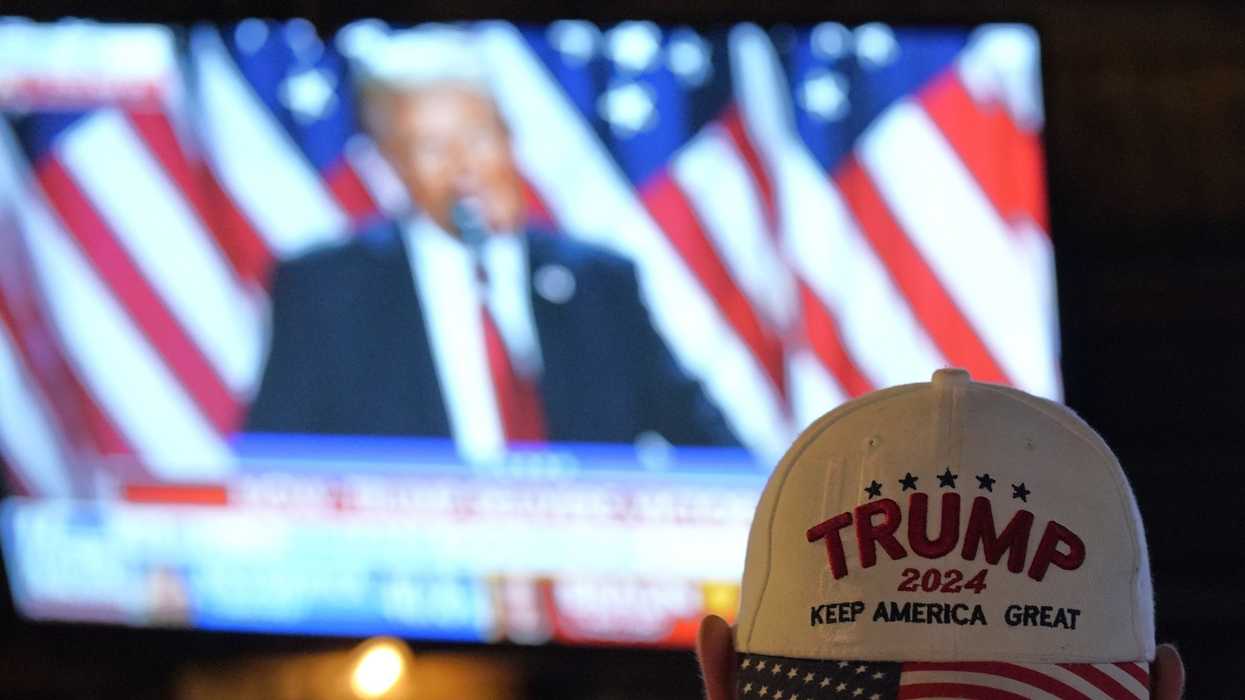
· Both have experienced the rise of right-wing strongmen with a cult-like appeal to their base—Narendra Modi in India and Donald Trump in America.
· Both Modi and Trump have exploited majoritarian grievances to launch a bellicose nationalism, Hindutva—Hindu nationalism—in Modi’s case and America First in Trump’s. Modi’s project involves pitting the dominant Hindu majority against religious minorities, particularly Muslims, whom Modi’s minions have demonized and dehumanized. He believes that Hindus, whose holy sites reside in India are the true natives while Muslims and Christians, who have also lived in the country for centuries, are foreigners. Trump’s America First, likewise, has portrayed white Christians as the natural claimants of America while Hispanics, Asians and Muslims are regarded as foreign interlopers. In short, both have divided the population into a favored majority in-group whose interest they seek to protect against disfavored minority out-groups.
· They both regard political opponents not merely as opponents but enemies that need to be utterly discredited and decimated, feeding extremist politics and exacerbating political polarization.
· They both have deployed modern digital tools —Twitter in Trump’s case and WhatsApp in Modi’s —to aim a fire-hose of disinformation at the body politic, overwhelming the epistemic infrastructure for truth-seeking in liberal polities, as Brookings Institute scholar Jonathan Rauch has brilliantly described.
· They both flattened every point of resistance within their own parties (although there never really was a strong tradition of separation between the party and the prime minister in India). The GOP’s rapid abandonment of its longstanding commitment to free enterprise, limited government and fiscal responsibility, and enthusiastic capitulation to Trump and Trumpism will figure among this century’s more shocking political developments.
· They both relentlessly attacked institutions—both outside and inside the government —that tried to hold them accountable. Modi derided media organizations that criticized him as opposition-paid hacks and Trump went even further and declared them the “enemy of the people.” Both stacked government agencies with loyalists willing to subvert the rule-of-law to serve them, purging independent-minded civil servants.
· They both have shown a willingness to mobilize private violence to accomplish political ends. On repeated occasions, Modi has given his party apparatchiks free rein to attack Muslims and their supporters on college campuses protesting his agenda to strip them of citizenship. And Trump openly instigated the January 6 attack on the Capitol building to overturn the election result.
The list goes on…
Still, there are key differences, the most obvious one being that Modi won re-election by a landslide while Trump lost. This is no doubt because America has 171 more years of democracy under its belt than India and its governing institutions are stronger, better constructed, and more functional. The Democratic Party, the American courts, and the U.S. media were far better placed than their counterparts in India to withstand the Trump onslaught. But Trump’s margin of loss was shockingly small given his many vices and transgressions. What’s more, it is an open question whether he wouldn’t have his feet up in the Oval Office at this moment were it not for “unprecedented mass activism” by Democrats, Independents, and NeverTrump conservatives, notes American University’s Laura Field. “In the face of myriad institutional failures” and with “little help from the spineless GOP,” she notes, “Trump’s worst excesses were kept in check by the country’s citizens.”
But the fact is that this level of civic activism is neither sustainable nor desirable. Ordinary citizens should be able to disregard politics in their day-to-day lives and get on with the “pursuit of happiness” rather than having to stay in a state of high dudgeon. Eternal vigilance may be the price of liberty, but the need for such hyper-vigilance is the symptom of a polity in trouble.
Moreover, civic activism on one side inevitably spawns a reaction on the other in an ever-escalating spiral of political polarization. Indeed, the former president hasn’t accepted his defeat and neither have over half of Republicans. National Review’s Kevin Williamson pointed out in The New York Times recently that had it not been for the “thin, gray line” of Republican officials at the state and local levels who honestly called the election results despite “intense pressure” from Trump to cheat, his coup might well have succeeded. But instead of showering them with respect and gratitude, the GOP is either replacing them or browbeating them into submission ahead of the 2024 election. Among them is Georgia’s Secretary of State Brad Raffensperger who has been pilloried within the GOP for refusing to find Trump the 11,780 votes he needed to win that state. Raffensperger has now taken to condemning the Congressional investigation into the January 6 riots as a “partisan sideshow,” refusing to comply with its subpoenas, in a desperate bid to ward off a Trump-backed primary challenger.
Meanwhile, some of the Capitol Hill rioters held a “Justice for J6 rally” this weekend, just blocks away from where I live, in a show of solidarity for their “brave” comrades arrested for the destruction of property and violence on January 6. They think they are the ones being victimized for trying to stop a tyrannical takeover of America. (Check out my pictures.)
This kind of political chasm can’t be fixed at the partisan political level; it needs a cultural reset. Indeed, Americans of all stripes need to be reminded that absolving rulers of the rule of law and empowering them to destroy their political enemies is the road to perdition. A liberal democracy does not supply everyone a ready-made understanding of the good life. That is something that individuals and communities have to work out for themselves through their own “experiments of living,” as John Stuart Mill put it. This inevitably creates tensions and frictions but these have to be resolved within a broader liberal commitment to pluralism, toleration, and civil persuasion, even in the face of perceived excesses. Empowering a leviathan to impose a uniform vision or settlement by hook or crook raises the political stakes in which one side eyes a complete victory and the other confronts total annihilation. The upshot is civil strife in which everyone loses.
That is the fundamental insight of classical liberalism, a philosophy that puts resistance to tyranny at the heart of its political project. This is the philosophy to which I subscribe. And using it to defend liberal democracy will be the mission of The UnPopulist and my fellowship at the Mercatus Center’s newly created Program on Pluralism and Civil Exchange. We will examine the theory of liberty and tyranny and visit moments, in other countries and in other times, when authoritarianism was ascendant. One aim is to construct early warning systems to detect and guard against illiberal, strongman politics. We will feature original commentaries as well as curate those from elsewhere both in the United States and abroad. Down the road, we will host panel discussions and post podcasts with thoughtful people from across the world and across the political spectrum likewise engaged in the struggle to restore liberal values.
Stabilizing and strengthening liberal democracy in America will have repercussions far beyond America. Successful polities have “demonstration effects.” Huntington even worried that should India lapse into authoritarianism, it will have an impact on the political evolution of other Third World countries. But as the world’s most prestigious and successful liberal democracy, of course America has the largest demonstration effects.
Huntington could not have imagined that a bombastic real-estate-tycoon-turned-reality-TV-star with a comb-over would one day shake America’s political foundation. Yet, he warned: “If people around the world come to see the United States as a fading power beset by political stagnation, economic inefficiency, and social chaos, its perceived failures will inevitably be seen as the failures of democracy and the worldwide appeal of democracy will diminish.”
This outcome would be avoidable if there were other equally strong and successful liberal democracies that could replace America if it fails. But in their absence, China’s repressive state capitalism might fill the void. Or something equally noxious. This would be tragic given that liberal democracy is the only system that has managed to deliver unprecedented living standards along with individual liberty, human dignity, and peace.
This article is republished from The UnPopulist under a Creative Commons license. Click here to read the original article.