

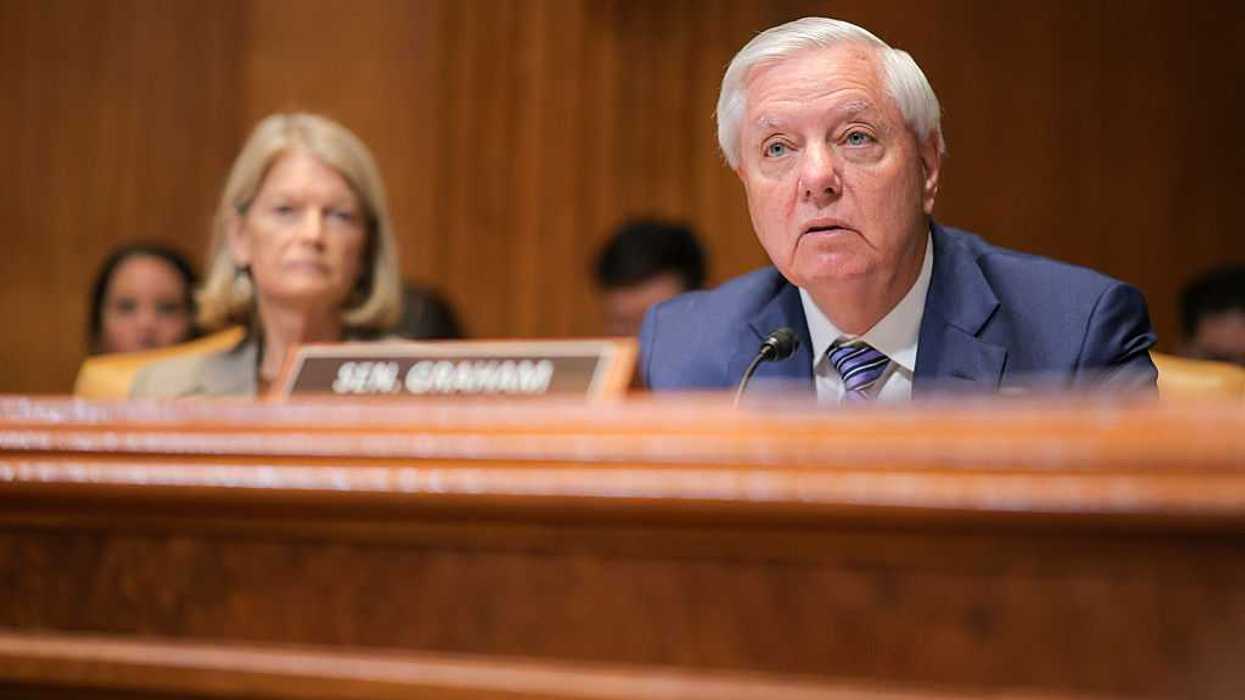

On July 11, 2026, South Carolina Senator Lindsey Graham unexpectedly passed away at age 71. The likely cause of death was a tear in the main vessel that carries blood out of the heart, otherwise known as aortic dissection. According to a medical examiner’s preliminary report, the aortic dissection itself was due to a “brief and sudden illness” known as arteriosclerotic cardiovascular disease, which hardened Graham’s arteries.
Graham’s death prompted widespread, bipartisan tributes from across the political spectrum. President Trump ordered all flags to be flown at half-mast in the senator’s honor, later exclaiming that “Lindsey will be greatly missed!!!” on social media. On the global stage, key international allies mourned the loss of a fierce advocate for overseas alliances, with tributes coming from Ukrainian President Volodymyr Zelenskyy, Israeli Prime Minister Benjamin Netanyahu, and German Chancellor Friedrich Merz.
The senator was a larger-than-life figure, a champion of proactive American foreign policy who crossed bipartisan and party divides, serving as an instrumental congressional figure for the Republican Party for decades. His death comes at an unfavorable time for the Republican Party, otherwise known as the GOP, as midterm election campaigns ramp up and key legislation advances through Congress.
What Does This Vacancy Mean for the Republican Party?
One of the longest-tenured lawmakers on Capitol Hill, Graham first served as a member of the House of Representatives from 1995 to 2003, and then as a senator from 2003 to the present day. By 2026, the South Carolina Republican was an integral part of the Republican Party, chairing the Budget Committee, the congressional group that drafts the United States’ annual $7.4 trillion budget. Over time, he also developed into a prominent foreign policy figure, becoming a key advocate for the defense of the free world, global leadership, and alliance building.
Beyond leaving behind an extensive congressional and international legacy, the late senator was also a widely recognized figure in U.S. politics. Within his party’s ranks, he was known as a staunch Trump ally while simultaneously retaining elements of the Reagan-era old guard Republicans due to his role as a foreign policy tsar. This unique position allowed Graham to serve as a unifying force within the party, eventually earning the moniker the “bridge”.
This reputation for dealmaking also extended across party boundaries. In 2009, Graham teamed up with Democratic Senator John Kerry to push through climate legislation. In 2012, Graham worked with Democratic Senator Chuck Schumer to orchestrate a bipartisan immigration reform bill. More recently, the senator was working across the political spectrum to pass additional sanctions on Russia. In an era of political polarization and congressional deadlock, such a bipartisan figure is rare, and his absence will be sorely felt.
How Lindsey Graham’s Passing Disrupts the Senate GOP Agenda
Senator Graham’s passing has significant effects on both the GOP’s legislative agenda and the upcoming 2026 midterms. Most pressing is the upcoming September 30 deadline to fund the government, a legislative issue that Graham retained heavy influence over through his positions on the Senate Budget Committee and Appropriations Committee. Due to his untimely death and Senator Mitch McConnell’s indefinite hospitalization, the GOP is down to a 14-13 minority in the Appropriations Committee. The powerful Appropriations Committee is responsible for the allocation of federal government funds, either through authorizing bills from other Congressional committees or through writing annual appropriation bills.
The vacated seat creates problems for the broader battle for Senate control as well. Without McConnell and Graham, the Republican Party’s majority goes down from 53-47 to 51-47, leaving a slim margin of error for defections. At a time when the GOP is advancing an expansive legislative agenda, including the SAVE American Act, the Birthright Citizenship Act, regular appropriations bills, an $87.6 billion emergency fund for the 2026 Iran War, and an additional $350 billion for Pentagon funding, these absences are troubling. South Carolina Governor Henry McMaster recently appointed Lindsey Graham’s sister, Darline Graham Nordone, as a temporary replacement. Yet, while the transition takes place, Senate politics remain significantly altered.
While Nordone is the temporary replacement, Republicans must now find a permanent successor. Graham defeated South Carolina primary challengers for his Senate seat for the upcoming 2026 midterm elections in June. His death now forces the GOP to hold special primaries by August 11 to find a candidate by election day, November 3. In an era where election campaigns ramp up months in advance, the lack of time combined with a primary race has thrown a previously secure seat into chaos. Despite the uncertainty, the chances of Democratic candidate Annie Andrews flipping the seat remain slim, given that South Carolina is a deeply red state that has not elected a Democrat to the Senate since 1998. Only time will tell who steps forward to fill the significant gap Graham leaves behind in a deeply divided Congress.
Jaden Macomber is an undergraduate student at UCLA, where he is earning his B.A. in political science alongside a minor.
A Sudden Vacuum: Unpacking Lindsey Graham’s Legacy and Implications for the GOP’s Senate Agenda, a nonpartisan policy brief, written by an ACE fellow, is republished by The Fulcrum as part of our partnership with the Alliance for Civic Engagement and our NextGen initiative — elevating student voices, strengthening civic education, and helping readers better understand democracy and public policy.