


All seven senators running for president have Capitol Hill staffs more racially diverse than the states they represent, and only two of them employ a smaller share of white people than the Democratic electorate they're seeking to win over.
The demographics of their offices, and those of all 40 of their colleagues in the Democratic Caucus, were revealed last week in the most recent edition of a report the Senate leadership has been commissioning over the past dozen years in an effort to promote more gender, ethnic and sexual identity diversity on that side of the Capitol.
Getting more people from different backgrounds and experiences to work (and have internships) on Capitol Hill has become an increasingly emphatic goal of those seeking to improve not only the functionality but also the public's perception of the legislative branch.
And in the opening stages of the 2020 presidential campaign, when the Democratic Party will be counting on increased turnout among minority voters, party leaders have been talking up their commitment to diversity with renewed intensity.
Kamala Harris of California has the Senate personal office staff with the highest share of non-white workers, at 70 percent. The only other black candidate in the Democratic field, Cory Booker of New Jersey, is No 3. with 61 percent staff of color. (In between is Hawaii's Brian Schatz.)
Bernie Sanders (28 percent) and Amy Klobuchar (38 percent) have the least diverse collections of aides among the Senate's current White House aspirants, but his Vermont and her Minnesota are also the whitest of the seven states represented by the contenders.
And both Sanders and Klobuchar increased the overall diversity of their staff in recent years, to the point that they are overrepresented by black people, Latinos and Asians on their payrolls compared to the demographics of their states.
Still, they are the two with groups of employees whiter than the Democratic Party. According to the Joint Center for Political and Economic Studies, a think tank focused on boosting African-Americans' socioeconomic status and civic engagement, 41 percent of registered Democrats identify as people of color.
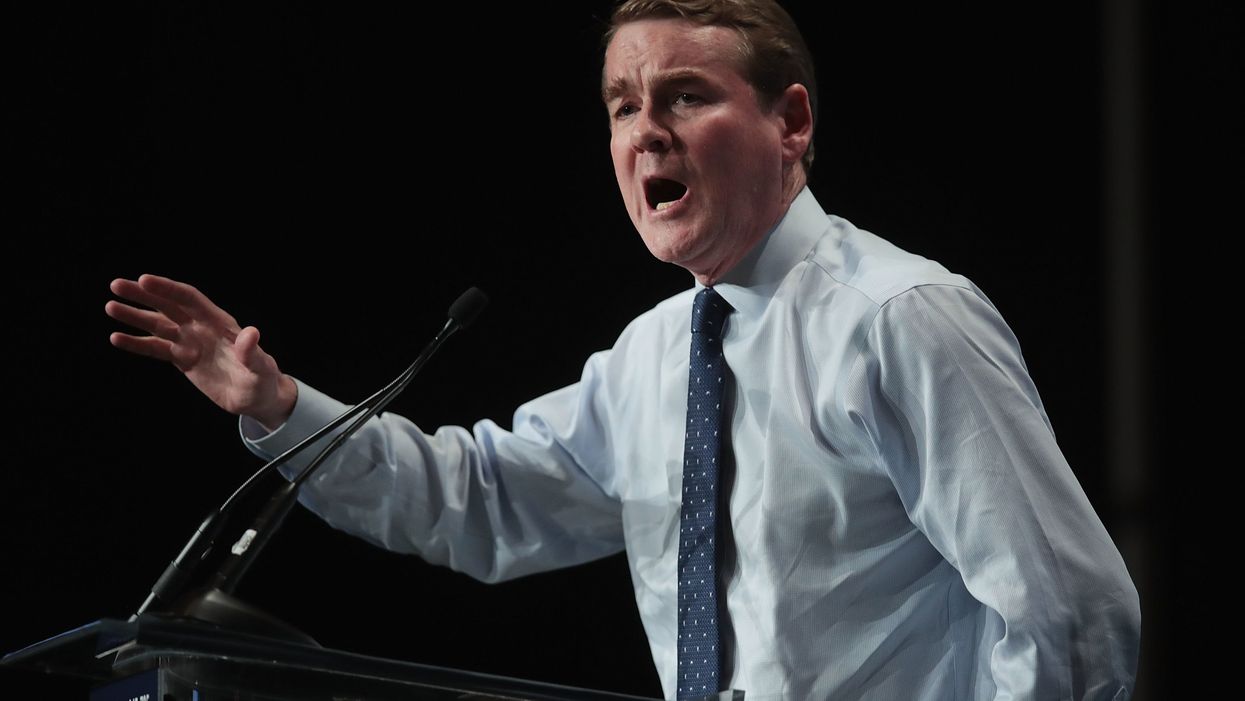
By that measure, Michael Bennet of Colorado (at 42 percent) and Kirsten Gillibrand of New York (46 percent) have come closest to assembling staffs that mirror the overall racial diversity of their party.
But Gillibrand has seen the number of black people on her staff drop in half over the past two years — to 11 percent of the roster (including her chief of staff, however) while they account for one in five members of the party nationwide.
The staffs of Klobuchar, Sanders and Bennet have smaller percentages of black people than the party overall, but in all three cases the percentages are higher than the black share of their states' populations.
Almost a quarter of Elizabeth Warren's staff is black, a much higher percentage than all the others except Booker and Harris.
At the same time, however, at a time when one in eight Democrats nationally identifies as Hispanic, Warren and Klobuchar are then only senators in the field with a smaller share of Latinos on their staffs than 12 percent. (The Minnesotan's staff is 4 percent Latino, half what it was two years ago.)
While his staff is the Senate's third most diverse, Booker is the only one of the seven with a staff that does not have a strong overrepresentation of Asian-Americans. (English-speaking members of this group are 3 percent of registered Democrats, the Pew Research Center says.)
The raw numbers for each office were not revealed in the study, and the number of staffers each senator may employ in these "personal" offices — not the aides they hire for committees or leadership jobs — varies considerably based on their number of constituents. Harris, for example, gets to hire many more people to serve California than Sanders gets to handle the needs of Vermont.











The President Invited Iran to Bomb My Home