



After New York City’s new mayor was inaugurated on January 1, should federal funds still go to the Big Apple?
What the bill does
The MAMDANI Act would ban federal funds from New York City while newly elected Zohran Mamdani is mayor.
The bill’s acronym, MAMDANI, stands for Moving American Money Distant from Anti-National Interests.
Rep. Buddy Carter (R-GA1) introduced a House version on November 7, three days after Mamdani won the general election on November 4.
Notably, the bill only appears to apply to Mamdani himself – not even a potential mayor who would share similar beliefs. If Mamdani were ever to resign or take another political position, his spot would be filled by the city’s Public Advocate: currently Jumaane Williams, who himself endorsed Mamdani.
Context: Who is Mamdani?
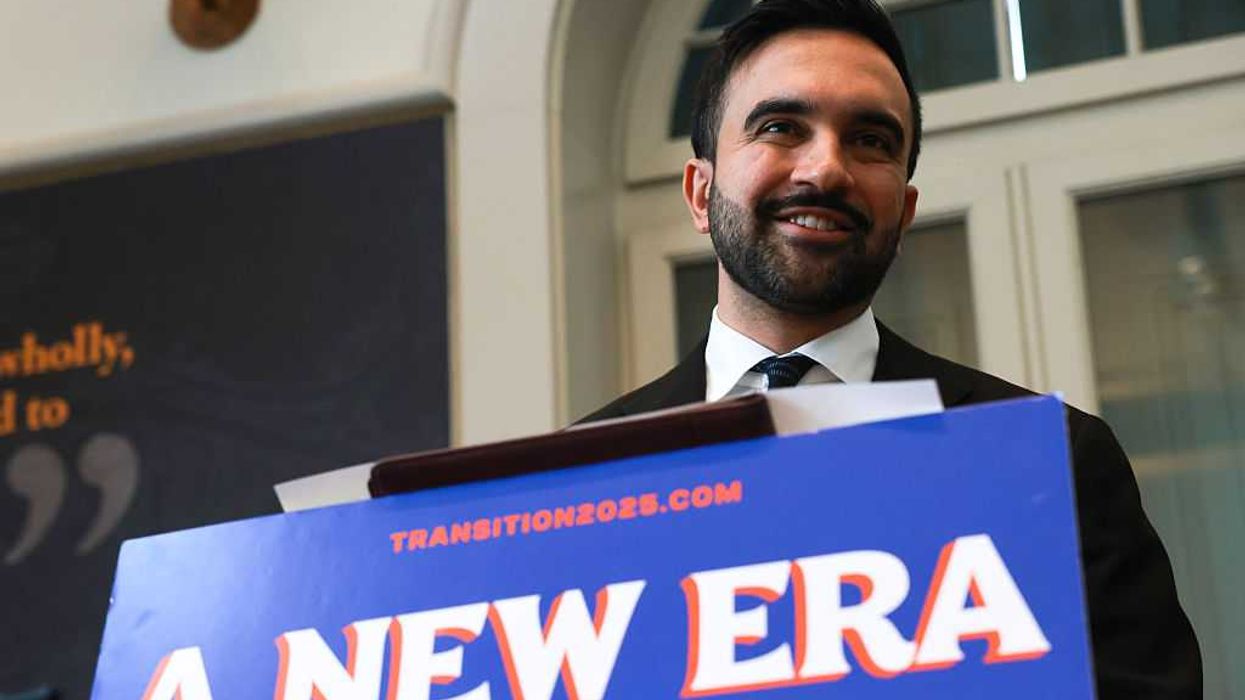
In June 2025, Mamdani shocked the political establishment by winning New York City’s Democratic mayoral primary. The 34-year-old defeated former New York governor Andrew Cuomo, a more centrist moderate candidate who was projected to win.
Mamdani began his campaign with far less name recognition, as a representative in New York’s State Assembly, representing a part of the borough Queens. But almost overnight, Mamdani became “one of the five most recognizable names in the party,” according to political analyst Nate Silver. For example, Mamdani now has 11 million Instagram followers, compared to Cuomo with less than 1 million.
Mamdani has proven controversial, for multiple reasons. Here are five:
- Economics: His economic ideology of “democratic socialism” makes him arguably the most powerful person in America to espouse that philosophy – even more than Sen. Bernie Sanders (I-VT) or Rep. Alexandria Ocasio-Cortez (D-NY14). Both are certainly famous, but neither has held a top leadership role in quite the same way. Critics say socialism has wrecked economies such as Venezuela and Cuba, while supporters point to Scandinavian countries such as Sweden, Norway, Finland, and Denmark.
- Israel: Mamdani also vowed to arrest Israeli Prime Minister Benjamin Netanyahu for allegedly committing war crimes if Netanyahu ever sets foot inside New York City – likely to visit the United Nations. (In response, Netanyahu said he would still come to NYC under Mamdani’s tenure.) Mamdani also initially refused to condemn the phrase “globalize the intifada,” though he later said he would “discourage” the phrase and wouldn’t use it himself.
- Law enforcement: In 2020, during the height of the George Floyd protests over race relations and police tactics, Mamdani tweeted: “We don't need an investigation to know that the N.Y.P.D. is racist, anti-queer, and a major threat to public safety.” (Though he backed off that position somewhat in a 2025 interview with Martha MacCallum on Fox News.)
- Dual citizenship: Mamdani moved to the U.S. in 1998 at age seven, becoming a U.S. citizen in 2018 – but maintains dual citizenship with both the U.S. and Uganda. Cuomo exploited this as an attack line: "Why would you keep a citizenship in Uganda?" Cuomo asked. "You are a citizen of Uganda, running for mayor.” (Since Mamdani was born in Uganda, he can’t become president.)
- Religion: Mamdani is arguably the most powerful and prominent Muslim-American politician ever, and the first Muslim mayor of New York City. Several prominent figures and politicians on the right have attacked him on that basis, including Rep. Nancy Mace (R-SC1). “After 9/11 we said ‘Never Forget,’” Mace posted on X (formerly Twitter) alongside a photo of Mamdani. “I think we sadly have forgotten.”
Mamdani proved controversial even within his own party. U.S. Senate Minority Leader Chuck Schumer is also a Democrat from New York, but wouldn’t endorse Mamdani for the general election.
What supporters say
Supporters of the MAMDANI Act argue that cities and states, which are supposedly better-run than New York City, shouldn’t bail it out or financially support policies they oppose.
“In the United States of America, a nation built on freedom, taxpayer dollars should not be used to fund communism and antisemitism,” Rep. Carter said in a press release. “Georgians want nothing to do with Mamdani’s radical beliefs, and their hard-earned money should not be wasted on programs that will bankrupt the financial capital of the world.”
“Any New Yorker with common sense is welcome to move to the great, FREE state of Georgia.”
What opponents say
Mamdani disputes characterizations of himself as either an antisemite or a communist.
“As mayor, I will always stand steadfast with our Jewish neighbors to root the scourge of antisemitism out of our city,” he posted on X (formerly Twitter). Also: “No, I am not,” he responded when asked by Kristen Welker on NBC’s Meet the Press if he was a communist.
Communism is a political system, while socialism is an economic system. Though the two have often been incorporated together in world history, most famously in the Soviet Union during the Cold War, they don’t necessarily have to be. Mamdani calls himself a “democratic socialist” to clarify that he prefers socialism as an economic system but democracy as a political system.
What has Trump said?
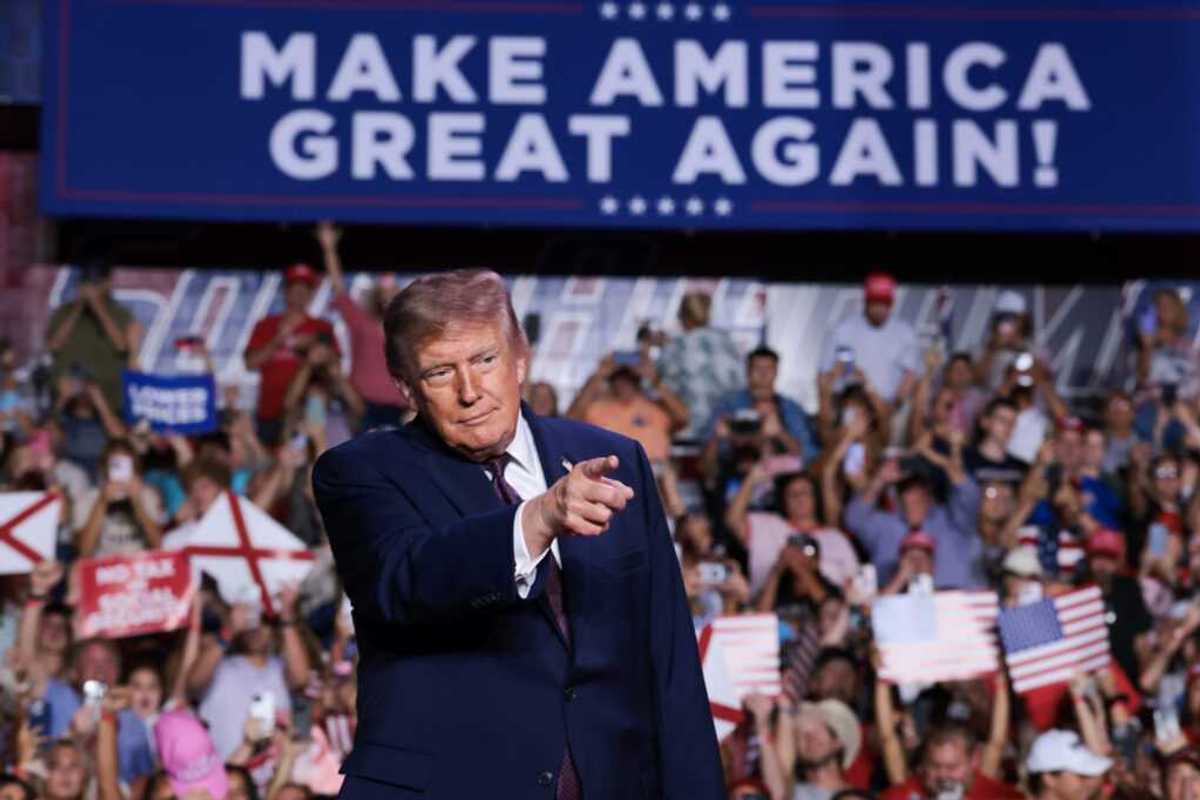
The day before November’s election, President Donald Trump suggested that he might withhold federal money from New York City unilaterally from the White House.
“It is highly unlikely that I will be contributing federal funds, other than the very minimum as required,” Trump posted on Truth Social. “It can only get worse with a communist at the helm, and I don’t want to send, as president, good money after bad. It is my obligation to run the nation, and it is my strong conviction that New York City will be a complete and total economic and social disaster should Mamdani win."
Mamdani responded that he didn’t take the ultimatum seriously.
“I will address that threat for what it is: it is a threat. It is not the law,” Mamdani said the day before his election. “Too often, we treat everything that comes out of Donald Trump’s mouth as if it is already legal, just by virtue of who is saying it.”
“This funding is not something that Donald Trump is giving us here in New York City,” Mamdani continued. “This is something that we are, in fact, owed in New York.”
A few weeks after the election, Trump and Mamdani met for the first time at the White House, in a meeting described as “surprisingly cordial,” with Trump adding, “I’ll be cheering for him.”
What happens now
The bill has not yet attracted any cosponsors, not even any fellow Republicans.
It awaits a potential vote in either the House Appropriations or Oversight and Government Reform Committees.
Similar legislation
At least three similar pieces of legislation have been introduced by congressional Republicans in response to Mamdani.
A different MAMDANI Act
Rep. Mike Lawler (R-NY17) introduced an unrelated bill also called the MAMDANI Act in July.
Though it wouldn’t actually change public policy, it would require the FTC (Federal Trade Commission) to conduct a study on government-owned grocery stores. Mamdani wants to create a pilot program, establishing five such taxpayer-funded grocery stores, one in each New York City borough.
The acronym MAMDANI in this bill stands for Measuring Adverse Market Disruption And National Impact.
The bill’s supporters argue that Mamdani’s plan would establish too much government control and potentially raise prices.
“Government-run grocery stores raise serious questions about market fairness and taxpayer accountability,” Rep. Lawler said in a press release. “The [bill] ensures we carefully assess the potential impacts of such proposals before public funds are committed, or they risk undermining local businesses and disrupting supply chains, ultimately leaving consumers worse off.”
Opponents counter: the plan is “a public option for produce, an understanding that for far too many New Yorkers, groceries are out of reach, and the importance in city government of reasonable policy experimentation," Mamdani said.
The bill has attracted one cosponsor, fellow New York Republican Rep. Andrew Garbarino (R-NY2). It awaits a potential vote in the House Judiciary Committee.
Sovereign Enforcement Integrity Act
The Sovereign Enforcement Integrity Act would ban Mamdani from ordering Netanyahu’s arrest if the Israeli leader comes to New York City.
Rep. Elise Stefanik (R-NY21) introduced the House version on September 16. Sen. Rick Scott (R-FL) introduced the Senate version two weeks later, on September 29.
Technically, the legislation would ban any government or law enforcement officer working for a state, territory, or municipality – such as a mayor or a police officer working for a mayor – from arresting anyone based on an ICC (International Criminal Court) warrant. The ICC issued such an arrest warrant for Netanyahu in 2024, contending his government committed war crimes during its invasion of Gaza.
The bill’s supporters argue the U.S. shouldn’t carry out arrests on behalf of an international institution for which they’re not even a member.
“The United States is not part of the International Criminal Court," Rep. Stefanik said in a press release. "That is why I introduced the [bill] to protect American sovereignty and prohibit radicals like Mamdani from illegally arresting the leader of our democratic ally Israel."
Opponents counter that if Trump won’t arrest Netanyahu, then Mamdani should.
“It is my desire to ensure that this be a city that stands up for international law,” Mamdani told the New York Times. “This is a moment where we cannot look to the federal government for leadership. This is a moment when cities and states will have to demonstrate what it actually looks like to stand up for our own values, our own people.”
The legislation has attracted two House cosponsors, one Republican and one Democratic: Reps. Mike Lawler (R-NY17) and Josh Gottheimer (D-NJ5). However, no Senate cosponsors have yet signed on.
It awaits a potential vote in either the House or Senate Judiciary Committees.
A resolution about socialism
In November, the House voted 285-98 on a symbolic concurrent resolution from Rep. Maria Elvira Salazar (R-FL27) to “denounce the horrors of socialism.” 86 Democrats voted in favor, while no Republicans opposed it.
While the concurrent resolution was ostensibly about socialism in general, the House vote was intentionally scheduled the same day as Trump’s meeting with Mamdani.
The resolution’s supporters argue that socialism has produced terrible results, in both the past and present.
“It has never delivered justice or equality, only fear, censorship, poverty, and broken nations. I represent thousands of families who fled their homelands because socialist regimes promised paradise and delivered prisons,” Rep. Salazar said in a press release. “Today, the House is making it clear: we will not allow socialism’s failed ideology to take root in the United States.”
Opponents counter that the resolution is a scare tactic to demonize some of America’s most popular and successful institutions and policies.
“This very resolution goes further by using the specter of socialism to undermine some of the most important government programs in our country like Social Security, Medicare, Medicaid, and Obamacare,” Rep. Maxine Waters (D-CA43) said in a House floor speech. “These are programs that help everyday Americans put food on their plate and care for their children.”Jesse Rifkin is a freelance journalist with The Fulcrum. Don’t miss his report, Congress Bill Spotlight, on The Fulcrum. Rifkin’s writings about politics and Congress have been published in the Washington Post, Politico, Roll Call, Los Angeles Times, CNN Opinion, GovTrack, and USA Today.
SUGGESTIONS:
Congress Votes With Only One House or Senate Dissenter, 2025
Vice President J.D. Vance’s Tiebreaking Senate Votes, 2025











The President Invited Iran to Bomb My Home