


This year, many agency heads in the Trump administration sent out official Christmas messages that were explicitly religious rather than universal spiritual. So, for example, War Secretary Hegseth said, "Today we celebrate the birth of our Lord and Savior, Jesus Christ."
This is just one more example of the Trump administration's distortion and perversion of the principles on which America was founded. (See my posts, "The Far Right's Biggest Lie," and "The Radical Right/MAGA Perspective Is Not True to the Intent of Our Founding Fathers," among others.)
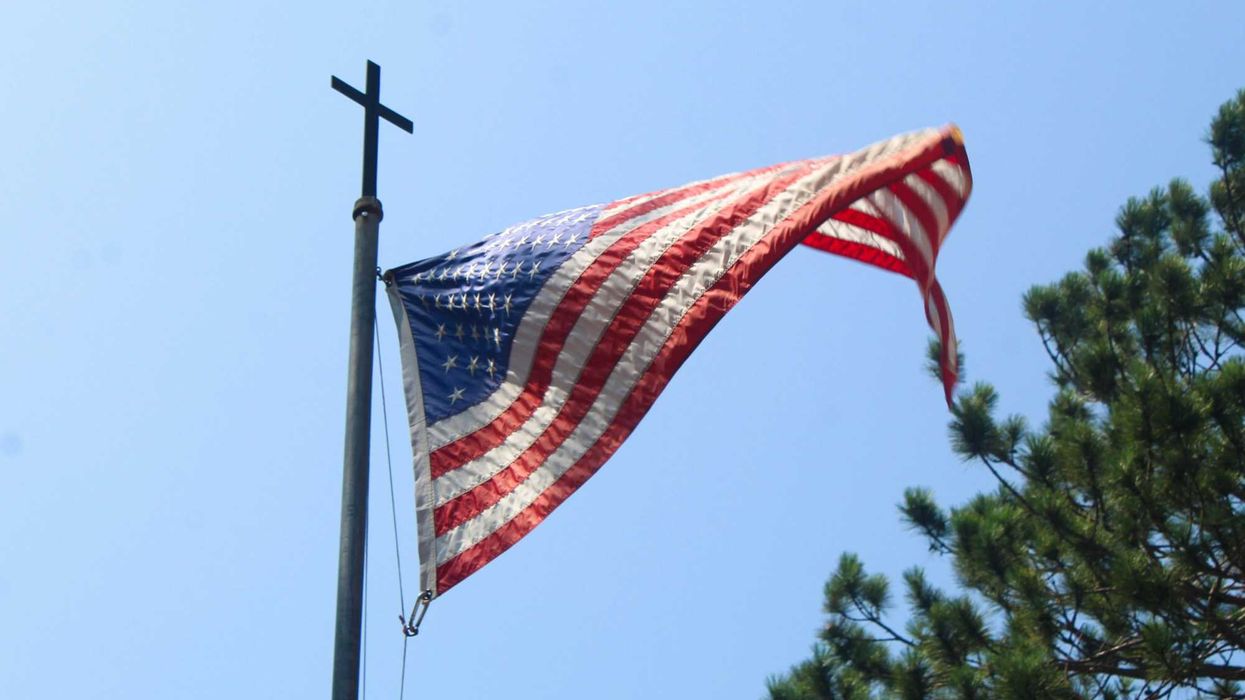
America is not a Christian nation. The majority of the population may be Christian, both now and at the time of our founding, but the Founders made very clear in the Constitution that this was not to be a Christian nation.
First, although the Founders were religious people—note the wording in the Declaration of Independence that we are "endowed by our Creator" with unalienable rights—the Constitution makes absolutely no mention of God.
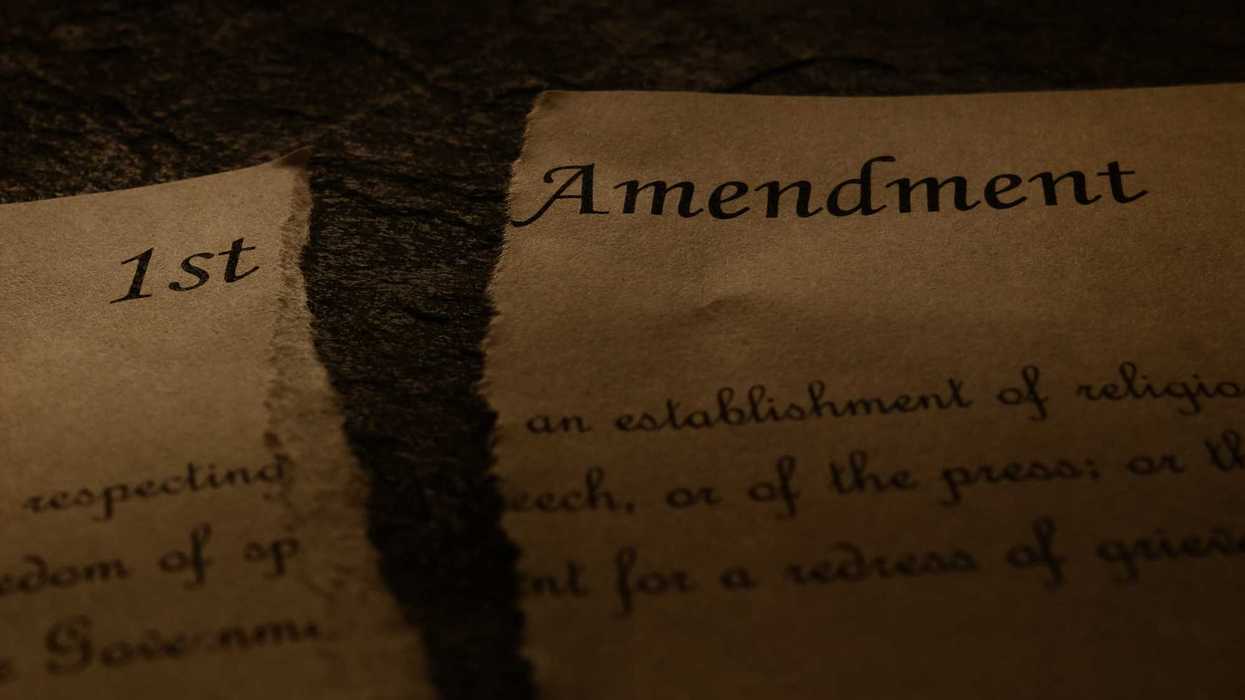
Second, what the Constitution does say in the 1st Amendment is that Congress shall make "no law respecting the establishment of religion," or prohibiting the free exercise of one's religion.
The Founders were aware of the suffering caused in Europe for centuries by state religions. That resulted in both people of other religions being persecuted and countries going to war over religious dominance. They were determined that the United States government not do anything that raised one religion to a higher status than the others and that no one be persecuted for or prohibited from practicing their religion.
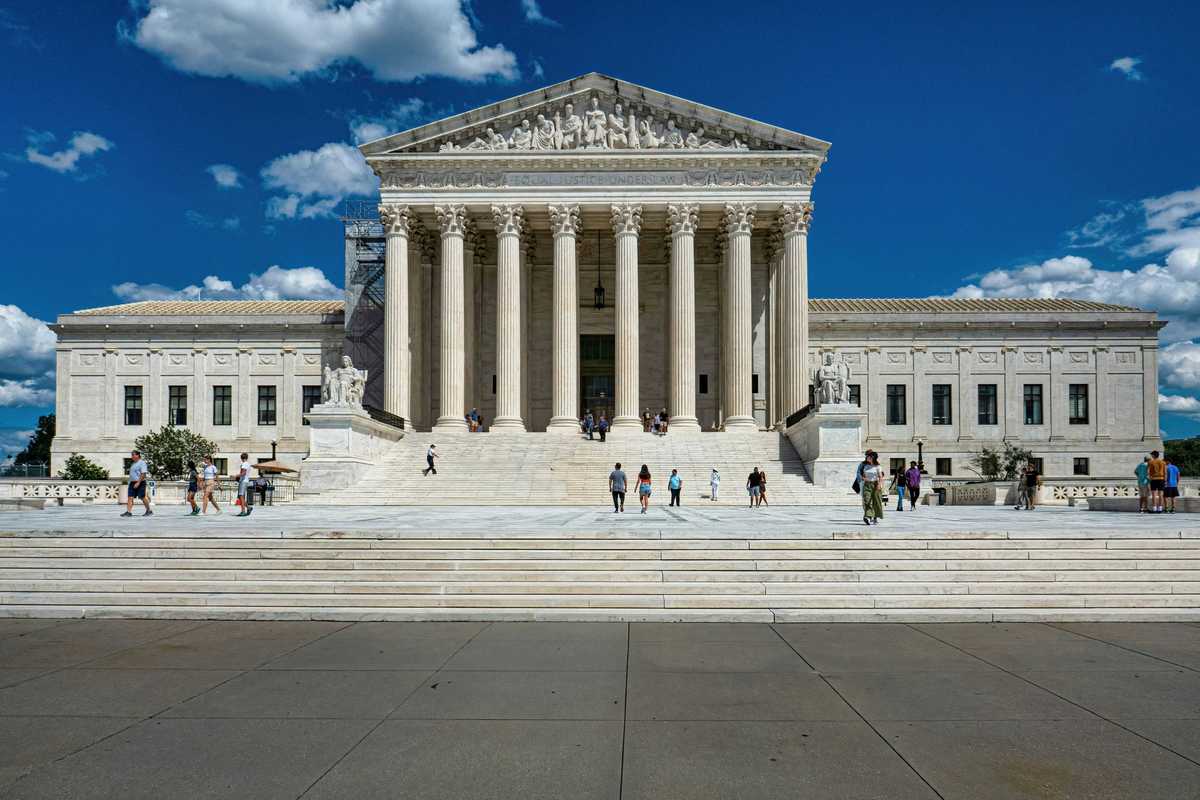
In numerous ways, however, the Trump administration has embraced Christianity. To please his conservative Evangelical supporters, Trump created a repurposed White House Faith Office that seeks in many ways to end the separation of church and state and promotes misleading books such as "The Christian History of the Constitution" to ground its efforts. (See my post, "Trump Violates Freedom of Religion.") He has also embraced the conservative Christian agenda in many ways, most critically in building a Supreme Court that overruled Roe v Wade.
The reader may ask, "What's the problem? The religious wars in Europe were centuries ago. And we would still have freedom of religion even if Christianity were made part of the government's agenda."
Technically, even if Christianity were part of the government's agenda, there would still be freedom of religion under the 1st Amendment. However, if you look at what is labeled "persecution" by Christian media and Trump, you will see that no one has the right to criticize Christians when they act according to their belief.
According to MAGA, Christians have the right to do whatever their religion instructs, regardless of whether it interferes with another person practicing their religion or their right to "life, liberty, and the pursuit of happiness." So, for example, a public baker has the right to refuse to make a cake for a gay wedding. A Christian who is slandered by someone exercising his right to free speech is being persecuted. And the list goes on.
The point is that with the MAGA perspective that it's only their rights that matter—they have no concern for the rights of others, no one can "unfairly" impinge on their rights—if Christian advocacy by government takes root, no one is safe in their practice of free speech or religion if it conflicts with Christian values/rights. (See my article, "The Far-Right's Biggest Lie.")
But there is another way in which the government's embrace of Christianity would have a chilling effect on freedom of religion. It is a natural desire of people to get ahead in their business/work/school endeavors. Often this has meant assimilating to become part of the majority; history is filled with businessmen, actors, performers, and others who have changed their names and even converted in order not to be stigmatized because of their religion. The psychological push to take this step is increased when there is a state religion, whether official or not, especially if anti-semitism is active.
For context, I should note that at the time of the revolution, 9 of the 13 colonies had official, established religions, a practice brought with them from the old country. The Founders made very clear, however, the importance they placed on the separation of state and church in the new government. Thomas Jefferson wrote that the 1st Amendment created a "wall of separation" between church and state. James Madison wrote that religion was beyond the government's authority. John Adams, in signing the Treaty of Tripoli, stated that the United States "is not in any way founded on the Christian Religion." Ultimately, all of the colonies accepted this new way forward by ratifying the Constitution and the Bill of Rights (the first 10 Amendments).
I am not a "religious" person but a very spiritual one, a practicing Buddhist who believes that each of us has within us the force of the Universe, the divine essence. It thus is not for the government to mandate for each individual what his spiritual beliefs are or aren't. And that each individual has the right to practice their religious/spiritual belief, so long as it does not impede the practice by another person of their religious/spiritual belief or any other right that they are guaranteed under our Constitution.
There must continue to be a wall of separation between church and state for the country's well-being. Given that the wall is in the process of being broken down, largely at the urging of evangelical denominations, what can people do to not just stop the process, but restore the separation?
The most one can do is make people aware that the Trump administration is not strengthening our freedom of religion—as he says he is—but instead is undermining that freedom by having the power of government favor the beliefs of one religious group—conservative Christians. By turning those beliefs into law (e.g., overruling Roe v Wade, eliminating LGBT protections, not recognizing gender identity issues), he has made "laws respecting the establishment of religion," and thereby restricted others from exercising their right to religious freedom and their right to pursue life, liberty, and happiness. Whatever happened to, "We are all children of God" and "God loves all his children?"
Trump's actions threaten the equality of all citizens, central to America's founding principles. (See my article, "What Are American Values?") He is threatening the diversity that our country has been built on.
How do you help make people aware? Go to religious and other organizations in your community and encourage them to have programs about this issue. Go to your local school board and encourage them to address this issue through school programs. Let your representatives in Congress know your feelings.
Since next year is the 250th anniversary of the Declaration of Independence, this is a perfect time to advocate for these programs and hopefully persuade your fellow citizens and representatives to argue for the full restoration of the freedom of religion guaranteed by the 1st Amendment.
Ronald L. Hirsch is a teacher, legal aid lawyer, survey researcher, nonprofit executive, consultant, composer, author, and volunteer. He is a graduate of Brown University and the University of Chicago Law School and the author of We Still Hold These Truths. Read more of his writing at www.PreservingAmericanValues.com