



In recent years, LGBTQ+ people and rights have been increasingly targeted as part of a wave of authoritarian illiberal politics, promoting a global “anti-gender” movement. These attacks on queer people have been characterized as “the canary in the coal mine”; an early warning sign of wider democratic erosion. Autocratic leaders have exploited anti-LGBTQ+ public sentiment to crack down on freedom of expression, freedom of the press, the right to organize, and to silence dissenting voices. In response, many LGBTQ+ movements are re-emphasizing their roles as democratic actors.
LGBTQ+ Rights and Democracy
Because respecting minority groups and representing their voices fairly is a measure of liberal democratic norms, the status of LGBTQ+ rights is sometimes viewed as a barometer of democracy. Societies with strong LGBTQ+ rights protections tend to have freer elections and more robust civil liberties, and LGBTQ+ rights are stronger in democratic states. Rights have often been won through social movements lobbying for change, a core process within well-functioning democracies. Social movements have an integral role in civil society, and a free civil society is a condition of democracy. In free civil societies, citizens can hold their governments to account, exercise free speech, and amplify their voices to make demands on the state. LGBTQ+ movements don’t just benefit from democracy; they are part of the fabric of civil society and democracy itself.
The links between authoritarianism and the recent repression of queer people and their rights is usually told as a negative story, with a list of violations, violence, and restrictions on civic space. This list of wrongdoings is meant to raise the alarm about rapid democratic decline. But there is another side to this narrative. There is an important story to be told about how movements in support of LGBTQ+ rights are protecting democratic values.
When LGBTQ+ Movements Defend Democracy
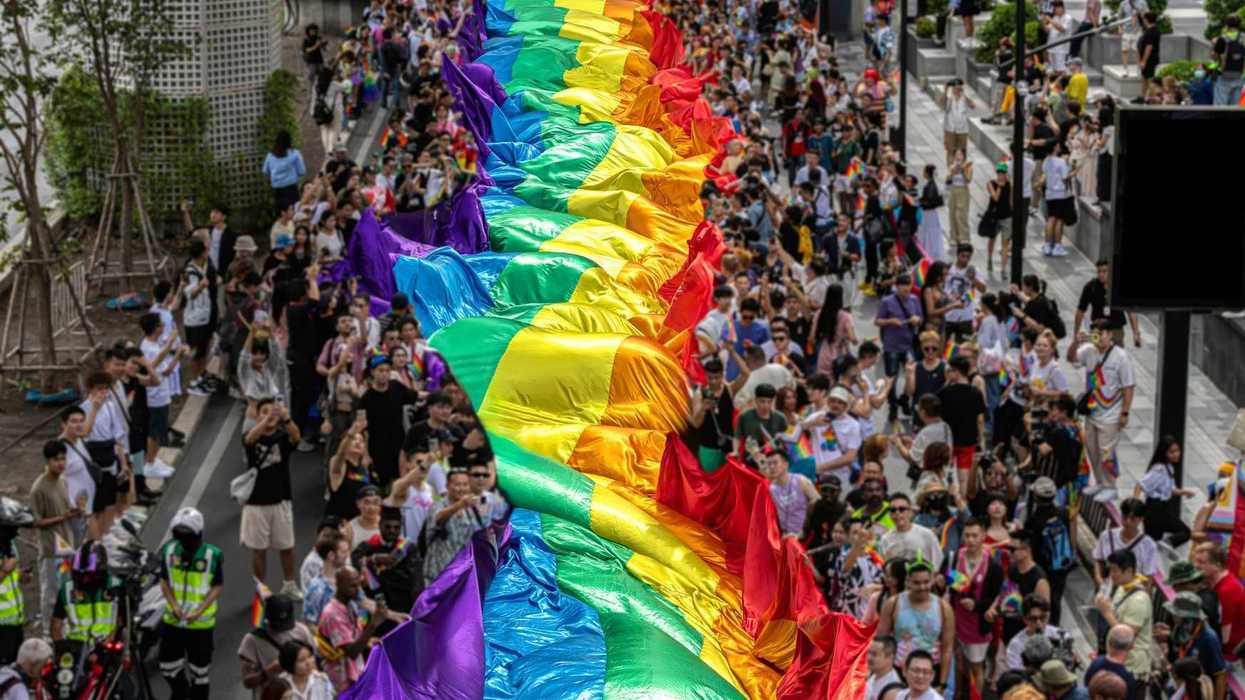
In the last few years, we have seen instances when LGBTQ+ social movements have actively engaged in protecting freedom of assembly, a core democratic right. Hungary’s former prime minister, Viktor Orbán, tried to ban Budapest’s Pride march in June 2025. The city’s mayor, Gergely Karácsony, allowed the march to proceed. The march transformed into a mass anti-government demonstration, drawing around 100,000 people. This event contributed to the changing landscape that brought about the defeat of Orbán in the April 2025 election. That democracy activists saw a platform for action through LGBTQ+ rights is a promising indication of alliances that can contest anti-gender politics. Freedom of assembly claimed by one marginalized group can open space for wider democratic mobilization.
Other movements have successfully folded together calls for specific LGBTQ+ rights with calls for democratic processes. In Thailand, LGBTQ+ activists were deeply embedded in the 2020 pro-democracy protests, which demanded constitutional reform away from monarchy and toward democracy with free and fair elections. LGBTQ+ people were visible as leaders helping to shape demands and develop new modes of action. Same-sex marriage became a core issue during the protests and led to the 2023 Marriage Equality Act, which passed with overwhelming support in the upper and lower houses. When interviewed, Thai LGBTQ+ rights activists said that they need democracy in order to claim their rights and that democratically elected representatives are more likely to listen to their issues. Activist Matcha Phornin stated: “A significant part of our success came from intersecting with other movements, particularly democracy movements. When democracy is compromised, it becomes difficult to advocate for LGBTQI+ rights. That’s why many LGBTQI+ activists are also pro-democracy activists, which makes our movement more united and therefore stronger. . . . The democracy movement, which includes many young LGBTQI+ activists, has been instrumental in pushing for legislative change.”
Other LGBTQ+ rights efforts focused on the regulatory environment. In February 2023, Kenya’s Supreme Court ruled that the National Gay and Lesbian Human Rights Commission could register as a formal NGO. The ruling, which was based on freedom of association protections in the Constitution, concluded a 10-year battle. While same-sex relations remain criminalized in Kenya where social norms are conservative, the legal victory upheld the right to association. In doing so, it protected not only LGBTQ+ organizing but also the broader democratic principle that marginalized groups have the right to organize.
The Broad Reach of Social Movements
Social movements may have direct influence on political regimes and policies, but they also reshape the terms of the debate, open participation to different voices, and reclaim public space. In Thailand, the 2020 protests did not result in democratic change across formal politics, but they did spark a significant shift in public discourse on the issues and on the right to protest. Kenya’s court case held civic space open for dissenting voices even though LGBTQ+ people are criminalized. The Hungary Pride march in 2025 shows the power of people who may disagree on some issues, but who can come together to fight for democratic governance. These shifts contribute to democratic norms and move the balance of power toward the people. Because LGBTQ+ rights have been so regularly attacked by authoritarian politics, LGBTQ+ rights activists are responding by making the case that their rights are fundamental to democracy. LGBTQ+ rights are inextricably linked to the rights and freedoms of all, the protection of which is central to upholding the democratic principles of inclusion, voice, and representation.
This article was originally published as part of Resilience & Resistance, a Charles F. Kettering Foundation blog series that features the insights of thought leaders and practitioners who are working to expand and support inclusive democracies around the globe.
Evie Browne is a research fellow at ODI Global, in the Gender Equality and Social Inclusion team, researching gender norms and normativity, sexualities, rights, and social justice. Evie has a PhD in International Development from the University of Sussex with a focus on LGBTQI+ issues and gender normativity among lesbian and bisexual women in Cuba.










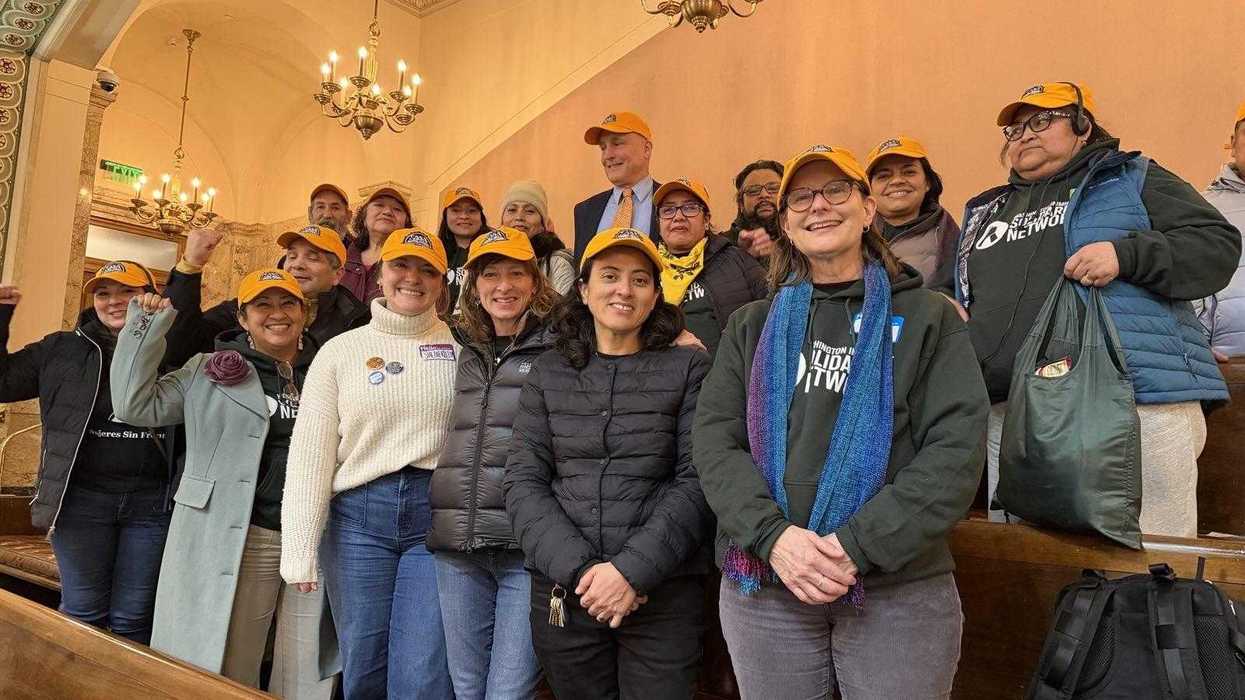
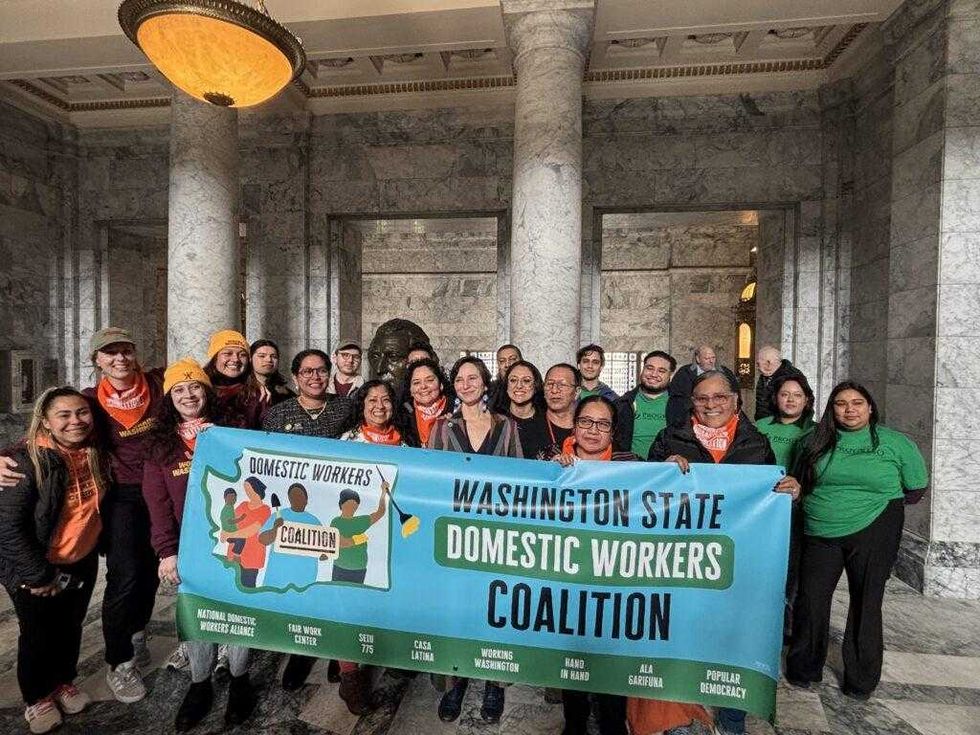 State Sen. Rebecca Saldaña, center, stands with members of the Washington State Domestic Workers Coalition at the state Capitol on Feb. 28, 2026. The Domestic Workers Bill of Rights passed in the House that day, before being signed into law in March. (Photo courtesy of Casa Latina)


The President Invited Iran to Bomb My Home