



Political developments in the United States highlighted a trend of democratic slippage…. Today, the state and fate of democracy in the world is perhaps more uncertain than it has been in our lifetimes.”
Kevin Casas-Zamora, 2025, International IDEA
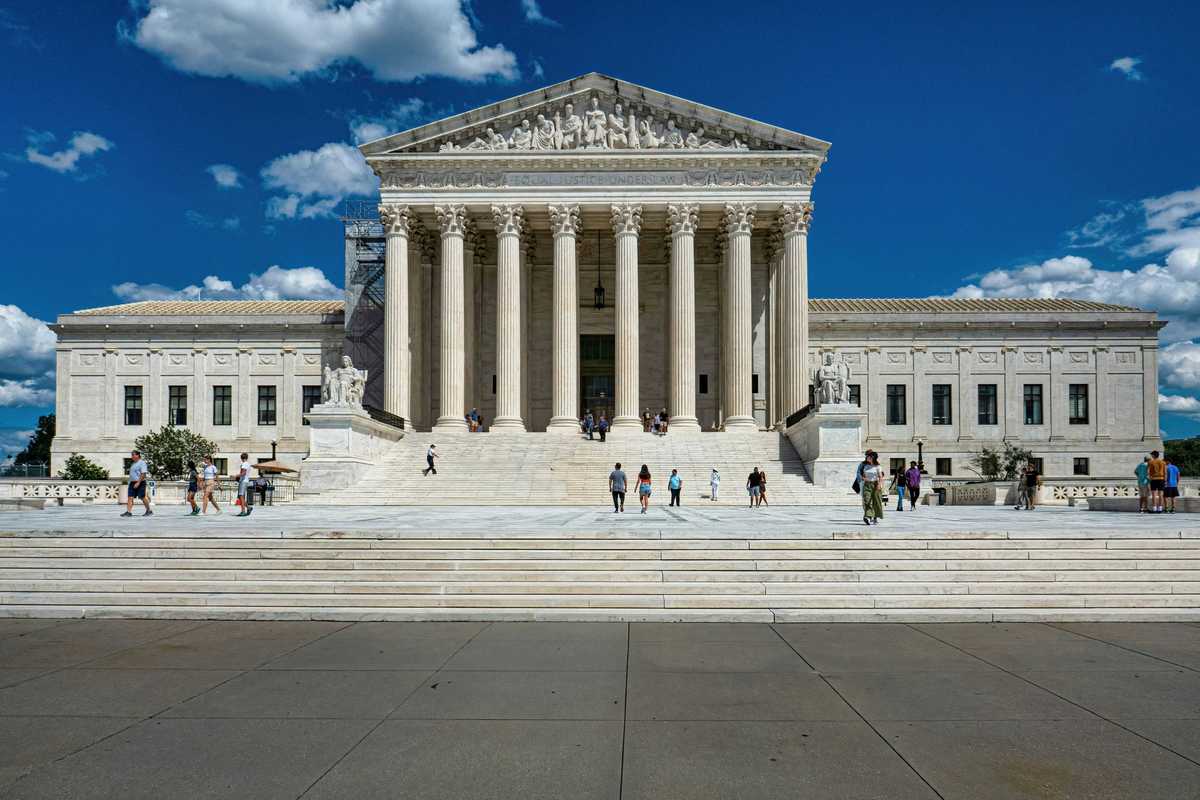
Donald Trump has caused a decline globally in democracy, the authoritative international institute V-Dem declaring that he is “unraveling the democratic era.” Pay-to-play, government fostered disinformation, an obsequious legislature, White House grifting, a President above the law, and a deeply partisan Supreme Court – no wonder U.S. democracy in 2025 was rated a dismal 66th by Freedom House – less democratic than Mongolia or Panama, little better than Bulgaria or Ghana.
While Trump is blamed, he is merely the chalice. The poison is his enablers - the canny, corrupt Roberts Supreme Court Republican majority. They are a throwback to the Fuller court of Plessy v Ferguson notoriety that exalted Jim Crow. The Encyclopedia of the American Constitution explains that during the Fuller era:
“blacks, through one scheme or another, were disenfranchised on a grand scale. The Fifteenth Amendment was reduced to a nullity.”
And while they are most certainly not the first white supremacist court, the Roberts Republicans are acknowledged to be the first partisan court in U.S. history, scheming to enact their Republican patrons' agenda – even mimicking Weimar era justices in granting unconstitutional monarchical powers to a cruel narcissist authoritarian.
The evidence is the Roberts Court history of rulings – Shelby County, Brnovich, and Rucho - that kneecapped both minority voting rights and the Democratic Party. Those twin goals are most recently exemplified by their April 2026 ruling in Callais, which will diminish minority power in Congress.
Moreover, Callais may well enable their Republican patrons to create a stranglehold on the House of Representatives for many years to come. That danger arises from the combined impact of Callais and Congressional reapportionment following the 2030 decennial census.
Congressional Reapportionment
From their base of 19 traditionally blue states and the District of Columbia (plus one electoral vote from Nebraska), Democratic presidential nominees in the 2020’s needed to win just the three upper-midwest swing states of Michigan, Pennsylvania, and Wisconsin to accumulate 273 electoral votes (EV), surpassing the 270 majority threshold.
Reapportionment following the 2030 decennial census will make Democrats' path to 270 EV more treacherous. Out-migration during the 2020’s from California, New York, and other blue states will likely shift 12 of the 435 Congressional seats (and 12 EV in the Electoral College) from blue to red states. The Democrats’ base of 273 EV will shrink to 261 EV. Thus, to reach 270 EV in the 2030s, a Democratic presidential nominee will have to retain the three upper-midwest swing states plus win either Arizona (11 EV), Georgia (16 EV), or North Carolina (16 EV).
Voters in Arizona, Georgia, and North Carolina are typically Republicans – having supported Democratic nominees just once (2020) since 2000 and then very narrowly.
Winning a Governing Trifecta in 2028
To improve their Electoral College odds in these six swing states, Democrats have just a few years to upgrade their political profile. Yet to realistically have a chance to conduct such a makeover, they must win a governing trifecta in 2028 – both houses of Congress and the presidency.
That makeover - as Party experts like James Carville and Stan Greenberg have repeatedly urged - should center the Party’s agenda on economic challenges such as stagnant wages, inflation, and AI that bedevil working- and middle-class voters. Surveys, for instance, affirm that financially precarious working-class women in particular are promising Democratic electoral targets. And leading strategists cite polling showing that 74% of all voters want Democrats to focus on affordability, especially lowering health care costs, and 82% want them to protect Social Security and Medicare.
Other important issues are elitist Trump administration policies, including tax cuts for the wealthy, and spiking gasoline and food prices. Moreover, 61% of independents see Trump as corrupt, an issue that recently doomed the Hungarian Viktor Orbán. Trump grifted $3 billion in 2025 and routinely sells pardons for millions – freeing convicted thieves and international drug lords incarcerated by Democrats. In addition, the Democrats should deemphasize social issues, partly responsible for their historically poor polling, perhaps adopting the Olympics’ new objective standard for women's sports.
Winning a trifecta in 2028 will afford Democrats a chance to rectify their reputation for incompetence by showing swing state voters that they can deliver on promises. It would enable them, for example, to resurrect the Biden-era refundable child tax credit that cut child poverty in half and to protect Social Security and Medicare, extremely popular programs being reduced and privatized by Republicans. Success on these and other impactful middle-class economic policies would embellish Democrats’ standing. And it would lift spirits, renewing faith in government as an instrument for good, faith battered by decades of Republicans and their billionaire donors who view successful government programs as an abomination.
Callais Can Prevent a Democratic Trifecta
The partisan Callais ruling markedly darkens Democrats’ prospects of winning that vital trifecta in 2028.
In the months prior to Callais, the red states of Texas, Missouri, North Carolina, and Ohio gerrymandered at Trump’s urging nine blue Congressional districts to favor Republicans. Those actions were partly offset by California’s gerrymandering.
Then, in April 2026, the Roberts Republicans issued the Callais ruling.
By largely gutting the Voting Rights Act (VRA), Callais will enable Republican states to flip as many as 19 additional majority-minority Democratic congressional districts heretofore shielded by the VRA. Many could even be flipped by energized Republicans prior to the 2026 midterm election - including five seats hurriedly gerrymandered in Florida and Tennessee in May. Minority representation in Congress will plunge as it did during the Jim Crow era.
Preserving Democracy: Countering the Callais Ruling
To sustain hopes for a 2028 trifecta, Democratic states must offset as many of these blue Congressional districts as possible from being flipped by Republicans. Specifically, there are a large number of majority-minority districts in blue states like California. And a number of districts can be redistricted, spreading out Democratic voters to eliminate neighboring Republican districts. Importantly, blue states have engaged in less partisan gerrymandering than Republicans in recent years. Thus, there are as many as 22 Republican districts in blue states such as Colorado and New York that could be flipped in 2027 and 2028. And Virginia may redistrict again. Republicans acknowledge that Democrats could offset all the red-state gerrymandering now underway by 2028.
Gerrymandering these districts to blue, however, will not be easy. Democrats will need to win state legislative majorities in Minnesota, Wisconsin, and Pennsylvania in the 2026 midterm elections, for instance. Moreover, many blue states like New York and Virginia have laws specifically barring gerrymandering that must now be set aside.
The Jim Crow Supreme Court has confronted Democrats with a Hobson’s choice: conduct tawdry gerrymandering that reduces racial representational equality for their minority supporters – or allow Republicans to seize the House of Representatives by default for a decade or more.
Quickly countering Republican gerrymandering is the only pathway to a 2028 trifecta and the opportunity to enact an epochal agenda enabling the Democrats to survive the reapportionment tsunami in 2032.
George Tyler is a former deputy assistant treasury secretary and World Bank official. He is the author of books including Billionaire Democracy and What Went Wrong.












The President Invited Iran to Bomb My Home