


Skip to content
Search

Latest Stories

Follow Us:
Top Stories

How Tensions in the Strait of Hormuz Affect Your Wallet

News

Gasoline prices have increased since the United States and Israel began their attacks against Iran on February 28, 2026.

In the image below, you can see how the national weekly average rose from $2.29 per gallon during the week of February 23, 2026, to $3.50 per gallon during the week of March 9, 2026.


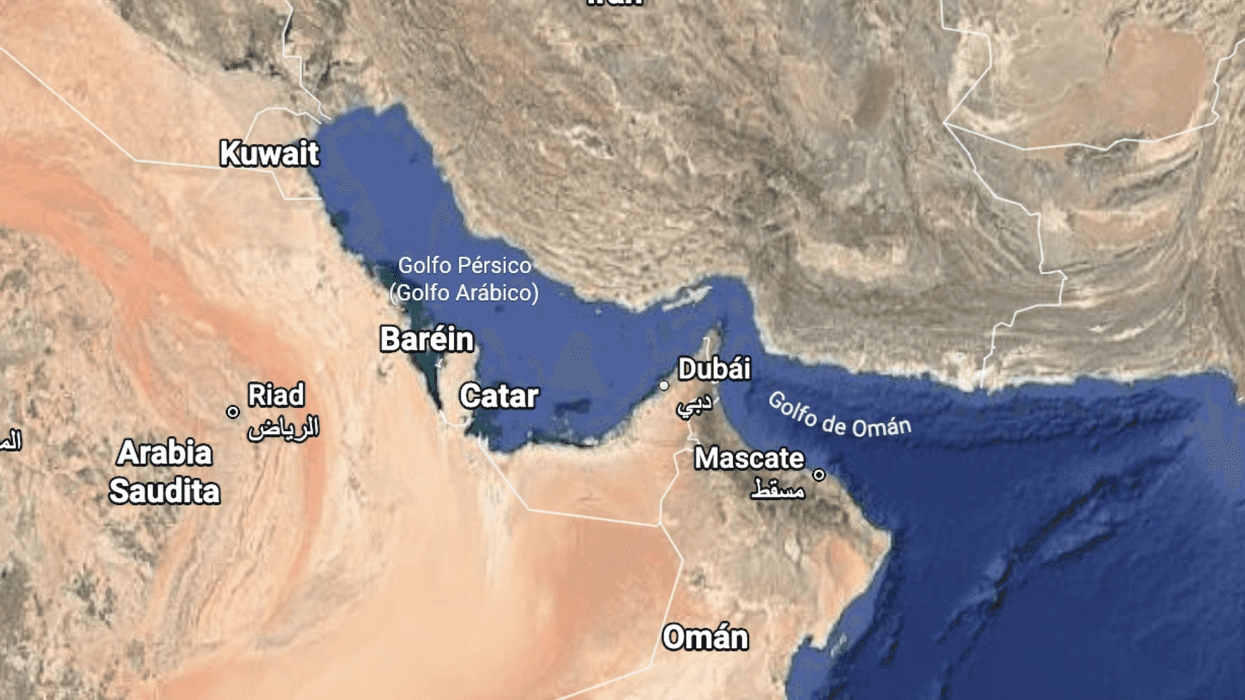
The Strait of Hormuz

As we explained in this Factchequeado article, the Strait of Hormuz is a waterway about 24 miles wide at its narrowest point, located between Iran and the United Arab Emirates. One‑fifth (20%) of the world’s oil trade—around 21 million barrels per day—passes through it. The Strait connects the Persian Gulf, the Gulf of Oman, and the Indian Ocean.

Source: Google Maps.

Since the beginning of the war, there have been at least five reports of vessels attacked in the Strait, according to data collected through March 13, 2026, by the United Kingdom Maritime Trade Operations center. In addition, two sources told Reuters on March 11, 2026, that Iran was deploying mines in the Strait.

Meanwhile, Donald Trump said in a Fox News interview released on March 13, 2026, that the United States could escort ships traveling through the strait “if it’s necessary for us to do it, but, you know, let’s hope things go very well and we’ll see what happens.”

The vast majority of crude oil that passes through the Strait of Hormuz (84%) is destined for Asian markets, while only 7% reaches the United States, according to this 2025 report from the U.S. Energy Information Administration (EIA). However, a disruption affecting 20% of global oil transit increases prices in all international markets—especially because traders do not know how long the Strait might remain impassable—John Browne, former president of British Petroleum (BP), told the BBC.

Tip: You can compare gas station prices in your area using apps like GasBuddy, Upside, Waze, or Google Maps to monitor real‑time gasoline prices anywhere in the United States.

But it’s not just gasoline prices…

David Ortega, a food economics professor at Michigan State University, told PBS that if oil prices remain high, the cost of fresh food could rise because “it gets to the supermarket using diesel, whether by truck or by ship.” Diesel prices increased from $3.80 per gallon during the week of February 23 to $4.80 per gallon during the week of March 9, according to EIA data.

Ortega also explained that oil prices affect agricultural production because they raise the cost of machinery fuel and fertilizers, which are produced from natural gas.

Gregory Daco, chief economist at the consulting firm EY‑Parthenon, estimated in a March 11, 2026, analysis that due to volatility and rising oil prices—and as long as hostilities in the Strait of Hormuz continue—inflation in March 2026 could increase by nearly 1% above the 2.4% recorded in February 2026.

How Tensions in the Strait of Hormuz Affect Your Wallet was first published as "Cómo las tensiones en el estrecho de Ormuz afectan tu bolsillo" by Factchequeado and republished with permission.

Rafael Olavarría is a Political and immigration fact‑checker.

Read More

Trump’s claims versus reality on the economy and tariffs
a close up of a one dollar bill
Photo by Adam Nir on Unsplash

Trump’s claims versus reality on the economy and tariffs

Even as the Trump administration scrambles to wage war against Iran, it also must figure out a new tariff regime that can survive Supreme Court scrutiny. As usual with President Donald Trump, it’s necessary to weed out his hype and braggadocio from reality.

In late February, six Supreme Court justices -- three conservative and three liberal-- struck down President Trump’s use of an international emergency powers statute to impose broad tariffs on imports from across the world. That was not much of a surprise, since that statute doesn’t even mention the word “tariff” and legal experts had been predicting this outcome for many months.

Keep Reading Show less
A gavel.

Analysis of President Donald Trump’s tariffs after a record $901.5B U.S. trade deficit in 2025. Explore the economic realities behind trade imbalances, the United States Supreme Court ruling on tariff authority, and the growing debate over executive power and trade policy.

Getty Images, Phanphen Kaewwannarat

What’s Next After the Court’s Tariffs Decision?

A Stubborn Imbalance

After a year of President Trump’s sweeping tariffs, sold as a reset of global trade, the promise was simple: the U.S. trade deficit would shrink. It did not. The Commerce Department instead reported a $70.3 billion deficit in December and a staggering $901.5 billion for all of 2025, one of the largest totals on record. The gap between imports and exports barely narrowed at all.

These figures matter because they undermine the central premise of the strategy: make imports more expensive, reduce foreign purchases, and bring production back to the United States. But that approach overlooks a key reality. Trade balances are not driven by tariffs alone. They reflect deeper forces such as consumer demand, domestic savings rates, the strength of the dollar, and global capital flows. Those forces do not yield easily to executive action.

Keep Reading Show less
A child putting a coin in a small piggy bank.

An in-depth analysis of Trump Accounts, the child savings program promoted by Donald Trump, examining wealth inequality, government seed money, and economic impact on struggling families.

Getty Images, Natalia Lebedinskaia

Trump Accounts: Who Benefits From the New Child Savings Accounts?

The Trump administration has undertaken a public relations blitz for “Trump” accounts over the past month. During the State of the Union address, President Trump asserted that these accounts were “so special, it has taken off and gone through the roof.” A commercial aired during the Super Bowl, promoting these accounts as a way to “jumpstart the American dream.” In late January, Nicki Minaj appeared with President Trump at a summit about Trump Accounts, saying, “Early financial literacy & financial support for our children will give them a major head start in life.”

As an expert on policies that support the economic security of children and families, I have to say – it’s a little more complicated than the hyperbole suggests.

Keep Reading Show less
10 economic falsehoods debunked from Trump’s State of the Union speech

Trump addresses the nation in his State of the Union speech Tuesday night, touting economic growth throughout his first year in office.

(Cayla Lagbold-Carroll/MNS)

10 economic falsehoods debunked from Trump’s State of the Union speech

WASHINGTON — President Donald Trump launched into his State of the Union speech Tuesday night with sweeping bravado about the economy after his first year in office. At best, his claims were misleading or lacked context. At worst, they were blatantly false.

Inflation Claim: “The Biden administration and its allies in Congress gave us the worst inflation in the history of our country. But over the past 12 months, my administration has driven core inflation to its lowest level in more than 5 years. And in the last three months of 2025, it was down to 1.7%.”

Keep Reading Show less