



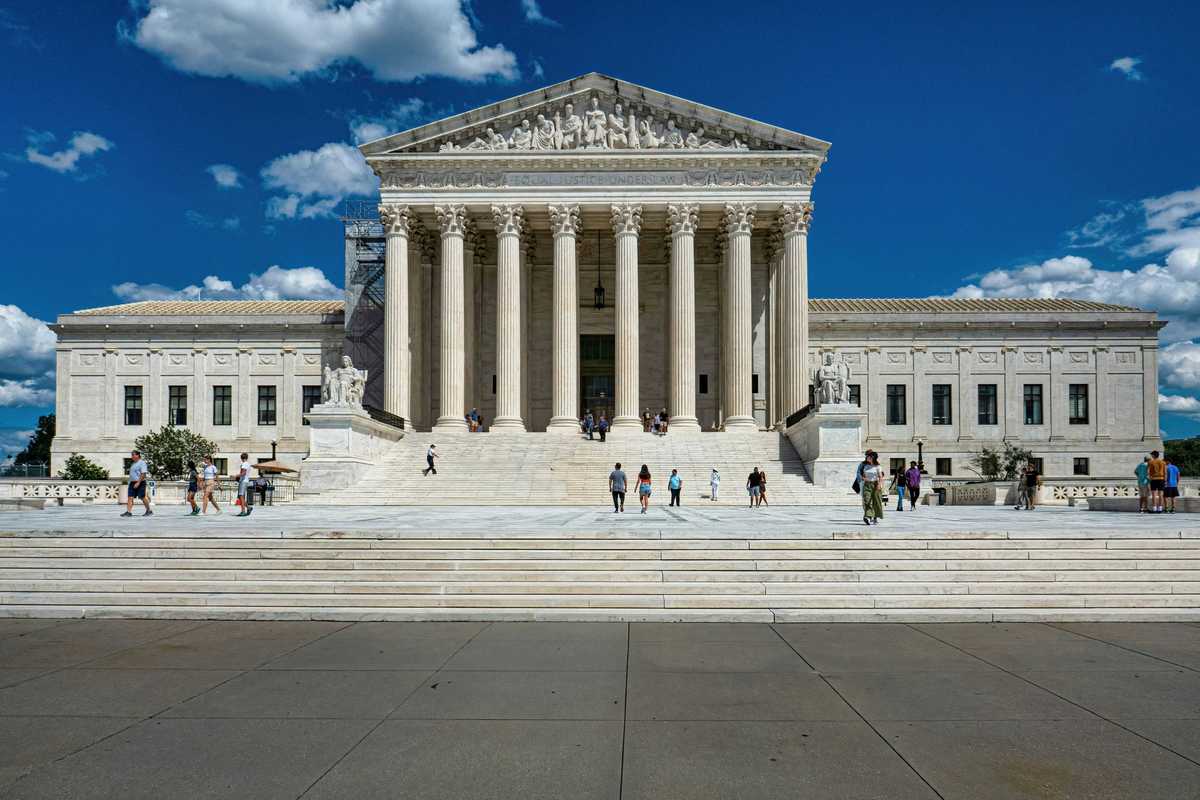


2026 is here. We are less than one hundred days from Independence Day, the apex of our yearlong celebration of America’s 250th birthday. Still, we will miss the purpose of this moment if we don’t think beyond it.
For guidance, we can look at a university’s commencement ceremony. When I was in college, ‘commencement’ felt like a funny word. I was ending my time there, wasn’t I? But, a little reflection provides a lot of clarity. The more I thought about graduation, the more commencement felt like the perfect definition. School is not meant to be our final destination. It’s a preparatory season.
So what does that mean for the commemoration of our semiquincentennial? What parallels can we draw from these yearly college ceremonies?
The ceremonies themselves do, in fact, commemorate. We celebrate the rewards of long hours and deep thinking. But crossing the stage is just as much of a beginning as an end. Moving the tassel from right to left symbolizes a new chapter; a commencement.
To only focus on the commemoration, in fact, is dangerous for democracy. Alexis de Tocqueville reflected on this danger in Democracy in America. “If long-term interest could prevail over the passions and needs of the moment,” he pondered, “there would never be tyrannical sovereigns or an exclusive democracy.” In this vein, commemoration alone may encourage us to add more red, white, and blue to our wardrobe, but it will not strengthen the collective civic resolve our constitutional democracy craves.
To be meaningful, this year must rejuvenate our sense of purpose for the preservation of our nation. We can leverage this moment to build civic momentum that doesn’t just commemorate America250, but commence America250+.
There are a lot of ways that we can do this. America250+ is not confined to a particular course of action. It’s not defined by a particular field, region, or political persuasion. Many groups are already realizing this and demonstrating an America250+ mindset. Democracy2076 is working to inspire renewed faith in a pro-democratic future by anticipating our tricentennial. Made by Us launched Youth250, acknowledging that Gen Z will write the next chapter of the American story. Such initiatives see commemoration as a pathway to commencement.
At my organization, Thinking Nation, we see our call to action as strengthening history education. We want to leverage the study of the past in ways that can better our collective future. In order to do this, we need to re-evaluate our approach to history education in American classrooms.
We are not satisfied with students leaving classrooms where the measure of their success is defined by the strength of their memory. Therefore, in the spirit of America250+ we are calling for a new minimum standard in history education; one where thinking is the minimum. We seek to raise the floor for every classroom and expectations for every student.
A new minimum standard is accessible for everyone. Still, it demands a paradigm shift. History can not be defined simply as the past. Rather, it must be embraced as a discipline, where students are agentic humans that evaluate evidence, contextualize stories, and relish in the complexity and nuance of the past. This not only defines the epistemology inherent to the discipline of history, as articulated by the American Historical Association, but cultivates the dispositions our 21st century constitutional democracy craves.
At a time where AI is supplanting humanity, learning how to think is perhaps more important than ever. Even Anthropic’s president acknowledges this. Every student takes history courses, but these courses have fallen flat on their promise to prepare students for civil society. Advocating for a new minimum standard is one way that we can take the commemoration of America250 and transform it into a democracy-strengthening America250+.
At Thinking Nation, we are realists in acknowledging that we will likely never agree on what to teach in a pluralistic society; but we are idealists in that we believe a new philosophical and pedagogical minimum standard is attainable. Classrooms must be inquiry-based, rooted in historical thinking, and literacy-rich. Teachers must be collaborative and data-informed. Without meeting this standard, we will remain a marginalized discipline.
If history education continues to be marginalized, lacking resources compared to ‘tested subjects’ like STEM and English Language Arts, we cannot act surprised at the visible deterioration of democracy.
History is a human-centered discipline. We learn about—and from—humans, engaging with a variety of perspectives. In an age of self-absorption, where algorithms feed us only what we want, history asks us to turn outside of ourselves. Through it, we cultivate empathy for people we have little in common with and ask deeper questions of the things we see.
The discipline of history empowers us to question sources, interrogate information, and seek truth. At this moment, are there more important dispositions to equip participants in our democracy with?
It is to this end that our America250+ initiative is to establish a new minimum standard in history education. We are dissatisfied with the status quo of the field. The students in our classrooms deserve to be better prepared to renovate our democracy. Without doing so, our commemorations are meaningless celebrations rooted in nostalgia, lacking the reflective patriotism required to strengthen the American experiment.
For the future of our country, this year must be a catalyst for lasting impact. Individuals and organizations cannot only commemorate America250, but consider the ways that they can commence America250+.
Zachary Cote is the executive director of Thinking Nation, a social studies education nonprofit based in Los Angeles. Prior to this role, he taught middle school history at a public charter school in South Los Angeles.











The President Invited Iran to Bomb My Home