
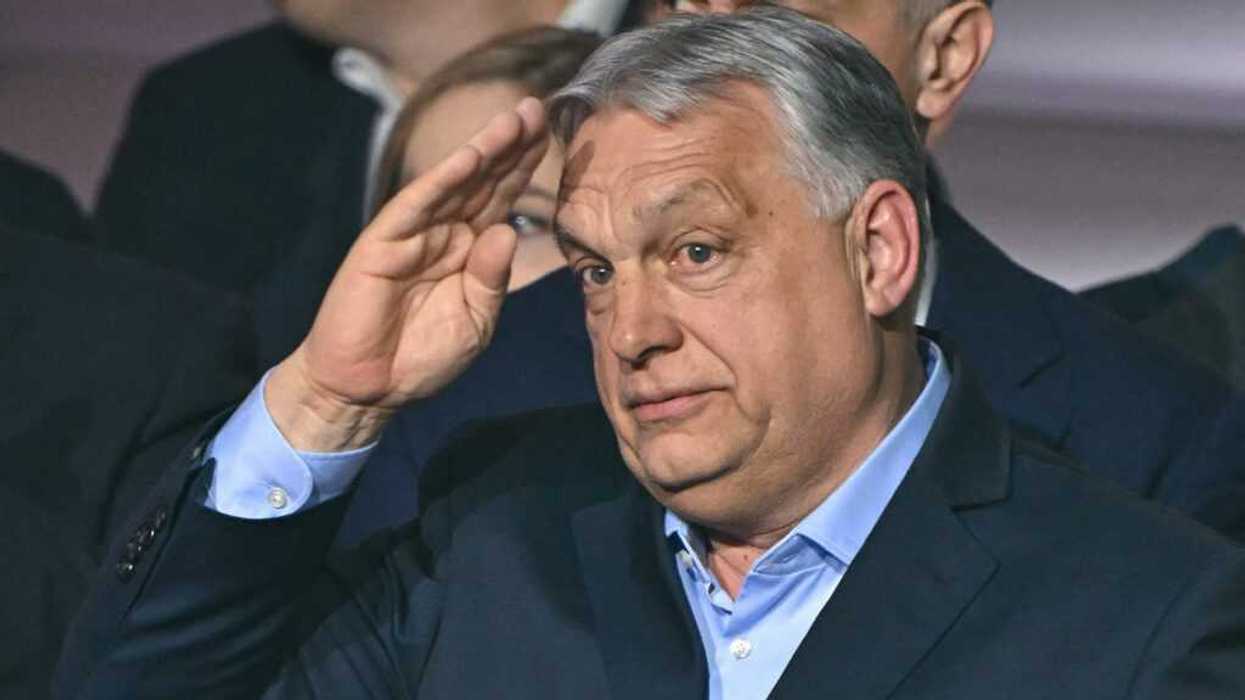

Viktor Orban, the proudly “illiberal” prime minister of Hungary, beloved by various New Right nationalists and MAGA American intellectuals, was crushed at the polls this weekend.
Over the last decade or so, Hungary became for the New Right what Sweden or Cuba were to the Old Left. For generations, various American leftists loved to cite the Cuban model as better than ours when it came to healthcare, or education. Some would even make wild claims about freedom under Fidel Castro’s dictatorship. Susan Sontag famously proclaimed in 1969 that no Cuban writer “has been or is in jail or is failing to get his works published.” This was simply not true. The still young regime had already imprisoned, tortured or executed scores of intellectuals. (Sontag later recanted.)
Sen. Bernie Sanders and Rep. Alexandria Ocasio Cortez still talk about Nordic countries as if we have much to learn from them, despite the fact the Nordic model heavily depends on taxing the poor and middle class, not soaking the rich. Now, distinctions matter. The Nordic systems are democratic and decent. Cuba is a Marxist basket case and police state. But the one thing uniting both fan clubs is the tendency to see the countries they imagine them to be rather than the reality.
President Trump, Tucker Carlson and JD Vance (most recently while campaigning for Orban) have all lavished praise on Hungary. Patrick Deneen, a leading New Right intellectual, saw in Orban’s Hungary “a model of a form of opposition to contemporary liberalism that says, ‘There’s a way in which the state and the political order can be oriented to the positive promotion of conservative policies.’ ”
The Heritage Foundation, a once respected conservative think tank that has shed its devotion to the Constitution and traditional conservatism, agrees. Its wayward president, Kevin Roberts, in 2024 called Orban’s Hungary a “model for conservative governance.”
This mirrors Orban’s own explanation: “The Hungarian nation is not simply a group of individuals but a community that must be organized, reinforced and in fact constructed,” he explained in 2014. “And so in this sense the new state that we are constructing in Hungary is an illiberal state, a non-liberal state.”
Don’t be put off by the word “liberal” here (or by Deneen’s and Roberts’ tendentious use of “conservative”). Orban and his fans aren’t talking about mere left-wing policies. The “liberal” here is the liberalism of liberal democratic capitalism, John Locke, Adam Smith and the American founding fathers.
“Checks and balances is a U.S. invention that for some reason of intellectual mediocrity Europe decided to adopt,” Orban claimed. Checks and balances is not actually an American invention. But it is a vital liberal bulwark against authoritarianism and corruption.
When the U.S. Supreme Court said that President Biden couldn’t, on a whim, forgive student loan debt or ban evictions, or when it ruled that Trump couldn’t unilaterally tariff the world or indiscriminately deploy troops to American cities, that was checks and balances at work.
Claims that Orban was an authoritarian could be overblown. But he was moving in that direction, larding the courts, universities and state media with political loyalists and, until this weekend, rewriting the election laws to stay in power.
But his corruption was not exaggerated, and his corruption is why he lost. Orban steered state resources to his cronies, family and hometown friends on a massive scale. But that doesn’t mean he broke the law. He wrote — or interpreted with the help of crony judges — the law to make favoritism legal. That sort of favoritism, it turns out, is incredibly bad for the economy because it distorts the market, misallocates scarce resources for self-serving political objectives and discourages investment. It’s fine to say Orban lost because the Hungarian economy and healthcare system were a mess. But that mess stemmed from Orban’s corruption.
In America we tend to think of corruption as illegal; taking bribes, pilfering taxpayer money, etc. But in many parts of the world that’s neither illegal nor even corrupt. It’s the way business is done. In many developing countries — and for most of human history — government is run like a family business. Special treatment for relatives and allies is natural. What’s unnatural is the modern liberal way of putting contracts out to bid and treating taxpayer money as sacrosanct.
No country is perfect at this. Which is one reason we have checks and balances. Each branch is supposed to be on the lookout for abuses by the others, and everyone is supposed to be subordinate to the rule of law, not the law of rulers.
Orbanism is not a new model, or “wave of the future.” It was a tide of the past. And it’s good news that it’s receding.
Jonah Goldberg is editor-in-chief of The Dispatch and the host of The Remnant podcast. His Twitter handle is @JonahDispatch.

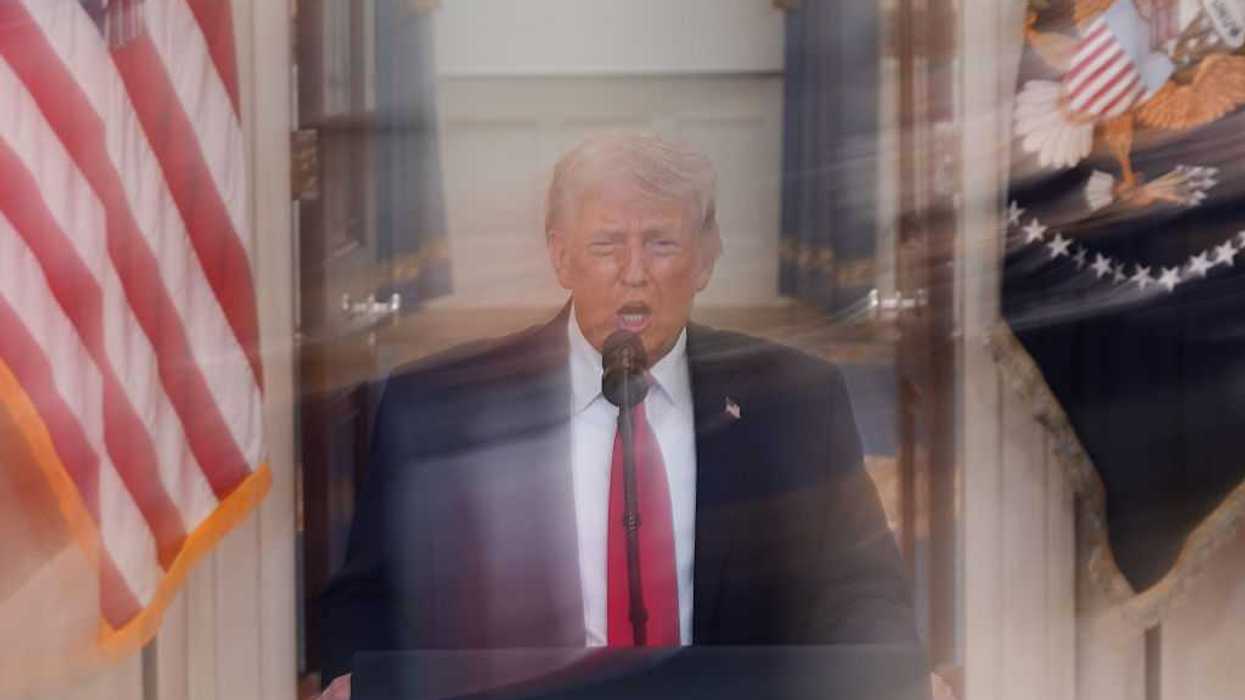






U.S. President Donald Trump speaks during a“ Steel Across America” event ahead of the 25th anniversary of the Sept. 11th attacks on the Ellipse near the White House on Sept. 8, 2026 in Washington, D.C. President Trump welcomed 9/ 11 first responders to the Tunnel to Towers Foundation’ s“ Steel Across America” event featuring a 16,900- pound, 21- foot steel beam recovered.
For Trump, even 9/11 is an opportunity
There was a reason organizers of the 9/11 ceremony in Manhattan told President Trump he could not speak at this year’s memorial service.
A good one, it turns out.
Because in a speech he gave on Tuesday in Washington, he did exactly what they were presumably worried about — he made it about himself.
According to The New York Times, Trump had wanted a speaking role at the service, but the National Sept. 11 Memorial and Museum, which oversees the site, said no, as they’ve maintained for the past decade-plus that the venue and event should be nonpartisan.
Trump has long used awful tragedies to either puff himself up, trash political opponents, or sell lies to the American people.
He blamed a deadly plane crash at Washington National Airport last year on diversity, equity and inclusion policies. He blamed Puerto Ricans for the devastation they endured after Hurricane Maria in 2017. He reportedly considered withholding disaster relief after the California wildfires based on the way affected regions voted. In an interview on Fox News meant to commemorate the 75th anniversary of D-Day in Normandy, he used the occasion to slam former House Speaker Nancy Pelosi…with graves of the dead behind him.
And now, as we approach the 25th anniversary of what many New Yorkers consider the darkest day in modern history, Trump has done it again.
He told a rambling, nonsensical story — one he’s told before — about going to Ground Zero just after terrorists flew two commercial jets into the twin towers. In the story, which no one has been able to verify, despite multiple attempts, he says firefighters had to carry him out of One Liberty Plaza, also known as the U.S. Steel Building, because they thought it was about to collapse.
As CNN fact checker Daniel Dale notes, there’s no evidence Trump went into this building, especially at a time when NYPD and NYFD had locked down the area. There’s no evidence that building was collapsing — in fact, it was deemed structurally sound and reopened within two months of the attacks. There’s no evidence he was carried out of it by firefighters.
But the lie isn’t even the worst part. Pretend it was all true — why would the leader of our country, and a New Yorker, decide to make that tragic day about himself?
Because that’s who Donald Trump is. He’s a malignant narcissist.
He’s also, incidentally, a terrible and ineffectual president, who’s made ill-fated decisions that he has to keep defending, and there’s nothing he won’t do to make himself look and feel better.
Within the first two minutes of his speech, he was cravenly using 9/11 to justify and promote his dumb war in Iran — two events separated by 25 years and 6,000 miles.
“And I will tell you, we’re right now fighting because we have a certain nation that wanted a nuclear weapon, they were very close to getting it, and now they have no chance at getting it. They will never have a nuclear weapon. Iran will not have a nuclear weapon. And they’ve been punished greatly. As you know, we’ve really taken it to them.”
As a New Yorker who lived through 9/11, still one of the worst days of my life, I’m utterly sickened by Trump’s crass, political, and self-promotional framing of that awful day.
And I’m relieved he won’t be given a platform to do it again on Friday’s anniversary in lower Manhattan.
Because for Trump, everything is his for the taking, and absolutely nothing is sacred.
S.E. Cupp is the host of "S.E. Cupp Unfiltered" on CNN.